Bankruptcy, banking regulations, and credit laws form the legal backbone of consumer finance in South Dakota. While bankruptcy is governed primarily by federal law, state rules and exemptions play a critical role in determining what property you can keep, how creditors may pursue you, and how financial institutions must treat your accounts and loans.
This guide explains how these systems fit together, focusing on the practical impact on South Dakota residents who are managing debt, working with banks, or trying to rebuild credit after financial hardship.
1. Legal Framework: Federal Bankruptcy and South Dakota Law
Bankruptcy in the United States is controlled by Title 11 of the United States Code, often called the Bankruptcy Code. Bankruptcy cases are heard exclusively in federal bankruptcy courts, not in state courts. The District of South Dakota has its own federal bankruptcy court locations and local rules that supplement federal statutes and procedures.[10]
At the same time, South Dakota law shapes important parts of bankruptcy and credit outcomes, especially:
- Exemptions: State statutes specify which property is protected from creditors and bankruptcy liquidation.
- Homestead protections: South Dakota offers generous protection for equity in a primary residence.
- Banking and lending rules: State and federal banking laws regulate deposit accounts, loan terms, interest rates, and collection behavior.
- Consumer credit protections: Federal laws such as the Fair Credit Reporting Act and Fair Debt Collection Practices Act apply in South Dakota, alongside state-level protections.
Understanding which rules are federal and which are state-based is crucial. In bankruptcy, federal law determines the structure of the case, but South Dakota law determines many of the practical outcomes, like what you keep and what creditors may recover.
2. Bankruptcy Options for South Dakota Residents
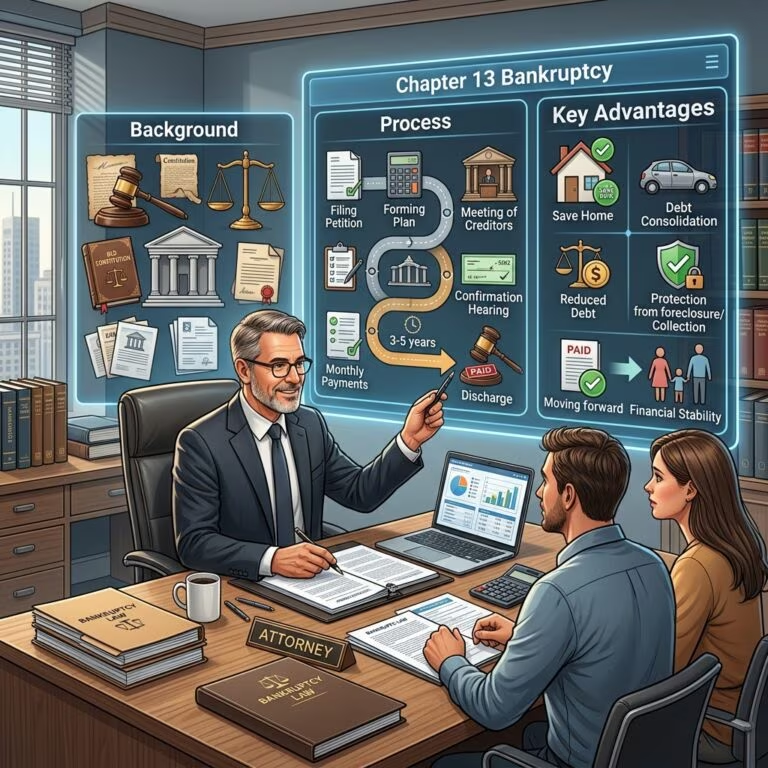
Most individuals in South Dakota file bankruptcy under Chapter 7 or Chapter 13 of the Bankruptcy Code. Each chapter addresses debt problems differently.
| Feature | Chapter 7 (Liquidation) | Chapter 13 (Repayment) |
|---|---|---|
| Basic approach | Non‑exempt property may be sold to pay creditors; remaining eligible debts are discharged. | Debtor proposes a 3–5 year repayment plan, then remaining eligible debts are discharged. |
| Typical use | Lower‑income debtors with limited non‑exempt assets and high unsecured debt. | Debtors with steady income who want to keep assets (home, car) and cure arrears over time. |
| Income test | Subject to a means test comparing household income to South Dakota median income. | Requires enough disposable income to fund a feasible repayment plan. |
| Impact on property | Trustee may liquidate non‑exempt property to pay creditors. | Debtor keeps property but must commit disposable income to the plan. |
Choosing the right chapter depends on income, assets, and debt type. Many South Dakota residents consult legal and financial professionals to evaluate whether Chapter 7 or Chapter 13 is more suitable for their situation.
3. The Bankruptcy Process in South Dakota
Although the specifics vary by individual case, most consumer bankruptcies in South Dakota follow a predictable sequence set out in federal law and local rules.
3.1 Pre‑Filing Requirements
Federal law requires debtors to complete credit counseling from an approved provider within 180 days before filing. Debtors must also gather financial information, including:
- Recent tax returns and pay stubs
- Lists of all debts and creditors (secured and unsecured)
- Documentation for major financial transactions in the prior two years
- Titles, deeds, and account statements for real estate, vehicles, and financial accounts
This information supports the official bankruptcy forms and schedules that must be filed with the court.
3.2 Filing the Case
To begin a case, the debtor (or their attorney) files a petition in the United States Bankruptcy Court for the District of South Dakota, along with schedules describing income, expenses, property, and debts.
Key effects of filing include:
- Automatic stay: Most collection activities, lawsuits, and garnishments stop immediately.
- Appointment of a trustee: A trustee administers the case, reviews schedules, and manages non‑exempt property or plan payments.
- Notice to creditors: Creditors receive notice and may file claims or objections according to federal rules.
3.3 Creditors’ Meeting and Ongoing Requirements
Debtors must attend a meeting of creditors (also called a 341 meeting), where the trustee asks questions under oath about finances and property. Creditors may attend and ask limited questions as well.
After filing, debtors must also complete an approved financial management course before receiving a discharge. In Chapter 13 cases, they must make regular plan payments and comply with the terms approved by the court.
3.4 Discharge of Debts
At the end of a successful case, the court issues a discharge, releasing the debtor from many pre‑petition debts. Some obligations, such as most student loans, recent tax debts, and domestic support obligations, often remain non‑dischargeable under federal law.
4. South Dakota Bankruptcy Exemptions and Protected Property
Exemptions are critical because they determine what property you can keep through bankruptcy. South Dakota has its own exemption system, and debtors generally use it if they have lived in the state for at least two years (730 days).
4.1 Homestead Protection
South Dakota offers strong homestead exemptions. As a general rule, equity in a primary residence is fully exempt if the property size is below certain limits (typically up to one urban acre or 160 rural acres). Many mobile homes and similar dwellings used as primary residences are also protected, subject to size and registration requirements.
Because the homestead exemption is generous, many South Dakota homeowners can file bankruptcy without losing their primary residence, provided they meet all statutory conditions and stay current on any secured mortgage obligations.
4.2 Personal Property
South Dakota law allows exemptions for various categories of personal property, such as household goods, clothing, furniture, and basic appliances. While some items have dollar limits, many used household goods have low resale value, meaning they are effectively protected in most cases.
Additional personal property protections may include:
- Tools of the trade or professional equipment, subject to statutory limits
- Bibles, books, and certain personal items up to defined values
- Livestock and farming equipment for qualifying heads of household, within specific value caps
4.3 Retirement Accounts and Insurance
Retirement accounts such as IRAs, 401(k) plans, and other qualified retirement funds are generally exempt under both federal and state law. Pension benefits and public benefits like Social Security are also typically protected from most creditors.
Insurance proceeds and policy values may be exempt depending on the type of policy and the beneficiary’s relationship to the insured. These rules can be complex, so careful review of state statutes or professional advice is often needed.
5. Banking Law Basics in South Dakota
Banking law affects how financial institutions operate and how they treat customer accounts, loans, and collateral. While bankruptcy is federal, banks in South Dakota are subject to a combination of federal regulation and state banking statutes.
Key banking law concepts relevant to consumers include:
- Deposit accounts: Rules governing set‑offs, overdraft practices, and account closure.
- Loan documentation: Requirements for clear disclosure of terms, interest rates, and security interests.
- Collateral and repossession: Procedures for enforcing security interests in vehicles and personal property, which interact with bankruptcy protections.
- Compliance with federal consumer laws: Including truth‑in‑lending, fair credit reporting, and unfair or deceptive practices standards.
When a debtor files bankruptcy, banks must comply with the automatic stay and other federal protections, such as restrictions on post‑petition collection efforts. Local court rules and guidance from the District of South Dakota also regulate how banks and other creditors must handle claims and communications in an active case.
6. Credit Law and Consumer Protections
Credit law governs how debts are reported, collected, and resolved. South Dakota residents benefit from nationwide consumer protection laws, including rules on credit reporting, debt collection, and fair lending.
Important credit‑related protections include:
- Fair Credit Reporting: Limits on how long negative information (including bankruptcies) can remain on credit reports, and rights to dispute errors.
- Debt collection standards: Federal laws restrict harassment, abusive language, and misleading statements by third‑party debt collectors.
- Disclosure obligations: Lenders must clearly disclose interest rates, fees, and other key terms before extending credit.
Bankruptcy interacts with credit law by changing the legal status of many debts. Once a debt is discharged, creditors generally may not continue reporting it as active or pursue collection, though the historical bankruptcy filing can remain on credit reports for a limited period under federal rules.
7. Practical Implications for South Dakota Consumers
For individuals and families living in South Dakota, the combination of bankruptcy, banking, and credit law has concrete, day‑to‑day effects.
7.1 When Debt Problems Arise
Consumers typically face difficulties such as mounting credit card balances, medical bills, personal loans, or mortgage arrears. Before filing bankruptcy, many evaluate options such as repayment plans, loan modifications, or debt negotiation.
Key practical steps include:
- Assess which debts are unsecured (e.g., credit cards) and which are secured (e.g., car loans, mortgages).
- Determine whether income is likely to support a long‑term repayment plan (Chapter 13) or whether liquidating non‑exempt assets and discharging unsecured debts (Chapter 7) is more realistic.
- Review which assets are protected under South Dakota exemptions, especially the homestead and personal property rules.
7.2 Working With Banks During Financial Distress
Banks play a central role in managing hardship. They may offer forbearance, loan restructuring, or other relief, but they are also empowered to enforce loan contracts, repossess collateral, or apply set‑offs under applicable law.
Once a bankruptcy case is filed, banks must:
- Stop most collection actions due to the automatic stay.
- Route communications through the debtor’s attorney or trustee, according to court rules.
- File claims with the bankruptcy court if they wish to participate in any distribution.
7.3 Rebuilding Credit After Bankruptcy
Although bankruptcy appears on credit reports for several years, many debtors begin rebuilding credit relatively quickly by:
- Ensuring all discharged debts are correctly reported as such.
- Making timely payments on any remaining obligations (such as reaffirmed loans or post‑bankruptcy credit accounts).
- Using secured credit cards or small installment loans responsibly to demonstrate positive payment history.
Over time, federal credit reporting rules allow older negative information to drop off reports, and responsible financial behavior can improve credit scores significantly.
8. Frequently Asked Questions (FAQs)
Does bankruptcy in South Dakota happen in state court?
No. All bankruptcy cases are filed in federal court. The United States Bankruptcy Court for the District of South Dakota has exclusive jurisdiction over bankruptcy filings; state courts do not handle bankruptcy cases.
Can I choose which property to protect in bankruptcy?
You cannot pick and choose freely, but you can use the exemptions provided by South Dakota law and federal law to shield certain categories of property, such as your homestead, household goods, and retirement accounts, subject to statutory limits.
How long must I live in South Dakota to use its exemptions?
Generally, you must have lived in South Dakota for at least 730 days (two years) before filing in order to use South Dakota’s exemption scheme. Otherwise, federal law may require use of another state’s exemptions depending on your prior residence.
What happens to my bank accounts when I file?
Filing may affect your bank relationships, especially if you owe money to the same institution that holds your deposits. Banks must comply with the automatic stay but may exercise limited rights such as set‑off in certain circumstances, subject to federal bankruptcy rules and court oversight.
Does bankruptcy erase all debts?
No. Bankruptcy can discharge many unsecured debts, but some obligations, including most domestic support obligations, recent tax debts, and many student loans, remain non‑dischargeable under federal law.
References
- Understanding Bankruptcy — United States Bankruptcy Court, District of South Dakota. 2023-05-01. https://www.sdb.uscourts.gov/understanding-bankruptcy
- Bankruptcy Statutes, Rules, and Forms — United States Bankruptcy Court, District of South Dakota. 2023-05-01. https://www.sdb.uscourts.gov/bankruptcy-statutes-rules-and-forms
- Filing Bankruptcy in South Dakota – What Is the Process? — SouthDakotaBankruptcy.com. 2022-01-15. http://www.southdakotabankruptcy.com/process.html
- South Dakota Bankruptcy Exemptions and Filing Guide 2025 — Nolo. 2024-01-10. https://www.nolo.com/legal-encyclopedia/how-to-file-bankruptcy-in-south-dakota.html
- Bankruptcy in South Dakota – South Dakota Exemptions — SouthDakotaBankruptcy.com. 2022-01-15. http://www.southdakotabankruptcy.com/exemptions.html
- South Dakota Bankruptcy Exemptions and Law — FindLaw. 2023-03-20. https://www.findlaw.com/bankruptcy/bankruptcy-laws-by-state/south-dakota-bankruptcy-exemptions-and-law.html
- District of South Dakota – Contact and Court Locations — United States Bankruptcy Court, District of South Dakota. 2023-05-01. https://www.sdb.uscourts.gov/