
How to File for Divorce in West Virginia
A practical guide to residency, filing steps, forms, and court procedure for West Virginia divorce cases.
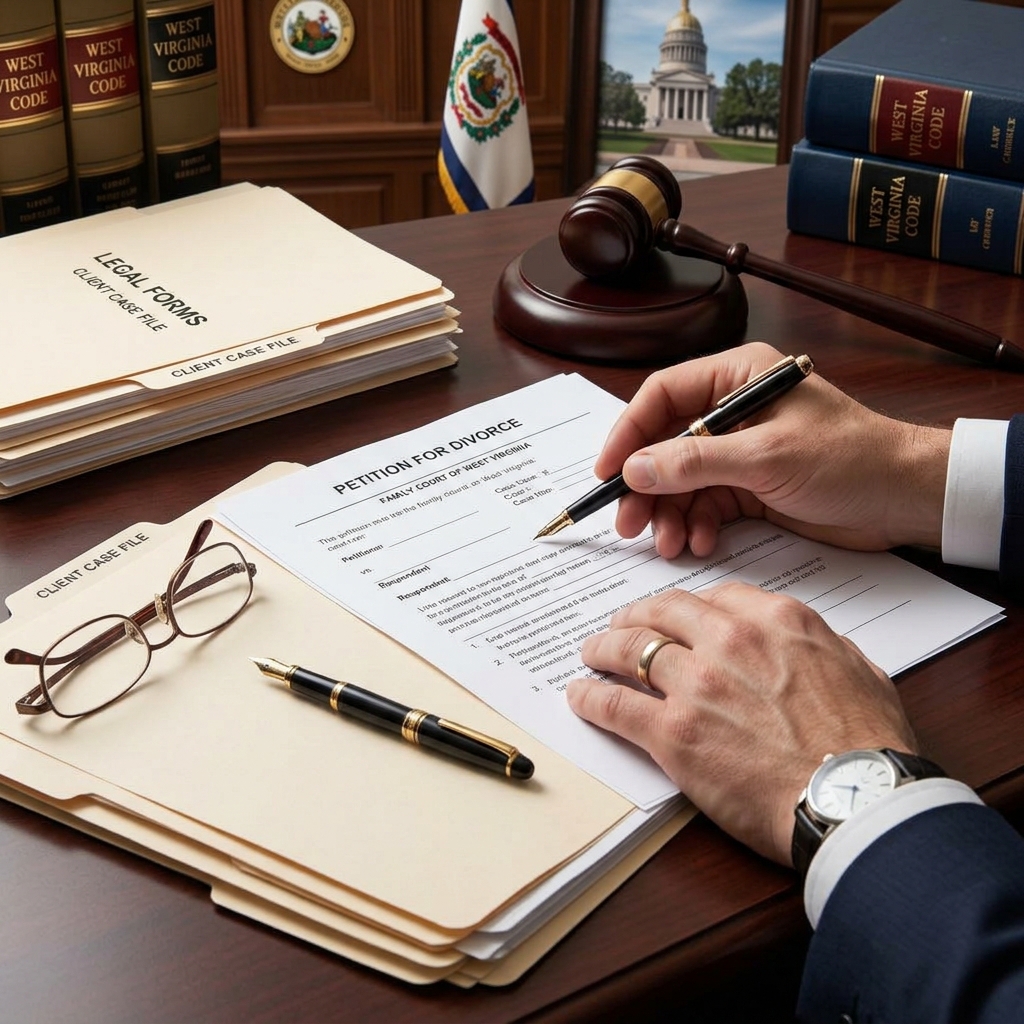
Starting a Divorce Case in West Virginia
Filing for divorce in West Virginia begins with meeting the state’s eligibility rules and choosing the correct county court. In most cases, the process starts when one spouse prepares and files a divorce petition, then formally notifies the other spouse so the case can move forward.
Although the process is designed to be manageable, it still requires careful attention to residency, paperwork, deadlines, and local filing rules. Missing one of those pieces can delay the case or force a party to refile documents.
Who Can File in the State
Before a court will hear a divorce case, the filing spouse must show that the case belongs in West Virginia. The state generally allows filing if one spouse has lived in West Virginia for at least one year before filing, or if the marriage took place in West Virginia and one spouse currently lives there.
That residency rule matters because courts use it to confirm they have authority over the marriage. If the parties were married outside the state, the one-year rule is especially important. If the grounds for divorce involve adultery, the filing spouse must also be living in West Virginia at the time of filing.
| Common filing situations | General rule |
|---|---|
| Married in West Virginia | Either spouse may usually file if one spouse currently lives in the state |
| Married elsewhere | At least one spouse generally must have lived in West Virginia for one year before filing |
| Adultery-based case | The spouse filing usually must be a current West Virginia resident |
Grounds for Divorce
West Virginia recognizes both fault-based and no-fault divorce paths. A no-fault case is often the simplest option because it does not require one spouse to prove wrongdoing. A fault-based case may still be available if the facts fit a recognized legal ground.
One commonly used no-fault ground is that the spouses have lived separate and apart without cohabitation for the required period. Fault-based grounds may include issues such as adultery or other conduct recognized by state law. The practical difference is that fault allegations can affect how contested the case becomes, even if they do not always change the final result.
Choosing the Right County
Once eligibility is confirmed, the next step is filing in the proper county. West Virginia divorce cases are generally filed in the family court through the circuit clerk’s office in the appropriate county courthouse.
The correct county usually depends on where the respondent lives, where the spouses last lived together, or, in some situations, where the filing spouse now lives. Picking the wrong county can create unnecessary delay, so it is worth confirming the venue before submitting paperwork.
- If the other spouse lives in West Virginia, filing is commonly allowed in that county.
- If the spouses last lived together in West Virginia, that county may also be available.
- If the other spouse lives out of state or cannot be located, the filing spouse may be able to file in the county where they live.
The Main Forms You Will Need
A West Virginia divorce case usually involves several documents beyond the basic petition. The exact packet can vary depending on whether the spouses have minor children, whether support is requested, and whether a fee waiver is needed.
Common paperwork includes the divorce petition, a civil case information statement, a vital statistics form, a financial statement, and any forms related to support, parenting, or service of process. If children are involved, a proposed parenting plan and child-related forms are often required as well.
- Divorce petition: starts the case and explains the relief requested.
- Civil case information statement: gives the court basic case details.
- Vital statistics form: provides information used for official recordkeeping.
- Financial statement: discloses income, expenses, assets, and debts.
- Parenting plan: outlines custody, visitation, and decision-making if children are involved.
- Fee waiver request: used when a party cannot afford court costs.
Some forms must be signed under oath or notarized, so it is important to read the instructions carefully before filing. Keeping a copy of everything you submit is also a smart practice because you may need it later during hearings or settlement discussions.
Filing the Papers With the Court
After completing the forms, the filing spouse submits them to the circuit clerk in the proper county. The clerk opens the case, assigns a docket number, and issues the paperwork needed for service on the other spouse.
There is usually a filing fee, and additional fees may apply if children are involved or if the county requires extra administrative steps. If paying the fee would create hardship, a spouse may request a waiver, but the court will normally require financial information to support that request.
Organizing the filing packet before going to the courthouse can save time. It also helps to confirm whether the county has its own local preferences for formatting, copies, or supplemental disclosures.
Notifying the Other Spouse
Filing alone does not begin the court’s decision-making process. The other spouse must also be formally served with the divorce papers so they have legal notice of the case and an opportunity to respond.
Service is important because it protects due process and starts the clock for response deadlines. Depending on the circumstances, service may be completed through approved methods such as personal delivery or certified mail. If the spouse is difficult to find, the court may require additional steps before allowing the case to proceed.
If the other spouse signs an acceptance of service, that can simplify the process, but the court still needs proper proof that service occurred.
What Happens After Service
Once the respondent receives the papers, they usually have a limited time to file an answer. In an uncontested case, the respondent may agree with the proposed terms or file documents reflecting the parties’ settlement. In a contested case, the respondent may dispute one or more issues, which can lead to hearings and further court involvement.
If the case is uncontested, the process is usually faster and less expensive. Even then, the court may still require completed forms, financial disclosures, and a hearing before granting the divorce.
Special Issues When Children Are Involved
Divorces involving minor children usually require more paperwork and more planning. Courts want enough information to address custody, visitation, child support, and the children’s best interests.
A parenting plan often becomes one of the most important documents in the case. It should address where the children will live, how holidays will be divided, how parents will share decision-making, and how disputes will be resolved. Some parties also need to complete parent education requirements or child-related financial forms before the court will schedule final action.
- Custody and visitation schedules may need to be detailed and practical.
- Child support calculations may require income and expense information.
- Parent education requirements may apply in cases with minor children.
Contested and Uncontested Divorces
The level of disagreement between the spouses strongly affects how the case unfolds. An uncontested divorce means the spouses have reached agreement on the key issues, such as property division, support, and parenting terms. A contested divorce means at least one major issue remains unresolved.
Contested cases often move more slowly because the court may need to hold hearings, review evidence, and issue temporary orders. Uncontested cases generally follow a more streamlined path, but the parties still must satisfy all filing, service, and documentation requirements.
| Type of case | Typical features |
|---|---|
| Uncontested | Agreement on major issues, fewer hearings, usually faster |
| Contested | Disputed issues, more filings, hearings likely required |
How Property and Support Are Handled
Divorce does not end with the dissolution of the marriage alone. The court may also need to address property, debts, spousal support, and other financial matters. Each spouse’s disclosure forms help the court and the parties understand the full financial picture.
Property division can include real estate, bank accounts, retirement assets, vehicles, and household items. Spousal support is not automatic; it depends on the facts of the case and the legal standards that apply. If the spouses reach their own agreement, the court can often incorporate it into the final divorce order.
Deadlines and Practical Mistakes to Avoid
Deadlines matter throughout a West Virginia divorce. A party who misses a response date, fails to serve papers correctly, or omits a required form may slow the case or weaken their position. A mistake in residency information or county selection can also create avoidable problems.
Three common mistakes are filing without checking eligibility, failing to include all required forms, and assuming the spouse does not need formal notice. Careful preparation at the beginning is usually easier than fixing errors later.
Frequently Asked Questions
Do I need a lawyer to file for divorce in West Virginia? No, many people file without a lawyer, especially in uncontested cases. However, legal help can be valuable if children, property, support, or safety concerns are involved.
How long does the process take? Timing depends on whether the case is contested, whether children are involved, and how quickly both parties complete the required steps. Uncontested cases usually move more quickly than contested ones.
Can I file if my spouse lives in another state? Yes, in some situations. West Virginia residency rules still apply, and the correct county and service method must be chosen carefully.
What if I cannot afford the filing fee? You may be able to ask the court to waive filing costs by submitting a fee waiver request with financial information.
Do I have to appear in court? Often yes, especially before the court enters a final divorce order. The need for a hearing depends on the county and whether the case is contested.
Preparing for the Next Step
Anyone planning to file for divorce in West Virginia should begin by confirming residency, gathering financial information, and identifying the county where the case belongs. From there, the process becomes easier to manage: complete the packet, file it with the clerk, serve the other spouse, and track the deadlines that follow.
When the paperwork is organized and the parties understand the issues in dispute, the case is usually far less stressful. Careful preparation can also improve the chance of reaching an efficient resolution, whether the divorce is handled by agreement or through court hearings.
References
- West Virginia Petitioner’s Divorce Packet Instructions — West Virginia Judiciary. 2026-02. https://www.courtswv.gov/sites/default/pubfilesmnt/2026-02/SCA-FC-100.pdf
- West Virginia Code §48-5-202 — West Virginia Legislature. 2026-07-10. https://code.wvlegislature.gov/48-5-202/
- West Virginia Divorce | WomensLaw.org — WomensLaw. 2026-07-10. https://www.womenslaw.org/laws/wv/divorce
- How To File Your Divorce Case — Legal Aid of West Virginia. 2026-07-10. https://legalaidwv.org/legal-information/divorce-how-to-file-your-divorce-case/
- West Virginia Legal Requirements for Divorce — FindLaw. 2026-07-10. https://www.findlaw.com/state/west-virginia-law/west-virginia-legal-requirements-for-divorce.html
- Divorce in West Virginia: What to Expect From Start to Finish — RWK Law. 2026-07-10. https://rwk-law.com/post/Divorce-in-West-Virginia-What-to-Expect-From-Start-to-Finish
Similar Articles








Read full bio of Sneha Tete


