
Key Information Your Guardianship Lawyer Must Understand
Learn what details, documents, and decisions your lawyer needs to navigate guardianship cases effectively for a vulnerable child or adult.
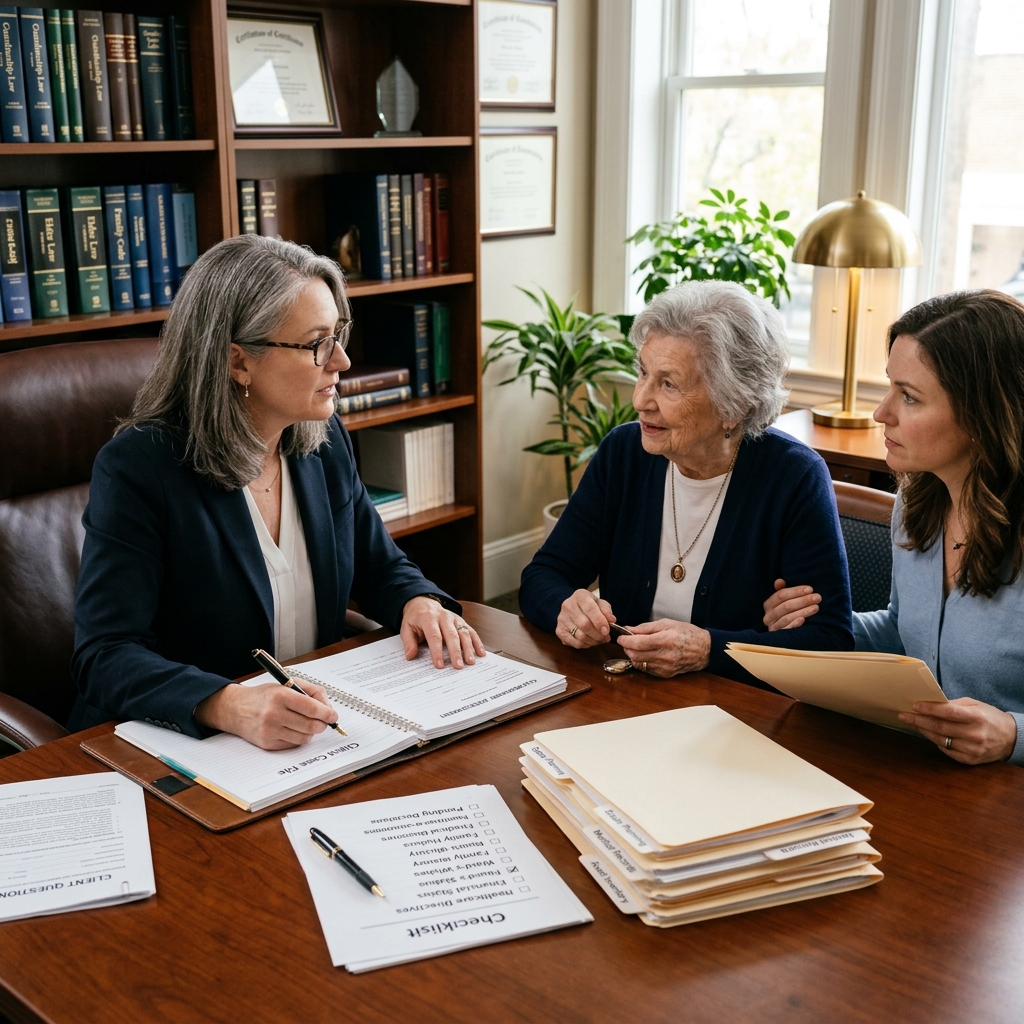
When someone you love can no longer manage their own affairs, pursuing legal guardianship can be a critical step to keep them safe and supported. Guardianship cases are complex, and your lawyer needs clear, accurate information to protect your relative’s rights, comply with court requirements, and guide you through the process effectively.
This article explains what information your guardianship lawyer must know, how that information is used in court, and what you as a proposed guardian should understand about your future responsibilities over the person and the estate.
Understanding Guardianship: Core Concepts Your Lawyer Will Assess
Before filing any papers, your attorney must determine whether guardianship is legally appropriate and ethically justified. Guardianship is a court-supervised legal relationship in which a guardian is appointed to make decisions for an individual (called the ward) who lacks capacity to manage some or all aspects of life.
Why Capacity Matters
Courts do not create guardianships merely because someone is elderly, disabled, or makes poor choices. Instead, judges look for evidence that the person cannot understand information or appreciate consequences well enough to make or communicate informed decisions.
- Cognitive limitations such as dementia, brain injury, or intellectual disability.
- Severe mental health conditions that impair judgment or reality testing.
- Developmental issues or medical conditions that prevent a minor or adult from handling basic affairs.
- Chronic substance use that undermines consistent decision-making.
Your lawyer will ask detailed questions about the proposed ward’s ability to understand finances, health choices, living arrangements, and legal documents, as well as their ability to communicate decisions over time.
Types of Guardianship Your Lawyer Will Consider
To guide you properly, your attorney must understand which type of guardianship you seek and why, because the scope of authority varies significantly.[10]
| Type of Guardianship | Primary Focus | Key Responsibilities |
|---|---|---|
| Guardianship of the Person | Personal care and day-to-day life | Housing, medical care, education, safety, daily support. |
| Guardianship of the Estate | Money and property | Managing assets, paying bills, recordkeeping, court-approved transactions. |
| Full Guardianship | Broad authority over person and/or estate | Comprehensive decision-making where capacity is significantly impaired. |
| Limited Guardianship | Specific areas of decision-making | Narrow powers tailored to what the ward cannot do independently. |
During your first meetings, expect your lawyer to explore whether a limited guardianship could protect the ward while preserving as much independence and as many legal rights as possible.
Personal Background Information Your Lawyer Needs
Accurate factual information is the foundation of every guardianship petition. Your attorney will need a clear picture of the ward’s life, relationships, and needs to draft convincing documents and answer questions in court.
Identity and Relationship Details
Judges want to see who the ward is, who you are, and why you are the right person to serve as guardian. Be prepared to provide:
- Full legal name, date of birth, and current address of the proposed ward.
- Your full name, address, and contact information.
- Your relationship to the ward (e.g., parent, sibling, adult child, other relative, trusted friend).[10]
- Names and contact information for close family members who may have an interest in the case.
- Information about any prior legal arrangements (powers of attorney, health care proxy, trusts).
Courts sometimes prioritize certain relatives, so your lawyer will need to know if multiple people may compete or object to the appointment.[10]
Medical and Functional Information
Medical and functional details help your lawyer demonstrate incapacity and justify the scope of guardianship requested.
- Diagnoses and treatment history from physicians or mental health professionals.
- Recent hospitalizations, major procedures, or psychiatric crises.
- Medication lists, including drugs that affect cognition or mood.
- Reports about whether the ward can manage self-care tasks such as bathing, dressing, preparing meals, and handling medications.
- Any history of exploitation, financial abuse, or unsafe living conditions.
In many jurisdictions, the court will require a medical or psychological evaluation, and your attorney will coordinate obtaining and submitting this evidence.
Financial and Property Information
If you seek authority over the estate, your attorney needs a snapshot of the ward’s finances and assets so they can explain to the court what needs protection.
- Bank accounts, retirement accounts, investment portfolios and cash holdings.
- Real estate and vehicles owned by the ward.
- Insurance policies and beneficiary designations.
- Debts, mortgages, and regular financial obligations.
- Monthly income sources (wages, pensions, public benefits).
This information forms the basis for the initial inventory and later accountings that guardians of the estate must file with the court.
Legal and Procedural Information Your Lawyer Must Gather
Guardianship is not only a factual question about capacity; it is also a structured legal process. Your lawyer needs information to comply with statutory requirements, court rules, and due process protections for the ward.
Existing Legal Protections or Orders
Your attorney must know whether any legal instruments already grant decision-making authority or limit it.
- Durable power of attorney for finances or health care.
- Living wills or advance directives concerning medical treatment.
- Existing court orders from prior guardianships, conservatorships, or custody cases.
- Trusts or representative payee arrangements managing income.
- Criminal or protective orders that affect contact with certain individuals.
These instruments may reduce the need for guardianship or require the court to harmonize overlapping authorities.
Information Relevant to Court-Appointed Representatives
In many states, courts appoint an attorney ad litem or similar representative to advocate for the ward’s preferences and rights.
Your lawyer will anticipate working with:
- Attorney ad litem (AAL) who meets with the ward, reviews records, explains options, and may contest the guardianship if appropriate.
- Guardian ad litem (GAL) or investigator who assesses what arrangement is in the ward’s best interests and reports to the court.
To prepare for these interactions, your attorney will want complete information about family dynamics, potential conflicts, and any allegations of abuse or neglect, so they can respond effectively if the AAL challenges the petition.
Costs, Fees, and Financial Planning for the Case
Guardianship proceedings involve court fees and professional costs. Your lawyer will ask who can pay and whether the ward’s estate can bear the expenses.
- Filing and service fees charged by the clerk of court.
- Fees for the petitioner’s attorney and any attorneys ad litem.
- Medical examination and evaluation costs.
- Bond premiums if a bond is required to protect the ward’s estate.
In some cases, the judge may authorize payment of these expenses from the ward’s funds, so your lawyer must know the estate’s approximate value to advise you accurately.
What Your Lawyer Needs to Know About Your Role as Guardian
Courts look beyond your desire to help; they expect guardians to understand the serious legal duties involved. Your lawyer will assess your suitability and ensure you understand the obligations you are about to assume.
Duties of a Guardian of the Person
A guardian of the person is responsible for the ward’s care, support, and general well-being. According to family law self-help guidance, typical responsibilities include:
- Providing proper care, maintenance, education, and daily support.
- Ensuring food, clothing, shelter, and other basic necessities.
- Authorizing medical, dental, psychiatric, and psychological care, with court approval for certain major procedures.
- Supporting the ward’s opportunities for training, education, and, where appropriate, employment.
- Filing required reports to inform the court about the ward’s condition and living situation.
Your lawyer will explain that you must act in the ward’s best interests while respecting their autonomy and rights as much as their capacity allows.
Duties of a Guardian of the Estate
Guardians of the estate have fiduciary duties, meaning they must manage money and property with strict honesty, care, and loyalty to the ward.[10]
- Protect, preserve, and manage the estate according to law.
- Use estate funds for the ward’s care, support, education, and legal obligations.
- Keep the ward’s funds in separate accounts and avoid mixing them with personal money.
- Prepare inventories of assets and detailed accountings of income and expenses.
- Seek court permission before major transactions such as selling real property or changing beneficiary designations.
Your lawyer will need to know whether you have experience handling finances and whether you understand the importance of recordkeeping and compliance with court orders.
Respecting the Ward’s Rights and Preferences
Modern guardianship law emphasizes limiting restrictions and preserving rights as much as possible. Guidance from state law libraries highlights that wards generally retain rights such as voting, marrying, and maintaining personal relationships unless specifically restricted by the court.
Your attorney will ask about:
- How you plan to involve the ward in decisions they can still understand.
- Whether you can support the ward’s choices about contact with friends and family, consistent with safety.
- How to balance risk with dignity, independence, and respect.
This information helps your lawyer present you as someone who will not unnecessarily restrict the ward’s freedoms.
Information Your Lawyer Uses to Navigate the Court Process
Once your lawyer has gathered the necessary facts, they turn to procedural steps such as drafting petitions, notifying interested parties, and presenting evidence at hearings.
Filing the Petition and Supporting Documents
Your attorney will use the information you provide to prepare a petition explaining:
- Why guardianship is necessary and why less restrictive alternatives are insufficient.
- Which type of guardianship is sought (person, estate, or both).
- Your relationship to the ward and any competing claims to serve as guardian.[10]
- Key medical and functional facts demonstrating incapacity.
They will attach or later submit medical evaluations, financial summaries, and any supporting statements from family or professionals.
Preparing for the Court Hearing
At the guardianship hearing, the judge will question whether a guardianship is truly necessary, whether you are suitable, and whether the proposed orders are tailored appropriately.
Your lawyer will prepare you to explain:
- Specific incidents showing that the ward cannot manage finances, health decisions, or day-to-day life safely.
- Steps already taken to support the ward without a guardianship, and why those measures are insufficient.
- How you plan to fulfill duties as guardian over the person and/or estate.
- How you will respect the ward’s remaining rights and involve them in decisions.
They will also anticipate questions from the court-appointed attorney or investigator and discuss with you how to respond candidly and respectfully.
Practical Tips: How to Help Your Guardianship Lawyer Help You
The quality of information you provide can significantly influence how smoothly your guardianship case proceeds and how quickly the court can make a decision. You can support your lawyer’s work by being thorough, organized, and realistic.
Key Information to Gather Before Your First Meeting
- List of all healthcare providers and recent medical reports.
- Summary of the ward’s daily routine and areas where they struggle.
- Estimated value of assets and a list of major financial accounts.
- Copies of any powers of attorney, advance directives, or prior court orders.
- Names and contact details of close family members and any known objectors.
Questions to Ask Your Guardianship Lawyer
- What type and scope of guardianship best fits the ward’s needs?
- What evidence will the court expect to see to prove incapacity?
- How often will I need to file reports or accountings with the court?
- What decisions require specific court approval before I act?
- What are the estimated costs and timelines for the case, and who pays them?
Discussing these questions early helps align expectations and ensures your lawyer is fully informed about your capacity and willingness to meet guardianship obligations.
Frequently Asked Questions (FAQ)
1. Why does my guardianship lawyer ask so many personal questions?
Your lawyer must present a complete picture of the ward’s needs and your suitability to the court. Detailed medical, financial, and family information allows the judge to decide whether guardianship is necessary and, if so, how broad it should be. Without this information, the court may delay or deny your petition.
2. Do I still need guardianship if there is already a power of attorney?
A power of attorney may be sufficient in some cases, but it can be revoked by a person who still has legal capacity, and it may not cover all decisions. Your lawyer will review existing documents to determine whether they adequately protect the ward or whether court supervision through guardianship is still needed.
3. What happens if family members disagree about who should be guardian?
When relatives compete or object, the court chooses the person it considers best qualified and most likely to act in the ward’s best interest.[10] Your lawyer will need full information about these conflicts to prepare for possible contested hearings and to demonstrate why your appointment serves the ward.
4. Will the ward lose all their rights under guardianship?
No. Modern guardianship law emphasizes preserving rights wherever possible and using limited guardianships when appropriate. Wards often retain rights such as voting, marrying, and maintaining social relationships unless the court explicitly restricts those rights. Your lawyer will tailor the request so that only truly necessary powers are granted.
5. How long does guardianship last?
Guardianship typically continues until the ward regains capacity, dies, or, in the case of a minor, reaches adult age. Courts may also terminate or modify guardianship if circumstances change. Your lawyer needs ongoing information about the ward’s condition to advise if a review or modification is appropriate.
References
- Powers and Duties of a Guardian — Family Law Self-Help Center. 2023-01-01. https://www.familylawselfhelpcenter.org/self-help/guardianship/overview/powers-and-duties-of-a-guardian
- Guardianship Responsibilities — Texas Guardianship Association. 2022-06-01. https://www.texasguardianship.org/guardianship-responsibilities/
- Rights & Responsibilities – Guardianship — Texas State Law Library. 2022-05-01. https://guides.sll.texas.gov/guardianship/rights-responsibilities
- Guardianship — Weaver Legal. 2021-09-01. https://weaverlegal.net/guardianship
- Responsibilities of a Guardian — Wilkinson & Finkbeiner Family Law. 2021-08-01. https://www.wkfamilylaw.com/practice-areas/guardianship-overview/guardianship-what-are-a-guardians-duties-and-responsibilities/
- Guardianship — Texas State Law Library Guide. 2020-01-01. https://guides.sll.texas.gov/guardianship
Similar Articles








Read full bio of Sneha Tete


