
Driving Without a Side Mirror: Legal Risks and Safety Issues
Uncover state-specific laws, federal standards, and safety hazards of operating a vehicle missing a side mirror—know your rights and risks.
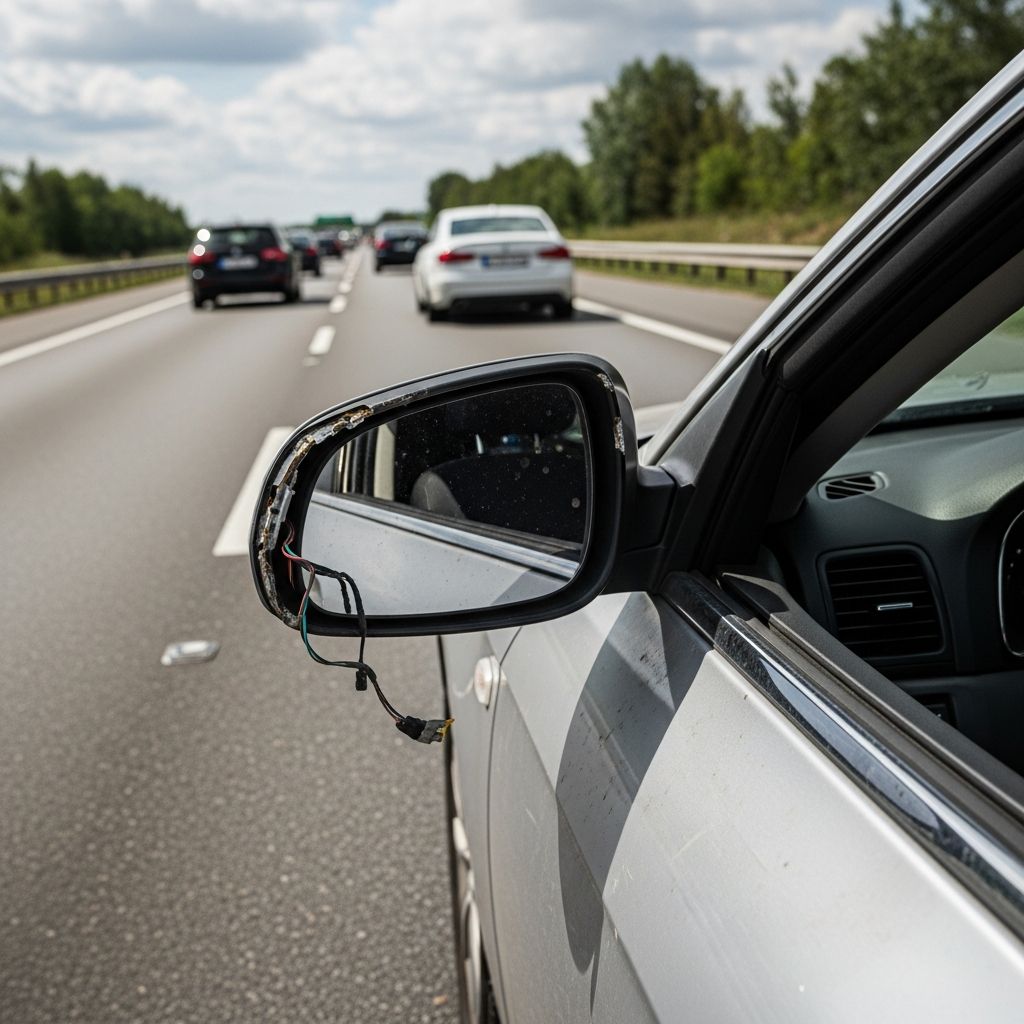
Vehicle mirrors are critical for safe driving, providing essential visibility to the rear and sides. But what happens when a side mirror breaks or goes missing? Legality varies widely by location, blending federal standards with state-specific rules. This article delves into the regulations, potential penalties, safety implications, and steps drivers can take to stay compliant and protected on the road.
Federal Foundations: The Baseline for Mirror Requirements
The starting point for all U.S. mirror laws is the Federal Motor Vehicle Safety Standard (FMVSS) No. 111, which mandates that passenger cars must offer a clear view to the rear. This can be achieved through an interior rearview mirror or, if that’s inadequate or obstructed, at least one exterior mirror on the driver’s side. This federal rule sets the minimum bar, ensuring drivers have visibility for approximately 200 feet behind the vehicle.
States build on this foundation, often requiring additional mirrors. For instance, if cargo, trailers, or tinting blocks the rearview, both left and right side mirrors become necessary in many jurisdictions. Understanding this interplay is key, as non-compliance can lead to traffic stops, fines, or worsened liability in accidents.
State-by-State Breakdown: Where One Mirror Suffices and Where It Doesn’t
Mirror laws aren’t uniform across the U.S., creating a patchwork of requirements. Most states demand at least the driver’s side (left) mirror plus either the interior rearview or passenger-side mirror. A handful insist on both exterior mirrors regardless.
Here’s a comparative table of select state requirements:
| State | Left Side Mirror | Right Side Mirror | Rearview Mirror | Special Conditions |
|---|---|---|---|---|
| Wisconsin | Required (or functional equivalent) | Optional if rearview works | Required for 200 ft view | Heavy traffic areas increase risks |
| California | Required | Required if rear obstructed | One of two mirrors | Buses/towing need both |
| Texas | Required if interior inadequate | Optional | Primary if unobstructed | Class C misdemeanor fines up to $200 |
| Georgia | Required | Optional unless blocked | Required unless exterior covers | Blind spot checks mandatory |
| Maine/Mississippi | Required if rear obstructed | Both for towing/cargo | Obstructed triggers exterior | Trailer-specific rules |
This table highlights flexibility in many states but underscores risks in others. Always consult your state’s Department of Motor Vehicles (DMV) or transportation code for the latest, as local ordinances may add layers.
Common Scenarios: When Missing a Mirror Triggers Enforcement
- Broken Driver’s Side Mirror: Almost universally problematic, as federal law prioritizes it when rearview fails. Officers can pull you over based on visible equipment defects.
- Passenger-Side Mirror Absent: Legal in most states if rearview provides clear sightlines, but risky for lane changes.
- Obstructed Rearview: Triggers mandatory side mirrors, especially for trucks or loaded vehicles.
- Towing or Commercial Use: Dual exterior mirrors often required by both federal and state regs.
In practice, police discretion plays a role. A dangling or shattered mirror is a clear pretext for a stop, potentially leading to further inspections.
Penalties and Citations: Fines, Points, and Long-Term Impacts
Driving without required mirrors is typically a non-criminal infraction, but consequences add up. Fines range from $50 to $200+, with points on your license in states like Texas (Class C misdemeanor). Repeat offenses escalate to court appearances or license suspensions.
Beyond tickets, insurance hikes are common. Insurers view missing mirrors as negligence, potentially increasing premiums by 20-50% or denying claims post-accident if visibility contributed to fault. In crash scenarios, courts may assign higher liability to the impaired driver, affecting settlements.
Safety First: Why Mirrors Matter Beyond the Law
Even where legal, skipping a side mirror compromises safety dramatically. Mirrors eliminate blind spots, crucial for merging, overtaking, and parking. Without them, reaction times double in dense traffic, per visibility studies. Modern aids like cameras help, but they’re no substitute for direct views, especially in rain or at night.
Statistics from the National Highway Traffic Safety Administration (NHTSA) link poor rear visibility to thousands of annual collisions. Driver error from blind spots accounts for 10-15% of lane-change crashes—risks amplified sans mirrors.
Vehicle Inspections and Roadworthiness Standards
Annual safety inspections in 37 states flag missing mirrors as failures, blocking registration renewals. Even in non-inspection states, resale value drops, and buyers wary of defects. Proactive replacement ensures compliance and peace of mind.
Practical Fixes: Repair, Replace, or Temporary Solutions?
Temporary fixes like tape or makeshift covers rarely pass muster and may worsen citations. Professional replacement costs $100-400, depending on vehicle make and features (e.g., heated or auto-dimming). Many auto shops offer same-day service.
For emergencies:
- Avoid highways; stick to low-speed roads.
- Signal early and shoulder-check manually.
- Carry a passenger for blind-spot spotting.
Invest in quality OEM or aftermarket mirrors with blind-spot indicators for enhanced safety.
Insurance and Liability: Post-Accident Repercussions
In collisions, a missing mirror can shift fault. Adjusters scrutinize equipment, potentially deeming you 100% at fault for failing to maintain visibility. Personal injury claims suffer too, as defendants argue contributory negligence. Document repairs promptly to mitigate.
Evolving Tech: Cameras and the Future of Visibility
Emerging vehicles integrate camera-mirror systems (CMS), compliant with updated FMVSS rules since 2021. These digital displays match or exceed traditional mirrors, potentially reshaping laws. However, legacy vehicles must stick to glass.
Frequently Asked Questions (FAQs)
Is it ever okay to drive without any side mirrors?
Only if your rearview provides unobstructed 200-foot rear visibility and state law allows—no states permit zero mirrors outright.
What if my mirror is cracked but still usable?
Officers assess functionality; distorted views often lead to citations. Replace ASAP.
Do motorcycles need side mirrors?
Yes, at least one per federal standards, with states varying.
Can I get a ticket for a loose mirror?
Yes, if it impairs safe operation—secure it immediately.
How quickly must I fix a broken mirror after a ticket?
Typically 7-30 days; check court orders to avoid escalation.
Staying Compliant: Actionable Steps for Drivers
To avoid pitfalls:
- Review your state’s vehicle code annually.
- Inspect mirrors pre-trip, especially post-minor collisions.
- Budget for repairs; DIY kits exist but verify legality.
- Use apps tracking local traffic laws.
Proactive maintenance prevents legal headaches and keeps roads safer for all.
References
- Is It Legal to Drive Without a Side Mirror in Wisconsin? — Affordable Auto Glass WI. 2025-11-12. https://affordableautoglasswi.com/2025/11/12/driving-without-side-mirror-wisconsin/
- Is it Illegal to Drive Without a Side Mirror? — CarParts.com. N/A. https://www.carparts.com/blog/is-it-illegal-to-drive-without-a-side-mirror/
- Legally Speaking, Do You Need a Side Mirror on Your Car? — Daniel Stark Injury Lawyers. N/A. https://www.danielstark.com/blog/legally-speaking-do-you-need-a-side-mirror-on-your-car/
- Illegal to Drive Without a Side Mirror in Georgia — Ted Law Firm. N/A. https://www.tedlaw.com/driving-without-side-mirror-georgia/
- Federal Motor Vehicle Safety Standards; Rear Visibility — National Archives (eCFR). 2023-10-01. https://www.ecfr.gov/current/title-49/subtitle-B/chapter-V/part-571/subpart-B/section-571.111
- Traffic Safety Facts: Blind Spot Related Crashes — NHTSA (U.S. DOT). 2022-01-01. https://crashstats.nhtsa.dot.gov/Api/Public/ViewPublication/813290
Similar Articles








Read full bio of medha deb




