
Driver Assistance Tech: Safety Gains and Risks
Unpacking the real-world safety of advanced driver assistance systems: impressive crash reductions meet persistent limitations and driver overreliance.
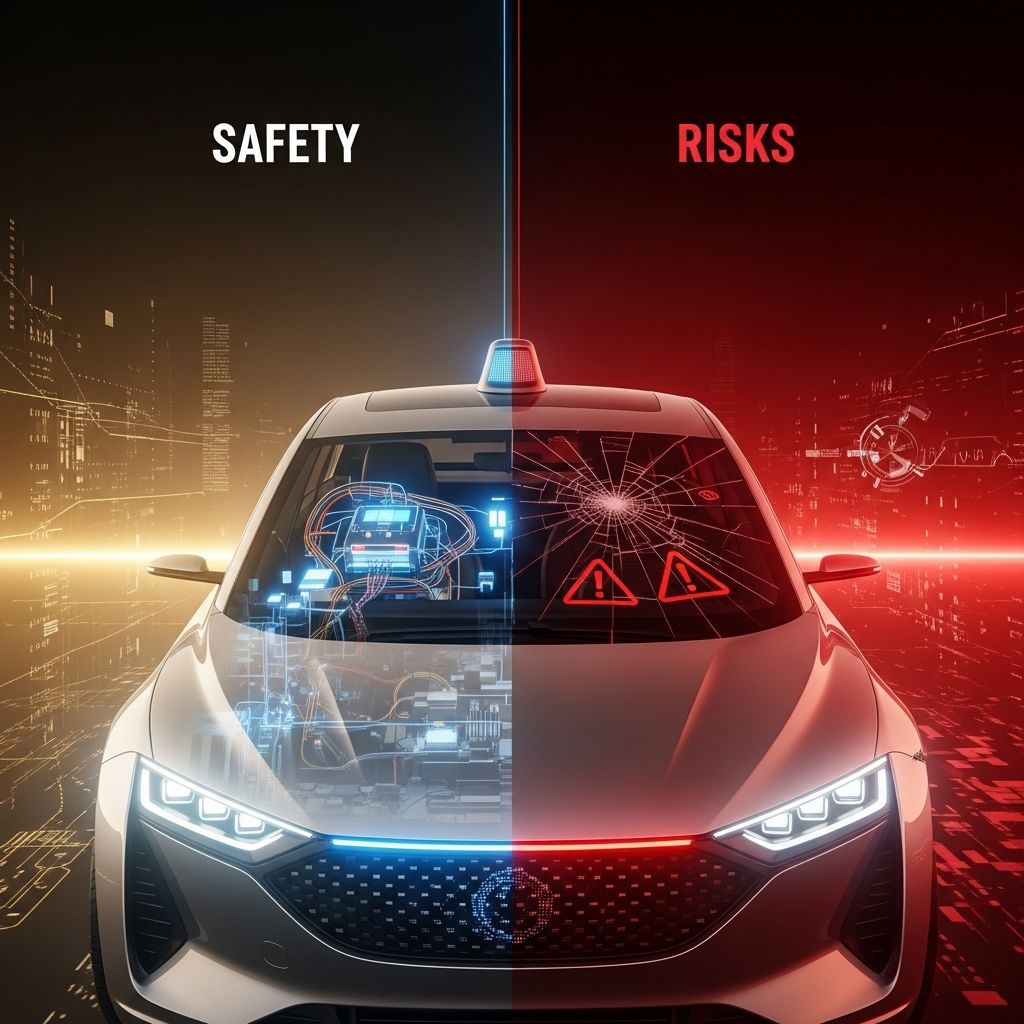
Modern vehicles increasingly incorporate advanced driver assistance systems (ADAS), designed to enhance road safety through automation of routine tasks like braking, steering, and speed control. These technologies, ranging from basic alerts to semi-autonomous features, aim to mitigate human error—the primary cause of over 90% of crashes—by intervening faster than drivers can react. However, real-world performance reveals a mixed picture: substantial reductions in certain collision types alongside notable failures and unintended behavioral shifts among drivers.
Core Technologies Powering Safer Drives
ADAS relies on a network of cameras, radar, lidar, and AI algorithms to monitor surroundings and execute preventive actions. Key systems include:
- Automatic Emergency Braking (AEB): Detects impending collisions and applies brakes autonomously, slashing rear-end crashes by 25-50% according to field studies.
- Lane Departure Prevention: Uses lane markings to steer the vehicle back if drifting occurs, cutting injury crashes by up to 21% in older driver cohorts.
- Adaptive Cruise Control (ACC): Maintains safe following distances by modulating speed, ideal for highway congestion.
- Blind Spot Monitoring and Rear Cross-Traffic Alert: Warns of vehicles in hidden zones, reducing lane-change incidents by 14%.
These features operate at SAE Levels 1-2 automation, requiring constant driver supervision, unlike higher-level full autonomy not yet consumer-available.
Proven Crash Reductions from Real-World Data
Insurance and safety organizations have quantified ADAS impacts through claim analyses and naturalistic driving studies. The Insurance Institute for Highway Safety (IIHS) Highway Loss Data Institute examined 2015-2023 Mazda models, revealing stacked benefits from feature bundles.
| Feature Bundle | Property Damage Liability Reduction | Bodily Injury Liability Reduction |
|---|---|---|
| Basic Front AEB | 13% | 9% |
| Comprehensive (AEB + Pedestrian Detection + Rear AEB + Lane Prevention) | 39% | 21% |
| Blind Spot + Rear Cross-Traffic | 10% | 13% |
Comprehensive packages yielded the largest drops, particularly in parking-lot fender-benders prevented by rear AEB. Standalone pedestrian-detecting AEB further bolstered vehicle-to-vehicle crash avoidance. NHTSA affirms active safety systems anticipate dangers beyond human capability, positioning them as vital for injury prevention.
Peer-reviewed analyses corroborate: AEB alone curtails total road crashes 6-18% and fatalities 7%, with rear-end collisions dropping most dramatically. Lane-keeping aids excel against drowsiness-related departures, a factor in 1.2 million annual global fatalities.
System Limitations and Failure Modes
Despite gains, ADAS is not infallible. Sensors falter in adverse weather, faded markings, or complex scenarios like construction zones. A AAA study logged issues every 8 miles over 4,000 miles of testing: lane drifting near guardrails, sudden disengagements of braking/steering, and handover surprises to unprepared drivers.
IIHS rated 14 systems from nine makers in 2024; 11 failed due to inadequate driver monitoring, allowing hands-off highway driving that fostered inattention. Systems like Tesla’s Full Self-Driving and others permitted eyes-off behavior, heightening risks.
- Phantom braking: Unprompted stops from misread shadows or overpasses.
- Sensor overload: Fails in rain, fog, or glare.
- Edge cases: Struggles with cyclists, debris, or sudden merges.
The Overreliance Trap: Behavioral Backfire
Paradoxically, ADAS can erode vigilance. Drivers, lulled by tech, disengage mentally—checking phones or nodding off—amplifying crash severity upon failures. Studies warn of ‘automation complacency,’ where perceived safety invites riskier habits akin to speeding post-seatbelt mandates.
Drowsiness monitors (in-cabin DMS) cut events and boost performance in limited trials, but widespread adoption lags, and efficacy varies by population. Without robust engagement checks, partial automation (Level 2) proves riskier than attentive manual driving in some metrics.
Regulatory Landscape and Legal Recourse
NHTSA oversees ADAS via federal standards, mandating AEB in new passenger cars by 2029. Yet, no uniform driver-monitoring requirements exist, leaving gaps. IIHS pushes for hands-on, eyes-on criteria in ratings.
When systems fail, liability splits: manufacturers for defects, drivers for misuse. Product liability claims hinge on proving design flaws (e.g., inadequate warnings) or failures to warn of limits. Crashes from disengagements have spurred lawsuits against Tesla, Ford, and others, with settlements emphasizing overpromising ‘self-driving’ capabilities.
Victims should document black-box data, sensor logs, and eyewitnesses. State laws vary; some impose stricter duties on ADAS-equipped vehicles.
Future Horizons: Toward Reliable Autonomy
Level 3+ systems, where vehicles handle all dynamics sans input (under strict conditions), promise paradigm shifts by excising human error. Current ADAS evolves via AI upgrades: better pedestrian/cyclist detection, V2V communication. HLDI notes compounding benefits as bundles mature.
Challenges persist: ethical dilemmas (trolley problems), cybersecurity, and equity (rural sensor efficacy). Regulators demand transparency in crash reporting; NHTSA’s standing AV docket tracks progress.
Frequently Asked Questions
Do driver assistance systems make cars crash-proof?
No. They reduce specific risks (e.g., rear-ends by 50%) but fail in weather, edges, or without supervision, per IIHS and AAA data.
Who is liable in an ADAS-related crash?
Typically shared: drivers for inattention, makers for defects/mislabeling. Courts assess warnings and usage.
Should I buy a car with ADAS?
Yes, for proven features like AEB (39% property claims drop), but stay engaged—treat as aid, not autopilot.
How effective is AEB against pedestrians?
Updated versions significantly cut strikes; bundled with rear AEB, they slash low-speed claims dramatically.
Are Tesla’s systems safer than others?
IIHS tests show mixed results; many including Tesla fail driver monitoring, risking complacency.
References
- Safety benefits stack up from driver assistance features — Insurance Institute for Highway Safety (IIHS). 2026-03-26. https://www.iihs.org/news/detail/safety-benefits-stack-up-from-driver-assistance-features
- Are active driving assistance systems dangerous? — Zausmer & August, P.C. (legal analysis citing AAA study). N/A. https://zbhlaw.com/blog/driving-assistance-failures/
- Automated Vehicle Safety — National Highway Traffic Safety Administration (NHTSA). Updated 2025. https://www.nhtsa.gov/vehicle-safety/automated-vehicles-safety
- The benefits and pitfalls of advanced driver assistance systems for managing drowsiness-related crashes — PMC/NCBI (peer-reviewed). 2024. https://pmc.ncbi.nlm.nih.gov/articles/PMC11725507/
- Driving Assistance Systems May Create More Risks Than They Solve — Business Insider (citing IIHS 2024 study). 2024-03. https://www.businessinsider.com/driving-assistance-systems-may-create-more-risks-than-solve-study-2024-3
Similar Articles








Read full bio of Sneha Tete




