
The Erosion of Digital Privacy: Streaming and the VPPA
How shifting from VHS to streaming changed digital privacy laws.
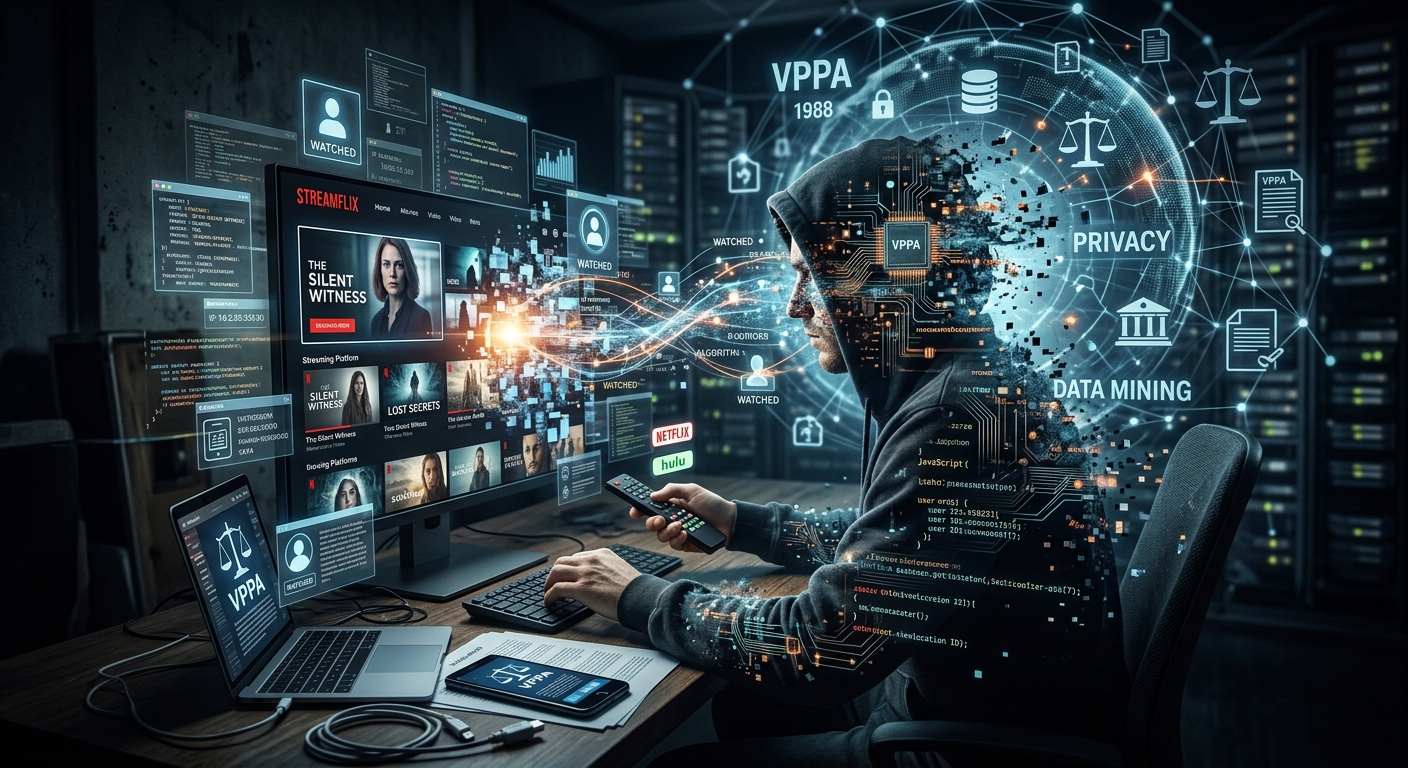
In an era defined by extreme connectivity, the boundary between our private interests and our public personas has become increasingly porous. Every click, search, and video stream leaves a digital footprint, creating a comprehensive dossier of our personal lives. Among the most intimate of these digital trails is our media consumption—the movies, documentaries, and television shows we choose to watch in the privacy of our homes. Historically, viewing habits were recognized as deeply personal data, shielded from public view by strict federal legislation. However, the rise of digital streaming giants and the allure of social media integration have fundamentally transformed the legal landscape governing video privacy.
What was once a stringent requirement for explicit, case-by-case consent has gradually eroded, replaced by streamlined legal mechanisms designed to facilitate frictionless data sharing. This shift raises profound questions about consumer rights, digital autonomy, and the true cost of our interconnected convenience. By examining the history and evolution of video privacy laws in the United States, we can better understand how corporate interests and technological advancements continuously challenge our fundamental right to digital privacy, and what users can do to reclaim control over their viewing habits.
The Surprising Origins of the Video Privacy Protection Act
To fully grasp the current state of digital privacy, one must look back to the unexpected political scandal that catalyzed the creation of the Video Privacy Protection Act (VPPA). In 1987, President Ronald Reagan nominated Judge Robert H. Bork to the United States Supreme Court. The nomination process was highly contentious and deeply polarized. Amidst the intense media scrutiny, a Washington D.C.-based weekly newspaper obtained and published a list of 146 video cassettes that Judge Bork and his family had rented from a local video store. The publication of this list sparked widespread bipartisan outrage, highlighting a critical gap in consumer privacy protections.
Lawmakers across the political spectrum recognized a chilling reality: if a prominent judicial nominee’s private rental history could be so easily exposed, everyday citizens were equally vulnerable. In response to this blatant invasion of privacy, Congress moved with uncharacteristic speed. The Video Privacy Protection Act was drafted, passed, and signed into law by President Reagan in 1988, becoming officially codified at 18 U.S.C. 2710. The law was celebrated as a landmark achievement. Its core mechanism was simple yet powerful: it prohibited a “video tape service provider” from disclosing personally identifiable information concerning any consumer without their explicit, written consent. Crucially, the VPPA mandated that this consent had to be obtained on a case-by-case basis, ensuring that individuals maintained granular control over their personal data.
From VHS to Streaming: A Massive Technological Shift
For over two decades, the VPPA effectively safeguarded consumer privacy in the physical realm of brick-and-mortar video rental stores. However, the legislation was fundamentally a product of its time, explicitly referencing “prerecorded video cassette tapes or similar audio visual materials.” As the new millennium progressed, the technological landscape underwent a seismic shift. The physical video store gave way to digital distribution platforms, and physical rentals were replaced by on-demand internet streaming. This transition brought massive convenience but also introduced entirely new business models reliant on user data.
With this digital transition came an explosion of social media networks that thrived on user engagement and the continuous sharing of personal experiences. Tech companies realized that integrating media consumption with social networking could drive unprecedented engagement. The concept of “frictionless sharing” emerged—a design philosophy where user actions, such as listening to a song or reading an article, were automatically broadcasted to their social media feeds without requiring manual input for each action. However, the VPPA’s stringent requirement for case-by-case written consent made the automatic, frictionless sharing of video content illegal, posing a significant hurdle for tech platforms aiming to capitalize on social integration.
The “Netflix Amendment” and the Push for Blanket Consent
The tension between the strict mandates of the 1988 VPPA and the ambitions of modern streaming platforms culminated in a massive lobbying effort spearheaded by major digital video providers. By 2011, industry giants, most notably Netflix, were eager to launch seamless integrations with social platforms like Facebook. The goal was to create applications that would automatically publish a user’s entire viewing history to their social network, theoretically enhancing content discovery among peers. Faced with the strict limitations of the existing privacy law, corporate lobbyists aggressively pushed for a legislative update.
The proposed legislation, often referred to as the “Netflix Amendment” (initially debated as H.R. 2471 and later passed as H.R. 6671), sought to fundamentally alter the consent requirements of the VPPA. Proponents argued that the law needed modernizing to reflect the realities of the internet age, claiming that consumers actually desired the ability to seamlessly share their viewing habits with friends. Despite significant pushback from privacy advocates and civil liberties organizations, the tech industry’s efforts succeeded. In early 2013, the Video Privacy Protection Act Amendments Act of 2012 was officially signed into law, effectively rolling back the strict protections that had been in place for twenty-five years.
Understanding the Shift in Privacy Protections
To understand the magnitude of this legislative shift, it is helpful to contrast the original framework with the updated rules. The transition from specific, case-by-case permission to long-term blanket consent fundamentally changed the balance of power between the consumer and the corporation.
| Feature | Original VPPA (1988) | Amended VPPA (2012) |
|---|---|---|
| Nature of Consent | Case-by-case basis explicitly required for each disclosure. | Blanket consent allowed for all viewing activity globally. |
| Duration of Consent | Valid only for the specific disclosure requested at that moment. | Valid for an ongoing, continuous period of up to two years. |
| Method of Consent | Written consent, historically requiring physical signatures. | Electronic consent via internet platforms (e.g., clicking “I Agree”). |
| Primary Beneficiary | The individual consumer, maximizing personal data privacy. | Streaming platforms and social networks, maximizing data flow. |
The Profound Privacy Implications of “Frictionless” Data Sharing
The shift toward blanket consent carries deep and often poorly understood implications for digital privacy. While proponents of the amendment championed the convenience of frictionless sharing, privacy advocates warned that it paved the way for the creation of incredibly sensitive digital dossiers. What a person chooses to watch can reveal a vast amount of intimate information about their inner life. Documentaries on controversial political subjects, films exploring sexual orientation, or instructional videos concerning specific medical and health conditions are all profoundly private matters. When this data is continuously aggregated through automated sharing mechanisms, it allows corporations to construct detailed behavioral profiles of their users.
Furthermore, the mechanism of electronic blanket consent preys upon “consent fatigue”—a well-documented phenomenon where internet users, overwhelmed by the sheer volume of terms and conditions they encounter daily, simply click “Accept” without reading or understanding the consequences. By bundling the request to share viewing habits into a lengthy, convoluted privacy policy or a broad social media integration prompt, companies successfully extract consent that is legally binding but scarcely informed. Once this data enters the ecosystem of a massive social network or a third-party data broker, the user loses virtually all control over how their viewing habits are utilized, analyzed, or monetized.
Broader Lessons for Digital Consumer Rights
The evolution of the Video Privacy Protection Act serves as a vital case study in the broader struggle for digital consumer rights in the United States. Unlike the European Union, which provides comprehensive data protection through overarching regulations like the General Data Protection Regulation (GDPR), the U.S. relies heavily on a patchwork of sector-specific privacy laws. When foundational laws like the VPPA are successfully amended to favor corporate interests and data-sharing over individual privacy, it sets a concerning precedent for other digital rights. It suggests that our civil liberties are negotiable commodities, easily traded away for marginal improvements in application functionality and targeted advertising.
To navigate this challenging landscape, internet users must cultivate a proactive approach to their personal digital privacy. This requires moving beyond passive content consumption and actively managing digital data permissions. Consumers must regularly audit the privacy settings on their streaming applications and connected social media accounts, revoking permissions that allow for continuous background data sharing. While the modern law permits companies to seek two-year blanket consent, it crucially also mandates that users must be provided with a clear and conspicuous method to opt-out or withdraw that consent at any time. Recognizing and exercising these rights is currently the most effective defense against the slow erosion of our digital boundaries.
Frequently Asked Questions (FAQs)
What exactly is the Video Privacy Protection Act (VPPA)?
The Video Privacy Protection Act is a federal statute passed in 1988 (codified at 18 U.S.C. 2710) designed to prevent video service providers from disclosing a consumer’s personally identifiable rental records without explicit written consent. It was originally enacted after a newspaper published the private video rental history of Supreme Court nominee Robert Bork.
How did the 2012 amendment change the original law?
The Video Privacy Protection Act Amendments Act of 2012 updated the law to allow for electronic, blanket consent. Instead of requiring explicit permission for each individual video shared, streaming platforms can now obtain a user’s consent to automatically share their entire viewing history on social media networks for up to two years.
Can streaming platforms legally sell my watch history to third parties?
Under the VPPA, streaming platforms cannot legally share or sell your specific, personally identifiable watch history to third parties without obtaining your informed consent. However, by blindly agreeing to updated Terms of Service or connecting a social media account to your streaming profile, you may have unknowingly provided this legal blanket consent.
How can I best protect my video viewing privacy today?
The most effective way to protect your privacy is to avoid linking your streaming accounts to your social media profiles. Additionally, you should frequently review the privacy and data-sharing settings within your streaming applications and explicitly opt out of any behavioral tracking, social sharing, or third-party data monetization features.
References
- 18 U.S.C. 2710 – Wrongful disclosure of video tape rental or sale records — Office of the Law Revision Counsel. 2024. https://uscode.house.gov/view.xhtml?req=granuleid:USC-prelim-title18-section2710&num=0&edition=prelim
- Public Law 112-258 – Video Privacy Protection Act Amendments Act of 2012 — U.S. Government Publishing Office. 2013-01-10. https://www.govinfo.gov/app/details/PLAW-112publ258
- U.S. House approves changes to Video Privacy Protection Act — Los Angeles Times. 2012-12-18. https://www.latimes.com/business/la-xpm-2012-dec-18-la-fi-tn-house-approves-vppa-20121218-story.html
- The Video Privacy Protection Act: Protecting Viewer Privacy in the 21st Century Hearing — Senate Judiciary Committee. 2012-01-31. https://www.govinfo.gov/content/pkg/CHRG-112shrg76625/html/CHRG-112shrg76625.htm
Similar Articles








Read full bio of medha deb


