
Defending the Fourth Amendment: Why Calling Congress Matters
Why calling your lawmakers is vital to stop unwarranted digital surveillance.
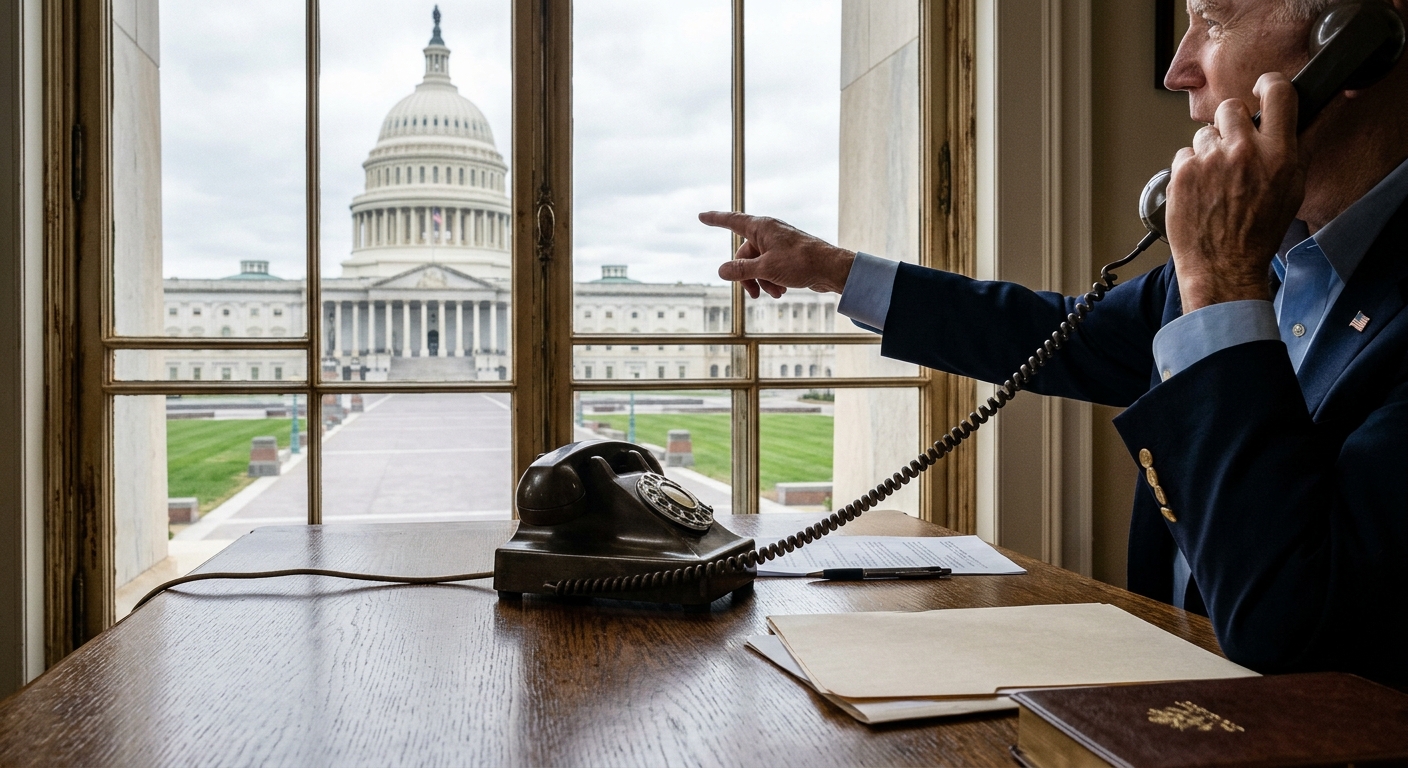
The Invisible Struggle for Digital Privacy
In an era where our digital footprints are permanently etched into massive servers and remote data centers, the friction between national security imperatives and fundamental constitutional privacy rights has never been more pronounced. For decades, the invisible machinery of government surveillance has steadily expanded, frequently bypassing the strict judicial oversight traditionally demanded by the Constitution. While the architecture of digital intelligence gathering grows increasingly complex, the most effective tool for everyday citizens to constrain it remains remarkably analog. Picking up the telephone and placing a direct call to a senator or representative is a cornerstone of grassroots advocacy. It is an action that cuts through the noise of Washington, forcing elected officials to confront the immediate concerns of their constituents.
The narrative of digital privacy is often framed as a losing battle against technological inevitability. However, history demonstrates that legislative pushback is entirely possible when public pressure reaches a boiling point. The intersection of civil liberties and national security is not a domain exclusively reserved for constitutional scholars or federal judges. It is a battleground where public opinion, channeled through coordinated communication, can alter the trajectory of sweeping intelligence bills. Understanding the history of domestic surveillance and the mechanics of political pressure is essential for anyone wishing to defend their right to privacy in the twenty-first century.
The Roots of the Modern Surveillance Crisis
The current landscape of domestic intelligence gathering did not materialize overnight. Its most significant modern expansions were forged in the crucible of post-9/11 anxiety, where the desire to preempt future tragedies often eclipsed long-standing civil liberties protections. A focal point of this era was the debate surrounding the Foreign Intelligence Surveillance Act (FISA) and its subsequent modifications. Originally enacted in 1978 to curb the abuses of the Watergate era, FISA established a secret court system designed to oversee and authorize the electronic surveillance of suspected foreign agents. For a time, it served as a delicate balance between intelligence needs and civil rights.
Before the pivotal changes in 2008, the Protect America Act of 2007 served as a temporary stopgap that broadly expanded the government’s ability to intercept communications without a traditional warrant, provided the target was reasonably believed to be outside the United States. When this temporary measure expired, the intelligence community heavily lobbied Congress to make these expanded powers permanent. This push culminated in the FISA Amendments Act of 2008. This controversial piece of legislation effectively legalized the warrantless wiretapping programs that had been operating in the shadows for years.
More alarmingly, it granted retroactive immunity to major telecommunications companies that had actively cooperated with the government’s extrajudicial data collection efforts. By shielding these corporations from pending civil lawsuits, the government effectively closed the courtroom doors to citizens seeking redress for the violation of their privacy. This concept of “telecom immunity” set a dangerous precedent, signaling that private entities could assist in circumventing the Fourth Amendment without fear of legal consequence, provided their actions were later sanctioned by legislative fiat.
The Illusion of Political Cover
When controversial bills like the FISA Amendments Act move through Congress, lawmakers frequently engage in complex procedural maneuvering to insulate themselves from public backlash. This often takes the form of splitting bills or offering symbolic amendments. For example, a senator might vote for an amendment designed to strip telecom immunity from a broader surveillance bill, knowing full well that the amendment will fail due to a lack of broader support. Subsequently, that same senator can vote in favor of the final, unamended bill.
This strategy provides them with what is known in Washington as “political cover.” They can return to their constituents and claim they fought valiantly against corporate immunity, while simultaneously boasting to national security advocates that they voted to expand intelligence-gathering capabilities to keep the nation safe.
For constituents, understanding this legislative sleight of hand is critical. It underscores why vague expressions of support for civil liberties in press releases are insufficient. Grassroots pressure must demand unequivocal action and clear, definitive voting records. When advocacy organizations urge citizens to call their senators “now,” it is usually a tactical maneuver to disrupt these carefully orchestrated political narratives. A sudden influx of angry constituent calls forces lawmakers to reevaluate the political calculus of their procedural votes. It strips away the illusion of consensus and replaces it with the stark reality of voter accountability.
Why the Telephone is Mightier Than the Keyboard
In an age of instant digital communication, it is tempting to believe that signing an online petition, firing off a quick email, or posting a fiery message on social media is sufficient to enact political change. However, congressional offices operate on a distinct hierarchy of communication, and the telephone still reigns supreme.
Why are phone calls so uniquely effective? The answer lies in the logistics and daily rhythm of a congressional office. Emails and form letters can be easily filtered, batched, and responded to with automated, pre-written templates. They require minimal staff time and create little to no disruption to the workflow. A ringing telephone, on the other hand, cannot be ignored. It requires a live human being—usually a staff assistant or legislative intern—to stop what they are doing, answer the line, actively listen to the constituent’s concern, and manually log the interaction into a database.
When a coordinated grassroots campaign results in hundreds or thousands of calls flooding a representative’s office, it creates an undeniable operational bottleneck. Staffers are forced to report the surge to the lawmaker’s legislative director or chief of staff immediately. This tangible, disruptive metric is a powerful indicator of voter intensity. Research into congressional communication strategies consistently shows that a relatively small number of personalized phone calls—sometimes fewer than fifty on a specific, niche issue—can prompt an undecided legislator to take notice and potentially alter their stance. The effort required to make a call demonstrates a level of commitment that an online click simply cannot match.
Comparing Constituent Communication Methods
| Communication Method | Office Disruption Level | Staff Attention Required | Overall Effectiveness |
|---|---|---|---|
| Direct Phone Call | High | Immediate (Live conversation & logging) | Very High – Forces immediate tally and reporting. |
| Personalized Letter | Medium | Delayed (Mail screening & manual reading) | High – Shows immense constituent dedication. |
| Form Email/Petition | Low | Minimal (Filtered by automated algorithms) | Low – Easily batched and ignored. |
| Social Media Mention | Very Low | Variable (Managed by digital team, not policy staff) | Very Low – Hard to verify constituent status. |
The Fourth Amendment in the Digital Era
The stakes of this grassroots advocacy are nothing less than the survival of the Fourth Amendment in the digital age. Written in the late eighteenth century, the Fourth Amendment protects citizens against “unreasonable searches and seizures,” requiring government agents to obtain a warrant based on probable cause before rummaging through a person’s “houses, papers, and effects.”
Applying this localized, physical framework to the sprawling realities of modern data collection has proven immensely challenging. Today, our “papers and effects” are no longer locked in wooden desk drawers; they reside on remote cloud servers, travel rapidly through fiber-optic cables, and are constantly generated by the smart devices in our homes and pockets. Surveillance programs authorized under provisions like Section 702 of FISA allow intelligence agencies to sweep up vast amounts of digital communication. While ostensibly targeting foreigners abroad, these dragnet operations inevitably capture the emails, text messages, and internet search histories of countless innocent Americans.
Legal scholars and privacy advocates increasingly point to the “Mosaic Theory” of the Fourth Amendment to explain the modern threat. This theory argues that while the collection of a single piece of digital metadata might not constitute a privacy violation in isolation, the aggregate collection of a person’s digital life over an extended period paints a deeply intimate portrait that should absolutely require a constitutional warrant.
When the government relies on the “Third-Party Doctrine”—a legal theory suggesting that individuals lose their expectation of privacy when they voluntarily hand information over to third parties like internet service providers or telecommunications companies—the constitutional shield is severely weakened. Constant legislative vigilance is required to ensure that technological advancement does not become a permanent backdoor for unwarranted government intrusion. Calling your senator is a direct method of enforcing the spirit of the Fourth Amendment when the letter of the law struggles to keep pace with rapid technological innovation.
A Step-by-Step Guide to Effective Constituent Advocacy
Taking the leap from passive observer to active participant is simpler than many realize. If you have never contacted your elected officials before, the process can seem intimidating, but it is a fundamental democratic right. Here is a comprehensive guide to making your voice heard effectively:
- Identify Your Representatives: Use official government portals to locate the contact information for your specific senators and representative. Remember, lawmakers generally only care about the opinions of the people who can actually vote for them. Focus your efforts exclusively on your district and state.
- Draft a Concise Script: Before dialing, jot down a few bullet points. You do not need to be a policy expert or a constitutional lawyer. Simply state your name, your zip code (to verify you are a constituent), the specific bill or issue you are calling about, and exactly how you want the lawmaker to vote.
- Keep It Brief and Respectful: The staffer answering the phone is logging data, not debating policy. A call taking less than sixty seconds is perfectly adequate. For example: “Hello, my name is Jane Doe, and my zip code is 12345. I am calling to urge the Senator to vote NO on any surveillance bill that does not include strict warrant requirements. Thank you.”
- Call the Local Offices: If the main Washington D.C. switchboard is busy, call the lawmaker’s regional or local state offices. These calls are logged with the exact same weight as those made to the Capitol.
- Make It a Habit: Do not wait for a massive national crisis to reach out. Regular communication builds a record of constituent engagement that offices track over time, making your voice a known variable.
Frequently Asked Questions (FAQs)
Do lawmakers actually listen to phone calls from constituents?
Yes, absolutely. While the senator or representative will rarely answer the phone themselves, every office has a dedicated, systematic method for tallying constituent opinions. A sudden spike in calls regarding a specific piece of legislation is immediately reported to senior staff and the lawmaker, and this metric can significantly influence an undecided legislator’s ultimate vote.
What does the term “telecom immunity” mean in the context of surveillance?
Telecom immunity refers to legal protections granted by the government to telecommunications and internet companies, shielding them from civil lawsuits. In historical contexts like the 2008 FISA Amendments Act, Congress granted retroactive immunity to companies that had shared their customers’ private data with intelligence agencies without a warrant, effectively blocking citizens from suing for massive privacy violations.
Why are emails considered less effective than phone calls?
Emails and digital petitions are easily batched, filtered by sorting algorithms, and responded to with automated templates. They do not disrupt the daily operations of a congressional office. A phone call requires immediate human interaction, tying up staff resources and vividly demonstrating a constituent’s dedication to the issue.
How does the Fourth Amendment apply to my digital data?
The application of the Fourth Amendment to digital data remains a heavily debated legal frontier. While the courts have made strides in protecting physical digital devices (like requiring a warrant to search a cell phone upon arrest), the government often argues that data held by third parties (like cloud storage or internet service providers) is not subject to traditional warrant requirements. This loophole makes legislative reform absolutely crucial.
The Imperative of Continuous Vigilance
The fight for civil liberties is never definitively won; it simply shifts to new, more technologically advanced battlegrounds. As surveillance technologies evolve from simple wiretaps to complex artificial intelligence algorithms capable of processing millions of communications per second, the potential for government overreach expands exponentially. The FISA Amendments Act of 2008 and the battles over telecom immunity serve as vital historical warnings of what happens when the public looks away and allows unchecked surveillance expansion.
Defending the Fourth Amendment requires more than relying on the courts; it requires an active, engaged citizenry willing to hold its elected officials accountable. The power dynamics of Washington are designed to favor well-funded lobbyists and entrenched bureaucratic interests. However, the one currency that still holds immense, unassailable value in the halls of Congress is the credible threat of voter dissatisfaction. By picking up the phone, stating your case clearly, and demanding the protection of your constitutional rights, you inject a necessary dose of friction into the legislative machine. Silence is often interpreted as consent. When it comes to the unwarranted surveillance of our digital lives, we cannot afford to be quiet. Pick up the phone and make the call.
References
- FISA Amendments Act of 2008, Public Law 110-261 — U.S. Government Publishing Office. 2008-07-10. https://www.govinfo.gov/app/details/PLAW-110publ261
- Foreign Intelligence Surveillance Act (FISA) and Section 702 Overview — Federal Bureau of Investigation (.gov). 2024-04-01. https://www.fbi.gov/investigate/terrorism/fisa-and-section-702
- Digital Evidence and the Fourth Amendment — George Washington University Law School. 2023-11-15. https://scholarship.law.gwu.edu/
- Talking to Congress: How Constituents Influence Policy — Congressional Management Foundation. 2021-08-20. https://www.congressfoundation.org/citizen-engagement
Similar Articles








Read full bio of medha deb


