
Criminal Penalties for Prescription Drug Misuse
A practical legal guide to how misuse of prescribed medications can trigger serious criminal charges, penalties, and long‑term consequences.
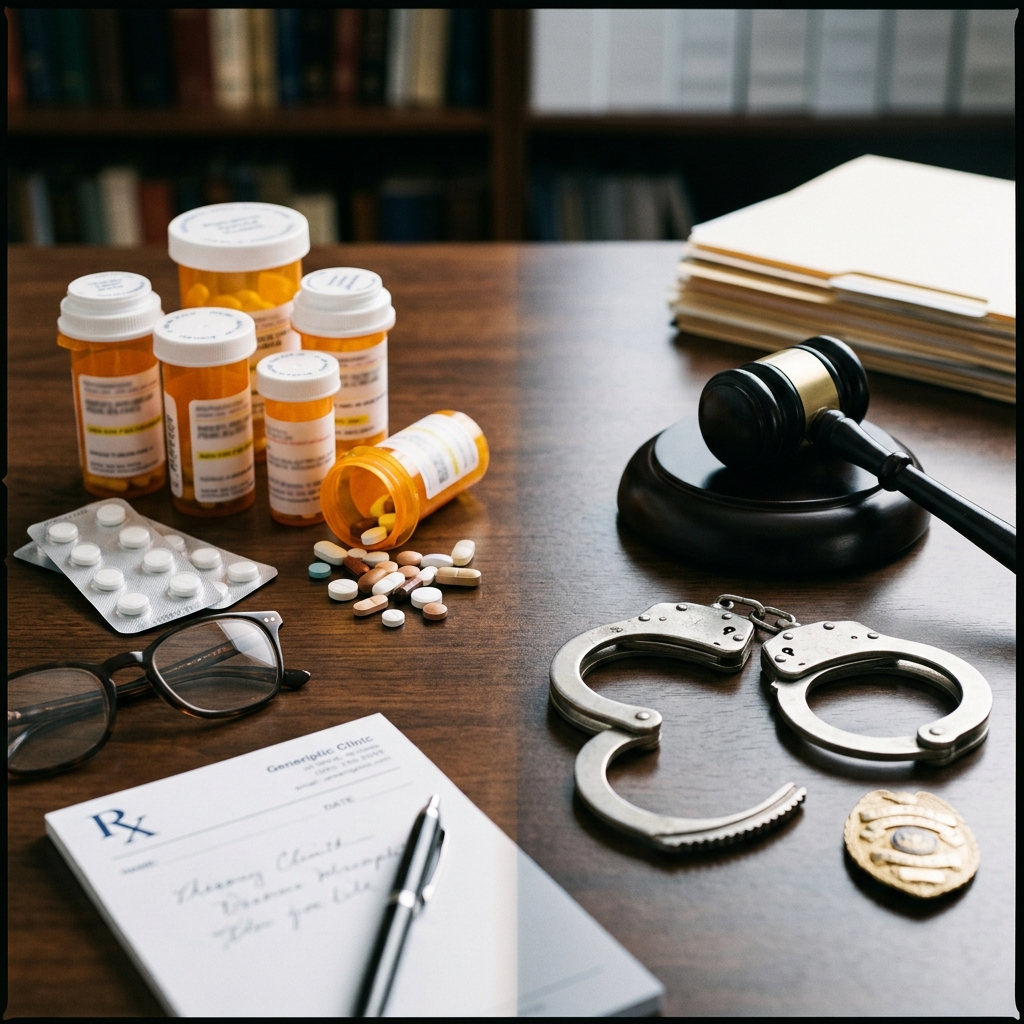
Prescription medications save lives and improve quality of life, but they also carry a serious legal risk when they are used outside the boundaries of a valid prescription. Misusing, sharing, selling, or obtaining prescription drugs through fraud can expose someone to the same types of criminal charges that apply to illegal street substances. Federal and state laws treat many prescription medications as controlled substances, and violations can lead to fines, jail or prison, probation, and a permanent criminal record.
This article explains how prescription drug misuse becomes a crime, the kinds of penalties courts can impose, and the broader consequences that often follow a conviction. It also outlines common defense strategies and practical steps to reduce legal risk while still receiving needed medical care.
Understanding Prescription Drug Misuse and Abuse
Before talking about penalties, it is important to understand how law and medicine define prescription drug misuse. Health agencies describe misuse as taking a prescribed medicine in a way that differs from the prescriber’s directions. While medical definitions focus on safety and addiction risk, criminal law focuses on whether the person’s conduct violates controlled substance laws.
Medical Definition of Misuse
Clinically, prescription drug misuse can include:
- Taking a higher dose than prescribed or more frequently than instructed.
- Using a medication for a different purpose than the one for which it was prescribed, such as taking pain pills to get high instead of for pain relief.
- Using someone else’s prescription instead of seeing a health care provider.
- Continuing to use a prescription drug after a provider has advised discontinuation.
Commonly misused prescription drugs include opioids for pain, benzodiazepines and other sedatives for anxiety or sleep, and stimulants often prescribed for attention deficit disorders.
Legal Definition of Misuse and Abuse
From a criminal law perspective, misuse and abuse overlap but are not identical. Legal trouble usually arises when misuse crosses into one or more of these categories:
- Possession without a valid prescription – Having a controlled medication that was not prescribed to you or that you obtained unlawfully can lead to a possession charge.
- Fraud or deception to obtain drugs – Using forged prescriptions, doctor shopping, or lying to a prescriber may be treated as prescription fraud or acquisition by misrepresentation.
- Distribution or sale of prescription medications – Giving or selling your pills to another person, even a friend or family member, may be treated as unlawful distribution or trafficking.
- Use inconsistent with prescription – In some jurisdictions, taking your own medication in a way that clearly violates prescription instructions can support a misuse or abuse charge.
These overlapping definitions mean that someone can face criminal charges even if the drug was originally prescribed legitimately.
How Prescription Drugs Are Classified Under Law
In the United States, many prescription medications are regulated under federal and state controlled substances laws. These laws divide drugs into schedules based on their medical use and potential for abuse, and the schedule strongly influences the severity of penalties.
| Schedule | General Description | Common Prescription Examples |
|---|---|---|
| I | High abuse potential, no accepted medical use. | Not usually prescribed (e.g., heroin). |
| II | High abuse potential, accepted medical use. | Opioid pain medications, some stimulants (e.g., oxycodone, methylphenidate). |
| III | Moderate abuse potential. | Certain combination pain medications, some anabolic steroids. |
| IV | Lower abuse potential. | Benzodiazepines, some sleep medications. |
| V | Lowest abuse potential among controlled substances. | Certain cough preparations with limited opioid content. |
Both federal law and state codes use these schedules when setting penalties for possession, distribution, and manufacture of controlled substances, including many prescription drugs.
Common Criminal Charges Related to Prescription Drugs
Depending on the facts, prescription-related conduct can trigger a wide range of charges. Some are misdemeanors, carrying relatively lower penalties, while others are felonies that can lead to lengthy prison sentences.
Possession of a Controlled Prescription Drug
Simple possession charges most often arise when law enforcement finds controlled medications on a person who does not have a valid prescription. Under federal law, possession of a controlled substance is typically treated as a misdemeanor for a first offense, with potential jail time of up to one year and fines starting at $1,000.
State penalties vary, but generally consider:
- The type of drug involved (for example, a Schedule II opioid versus a Schedule IV sedative).
- The quantity found, which can affect whether the state suspects personal use or intent to distribute.
- Whether the person has prior drug-related convictions.
Even when jail is not imposed, a possession conviction creates a criminal record that can affect employment, professional licensing, housing, and eligibility for certain public benefits.
Prescription Fraud and Doctor Shopping
People sometimes attempt to obtain extra medication by visiting multiple physicians, exaggerating symptoms, or using forged prescriptions. When detected, this conduct may result in
- Charges for obtaining a controlled substance by fraud or misrepresentation.
- Related offenses such as forgery or identity theft if false documents or stolen identifiers are used.
Although fraud-related offenses can sometimes be charged as misdemeanors, they are frequently treated as felonies, especially when large quantities of drugs are obtained or the conduct is repeated over time.
Distribution, Sale, and Trafficking
Sharing prescription pills may feel like helping a friend, but in the eyes of the law it can constitute unlawful distribution. Selling pills, transporting them for others, or participating in organized schemes to move prescription drugs can lead to distribution or trafficking charges.
Under federal statutes, trafficking in many Schedule I and II substances carries mandatory minimum sentences of at least five years in prison for a first offense, with potential fines up to several million dollars. Those penalties can increase sharply if the quantity of drugs is large or if someone is seriously injured as a result of the trafficking activity.
State laws also impose severe consequences for distribution, often with longer prison ranges and higher fines than for simple possession. In some jurisdictions, special enhanced penalties apply if the drugs involved include particularly dangerous substances such as fentanyl mixed with heroin.
Range of Penalties: Fines, Incarceration, and More
Courts have broad authority to tailor sentences based on the circumstances of each case. Penalties for prescription drug crimes may include incarceration, monetary fines, supervision in the community, and a variety of additional consequences.
Incarceration: Jail and Prison Terms
Time behind bars is often the most visible penalty for drug crimes. For prescription-related offenses, potential ranges include:
- Misdemeanor sentences – Local jail terms typically up to one year for simple possession or low-level offenses.
- Felony sentences – Prison terms that can extend from several years to decades for serious distribution or trafficking.
- Enhanced penalties – Additional consecutive prison time when certain substances, such as fentanyl mixtures, are involved.
The specific sentence imposed depends on the jurisdiction, the drug schedule, the quantity possessed or distributed, and the individual’s criminal history.
Fines and Financial Sanctions
Drug offenses frequently carry significant financial penalties. At the federal level, fines for controlled substance offenses can reach into the millions of dollars for serious trafficking cases. Even lower-level possession convictions may require payment of at least $1,000.
State laws often set fine ranges that increase with the seriousness of the offense. Misdemeanor prescription drug cases may involve relatively modest fines, while felony convictions can require payment of tens of thousands of dollars or more.
Probation, Community Supervision, and Treatment Conditions
Not every conviction results in immediate incarceration. Courts may place individuals on probation or other forms of community supervision, particularly when the conduct appears tied to a substance use disorder and the person has limited prior criminal history.
Probation orders commonly include conditions such as:
- Regular check-ins with a probation officer.
- Mandatory participation in substance use evaluation or treatment.
- Drug testing and abstinence from non-prescribed substances.
- Restrictions on travel or association with known drug users.
Violation of probation terms can result in additional penalties, including activation of a suspended jail or prison sentence.
Collateral Consequences Beyond the Criminal Sentence
Drug convictions often produce long-lasting effects that reach far beyond fines and incarceration. These collateral consequences can include:
- Employment challenges – Many employers conduct background checks and may be hesitant to hire individuals with drug convictions.
- Licensing barriers – Professional boards may deny or revoke licenses for occupations such as nursing, law, or commercial driving based on drug-related misconduct.
- Educational and financial aid impacts – Certain drug convictions can affect eligibility for public student loans and other educational benefits.
- Insurance and medical access issues – Insurers may contest claims, and providers might change prescribing practices for patients with drug-related criminal histories.
- Civil rights limitations – In some jurisdictions, felony convictions may affect voting rights or firearm possession.
Because these consequences are often not obvious at the time of arrest, legal advice is important early in the process.
Factors That Influence the Severity of Penalties
Two people charged with prescription drug offenses may face very different outcomes. Courts and prosecutors consider many factors when deciding what charges to file and what sentences to seek.
Type and Quantity of Drug Involved
As a general rule, the more dangerous and addictive the substance, and the larger the quantity involved, the higher the potential penalty. For example:
- Possession of a small amount of a lower-schedule sedative may lead to a misdemeanor, while large quantities of a Schedule II opioid can trigger felony charges.
- Trafficking in high-dose opioid formulations or potent synthetic opioids commonly carries enhanced sentences due to heightened overdose risk.
Intent: Personal Use vs. Distribution
Law enforcement and prosecutors look at context to infer whether drugs were meant for personal use or for sharing or sale. Indicators of distribution can include packaging materials, scales, large sums of cash, or communications suggesting sales.
Even when someone claims the drugs were for personal use, possession of a large quantity may lead authorities to presume an intent to distribute, resulting in more serious charges and penalties.
Prior Criminal History
Individuals with previous drug convictions, or prior offenses generally, usually face harsher outcomes. Under federal law, repeat drug possession offenses can shift a case from misdemeanor to felony and add additional years of potential imprisonment. Many states also impose mandatory minimums or enhanced sentencing ranges for repeat offenders.
Aggravating and Mitigating Circumstances
Several additional circumstances can raise or lower the likely sentence:
- Aggravating factors such as distribution near schools, sales to minors, use of weapons, or causing serious injury or death through drug distribution.
- Mitigating factors such as early acceptance of responsibility, cooperation with law enforcement, participation in treatment, or evidence that the misuse was driven by an untreated medical condition.
Defenses and Legal Strategies in Prescription Drug Cases
Being accused of a prescription drug offense does not automatically mean conviction. The outcome can depend heavily on the available evidence and on whether the accused promptly exercises constitutional rights and obtains qualified legal counsel.
Key Legal Rights
Anyone facing potential charges has several core protections:
- The right to remain silent and avoid self-incrimination.
- The right to speak with an attorney; if the person cannot afford one, the court can appoint counsel.
- Protection against unreasonable searches and seizures, which may allow challenges to how the drugs were discovered.
Common Defense Approaches
Defense strategies in prescription drug cases frequently involve close examination of documentation and police conduct. Examples include:
- Showing a valid prescription – Demonstrating legitimate medical need and proper prescribing can sometimes defeat possession allegations.
- Challenging the search – If officers lacked probable cause or a valid warrant, a court may suppress evidence obtained through an unlawful search.
- Questioning the chain of custody – Ensuring the medications seized are accurately identified and handled can prevent errors in evidence.
- Disputing intent to distribute – Arguing that the drugs were for personal therapeutic use rather than sale can reduce the severity of charges.
In cases where factual defenses are weak, attorneys may focus on negotiating reduced charges or alternative forms of resolution.
Diversion Programs and Treatment-Based Alternatives
Many jurisdictions recognize that substance use disorders are health issues as well as legal problems. To address this, courts sometimes offer diversion or specialty drug court programs that emphasize treatment and rehabilitation over incarceration.
Participation in such programs can involve:
- Structured treatment for substance use.
- Regular court appearances to monitor progress.
- Drug testing.
- Supportive services such as counseling or case management.
Successful completion may result in reduced charges, dismissal of the case, or avoidance of a formal conviction, which can lessen long-term collateral consequences.
Practical Steps to Reduce Legal Risk
Individuals who rely on prescription medications can take several practical measures to limit legal exposure, while still receiving appropriate medical care.
Use Medications Exactly as Prescribed
Health agencies emphasize that taking medications only as directed is one of the most effective ways to avoid both medical complications and misuse concerns. This includes:
- Following dosing instructions and not increasing amounts without medical advice.
- Avoiding mixing prescription drugs with other substances, especially alcohol or non-prescribed medications, unless cleared by a provider.
- Discussing any side effects or lack of effectiveness with a clinician rather than self-adjusting.
Avoid Sharing or Selling Medication
Even giving a single dose of a controlled prescription drug to a friend can be considered unlawful distribution in some circumstances. To reduce risk:
- Never sell or trade your prescribed medication.
- Do not give pills to others, even if they claim to have similar symptoms.
- Dispose of unused medications through approved take-back programs, rather than keeping large surplus quantities.
Communicate Openly With Health Care Providers
Honest communication about pain levels, anxiety, sleep problems, or other symptoms can help prescribers select appropriate and safer treatments, including non-opioid options when suitable. Discussing prior substance use issues can also allow providers to monitor for signs of misuse and intervene early.
Seek Legal Help Promptly if Accused
Anyone contacted by law enforcement about prescription drug use should consider:
- Invoking the right to remain silent until able to speak with counsel.
- Gathering prescription records, pharmacy receipts, and medical notes that may demonstrate lawful use.
- Consulting a criminal defense attorney familiar with drug laws and diversion options in the relevant jurisdiction.
Frequently Asked Questions
Can I be charged even if the medication was originally prescribed to me?
Yes. If you use a prescribed drug in a way that clearly conflicts with the prescriber’s instructions, or if you possess far more than would be expected for personal treatment, authorities may still allege misuse or intent to distribute.
Is sharing my pain medication with a relative always illegal?
Sharing controlled medications is legally risky because it can be treated as distribution or unlawful administration. Laws differ by jurisdiction, but in many places giving pills to someone without a prescription can support criminal charges, especially if harm results.
What happens to my professional license if I am convicted?
Professional licensing boards often have separate disciplinary processes. A drug conviction can trigger review and potential suspension or revocation, particularly in fields that involve public safety or access to medications, such as nursing or pharmacy.
Will I automatically go to prison for a first prescription drug offense?
Not necessarily. For low-level possession cases, courts may impose probation, treatment requirements, or other non-custodial sentences, especially when there is no prior criminal history. However, trafficking or serious distribution offenses can carry mandatory prison terms even for first-time offenders.
Can treatment help my case?
Engaging in treatment can sometimes serve as a mitigating factor and may improve eligibility for diversion programs or reduced sentences. Judges and prosecutors often take sustained treatment participation into account when evaluating risk and rehabilitation potential.
References
- Federal Alcohol and Drug Penalties — Standard College of Nursing. 2023-01-01. https://www.standardcollege.edu/campus-safety/federal-alcohol-drug-penalties/
- Penalties for Drug Abuse, Selling, and Smuggling in the USA — American Addiction Centers. 2022-06-01. https://drugabuse.com/addiction/drug-abuse/penalties/
- Prescription Drug Misuse — MedlinePlus, U.S. National Library of Medicine. 2023-08-10. https://medlineplus.gov/prescriptiondrugmisuse.html
- Understanding the Legal Risks of Prescription Drug Abuse — Penglase & Benson Law Offices. 2021-03-15. https://www.penglaseandbenson.com/news/the-legal-consequences-of-prescription-drug-abuse/
- Can You Be Charged for Prescription Drug Misuse? — Rodrick & Rouse Attorney at Law. 2022-05-20. https://rodrickrouseattorneyatlaw.com/blog/can-you-be-charged-for-prescription-drug-misuse/
- Abuse of Prescription Drugs — Schatz, Anderson & Associates. 2021-09-01. https://www.schatzanderson.com/criminal-defense/drug-crimes/abuse-prescription-drugs/
- Bowie and Crofton Maryland Prescription Drug Crime Attorneys — Carey Law Office. 2017-01-01. https://www.careylawoffice.com/drug-crimes/prescription-abuse-and-fraud/
Similar Articles








Read full bio of Sneha Tete




