
Consequences of Operating a Business Without a License
Understand the legal, financial, and practical risks of running an unlicensed business before you open your doors.
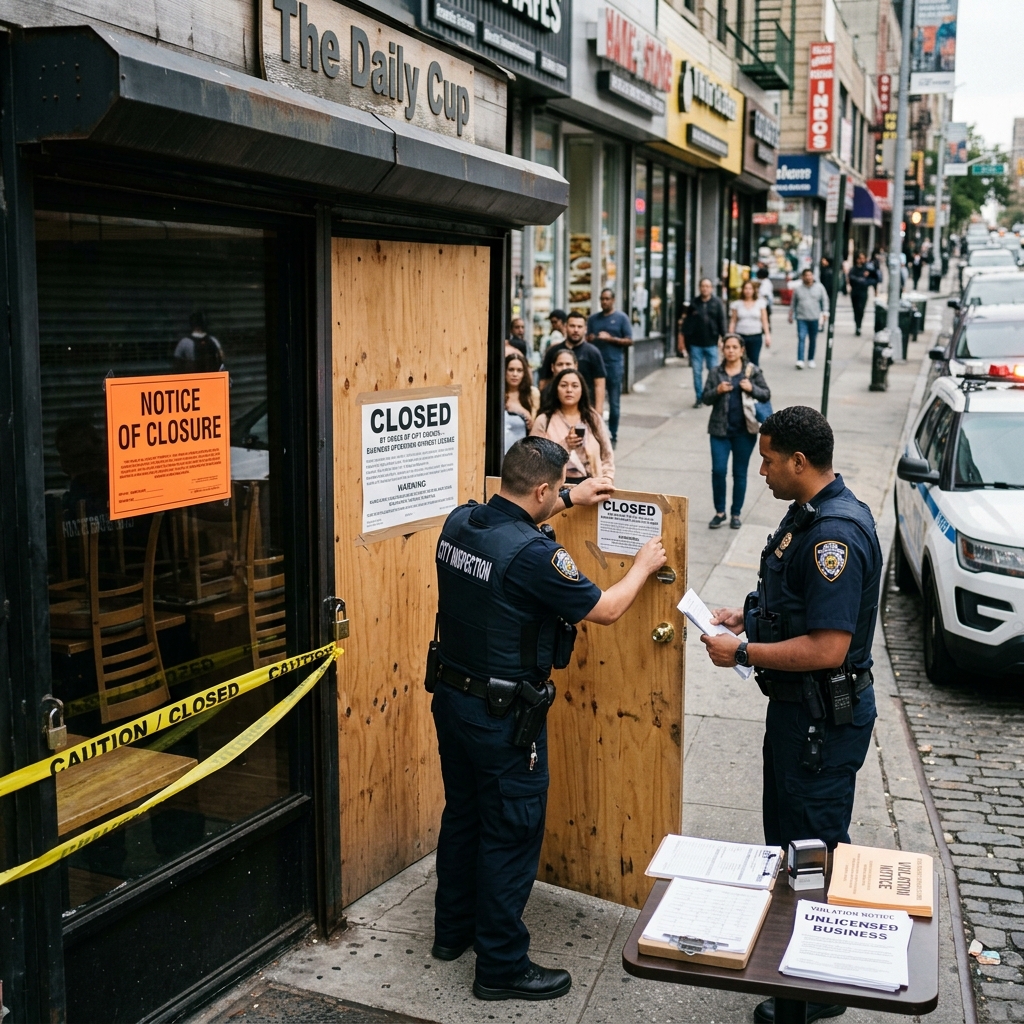
Starting a business often feels like a race: find customers, launch a website, and begin generating revenue as quickly as possible. In that rush, many owners treat licensing as paperwork they can “catch up on later.” In reality, operating without the proper business license can trigger serious legal, financial, and practical consequences, and in some cases even criminal liability.
This guide explains what can happen when you run a business without the required licenses, why licensing matters, typical penalties under U.S. law, and how to move from risky, unlicensed operation to full compliance.
Why Business Licensing Matters
A business license is government authorization to operate a particular type of business in a specific location. Depending on the industry and jurisdiction, you may need multiple licenses and permits—local, state, and sometimes federal—to legally conduct business.
- Public protection: Licensing helps governments ensure businesses follow health, safety, and consumer protection standards.
- Tax collection: Many licenses are tied to tax registration, such as sales and use taxes or occupational taxes.
- Regulation of specialties: Professions like medicine, law, construction, and insurance require specialized licenses to protect the public from unqualified providers.
- Economic data: License systems help governments track business activity for economic planning.
Because licenses serve these public purposes, bypassing them is not viewed as a minor paperwork omission; it is treated as a regulatory violation that can escalate quickly.
Typical Licensing Requirements for Small Businesses
The specific licenses your business needs depend on location, industry, and business model, but most small businesses encounter some combination of the following:
- Local business license or tax certificate: Many cities and counties require a general business license or occupational tax certificate for any business operating within their borders.
- State regulatory licenses: Regulated fields such as healthcare, childcare, legal services, construction, and insurance generally require state-issued professional or entity licenses.
- Sales and use tax registration: Businesses that sell taxable goods or certain services must register with the appropriate state tax authority to collect and remit sales tax.
- Zoning and home-occupation approvals: Physical locations (including home offices) may need zoning clearance or home-occupation permits to ensure compatible land use.
Online and home-based businesses are not automatically exempt. If you are running operations from your home or using local resources, you may still need local licensing and permits, even if you never receive customers in person.
Key Risks of Operating Without a License
Operating without required licensing can result in a combination of civil penalties, administrative actions, and, in some contexts, criminal exposure. While details differ by jurisdiction and industry, several consequences arise repeatedly.
1. Fines and Civil Penalties
Financial penalties are usually the first and most common consequence. Lawmakers often attach per-violation or per-day fines to unlicensed activity to encourage compliance.
| Jurisdiction / Context | Type of Activity | Illustrative Penalty |
|---|---|---|
| Virginia tax & fuel-related businesses | Engaging in licensed business without required license | First violation civil penalty of $5,000; $10,000 for subsequent violations. |
| District of Columbia insurance companies | Issuing insurance contracts without license | Fine of $100 per day for each day of unlicensed activity upon conviction. |
| Florida regulated professions | Practicing a DBPR-regulated profession without license | Citation fines and criminal penalties; fines due within 60 days of citation. |
In addition to fixed statutory amounts, some jurisdictions impose fines based on a percentage of the business’s revenue during the period of noncompliance, which can be very costly for successful businesses.
2. Orders to Cease Operations and Business Closure
Regulators often pair financial penalties with orders that require you to stop operating until you obtain proper licenses. This can happen through:
- Cease-and-desist orders from city, county, or state agencies.
- Denial or revocation of permits, such as health permits for restaurants.
- Lockouts or shutdowns where authorities physically close a location or revoke utility or occupancy permissions.
For a new or small business, even a temporary shutdown can lead to lost customers, cash-flow problems, and supply chain disruptions that are difficult to recover from.
3. Civil Liability and Lawsuits
Operating without appropriate licenses can make a business more vulnerable in civil disputes. If a customer, vendor, or competitor sues your company, your lack of licensure may be raised as evidence of wrongdoing or misrepresentation.
- Consumer claims: Customers may allege fraud or deceptive practices for representing yourself as a lawful business while unlicensed.
- Court bias against unlicensed operators: In some disputes, courts may weigh unlicensed status against the business when deciding damages or credibility.
- Contract enforceability issues: In certain sectors, contracts made while operating illegally may be harder to enforce.
These exposures compound any regulatory fines, creating additional financial risk.
4. Criminal Exposure in Regulated Professions
For some types of work, operating without a license is not just a regulatory violation—it is a criminal offense. This is especially common in fields where unqualified practice can directly harm the public.
- Florida regulated professions: Practicing a profession regulated by the Department of Business and Professional Regulation without a valid, active license is a criminal offense under Florida law.
- Highly regulated fields such as medicine and law: Practicing medicine or law without a license is illegal in every U.S. state and can result in arrest and prosecution.
Criminal penalties may involve fines, probation, and, for serious or repeated violations, imprisonment. Authorities are more likely to pursue criminal charges when there is intentional noncompliance, consumer harm, or a pattern of ignoring warnings.
5. Loss of Access to Opportunities and Funding
Licenses do more than satisfy regulators; they also unlock opportunities that often require proof of compliance:
- Government contracts and bids: Many public agencies require bidders to show evidence of current licenses or certificates. Unlicensed businesses may be barred from competing.
- Private contracts: Large companies and institutional clients often require contractors to be properly licensed before signing agreements.
- Loans and grants: Lenders and grant programs frequently ask for licensing documentation as part of due diligence.
Lack of licensure can therefore limit a business’s ability to grow, secure financing, or expand into new markets.
6. Damage to Reputation and Brand Trust
Beyond formal penalties, operating without a license is a significant reputational risk. Customers increasingly expect businesses to meet professional standards and legal obligations.
- Negative publicity: News of fines, shutdowns, or criminal charges can attract local media or social-media scrutiny.
- Loss of customer confidence: Once clients learn a business was operating illegally, many will take their business elsewhere.
- Long-term brand impact: Rebuilding trust after an unlicensed operation scandal can take years, affecting sales and hiring.
Reputation is an intangible asset; damage to it can exceed the cost of any individual fine.
How Long Can You Operate Without a License?
Many owners wonder how long they can “get away” with operating without a license. There is no safe grace period. Most jurisdictions require licenses before you begin operations, and enforcement can start at any time.
Enforcement timing depends on factors such as:
- Complaints from customers or competitors.
- Routine inspections by local or state agencies.
- Cross-checks between tax filings and licensing records.
- Visible advertising or signage that attracts regulator attention.
In some real-world scenarios, businesses have been shut down within a matter of weeks or months after opening. Once an agency discovers unlicensed activity, the business may face immediate fines, orders to cease operations, or more serious proceedings.
Practical Steps to Achieve Compliance
If you are already operating without a license—or unsure whether you need additional licenses—the most important step is to move toward compliance quickly. The longer you wait, the higher your financial and legal risk.
1. Identify Required Licenses and Permits
- Research local rules: Check your city and county websites for business licensing requirements, zoning rules, and tax registration obligations.
- Use official resources: The U.S. Small Business Administration and state business portals often provide tools and checklists to identify necessary licenses.
- Consider your industry: If you operate in a regulated field (construction, healthcare, insurance, financial services, etc.), look for industry-specific licensing laws.
2. Apply for Licenses Before Expanding Operations
Once you have identified the relevant licenses:
- Complete required application forms carefully.
- Gather supporting documents such as identification, entity formation documents, and insurance certificates.
- Budget for application fees and inspection costs.
- Prepare for potential background checks in regulated professions.
Many licenses require periodic renewals. Set reminders and track expiration dates to avoid accidental lapses that can lead to penalties.
3. Address Past Noncompliance Proactively
If you have already operated unlicensed, do not ignore the issue. Proactive steps can reduce the risk of severe penalties:
- Consult a business or licensing attorney: Legal counsel can explain your exposure and advise on how to approach regulators.
- Consider voluntary disclosure: In some situations, voluntarily approaching agencies to correct past noncompliance may result in more favorable treatment.
- Document your compliance efforts: Keep records of applications, approvals, and correspondence to show good-faith efforts.
4. Integrate Licensing Into Business Planning
Licensing should be part of your core business strategy, not an afterthought. When planning expansions, new locations, or new services, always assess:
- Whether additional licenses or permits are required.
- How long approvals typically take.
- What costs and operational changes licensing will entail.
Addressing these issues early reduces the risk of delays, fines, or forced closures after you have already invested in new operations.
Frequently Asked Questions (FAQs)
Do all businesses need a license?
Most businesses need at least one license or permit, typically a local business license or tax certificate, and many require additional state or industry-specific licenses. A minority of low-revenue or non-commercial activities may be exempt, but the rules are highly local.
Is running an unlicensed business always a crime?
No. In many cases, operating without a license leads to civil or administrative penalties such as fines or shutdown orders. However, in regulated professions—like construction trades, healthcare, and certain services—unlicensed practice can be a criminal offense.
Can I fix the problem after I’m caught?
In many jurisdictions, regulators allow businesses to obtain the proper licenses and resume operations after paying fines or meeting conditions. The longer you operate unlicensed or the more serious the industry, the more likely you are to face severe penalties or criminal charges.
Does an online or home-based business need a license?
Often yes. If you are providing services or selling goods from a home office or online, you may still need local business licenses, zoning approvals, and tax registrations, even if customers never visit your premises in person.
What should I do if I suspect a business is operating without a license?
Most states and local governments maintain consumer protection or licensing agencies that accept complaints about unlicensed activity. For example, Florida’s Department of Business and Professional Regulation offers phone, email, online, and mail options for reporting suspected unlicensed practice. Check your state or local licensing authority’s website for reporting procedures.
References
- Virginia Code § 58.1-2268: Engaging in business without a license; civil penalty — Commonwealth of Virginia. 2023-07-01. https://law.lis.virginia.gov/vacode/title58.1/chapter22/section58.1-2268/
- Can You Operate a Business in Georgia Without a License? — Lisenby Law Office. 2024-03-15. https://lisenbylaw.com/can-you-operate-a-business-in-georgia-without-a-license/
- Unlicensed Activity – FAQs — Florida Department of Business and Professional Regulation. 2023-05-10. https://www2.myfloridalicense.com/unlicensed-activity-faqs/
- 7 Consequences & Penalties for Operating a Business without a Business License — CSC Global. 2022-09-21. https://blog.cscglobal.com/7-consequences-for-operating-without-a-business-license/
- 7 Consequences for Operating a Business Without a License — Mosey. 2023-04-17. https://mosey.com/blog/penalty-for-operating-a-business-without-a-license/
Similar Articles








Read full bio of Sneha Tete


