
Commercial DUI Rules For CDL Holders: What You Need To Know Now
A clear guide to the stricter DUI rules, testing limits, and CDL consequences that apply to commercial drivers.
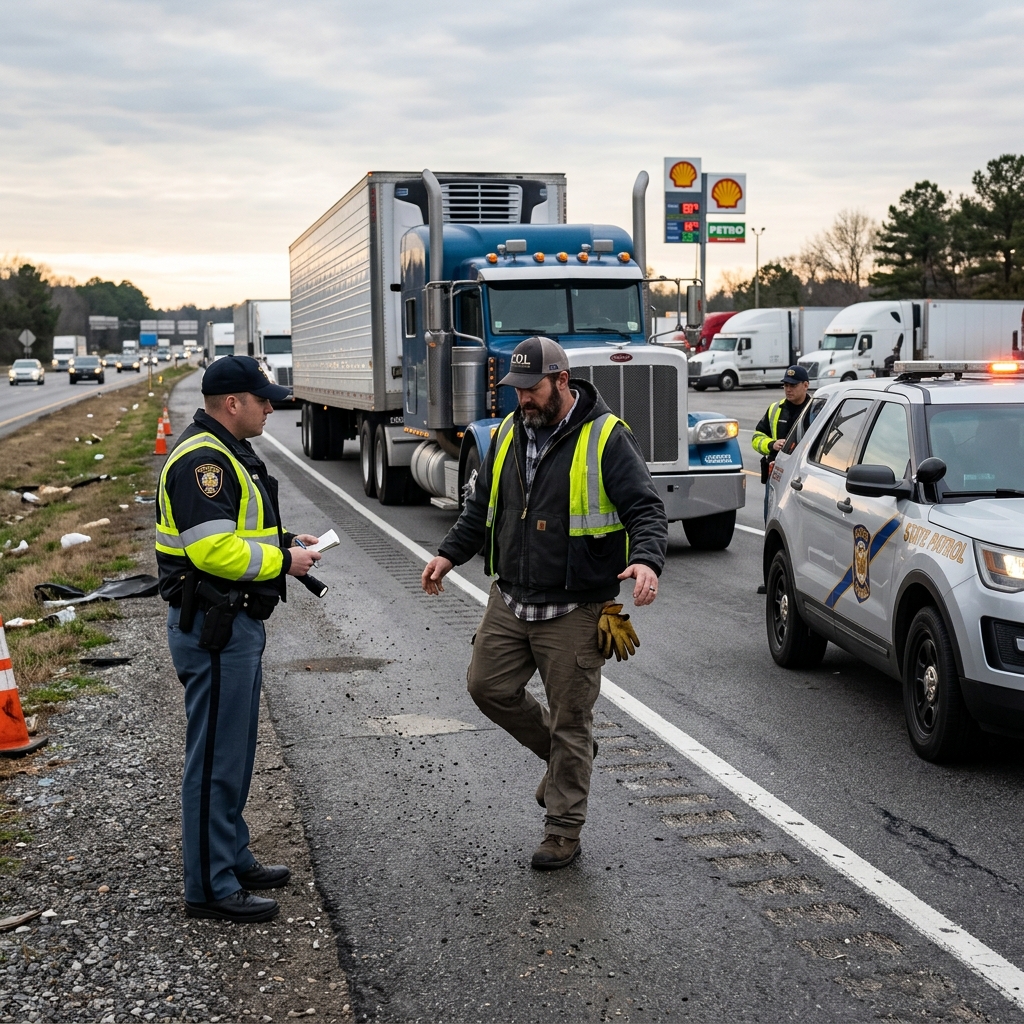
Commercial drivers are held to a stricter standard than ordinary motorists when it comes to alcohol and drug impairment. A DUI arrest can affect not only a driver’s personal driving privileges, but also the ability to work in a commercial role. Federal rules set a lower alcohol threshold for commercial vehicle operation, and many states adopt those standards with additional penalties of their own.
If you hold a commercial driver’s license, the most important point is simple: a mistake that might be treated one way in a personal vehicle can carry much harsher consequences in a commercial vehicle. Those consequences can include criminal charges, a suspension or disqualification of CDL privileges, employer notice obligations, and long-term damage to employment opportunities.
Why commercial drivers are treated differently
Commercial driving is regulated more strictly because large trucks, buses, and other commercial vehicles can create greater risks on the road. Federal Motor Carrier Safety Administration rules establish standards that apply to many commercial drivers, and states commonly build their own licensing and enforcement rules around those federal requirements.
The result is a two-track system. A driver may face one set of consequences for operating a private vehicle and a different, often more severe, set of consequences for operating a commercial vehicle. Even when the arrest occurs off the job or in a personal vehicle, the CDL can still be affected.
- Commercial vehicles are subject to lower alcohol limits.
- Refusal to test can trigger serious licensing consequences.
- A DUI conviction can lead to job-related reporting obligations.
- CDL disqualification can happen even after a first offense.
The lower BAC threshold for commercial driving
For most noncommercial drivers, the familiar legal limit is 0.08% blood alcohol concentration. Commercial drivers, however, are usually subject to a lower threshold of 0.04% while operating a commercial motor vehicle. That means a driver can be arrested or charged at a level that would not necessarily support a DUI allegation in a personal vehicle case.
This lower standard reflects the expectation that CDL holders exercise more caution because of the size and type of vehicles they operate. Some state laws also prohibit a commercial driver from operating a commercial vehicle within a few hours of drinking alcohol, even if the driver is not yet over the BAC limit. Those rules can create risk before a driver ever reaches the point of obvious intoxication.
| Situation | Common legal standard | Possible effect |
|---|---|---|
| Driving a personal vehicle | 0.08% BAC in many states | Standard DUI threshold for adults |
| Driving a commercial vehicle | 0.04% BAC in many states | CDL-specific DUI exposure |
| Refusing chemical testing | State and federal implied-consent rules | Licensing penalties and possible disqualification |
What happens after a commercial DUI stop
When law enforcement stops a commercial driver on suspicion of impairment, the investigation often follows the same general criminal process used in other DUI cases. Officers may observe driving behavior, ask questions, conduct field sobriety testing, and request a chemical test such as a breath, blood, or urine sample.
But the legal stakes are different. If the driver was operating a commercial motor vehicle, a BAC at or above 0.04% may be enough to support a commercial DUI allegation in many jurisdictions. If the driver was operating a personal vehicle, the regular DUI standard may apply instead, though the CDL can still be endangered depending on the final charge and conviction.
The exact penalties depend on the state, the prior record of the driver, whether there was an accident, whether the vehicle carried hazardous materials, and whether the case involved alcohol, drugs, or both. In some states, a first offense can already trigger a one-year disqualification from commercial driving.
Refusing a test can be especially costly
For commercial drivers, refusing a chemical test is often a major mistake. Many states and federal CDL rules treat refusal harshly, and the refusal itself can become part of the evidence used against the driver. In practical terms, refusal may not prevent a license loss; it may instead create an additional basis for punishment.
That is because commercial drivers are generally considered to have accepted implied-consent testing rules as a condition of driving. Once an officer has lawful grounds to request a test, a refusal can lead to immediate administrative consequences and may also influence the criminal case. In some places, refusal penalties are comparable to or worse than a failed test result.
- Administrative suspension may begin quickly.
- The refusal can be used in later proceedings.
- Commercial driving privileges may be restricted even before a conviction.
- Employment consequences may follow the legal penalties.
CDL disqualification and suspension rules
A commercial DUI conviction often leads to a CDL disqualification rather than only an ordinary driver’s license suspension. That distinction matters. A disqualification can block the driver from legally operating commercial vehicles even if some noncommercial driving privileges remain available.
For many first offenses, the disqualification period is one year. If the driver was transporting hazardous materials at the time, some states impose longer disqualification periods. A second DUI-related conviction can lead to lifetime loss of commercial driving privileges in certain jurisdictions. Because state law can vary, the precise duration and whether reinstatement is possible depend on where the conviction occurs and what the offense was.
How a DUI in a personal vehicle can still affect a CDL
A commercial driver does not have to be behind the wheel of a tractor-trailer or bus to lose CDL privileges. A DUI in a personal car can still affect the commercial license because many states and federal rules treat the conviction itself as the trigger for disqualification or reporting duties.
This is one of the most misunderstood aspects of CDL law. A driver may assume that a personal off-duty arrest will not affect work, but that assumption can be wrong. Once the offense appears on the driver’s record, the CDL may be suspended, disqualified, or placed at risk depending on the charge, the state, and the outcome of the case.
Employer reporting obligations matter too
Commercial drivers can also face separate reporting duties after a conviction. In many places, a CDL holder must notify an employer within a set time after certain traffic convictions, even if the vehicle involved was not commercial. Employers may then be prohibited from allowing the driver to operate a commercial vehicle during the disqualification period.
This creates a second layer of consequences beyond the court system. A driver may keep a job title but lose the ability to perform the essential work of the job. For many CDL holders, that can be just as damaging as the court-ordered penalties.
What penalties can accompany the criminal case
A commercial DUI case may include the same general criminal punishments found in ordinary DUI prosecutions, along with the licensing consequences unique to CDL holders. Depending on the jurisdiction and the facts, those penalties may include fines, jail time, probation, alcohol education programs, treatment requirements, and community service.
Some states increase the punishment for repeat offenses. Others impose mandatory minimum jail terms when BAC levels are especially high or when aggravating facts are present. Even when the criminal court sentence is relatively limited, the CDL consequence can still be severe and long-lasting.
- Fines can be imposed by the court.
- Jail time may apply in first or repeat cases.
- Probation may follow a conviction.
- Treatment or education programs may be required.
- Community service may be part of the sentence.
State law may add extra rules
Although federal standards influence commercial DUI enforcement, state law still plays a major role. Some states have explicit statutes for impaired driving in a commercial vehicle, while others address the issue through licensing laws, DUI provisions, or administrative code. The result is that the same conduct can be processed somewhat differently depending on where the arrest occurs.
For example, one state may focus heavily on BAC, while another may also punish driving with detectable alcohol in the system or with certain controlled substances. A few states include temporary out-of-service orders, minimum suspension periods, or special rules for hazardous-material drivers. Because of these differences, a CDL holder should not assume that one state’s rule set applies everywhere.
Practical steps after a commercial DUI arrest
After a commercial DUI arrest, the driver should act quickly because both criminal and licensing deadlines can arrive fast. Missing an administrative hearing, failing to request review in time, or ignoring an employer notice requirement can make the situation worse.
Early legal review is important because the criminal charge, the administrative CDL case, and the employment consequences may move on separate tracks. In many cases, a defense strategy must address all three.
- Write down the exact arrest details while they are fresh.
- Track all deadlines for hearings and license paperwork.
- Review employer notice rules before missing any required disclosure.
- Seek counsel familiar with CDL and DUI law as soon as possible.
Frequently asked questions
Does a CDL holder face a different BAC limit?
Yes. In many jurisdictions, the commercial-vehicle BAC limit is 0.04%, which is lower than the 0.08% commonly used for noncommercial drivers.
Can a DUI in my personal car affect my CDL?
Yes. A DUI in a personal vehicle can still trigger CDL disqualification, suspension, or employer reporting obligations depending on state law and the final conviction.
Is refusing a breath or blood test a good way to avoid a DUI conviction?
No. Refusal can create separate penalties and may lead to license consequences that are just as serious as the original stop.
Will I automatically lose my CDL after one DUI?
In many states, a first conviction in a commercial vehicle can lead to a one-year disqualification, but the exact result depends on the state and the facts of the case.
Can I still drive a noncommercial vehicle after a CDL disqualification?
Sometimes, but not always. That depends on the type of suspension or disqualification imposed and the rules of the state handling the case.
Why this area of law deserves careful attention
Commercial DUI law is not just about one traffic stop. It affects a person’s license, livelihood, and long-term ability to work in transportation. Because the standards are stricter and the consequences can reach beyond the courtroom, CDL holders need to understand how quickly a single mistake can change their professional future.
For that reason, anyone with a commercial license who is facing an impairment charge should treat the case as both a criminal matter and a licensing emergency. The legal outcome may determine not only whether the driver can keep driving, but whether the driver can stay in the profession at all.
References
- Do You Lose Your Commercial Driver’s License If You Get a DUI? — FindLaw. 2024. https://www.findlaw.com/dui/charges/commercial-dui-regulations.html
- Commercial Driver License Disqualification — Federal Motor Carrier Safety Administration. 2025. https://www.fmcsa.dot.gov/registration/commercial-drivers-license-disqualification
- 49 CFR Part 383 – Commercial Driver’s License Standards — U.S. Government Publishing Office. 2025. https://www.ecfr.gov/current/title-49/subtitle-B/chapter-III/subchapter-B/part-383
- 49 CFR Part 382 – Controlled Substances and Alcohol Use and Testing — U.S. Government Publishing Office. 2025. https://www.ecfr.gov/current/title-49/subtitle-B/chapter-III/subchapter-B/part-382
- Commercial Driver’s License Information System Disqualification Standards — Federal Motor Carrier Safety Administration. 2025. https://www.fmcsa.dot.gov/registration/commercial-drivers-license
Similar Articles








Read full bio of medha deb




