
Clearing Criminal Records: Expungement Essentials
Unlock a brighter future by understanding how to seal or dismiss criminal convictions through expungement processes across states.
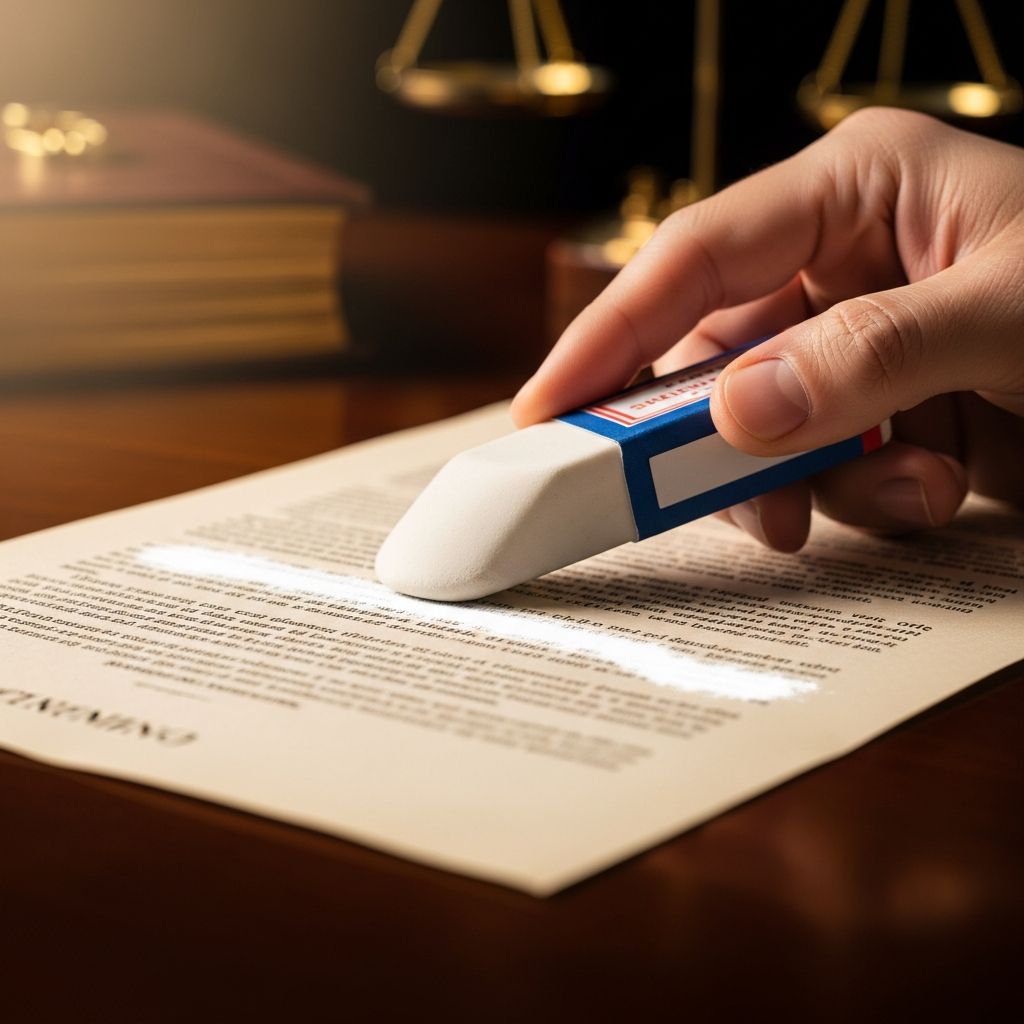
Criminal convictions can linger on public records, creating ongoing barriers to employment, housing, and professional licenses. Expungement, often called dismissal or record sealing in many jurisdictions, offers a pathway to mitigate these impacts by legally setting aside certain convictions. This process does not erase the record entirely but redesignates it, allowing individuals to move forward with greater opportunities. In states like California, governed by statutes such as Penal Code Section 1203.4, eligible persons can petition courts to dismiss convictions after fulfilling sentence terms.
Defining Expungement and Its Legal Scope
Expungement refers to a court-ordered process where a conviction is dismissed and set aside, effectively changing the plea’s status from guilty to not guilty for most practical purposes. Unlike full erasure, the record remains accessible to certain entities like law enforcement, but for civilian background checks, it often does not appear. This relief is crucial for rehabilitation, enabling petitioners to truthfully deny convictions in job applications, rental agreements, and licensing boards—though exceptions apply. Federal records and some state variations may differ, emphasizing the need for jurisdiction-specific research.
Key distinctions include dismissal under Penal Code 1203.4 for probation-completing cases and 1203.4a for summary probation or fines only. Recent laws like California’s Clean Slate Act (AB 1076, effective August 2022) automate sealing of dismissed convictions, enhancing accessibility.
Who Qualifies for Record Clearance?
Eligibility hinges on conviction type, sentence completion, and post-conviction conduct. Most misdemeanors qualify, alongside select felonies reducible to misdemeanors via Penal Code Section 17(b). Common eligible offenses encompass drug possession, petty theft, and DUIs, provided no state prison term was served.
- Completed probation or sentence: All terms, including fines, community service, and restitution, must be fulfilled.
- No new offenses: Petitioners need a clean record for a waiting period—typically one year post-probation or sentence.
- Non-serious crimes: Exclusions cover sex offenses against minors, serious felonies, and cases with Department of Corrections involvement.
- No pending cases: Active prosecutions disqualify applicants.
Felonies often require reduction first, then dismissal. Courts assess rehabilitation evidence, such as steady employment or community involvement. Professional boards may retain visibility, varying by agency rules.
Navigating the Expungement Application Journey
The process demands precision to avoid denials. It spans 2-4 months, influenced by court backlogs and paperwork accuracy. Here’s a structured overview:
- Verify Eligibility: Review records via Department of Justice or court clerks. Consult attorneys for complex felonies.
- Gather Documentation: Collect case numbers, disposition details, and proof of sentence completion from arresting agencies or online portals.
- Prepare Forms: Use CR-180 (Petition for Dismissal) and CR-181 (Order). Fee waivers exist for low-income applicants.
- File Petition: Submit to the originating court. Serve the district attorney, who may oppose.
- Court Hearing: Optional; explain rehabilitation. Judges probe current stability and public interest.
- Await Ruling: Granted petitions update records; denials allow refiling after 3-6 months. Notify DOJ for statewide updates.
Counties like Orange process efficiently, but delays arise from incomplete forms or prosecutorial challenges. Self-help centers or public defenders aid pro se filers.
Outcomes and Practical Impacts of Successful Petitions
| Aspect | Before Expungement | After Expungement |
|---|---|---|
| Background Checks | Conviction visible to employers/landlords | Generally not reported; say “no” to convictions |
| Employment | Barriers to jobs/hiring | Improved access, especially non-licensed roles |
| Licensing | Often disqualifying | Visible but dismissible; board-specific |
| Housing | Denials common | Easier approvals |
| Firearms Rights | Restricted | No restoration |
Success opens doors but has limits: law enforcement, courts, and some employers see records. Firearms prohibitions persist. Automation under Clean Slate streamlines sealing.
State Variations and Federal Considerations
While California exemplifies with Penal Code frameworks, processes vary nationally. Some states seal automatically; others require petitions. Federal convictions rarely qualify for expungement, directing to pardons. Always check local statutes—e.g., Orange County’s self-help forms differ slightly.
Potential Roadblocks and How to Overcome Them
Common pitfalls include untimely filings, incomplete records, or prosecutorial objections citing public safety. Judges may deny if rehabilitation lacks proof. Solutions: professional legal aid, meticulous documentation, and addressing prior issues before refiling. Costs range from free (waivers) to hundreds in fees/attorney time.
- Prosecutor Challenges: Prepare evidence of good conduct.
- Multiple Convictions: File separately; success on one bolsters others.
- Probation Violations: Seek early termination first (Penal Code 1203.3).
Benefits Beyond Background Checks
Expungement fosters reintegration, reducing recidivism by removing stigma. It aids family stability through better jobs and signals judicial recognition of change. Studies link record relief to employment gains of 20-30%. Long-term, it supports community safety via successful reentry.
Frequently Asked Questions
Can all misdemeanors be expunged?
Most yes, after sentence completion and waiting periods, excluding prison-sentenced cases.
How long does the process take?
Typically 2-4 months, varying by county and completeness.
Does expungement restore gun rights?
No, it does not affect firearms prohibitions.
Can I expunge as a non-citizen?
Eligibility similar, but immigration impacts require counsel.
What if denied?
Refile after 3-6 months, fixing issues.
Seeking Professional Guidance
While DIY is possible via self-help resources, attorneys streamline complex cases, boosting success rates. Public defenders’ clean slate programs offer free aid. Start with court self-help centers or legal aid foundations like LAFLA.
Expungement empowers second chances, but diligence is key. Verify your path today for tomorrow’s opportunities.
References
- Expungement in California: Clearing Your Criminal Record — Brownstein Law Group. 2023. https://www.brownsteinlawgroup.com/blog/expungement-in-california-clearing-your-criminal-record/
- Expungement Explained: What Is It? — Addair Law. 2024-07. https://www.addairlaw.com/blog/2024/july/expungement-explained-what-is-it-/
- What Is The Process To Get An Expungement In California? — Laguna Legal Help. 2023. http://lagunalegalhelp.com/blog/what-is-the-process-to-get-an-expungement-in-california/
- Cleaning Up Your Record – Criminal — Superior Court of California, Orange County. 2025. https://www.occourts.org/self-help/self-help-criminal/cleaning-your-record-criminal
- Record Clearing — Legal Aid Foundation of Los Angeles. 2024. https://lafla.org/get-help/expungement/
- California Restoration of Rights & Record Relief — Collateral Consequences Resource Center. 2024. https://ccresourcecenter.org/state-restoration-profiles/california-restoration-of-rights-pardon-expungement-sealing/
- Clean your record — California Courts Self Help Guide. 2025. https://selfhelp.courts.ca.gov/clean-your-record
Similar Articles








Read full bio of Sneha Tete




