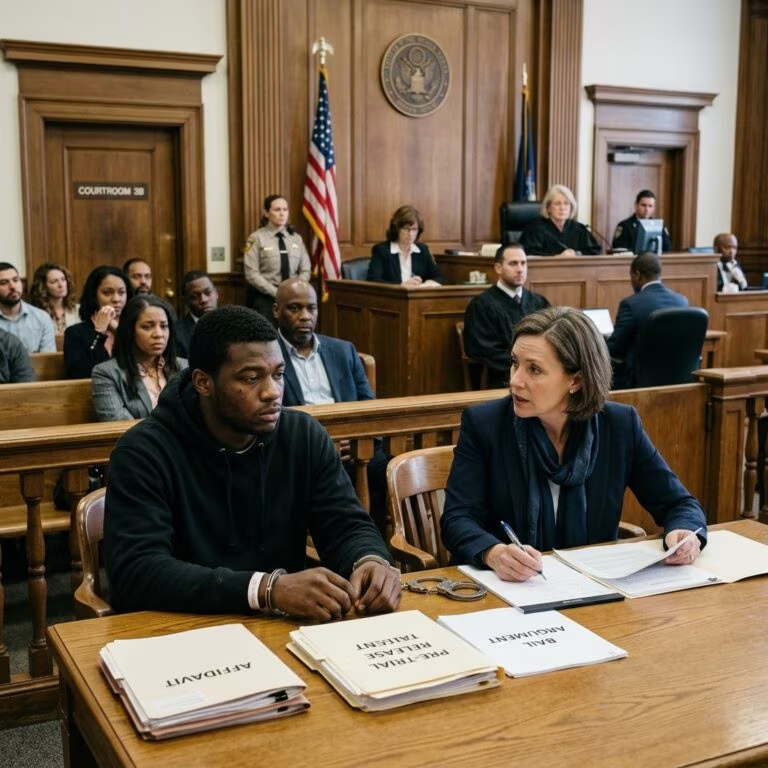
People who are incarcerated often assume that imprisonment means they have no way to seek justice if they are injured. In reality, the law gives prisoners some avenues to sue for harm suffered in custody, but those rights are limited, heavily regulated, and shaped by complex doctrines like sovereign immunity and “civil death”. Understanding these rules is critical for anyone trying to evaluate whether a jail or prison can be held liable for an inmate’s injuries.
Why Inmate Injury Lawsuits Are Different from Ordinary Claims
Injury law for incarcerated people sits at the intersection of tort law, constitutional rights, and government liability. Unlike typical personal injury claims against private parties, lawsuits involving jail or prison injuries must navigate special protections for government entities and strict procedural requirements.
The core differences include:
- Government defendants — Most prisons and jails are operated by state or local government, not private companies, bringing sovereign immunity doctrines into play.
- Restricted rights — Incarceration limits certain civil rights, and historically some jurisdictions have treated inmates as being under “civil death,” temporarily denying them access to civil courts.
- Constitutional overlay — Severe abuse or neglect may implicate the Eighth Amendment prohibition on cruel and unusual punishment and due process protections.
These differences do not automatically bar every claim, but they shape which lawsuits are allowed, whom you can sue, and what kind of compensation is available.
Key Legal Barriers: Sovereign Immunity and Civil Death
Two traditional legal doctrines explain why inmates sometimes cannot sue the prison itself for injuries: sovereign immunity and civil death.
Sovereign Immunity: Protection for Government Defendants
Sovereign immunity is a long-standing rule that government entities cannot be sued without their consent. Historically, this made many claims against prisons or correctional departments impossible. Over time, legislatures in the United States enacted statutes that partially waive immunity, allowing certain suits against the state, but usually under tight conditions.
Typical features of modern sovereign immunity waivers include:
- Allowing lawsuits for specified types of negligence by state employees.
- Imposing damage caps or limits on compensation.
- Requiring strict notice procedures and short deadlines.
- Excluding claims based on discretionary policy decisions, such as high-level staffing or security choices.
As a result, an inmate’s ability to sue a prison directly often depends on whether the applicable state Tort Claims Act or similar statute covers their specific type of injury.
Civil Death: Historical Limits on Prisoners’ Civil Rights
Some states historically treated people serving certain sentences as civilly dead, meaning they were temporarily denied access to civil courts even if immunity was waived. Under this approach, an inmate could not file a civil lawsuit until their civil rights were restored, often after release or a formal restoration process.
Research shows that:
- In jurisdictions applying civil death, inmates were barred from bringing suit for injuries suffered while incarcerated.
- Only after restoration of civil rights could a prisoner pursue a claim based on harms experienced during imprisonment.
- Modern reforms have reduced use of civil death, but vestiges still influence how courts treat inmate claims in some jurisdictions.
Today, many states recognize inmates’ right to bring civil claims, but the historical doctrine helps explain why some older cases deny any remedy for injuries behind bars.
Duties Owed to Prisoners and When a Claim Exists
When courts do allow claims, they usually focus on whether officials violated a legal duty of care. The general principle is that the government and prison officials owe incarcerated people a duty to keep them reasonably safe and protect them from unlawful injury.
Core Duties Recognized by Courts
Courts and legal commentary highlight several core duties toward inmates:
- Safekeeping and physical protection — Authorities must take reasonable steps to protect inmates from violence by staff, other prisoners, or foreseeable external threats.
- Protection from cruel and unusual punishment — The Eighth Amendment prohibits deliberate infliction of serious harm and deliberate indifference to serious risks to health or safety.
- Access to adequate medical care — Inmates retain the right to necessary medical treatment for serious health needs.
- Basic human dignity — Conditions cannot be so degrading, abusive, or neglectful as to violate fundamental rights.
If an injury occurs because officials breach one of these duties, and sovereign immunity is waived or does not apply, an inmate may have a viable personal injury or civil rights claim.
Examples of Situations Where Claims Have Been Allowed
Legal sources and case law illustrate circumstances where courts have allowed prisoners to sue officials or governments for injuries:
- An inmate taken from custody and killed by a lynch mob when officials failed to provide adequate protection.
- An inmate injured by another prisoner known to be violently insane, where authorities did not take reasonable preventive measures.
- An inmate harmed due to a superior official’s failure to perform required supervisory duties.
- Serious injuries from guard brutality or intentional assaults by correctional staff.
- Severe neglect of medical needs leading to significant worsening of a health condition.
These examples show that even in systems with strong immunity protections, courts may hold individual officials or the government liable when their actions or omissions clearly breach recognized duties.
Who Can Be Sued: Prison, Officials, or Others?
Whether a prisoner can sue the prison itself, rather than individual officers or outside parties, is often the crux of the issue. The answer depends on how the jurisdiction structures liability.
| Type of Defendant | When Claims May Be Allowed | Common Legal Obstacles |
|---|---|---|
| State prison or corrections department | Where a state tort claims statute waives immunity for negligence or specified wrongs. | Sovereign immunity; damage caps; strict filing deadlines; exclusions for discretionary functions. |
| County jail or local government agency | When local governmental immunity is limited by statute or case law. | Local immunity statutes; notice requirements; procedural hurdles. |
| Individual correctional officers | For intentional misconduct (assault, abuse) or gross negligence in fulfilling duties. | Qualified immunity in constitutional claims; need to show violation of clearly established rights. |
| Private contractors or medical providers | Where private entities provide healthcare, food, or security services in prisons. | Contractual defenses; proving duty and causation; sometimes arbitration clauses. |
| Other inmates | For intentional assaults or other wrongful acts. | Practical barriers to recovery; difficulty collecting judgments. |
This landscape explains why an inmate might be told they cannot sue the prison, yet still may bring a claim against individual officers or under a specific statute.
Types of Compensation Available to Injured Prisoners
Where the law permits lawsuits, incarcerated people may seek several categories of damages similar to other personal injury claims.
- Medical expenses — Costs associated with treatment of injuries, including hospital care, physician visits, medication, and rehabilitation.
- Lost wages or earning capacity — Compensation for income the person is unable to earn because of injuries, either during incarceration or after release.
- Pain and suffering — Damages for physical pain, emotional distress, and mental anguish.
- Punitive damages — In some jurisdictions, additional damages may be awarded to punish particularly egregious or intentional conduct and deter future abuse.
The availability and size of these damages often depend on statutes governing government liability and any caps imposed on claims against public entities.
Procedural Obstacles: Deadlines, Notice, and Exhaustion
Even when a legal claim exists in theory, inmates face significant procedural hurdles. Missing a deadline or failing to follow mandatory steps can bar recovery.
Statutes of Limitations and Notice Requirements
Every jurisdiction sets a statute of limitations — a deadline for filing lawsuits. For personal injury claims, many states use limitations periods of two or three years, including for inmates. Government defendants often require additional formal notice within a shorter timeframe, sometimes six months or one year, via a claim form or written notice.
Key points include:
- Deadlines usually begin on the date of injury or when harm is discovered.
- Failure to comply with notice requirements can result in dismissal of claims against government entities.
- In some states, special rules apply to claims by prisoners, so legal advice is essential.
Internal Grievance Procedures and Exhaustion
In many prison systems, inmates must first use internal grievance and complaint processes before going to court, particularly for federal civil rights claims. Although specific rules vary, the concept of “exhaustion” requires prisoners to fully pursue available administrative remedies within the facility.
Common steps include:
- Filing a written grievance describing the incident and injuries.
- Appealing unfavorable decisions through the prison’s internal appeal system.
- Keeping copies of all submissions and responses to document compliance.
Courts often dismiss lawsuits if the inmate cannot show they properly exhausted required administrative remedies before filing.
Practical Considerations for Inmates Seeking Justice
Legal rights on paper can be difficult to exercise in the correctional environment. Prisoners face limited access to communication tools, legal counsel, and evidence. Still, several practical steps can strengthen potential claims.
Important Actions After an Injury
Injured inmates or their loved ones can take the following steps to preserve legal options:
- Document the injury — Request medical evaluation promptly and ask that injuries be recorded in medical files. When possible, create written descriptions and note dates, times, and names of involved staff or witnesses.
- Use grievance procedures — File timely complaints through the facility’s formal process and retain copies.
- Seek legal advice — Where possible, contact an attorney experienced in prisoner rights or civil rights litigation to evaluate the case.
- Preserve evidence — Identify potential witnesses, request preservation of surveillance footage, and keep personal notes.
Role of Prison Injury and Civil Rights Lawyers
Attorneys who focus on prison injuries and civil rights help navigate complex rules and decide whether a case should be framed as a negligence claim, a constitutional violation, or both.They typically:
- Review medical records, incident reports, and grievance files.
- Investigate the incident, interview witnesses, and seek video or documentary proof.
- Determine which parties can be sued and under what statutes, considering immunity and damage caps.
- Handle negotiations and, if needed, litigation in state or federal court.
Because many inmate claims involve specialized rules, relying on a lawyer with experience in this area significantly improves the chances of success.
Common Misconceptions About Inmate Lawsuits
Public discussion about prisons often involves myths that can discourage injured prisoners from seeking help, or mislead families about what is possible.
- Myth: Prisoners lose all legal rights.
Reality: While incarceration restricts many liberties, inmates retain core rights to safety, medical care, and freedom from abuse, and can file lawsuits within legal limits. - Myth: Prisons can never be sued.
Reality: Sovereign immunity restricts suits, but many jurisdictions allow claims against state or local institutions under specific statutes, especially for negligence. - Myth: Only constitutional claims are possible.
Reality: Inmates may pursue both constitutional civil rights claims and state-law personal injury claims, depending on the circumstances. - Myth: Any injury automatically leads to compensation.
Reality: The law requires proof of a breached duty, causation, and compliance with procedural rules; minor or unavoidable injuries may not create liability.
FAQs About Prisoner Injury Claims
Can a prisoner ever sue the prison itself?
Yes, but only when sovereign immunity has been waived by statute or case law for the type of claim at issue. Many states have tort claims acts that permit limited suits against government agencies, including correctional institutions, subject to damage caps and strict procedures.
Are inmates allowed to sue while they are still incarcerated?
In many modern jurisdictions, inmates can file civil lawsuits during incarceration, although they must comply with prison grievance rules and other procedural requirements. Historically, doctrines like civil death barred such suits in some states, but those rules have been limited or reformed.
What kinds of injuries typically lead to successful claims?
Claims are more likely to succeed when injuries arise from clear breaches of duty, such as guard assaults, deliberate indifference to serious medical needs, failure to protect from known violent inmates, or dangerous conditions ignored by officials.
Can a prisoner’s family help pursue a claim?
Yes. Family members can often assist by contacting attorneys, gathering outside medical records, and helping preserve documentation. In severe cases, such as wrongful death, family members may become the primary plaintiffs in a civil lawsuit.
What if the prisoner is in a private facility?
Private prisons and detention facilities introduce different liability questions. While they do not enjoy the same sovereign immunity as state agencies, contracts and legal structures may affect who can be sued and under what theories. Claims against private entities still require proof of duty, breach, and causation, and may involve constitutional questions if the private operator performs traditional government functions.
References
- Remedies Available to Penal Inmates for Injuries Received While Incarcerated — Indiana Law Journal. 1954-01-01. https://www.repository.law.indiana.edu/cgi/viewcontent.cgi?article=2982&context=ilj
- New York Prisoner Rights Lawyer — Stephen Bilkis & Associates. 2023-06-01 (approx. updated). https://www.1800nynylaw.com/new-york-police-brutality/new-york-prison-rights-lawyer/
- Alabama Jail Injury Attorney — The Justice Law Firm, LLC. 2023-09-01 (approx. updated). https://www.legaljusticematters.com/practice-areas/jail-injury
- Prison Injuries — The Baltimore Injury Lawyer. 2022-05-01 (approx. updated). https://www.theinjurylawyermd.com/prison-injuries/
- Prison Abuse Attorneys: Jail Neglect and Injury — Kaplan & Grady. 2024-02-01 (approx. updated). https://www.kaplangrady.com/prisoners-rights-attorneys/jail-abuse-neglect-injury/
- How to Pursue a Jail Injury Claim in Pennsylvania — Mazzoni Valvano & Szewczyk. 2024-02-15. https://www.mtvlaw.com/blog/2024/february/injured-behind-bars-how-to-pursue-a-jail-injury-/