
Prescription-Drug DUI: What You Need To Know About Impairment
Prescription medicine can impair driving, and in many states it can support a DUI charge even when the drug was legally prescribed.
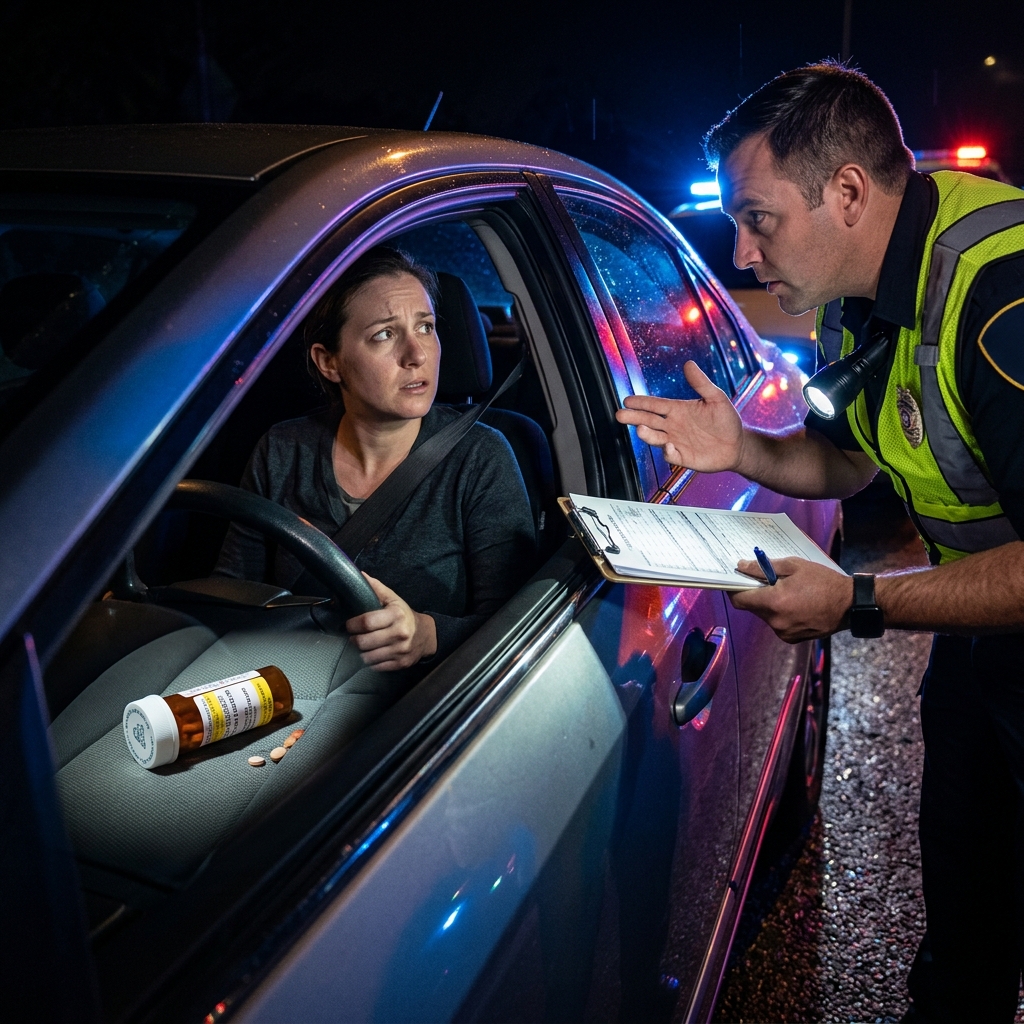
Many people assume that a legal prescription automatically protects them from driving-related charges. In reality, that assumption is often wrong. A medication can be lawfully prescribed and still leave a driver too impaired to operate a vehicle safely, which means a DUI or similar drugged-driving charge may still apply.
The core issue is not whether the medicine was obtained legally. The key question is whether it affected the driver’s mental or physical ability to drive with ordinary care. Across the United States, impaired driving laws can reach prescription drugs, over-the-counter medicines, marijuana, and other substances that reduce alertness, coordination, judgment, or reaction time.
Why a Legal Prescription Is Not a Safe Harbor
Prescription medication is not a blanket defense to impaired driving allegations. State laws generally focus on impairment, and many states allow prosecution when a drug makes a driver incapable of safe driving, even if the medication was prescribed and used exactly as directed.
That principle matters because a medication can produce side effects that affect driving without causing obvious intoxication. Drowsiness, blurred vision, slowed reaction time, dizziness, and poor coordination are all well-recognized warning signs that a medication may be unsafe before driving.
- Legal possession of the medicine does not automatically mean legal driving after taking it.
- A driver may still be charged if the drug causes unsafe impairment.
- Therapeutic use can still be risky if the medication affects alertness or judgment.
How the Law Usually Measures Drug Impairment
Drugged-driving laws usually fall into two broad categories. Some states rely on general impairment rules, while others also use numeric or zero-tolerance standards for specified drugs.
| Approach | What it means | Typical effect on prescription-drug cases |
|---|---|---|
| Impairment-based law | Driving is illegal when a substance makes the person unable to drive safely | The prosecution focuses on the driver’s condition and behavior |
| Zero-tolerance law | Driving with any measurable amount of certain drugs is illegal | More common for illegal drugs, but some states apply it to specified substances |
| Per se law | Driving is illegal above a set concentration of a drug in the body | The chemical level itself may establish the offense |
According to the Governors Highway Safety Association, states use both impairment-based and per se or zero-tolerance frameworks to address drug-impaired driving. In practice, this means two drivers taking the same prescription may face different legal exposure depending on the state, the medication, and how impairment is proven.
Common Prescription Medications That Can Affect Driving
Not every medicine creates a driving problem. The FDA says most medications do not affect driving, but some prescription and nonprescription drugs can make it unsafe to get behind the wheel. The risk is especially important when a medicine causes sedation, mental slowing, or reduced coordination.
Examples of drugs that may impair driving include opioids, benzodiazepines, sleeping pills, some antidepressants, antipsychotics, antiseizure medicines, and certain medicines used for allergies, motion sickness, diarrhea, or bladder control.
- Opioids: may cause drowsiness, slowed reaction time, or poor judgment.
- Anti-anxiety medicines: can reduce alertness and coordination.
- Sleeping pills: may leave residual next-day impairment.
- Some antidepressants: may cause fatigue, dizziness, or blurred vision.
- Muscle relaxants and seizure medicines: can affect concentration and motor control.
The risk is not limited to prescription drugs. Over-the-counter cold medicines, allergy products, cough suppressants, and sleep aids can also make driving dangerous.
What Prosecutors Look For in a Prescription-Drug DUI
Because prescription drugs may not have the same obvious signs as alcohol, police and prosecutors often rely on a mix of observations, testing, and expert evidence. They may look at how the driver behaved, what officers observed during the stop, and whether the person showed signs of impairment consistent with the medication taken.
Evidence often includes erratic driving, poor field sobriety performance, slurred speech, confusion, or difficulty following instructions. In some cases, chemical testing may be used, but impairment-based cases do not always depend on a specific drug concentration.
- Driving pattern before the stop
- Physical signs such as drowsiness or unsteady movement
- Field sobriety test performance
- Statements about recent medication use
- Toxicology or blood results when available
Why Side Effects Matter Even When You Take the Medicine Correctly
One of the most important misconceptions about drugged driving is the idea that following a prescription eliminates risk. The California Office of Traffic Safety states that taking prescription medication according to a doctor’s orders is not a valid excuse for driving while impaired.
That warning reflects a practical reality: a dose that is appropriate for treatment can still impair a particular person. Effects can vary depending on age, body weight, sleep, other medications, alcohol use, and whether the driver has built up tolerance.
Some drugs may also remain impairing for many hours after use, and certain products can affect driving into the next day. For that reason, the safest rule is not whether the medicine was prescribed, but whether the driver can genuinely operate a vehicle safely.
How Drivers Can Reduce Their Risk
Safe medication use and safe driving go together. The FDA recommends that people understand a medicine’s warnings, talk with a health care professional about side effects, and avoid driving when a medication could affect alertness or coordination.
Drivers should also read labels carefully. Warnings about operating machinery or about drowsiness should be treated seriously because they often apply to driving.
- Ask a doctor or pharmacist whether the medication can affect driving.
- Try a new medicine when you do not need to drive.
- Avoid alcohol or other sedating substances when taking medications that warn about drowsiness.
- Plan alternate transportation if the medicine makes you sleepy, dizzy, or mentally slow.
- Review warning labels on both prescription and over-the-counter products.
What Happens If You Are Stopped While Taking Medication?
If a driver is stopped and officers suspect impairment, the fact that the medicine was prescribed may not end the investigation. In many states, the question becomes whether the drug affected driving ability at the time, not whether it was legally obtained.
That distinction is important because a prescription may help explain why a driver took the substance, but it may not defeat a DUI charge. A defense may depend on proving that the driver was not impaired, that the medicine was taken correctly, or that another factor caused the observed symptoms. The available defenses vary widely by state law and facts of the case.
Prescription Drugs, Over-the-Counter Medicines, and Marijuana: A Shared Safety Issue
Drugged driving laws are broader than prescription medicine alone. The same safety principles apply to marijuana, illicit drugs, and many common household medicines that can reduce alertness or coordination.
That broader reach reflects the way these substances affect the brain. Medications and drugs can alter attention, reaction time, balance, perception, and judgment, all of which are critical to safe driving. When those functions are reduced, crash risk rises regardless of whether the substance was bought at a pharmacy, obtained from a physician, or used recreationally.
Frequently Asked Questions
Can I be arrested for DUI if I took my medicine exactly as prescribed?
Yes. Many states allow charges when a prescription drug impairs driving, even if the medication was used as directed.
Do police need a blood test to prove prescription-drug DUI?
Not always. In many cases, officers and prosecutors rely on driving behavior, physical signs, and field observations to show impairment.
Are over-the-counter medicines also a problem?
Yes. The FDA and traffic safety agencies warn that some OTC cold, allergy, sleep, cough, and motion-sickness medicines can impair driving.
What if the medicine makes me sleepy only sometimes?
That is still a warning sign. If a drug sometimes causes drowsiness or slowed thinking, it may be unsafe to drive until you know how it affects you.
Is marijuana treated differently from prescription medication?
Not in terms of safety. Driving while impaired by marijuana is still illegal, and many states use similar impaired-driving rules for marijuana and other drugs.
Practical Takeaways for Drivers
Prescription medication can be medically appropriate and still legally risky behind the wheel. The central issue in most drugged-driving cases is impairment, not intent. If a drug affects alertness, coordination, or judgment, it can create both a safety hazard and potential DUI exposure.
The safest approach is simple: learn the side effects, monitor how a medication affects you, and do not drive if there is any meaningful doubt about your ability to do so safely. That precaution is especially important for medications that carry drowsiness warnings or affect the central nervous system.
References
- Your Guide to Wisconsin Drugged Driving Laws — Hupy and Abraham, S.C. — FAQ page. https://www.hupy.com/faqs/your-guide-to-wisconsin-drugged-driving-laws.cfm
- Prescription Medication as a Legal Basis for DUI or DWI — Justia. https://www.justia.com/criminal/drunk-driving-dui-dwi/handling-a-dui-stop/prescription-medication-dui/
- Drug-Impaired Driving — California Office of Traffic Safety. https://www.ots.ca.gov/media-and-research/campaigns/drugged-driving/
- Some Medicines and Driving Don’t Mix — U.S. Food and Drug Administration. https://www.fda.gov/consumers/consumer-updates/some-medicines-and-driving-dont-mix
- Drugged Driving—What You Should Know — U.S. Department of Justice, Get Smart About Drugs. https://www.getsmartaboutdrugs.gov/family/drugged-driving%E2%80%94what-you-should-know
- Impaired Driving — Kent County, Michigan. https://www.kentcountymi.gov/1540/Impaired-Driving
- Drug-Impaired Driving — Governors Highway Safety Association. https://www.ghsa.org/state-laws-issues/drug-impaired-driving
Similar Articles








Read full bio of medha deb




