
How Civil Forfeiture Turns Traffic Stops Into Asset Battles
A closer look at how seized cash, due process, and property rights collide during roadside stops.
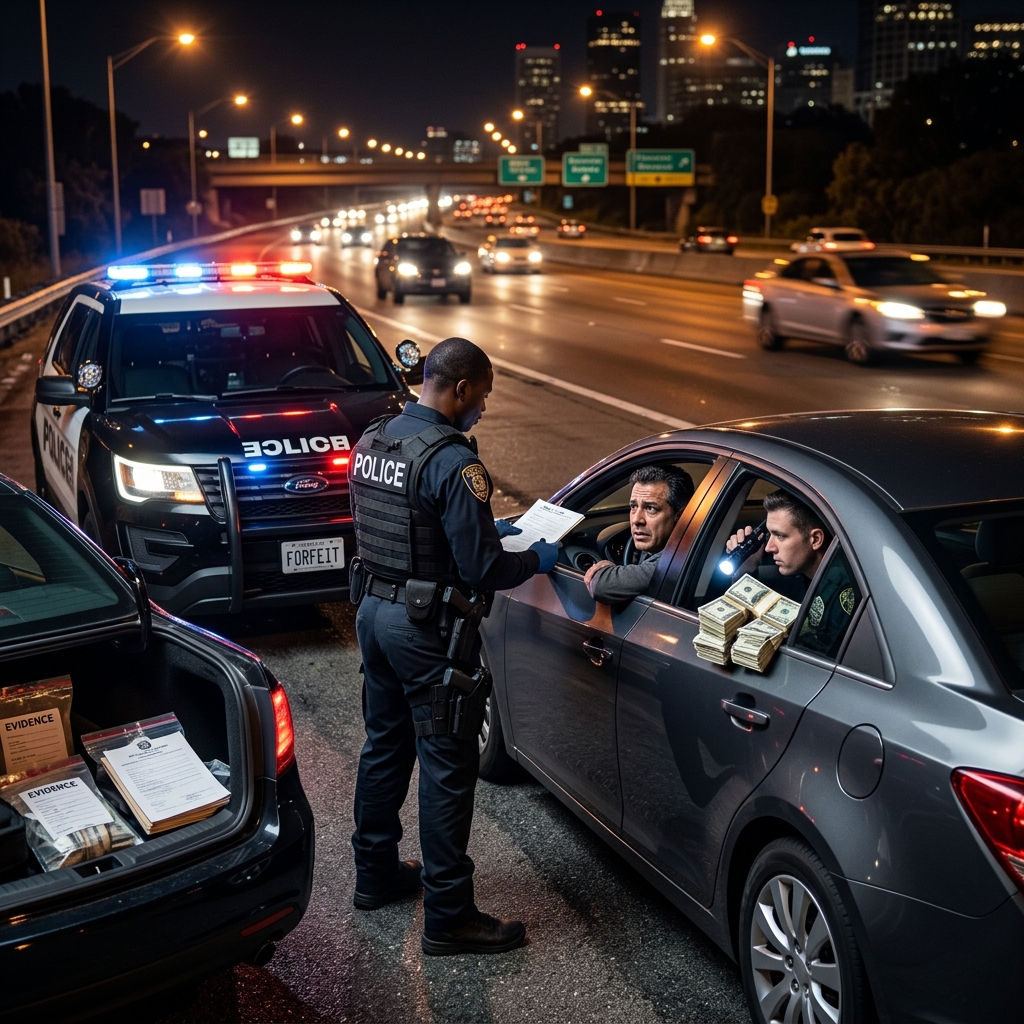
When a Routine Stop Becomes a Property Case
A traffic stop can begin as a minor roadside encounter and end as a major legal dispute over money, vehicles, or other valuables. In civil forfeiture cases, law enforcement may seize property they believe is tied to crime, even when the owner is not charged with a criminal offense. That difference makes these cases especially controversial, because the legal fight often centers on the property itself rather than on a person’s guilt or innocence.
This issue has attracted attention in cases involving large amounts of cash found during highway stops, but the underlying legal question reaches much further. Civil forfeiture can affect drivers, passengers, business owners, and even people who later claim they had no knowledge that their property was connected to illegal activity. The result is a system that can move quickly against property while moving slowly for the person trying to get it back.
What Civil Forfeiture Actually Means
Civil forfeiture is a legal process that allows the government to take property that is alleged to be connected to criminal conduct. Unlike criminal forfeiture, which generally follows a criminal conviction, civil forfeiture is filed against the property itself. That is why cases often have titles that read like a property is the defendant.
The justification for this system is that certain items, especially cash, vehicles, and equipment, may be used to facilitate crimes or may be proceeds of unlawful conduct. Supporters argue that forfeiture helps disrupt drug trafficking, money laundering, and other illegal enterprises. Critics respond that the process can create incentives to seize first and litigate later, especially when property is valuable and owners face a difficult burden to recover it.
In practical terms, once property is seized, the owner may need to navigate notice requirements, filing deadlines, court procedures, and proof issues. If the owner does nothing, the government can often move toward permanent forfeiture. If the owner contests the case, the dispute can become lengthy and expensive.
Why Traffic Stops Are a Common Starting Point
Traffic stops are one of the most common settings for asset seizures because officers may encounter cash, packaged goods, hidden compartments, or other items while conducting a roadside investigation. A stop for speeding, equipment violations, or lane issues may expand into questions about travel plans, vehicle ownership, or suspicious behavior. If officers believe there is probable cause to connect the property to a crime, they may seize it on the spot.
This can happen even when the amount of cash involved is not itself illegal. Carrying a large sum of money is not a crime by itself. The legal issue becomes whether officers can point to surrounding facts that suggest the money was tied to drug trafficking, fraud, or another offense. That is one of the most disputed parts of these cases, because innocent explanations for carrying cash can exist alongside suspicious circumstances.
For many property owners, the traffic stop is the last time they physically possess what is seized. After that, they are often dealing with paperwork, formal notices, and a legal system that may be unfamiliar and unforgiving.
The Central Due Process Question
The strongest criticism of civil forfeiture is that it can place the burden on the property owner to fight for the return of seized assets. In a criminal case, the government must prove guilt beyond a reasonable doubt. In a forfeiture case, the owner may need to assert an ownership interest, challenge the government’s claims, and prove lawful possession or innocence in some fashion, depending on the jurisdiction and facts.
That burden matters because a seizure can be devastating even before any court reaches the merits. Cash may be needed for rent, payroll, medical expenses, or travel. A seized vehicle can affect employment and daily life. If a business account or inventory is tied up, the consequences can spread beyond the immediate owner.
Advocates for reform argue that due process requires a quick hearing shortly after a seizure, where a judge can decide whether the government had a valid basis to take the property in the first place. They also argue that owners should have a realistic path to challenge the seizure, access counsel where possible, and recover property without being forced into a protracted and expensive fight.
Why Critics Say the System Needs Guardrails
Opponents of current forfeiture practices focus on incentives and fairness. When agencies can retain some or all of the proceeds from seized property, critics say the system may encourage aggressive enforcement. Even if most officers act in good faith, the structure itself can create public distrust when seizures appear disconnected from criminal charges or convictions.
Another concern is that many owners lack the resources to litigate. A person who has already lost cash or a vehicle may not be able to hire a lawyer or keep up with deadlines. That practical imbalance can mean the government effectively wins by default, even in cases where the underlying facts are disputed.
Critics also point to the difficulty of proving an innocent-owner defense. A driver may claim the property belonged to someone else, or that the cash came from lawful work, savings, or a family transaction. In theory, those explanations can defeat forfeiture. In practice, the owner must often gather records, witness statements, and other proof after the seizure has already occurred.
How the Government Defends Seizures
Government agencies typically argue that forfeiture is an important tool for removing the profits and instruments of crime. From that perspective, a seizure can preserve evidence, prevent assets from being moved, and disrupt criminal operations before funds disappear. Law enforcement also maintains that forfeiture laws are subject to judicial oversight and statutory procedures.
Officials often emphasize that seizures are not automatic takings. In many cases, officers must articulate a lawful basis for believing the property is connected to criminal conduct. Prosecutors then have deadlines to file forfeiture actions and provide notice. If the owner contests the case, the government must present evidence supporting forfeiture.
Still, the practical reality is that the contest usually begins only after the property is already in government hands. That timing is what fuels much of the debate over fairness.
Common Questions People Ask After a Seizure
- Can police take cash during a traffic stop? Yes, if they claim a lawful basis to believe it is connected to criminal activity.
- Do charges have to be filed first? Not always. Civil forfeiture can proceed separately from a criminal case.
- Can an innocent owner get property back? Often yes, but the process may require fast action and supporting evidence.
- Is carrying a lot of cash illegal? No. The dispute is usually about the alleged source or intended use of the money.
- Does the owner have to go to court? In many contested cases, yes, especially if the government does not voluntarily return the property.
A Simple Comparison of Criminal and Civil Forfeiture
| Feature | Criminal Forfeiture | Civil Forfeiture |
|---|---|---|
| Main target | Person after conviction | Property itself |
| Trigger | Usually a criminal case | Alleged link to crime |
| Burden | Government proves criminal guilt | Owner may need to fight for return |
| Timing | After conviction | Can begin quickly after seizure |
| Typical controversy | Sentence-related punishment | Due process and property rights |
Why the Debate Has Spread Beyond High-Value Cash Cases
Although headline cases often involve large sums of money, the legal principles apply to many kinds of property. Cars, phones, boats, electronics, and business equipment can all be swept into forfeiture disputes. In some situations, the property is essential to the owner’s work or family life, which raises the stakes well beyond the amount listed on a seizure report.
The broader policy question is whether forfeiture rules are calibrated to punish and deter wrongdoing without creating unfair outcomes for people who cannot quickly prove their rights. Legislatures and courts in many places continue to wrestle with that balance. Some reform proposals focus on raising the government’s burden, requiring faster hearings, limiting agency access to forfeiture proceeds, or tying forfeiture more closely to criminal convictions.
These proposals reflect a common theme: when the government takes property without a conviction, the process must be transparent, prompt, and reviewable if it is to maintain public confidence.
What Property Owners Can Do After a Seizure
Anyone whose property is seized during a traffic stop should act quickly. Deadlines can be short, and waiting too long may make recovery much harder. The first step is usually to read every notice carefully and confirm whether a forfeiture complaint has been filed. If so, the owner may need to file a claim, answer a complaint, or request a hearing.
It also helps to gather documentation immediately. Receipts, bank records, employment records, travel records, and witness statements can all help explain where the property came from and why it was being carried. If the property belongs to a business or another person, records showing ownership and lawful purpose may be critical.
Because forfeiture rules vary by jurisdiction, many owners also seek legal help early. A lawyer can identify deadlines, challenge deficient notices, and argue for the return of property if the government’s evidence is weak. Even when the amount seized is modest, the cost of inaction can be far greater than the cost of responding promptly.
What Makes These Cases So Politically Sensitive
Civil forfeiture sits at the intersection of crime control, property rights, and public trust. Supporters see a tool that helps law enforcement reach the profits of crime. Critics see a process that can punish people without the protections that normally come with criminal prosecution. Both sides agree that the issue matters because it affects how power is exercised on everyday roadsides and highways.
That tension explains why traffic-stop seizures often draw strong reactions. A roadside encounter is supposed to be temporary and limited. When it becomes a fight over major assets, the public naturally asks whether the law is being used fairly, whether owners get a meaningful chance to respond, and whether the government’s authority needs clearer limits.
As courts and lawmakers continue to revisit forfeiture rules, the core dispute remains the same: how to stop real criminal activity without turning property seizure into an end run around the safeguards of ordinary justice.
Frequently Asked Questions
Is civil forfeiture the same as a fine? No. A fine is a punishment imposed on a person, while civil forfeiture is a proceeding aimed at the property itself.
Can seized money be returned? Yes, if the owner successfully challenges the seizure or if the government cannot prove the required connection to criminal activity.
Does a traffic violation justify forfeiture? Not by itself. Officers generally need facts suggesting the property is connected to a separate crime.
Why do forfeiture cases move so slowly after a seizure? The government may have filing and service deadlines, while the owner may need time to gather evidence and respond.
What is the biggest risk for owners? Missing deadlines or failing to challenge the seizure can lead to the loss of the property by default.
References
- Nevada police claim millions in seized property every year. A lawsuit wants big changes — The Nevada Independent. 2025-07. https://thenevadaindependent.com/article/nevada-police-claim-millions-in-seized-property-every-year-a-lawsuit-wants-big-changes
- Forfeiture of Assets — U.S. Department of Justice. 2024-10. https://www.justice.gov/criminal/criminal-fraud/forfeiture-1
- Asset Forfeiture Program — U.S. Department of Justice, Office of Justice Programs. 2024-06. https://bja.ojp.gov/program/asset-forfeiture-program/overview
- Policing for Profit: The Abuse of Civil Asset Forfeiture — Institute for Justice. 2024-02. https://ij.org/report/policing-for-profit-3/
- Asset Forfeiture — Congressional Research Service. 2024-05. https://crsreports.congress.gov/product/pdf/IF/IF11343
Similar Articles








Read full bio of medha deb




