
School Social Media Policies in the Digital Age
How schools are redefining social media rules to balance student rights, safety, learning, and community trust.
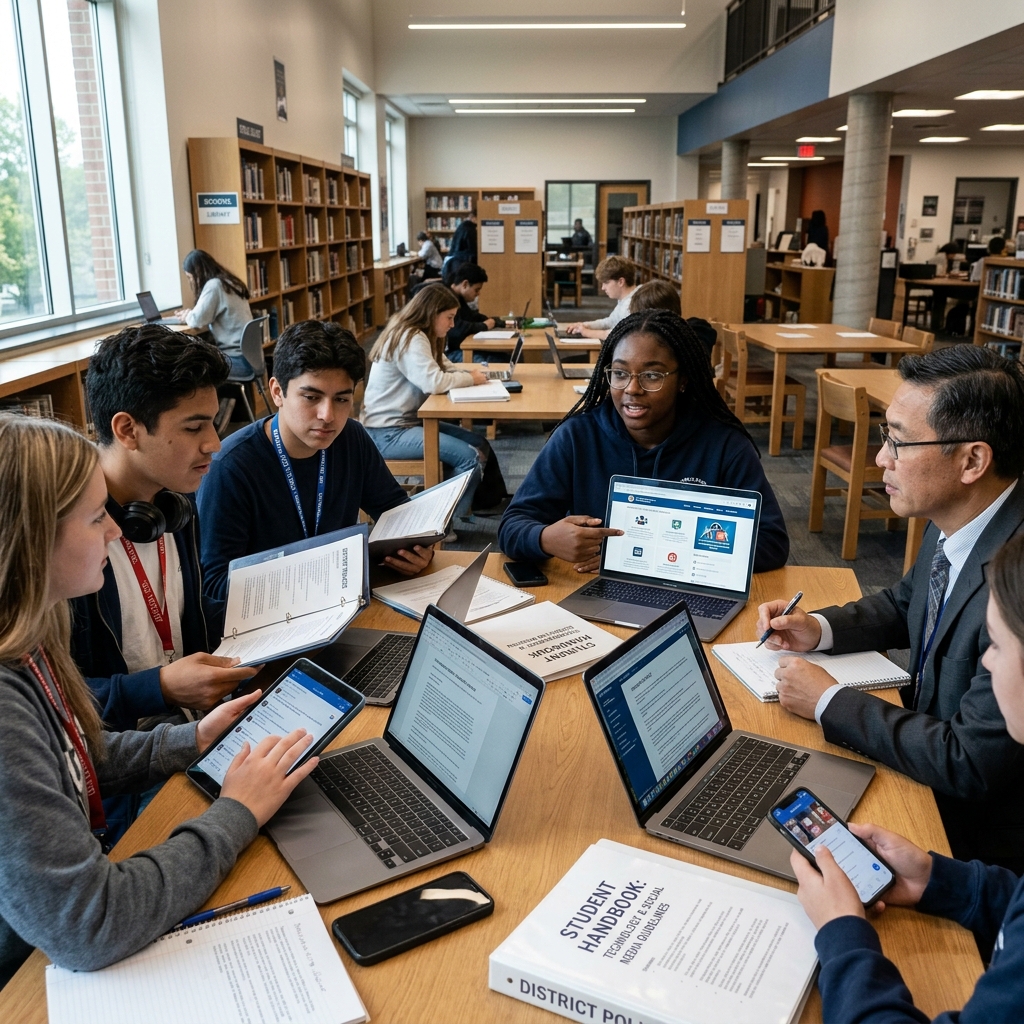
As smartphones and social networks have become a constant presence in students’ lives, K–12 schools have been forced to rethink how they handle social media use on and off campus. Districts now routinely adopt written policies that address everything from cyberbullying to staff–student communications, seeking to protect students while respecting legal rights and allowing technology to support learning.
This article examines how school social media policies are evolving, the legal and practical issues that drive them, and what families, educators, and students should understand about their rights and responsibilities.
Why Social Media Policies Have Become Essential
Schools are no longer dealing only with note-passing in class or conflicts that end when the dismissal bell rings. Online platforms allow conflicts, rumors, and threats to follow students 24/7, which can quickly affect the school environment.
Administrators increasingly see a formal social media policy as a necessary tool to:
- Protect student safety by addressing cyberbullying, harassment, and threats that may spill into school life.
- Clarify expectations for acceptable online behavior for both students and staff.
- Safeguard privacy when photos, videos, and personal data are shared online.
- Support digital learning by outlining how social platforms can be used for instruction.
- Reduce legal risk by documenting how the district addresses misconduct and protects rights.
Key Legal Principles Behind School Social Media Rules
Any school rule that touches student or employee speech must operate within a legal framework that includes constitutional protections, federal privacy laws, and state statutes. Policies must be written and applied in ways that consider at least four major legal themes:
1. Free Speech and Off-Campus Conduct
In the United States, students have First Amendment rights, but schools may restrict speech that substantially disrupts the educational environment or invades the rights of others. Courts have increasingly been asked to decide how this applies to off-campus social media posts that later affect school life, such as cyberbullying or threats. Districts therefore often limit their policies to conduct that has a clear connection to school operations, safety, or student well-being.
2. Student Privacy and Images
When schools post student photos or videos online, student privacy laws and local consent rules come into play. Many districts require written parental consent before using identifiable student images in public communications. Policies commonly address:
- When and how images of students may be shared on school or district accounts.
- Whether faces should be blurred or students only photographed in groups.
- Prohibitions on disclosing personally identifiable information without authorization.
3. Data Protection and Digital Footprints
Social media use can leave long-lasting digital trails. Schools increasingly link social media policies with broader data protection practices and vendor vetting, particularly if third-party platforms collect student data or offer educational tools. Policies may require staff to use only district-approved platforms for instruction and communication and keep professional social media accounts separate from personal ones.
4. Duty of Care and Harassment Prevention
Schools have a duty to provide a safe learning environment. When online harassment targets students or staff and undermines that environment, districts may be obligated to respond under anti-bullying or anti-discrimination laws. Many policies therefore highlight:
- Zero-tolerance stances on cyberbullying and threats.
- Reporting mechanisms for students, parents, and staff.
- Documented response protocols and disciplinary options.
Core Components of a Modern School Social Media Policy
While every district’s approach is different, effective school social media policies tend to share a common structure. They address who the rules apply to, what conduct is covered, and how violations will be handled.
| Component | Typical Policy Content |
|---|---|
| Scope | Defines whether rules apply to students, staff, volunteers, and official school accounts; clarifies coverage of on-campus and off-campus online conduct. |
| Acceptable Use | Explains what kinds of online behavior and educational use are allowed during school hours and on school devices. |
| Prohibited Conduct | Lists cyberbullying, harassment, threats, sharing obscene content, and unauthorized disclosure of student information as violations. |
| Privacy & Consent | Describes rules for posting student images and names, the need for media consent forms, and restrictions on sharing personal data. |
| Staff–Student Interactions | Draws boundaries for how educators may communicate with students online, including discouraging or prohibiting friending on personal accounts. |
| Enforcement | Outlines investigative steps, potential consequences, and appeal or grievance processes. |
| Education & Training | Commits to teaching digital citizenship and providing staff training to support safe and responsible use. |
Student-Focused Rules: Safety, Expression, and Digital Citizenship
Social media rules directed at students aim to protect them from harm while also teaching long-term digital skills. Rather than simply banning platforms, many schools now emphasize digital citizenship education and positive online behavior.
Acceptable Student Use
Policies typically spell out when students may use personal devices and which platforms may be accessed on school networks. Common approaches include:
- Allowing social media use only at designated times (such as lunch) or with explicit teacher permission.
- Blocking certain sites on school networks, but teaching about them in class through screenshots or simulations.
- Encouraging students to use classroom-specific or closed platforms for schoolwork.
Cyberbullying and Online Harassment
Most districts treat cyberbullying as an extension of existing anti-bullying policies. Typical policy language addresses:
- Harassing or threatening messages sent through social media, whether during or after school hours, when they affect the school community.
- Posting embarrassing images or personal information about classmates.
- Impersonating others online to damage reputations.
Policies often emphasize that online harassment can lead to school consequences, counseling referrals, and, in severe cases, involvement of law enforcement.
Teaching Digital Citizenship
In addition to rules, many districts introduce structured digital citizenship curricula that cover privacy, online relationships, media literacy, and digital footprints. These programs help students understand:
- How public posts can affect college admissions or future employment.
- How to identify misinformation and manipulative content.
- Strategies for responding to harassment and reporting abuse.
Staff Guidelines: Professionalism and Boundaries Online
School districts also craft social media guidance for teachers and other employees, focusing on maintaining professional boundaries, protecting student privacy, and avoiding conflicts of interest.
Separating Personal and Professional Profiles
Many policies instruct staff to keep personal and professional online identities distinct. Common expectations include:
- Using school-approved or district-managed accounts for communication with students and families.
- Not identifying themselves as speaking on behalf of the district on personal accounts.
- Refraining from using school logos or mascots in ways that could imply official endorsement.
Communicating with Students
Policies increasingly discourage or prohibit teachers from “friending” students on personal social accounts or using direct messages for non-instructional contact. Instead, districts recommend:
- Communicating through district email, learning management systems, or official messaging platforms.
- Avoiding one-on-one conversations on informal messaging apps about personal topics.
- Keeping all communication transparent, professional, and related to educational responsibilities.
Staff Conduct and Online Speech
Teachers and staff are reminded that their online behavior can affect community trust and employment. Many best-practice documents warn against:
- Posting content that could be perceived as bullying, harassing, or discriminatory toward students, parents, or colleagues.
- Sharing student images or information on personal accounts.
- Using the school network during work hours for personal social media activity.
Parent Consent, Opt-Outs, and Transparency
Parents increasingly expect to be informed when schools use social media for publicity or learning. Effective policies involve parents early and provide meaningful choice, particularly around student photos and online participation.
Media Consent and Opt-Out Forms
Many districts use written forms that allow parents to grant or withhold permission for the school to share identifiable images or videos of their children.
Good practice often includes:
- Describing which platforms are used (for example, official district Facebook or Instagram pages).
- Explaining whether students will be identified by name, grade, or not at all.
- Ensuring that opting out does not penalize students or exclude them from core activities.
Engaging Families in Policy Development
Some districts invite parent and community input when drafting or updating social media policies to increase trust and compliance. This might involve:
- Working with parent-teacher organizations to review policy drafts.
- Hosting information nights or webinars on digital safety and the new rules.
- Providing easy-to-read summaries, FAQs, and translations of policies.
Social Media for Learning and Community Building
Despite the risks, schools are increasingly using social media as a tool for instruction and communication. Policies that completely ban social platforms often fail to prepare students for the world they live in. Instead, many districts balance restrictions with structured, educational use.
Instructional Use in Classrooms
Teachers might use moderated social tools to:
- Host class discussions, polls, or backchannel chats during lessons.
- Share student work with families through closed or classroom-only platforms.
- Connect with experts or partner classrooms in other locations.
Policies often require that these activities align with clear learning goals and be conducted on approved platforms with age-appropriate privacy settings.
District and School Branding
District-wide social media accounts have become important channels for communicating with families and the wider community. Best practices recommended for official school accounts include:
- Ensuring consistent branding and messaging across district and school profiles.
- Designating responsible staff to oversee content and respond to comments.
- Monitoring posts for inappropriate comments and having a plan to address negative or harmful content.
Monitoring, Archiving, and Recordkeeping
Because communications through official accounts may be subject to public records laws, some districts implement tools to archive social media posts and interactions. Policies may specify:
- How long posts and comments must be retained.
- Who is responsible for downloading or storing records.
- Procedures for responding to information requests or complaints.
Challenges and Emerging Trends
Social media platforms and norms change quickly, often faster than formal policy cycles. Schools face ongoing challenges in keeping rules both relevant and enforceable.
Rapidly Changing Platforms
New apps and features emerge regularly, some emphasizing anonymity or encrypted messaging. Policies that list specific platforms can become outdated; many districts now write technology-neutral rules that focus on behavior rather than naming particular apps, while still training staff to stay informed about emerging tools.
Balancing Surveillance and Trust
Some parents and students worry that increased monitoring of online activity may infringe privacy. Districts attempting to balance safety and trust often:
- Limit monitoring to official channels and public content.
- Disclose monitoring practices in policy documents.
- Emphasize education and support over punishment, especially for minor first-time incidents.
Equity and Access
Policies must also account for differences in access to devices and connectivity. If schools rely heavily on social media for communication or class activities, students without reliable internet may be disadvantaged. Some districts address this by offering alternative communication methods and ensuring that essential information is also shared through non-digital channels.
Practical Tips for Stakeholders
Everyone in the school community has a role in making social media policies effective. The following suggestions can help students, parents, and educators navigate the digital landscape more safely and productively.
For Students
- Review your school’s technology or social media policy and ask questions if anything is unclear.
- Think before posting: assume that anything shared publicly can be copied and viewed by teachers, parents, and future employers.
- Report cyberbullying, threats, or harassment promptly to a trusted adult.
- Use privacy settings and avoid sharing personal contact information or location publicly.
For Parents and Guardians
- Read media consent and technology use forms carefully before signing.
- Talk with children regularly about their online experiences, including both positive and negative interactions.
- Model responsible social media use and avoid posting content that could embarrass or endanger your child.
- Stay informed about the platforms your child uses and how school policies address them.
For Educators and School Leaders
- Collaborate with legal counsel and IT specialists when drafting or updating social media policies.
- Provide regular training for staff and age-appropriate lessons for students on digital citizenship.
- Evaluate potential instructional uses of social media against clear learning goals and student privacy considerations.
- Ensure policies are easy to find, written in accessible language, and translated as needed for your community.
Frequently Asked Questions About School Social Media Policies
Can schools discipline students for off-campus social media posts?
In many jurisdictions, schools may take action when off-campus online behavior substantially disrupts the school environment or targets members of the school community with threats or harassment. However, they must still respect students’ free speech rights, and the exact boundaries depend on local law and court decisions. Families should consult their district policy and, if needed, seek legal advice for specific situations.
Do parents have to allow schools to post photos of their children?
Many districts require written permission before posting identifiable student images on public-facing platforms. Parents often have the option to opt out completely or restrict certain uses. If you have concerns, ask your school how to update your consent preferences.
Are teachers allowed to friend students on personal social media accounts?
Numerous districts advise against or explicitly prohibit staff from following or friending currently enrolled students on personal accounts, in order to maintain professional boundaries. Instead, they encourage the use of official school or classroom communication channels.
What should a student do if they are being cyberbullied?
Students are usually encouraged to save evidence (screenshots or messages), avoid responding aggressively, and report the incident to parents, teachers, or administrators. Many districts have specific cyberbullying response plans and can provide support such as counseling or mediation. If threats are serious or involve protected characteristics, law enforcement or other authorities may become involved.
How often should schools update their social media policies?
Because technology changes rapidly, it is prudent for schools to review their policies regularly—often annually or every few years—and after major platform or legal developments. Ongoing training and communication help ensure that policy updates translate into everyday practice.
References
- How to craft useful, student-centered social media policies — eSchool News. 2018-01-16. https://www.eschoolnews.com/featured/2018/01/16/craft-useful-student-centered-social-media-policy/
- Promoting Safe Social Media Use for Students and Teachers — PublicSchoolWORKS. 2023-05-01. https://corp.publicschoolworks.com/resource/promoting-safe-social-media-use-for-students-and-teachers/
- Social Media Guidelines for NYCPS Staff — New York City Public Schools InfoHub. 2023-09-12. https://infohub.nyced.org/in-our-schools/working-with-nycps/current-employees/social-media-guidelines-for-doe-staff
- Social Media Guide for K-12 Schools: Best Practices — SchoolStatus. 2022-08-10. https://www.schoolstatus.com/blog/social-media-guide-for-schools
- Social Media Best Practices — Montgomery County Public Schools. 2022-06-01. https://www.montgomeryschoolsmd.org/social-media-best-practices/
- 5 Successful Social Media Strategies for Education — CivicPlus. 2021-03-15. https://www.civicplus.com/blog/sma/5-successful-social-media-strategies-for-education/
- Use of Social Media Policy — Watervliet City School District. 2019-07-01. https://www.watervlietcityschools.org/about-us/use-of-social-media-policy/
Similar Articles








Read full bio of medha deb


