
Making the Most of Back‑to‑School Tax‑Free Weekends
A practical guide to understanding sales tax holidays, what qualifies, and how families can safely maximize back‑to‑school savings.
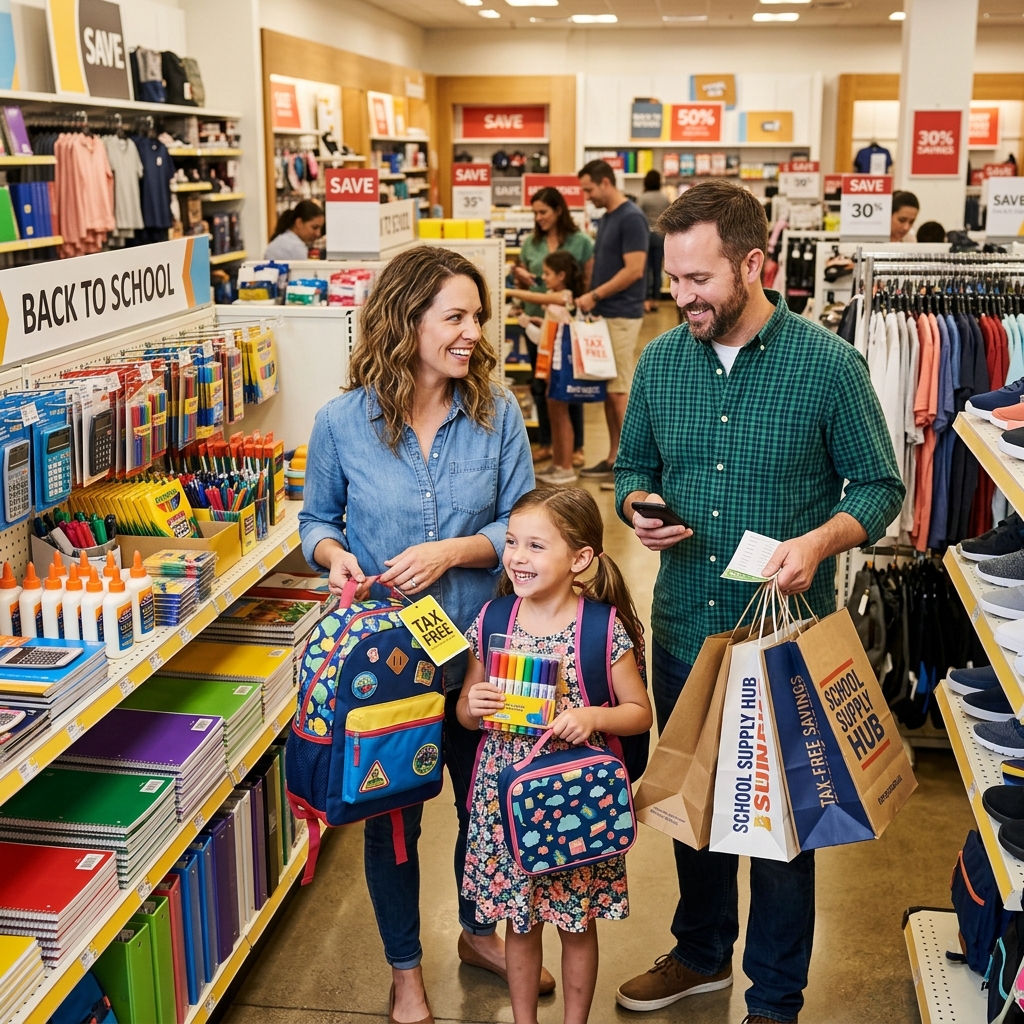
Every summer, many U.S. states offer sales tax holidays—short windows of time when certain purchases are exempt from state sales tax. These events, often called tax‑free weekends, are especially popular with families gearing up for back‑to‑school shopping. Understanding how these holidays work can help you stretch your budget and avoid costly mistakes.
What Is a Sales Tax Holiday?
A sales tax holiday is a legally defined period during which specified items are temporarily exempt from state (and sometimes local) sales tax. States adopt these holidays by statute or administrative action, generally targeting consumer needs like school supplies, clothing, and in some cases emergency preparedness or energy‑efficient products.
- Duration: Most back‑to‑school tax‑free weekends run for three days, starting early Friday and ending late Sunday.
- Scope: The exemption applies only to items and price limits defined by law or guidance from the state tax agency.
- Retailers: Both in‑store and online sellers doing business in the state can participate.
Although these holidays are widely advertised as “tax‑free,” it is critical to remember that only qualifying items purchased during the specified time are exempt. Everything else is still taxed in the usual way.
Common Features of Back‑to‑School Tax‑Free Weekends
While each state designs its own rules, many back‑to‑school sales tax holidays share a similar structure.
Typical Timing
Back‑to‑school tax‑free weekends are usually scheduled for early August, giving families time to shop before the school year begins. For example, several states begin their holidays at 12:01 a.m. on the first Friday in August and end late Sunday night.
Because timing is defined in law or official guidance, even a purchase at 11:59 p.m. may be treated differently than one made a few minutes later. Shoppers should verify exact dates and times on their state revenue or tax agency website.
Items That Often Qualify
Most back‑to‑school sales tax holidays focus on everyday school‑related purchases.
- Clothing and footwear for everyday wear, up to a specified price per item.
- School supplies such as notebooks, pens, binders, and calculators.
- Backpacks and other bags used by students.
- Computers and related equipment, often with higher price caps.
Some states also use back‑to‑school weekends to promote public policy goals. For example, Virginia includes hurricane preparedness items and Energy Star or WaterSense‑certified products in its annual sales tax holiday.
Price Limits and Per‑Item Rules
Qualification often depends on the price of each individual item, not the total cost of your cart.
| Item Type | Typical Rule | Example Limit* |
|---|---|---|
| Clothing & Footwear | Tax‑free if each item is under the state’s price cap. | Up to $100 per item in several states. |
| School Supplies | Selected supplies qualify when under a specified amount. | $20 per item for some Virginia school supplies. |
| Backpacks | Often treated separately, sometimes with quantity limits. | Up to $100 per backpack in Texas, max 10 per purchase. |
| Computers & Electronics | Higher caps reflect their typical price ranges. | Caps around $1,500 in some states. |
*Example limits based on selected state guidelines; actual caps vary by state and year.
What Usually Does Not Qualify
Tax‑free weekend advertisements can give the impression that everything in the store is exempt, but statutes and guidelines carefully restrict what qualifies.
- Business‑use purchases: Items bought primarily for use in a trade or business typically remain taxable.
- Rental items: Clothing or footwear rentals are commonly excluded.
- Luxury and non‑essential goods: Jewelry, cosmetics, eyewear, and furniture often do not qualify.
- High‑priced items: Any item above the per‑item price cap is normally fully taxable.
- Non‑covered categories: Vehicles, prepared food, gasoline, alcohol, and tobacco are excluded in many sales tax holidays.
States publish detailed lists that break down qualifying and non‑qualifying items. For example, Missouri defines eligible clothing, school supplies, computers, and certain software by statute for its Back‑to‑School Sales Tax Holiday.
In‑Store, Online, and Special Purchase Rules
Many consumers now shop online or use alternative purchasing methods. State tax agencies have adapted their guidance so tax‑free benefits apply to modern shopping habits, subject to clear conditions.
Online and Delivery Purchases
In several states, purchases made online during the sales tax holiday are treated the same as in‑store purchases, so long as the seller is doing business in the state and the transaction occurs during the holiday.
- The purchase date—not the delivery date—generally controls whether tax is due.
- Orders placed and paid for during the holiday are usually exempt if the item qualifies.
- If tax is charged in error on an eligible item, you can usually request a refund from the seller.
Layaway, Rain Checks, and Pre‑Orders
States differ on how they treat layaway plans and rain checks. For example, Texas explicitly allows tax‑free purchases when the final payment on a qualifying layaway item is made during the holiday. In contrast, South Carolina does not extend the exemption to items placed on layaway.
- Layaway: Check your state’s specific rules; eligibility can hinge on timing or whether the item was first placed on layaway before the holiday.
- Rain checks: Some states allow tax‑free treatment if the actual purchase occurs during the holiday using a rain check issued earlier; others do not extend the benefit to purchases completed after the window closes.
- Pre‑orders: In general, if payment is taken and the sale occurs during the holiday, qualifying items may be exempt even if shipped later.
Potential Savings and Budget Impact
The value of tax‑free weekends depends on the state’s sales tax rate and the amount you plan to spend. A 6% state sales tax, for example, effectively gives you a 6% discount on qualifying items purchased during the holiday.
- Families with multiple children purchasing clothing, school supplies, and electronics can save a noticeable amount.
- Budget‑conscious shoppers can align large school‑related purchases, such as laptops, with the holiday to maximize benefits.
- However, buying items solely because they are tax‑free can lead to unnecessary spending that outweighs the tax savings.
Policymakers also consider tax‑free weekends as tools to support retailers and stimulate local economies by concentrating consumer spending within a short period.
Legal and Administrative Foundations
Sales tax holidays are not informal promotional events; they are established by statute or administrative rule and implemented by state revenue agencies.
- States such as Missouri codify their Back‑to‑School Sales Tax Holiday in law, specifying dates and eligible items.
- Tax departments in Virginia, Texas, South Carolina, and Ohio publish detailed holiday guidance for both consumers and retailers.
- Retailers must correctly report exempt sales, often by using zero tax rates or special return adjustments.
This legal structure ensures that tax‑free treatment is consistent and enforceable and that taxpayers have clear rules to follow.
Practical Strategies to Maximize Tax‑Free Weekend Savings
A little preparation can significantly improve the value you get from back‑to‑school sales tax holidays.
Before the Holiday
- Check official state guidance: Visit your state tax or revenue department website to confirm dates, times, and qualifying items.
- Make a prioritized shopping list: Focus on items you genuinely need for the upcoming school year.
- Compare prices in advance: Tax‑free status does not guarantee the lowest overall price if retailers raise base prices.
- Plan around price caps: Look for qualifying items that fall below your state’s per‑item limits.
During the Holiday
- Keep receipts: Save documentation in case you need to challenge an incorrect tax charge.
- Ask questions at checkout: If you are unsure whether an item qualifies, confirm with the retailer before paying.
- Use both in‑store and online options: Take advantage of curbside pickup or online ordering if your state allows tax‑free treatment for remote sales.
- Stay within budget: Treat the holiday as a chance to reduce the cost of planned purchases, not as a reason to buy more.
After the Holiday
- Review charges: Verify that sales tax was not incorrectly applied to qualifying items.
- Request refunds when necessary: Many states instruct consumers to seek corrections directly from retailers if tax was improperly charged.
- Track savings: Knowing how much you actually saved can guide future decisions about participating in sales tax holidays.
Frequently Asked Questions (FAQs)
Are all school‑related items automatically tax‑free during the holiday?
No. Only items that fall within the categories and price limits defined by your state’s law or guidance are exempt. For example, basic supplies like notebooks may qualify, but decorative items, furniture, or high‑priced electronics may not.
Do local sales taxes also disappear during tax‑free weekends?
In some states, qualifying purchases are exempt from both state and local sales and use taxes for the duration of the holiday. In others, specific localities may opt out or follow different rules. Official guidance from your state’s revenue agency will explain how local taxes are treated.
Can I use coupons and still get tax‑free treatment?
Generally, using coupons does not disqualify a purchase from tax‑free treatment, but it may affect whether an item falls below the price cap. If a coupon lowers the effective price under the cap, the item may qualify; if the pre‑discount price is used, rules can differ. Check your state’s published guidance or retailer policy.
If I buy a qualifying item before the holiday and pick it up during the holiday, is it tax‑free?
Most states tie eligibility to the date of purchase, not pickup. If you paid for the item before the holiday, it is usually taxed in the normal way, even if you receive it later. If the sale is completed during the holiday, qualifying items are more likely to be exempt.
What should I do if a retailer incorrectly charges sales tax on an eligible item?
States commonly instruct consumers to seek a correction or refund directly from the retailer first. If you cannot resolve the issue, your state revenue agency may provide a process for reporting the problem or requesting assistance.
Do tax‑free weekends change from year to year?
Yes. Legislatures can amend statutes or adjust dates, and revenue departments may update guidance. Some states also add or remove categories of eligible items over time. Because of this, shoppers should confirm each year’s rules rather than relying on past experience alone.
Key Takeaways for Back‑to‑School Shoppers
- Sales tax holidays are legally defined events that temporarily exempt specified items from state and often local sales tax.
- Back‑to‑school tax‑free weekends usually focus on clothing, school supplies, backpacks, and sometimes computers, subject to per‑item price caps.
- Not all items qualify; business purchases, rentals, luxury goods, and high‑priced products are commonly excluded.
- Online and layaway purchases can qualify, but rules vary significantly by state.
- Consumers should rely on official guidance from their state tax or revenue agency to avoid misunderstandings and maximize savings.
Used wisely, back‑to‑school tax‑free weekends can offer meaningful savings on necessary purchases. By carefully reviewing state rules, planning ahead, and staying within budget, families can start the school year with essential supplies—without paying more in tax than the law requires.
References
- Guide to 2026 Tax-Free Weekends in Every State — NerdWallet. 2025-12-15. https://www.nerdwallet.com/taxes/learn/sales-tax-holiday-back-to-school-shopping
- Tax Free Weekend — South Carolina Department of Revenue. 2024-07-01. https://dor.sc.gov/communications/tax-free-weekend
- Sales Tax Holiday — Texas Comptroller of Public Accounts. 2024-06-10. https://comptroller.texas.gov/taxes/publications/98-490/
- Back to School Sales Tax Holiday — Missouri Department of Revenue. 2024-05-20. https://dor.mo.gov/taxation/business/tax-types/sales-use/holidays/back-to-school/
- Virginia Sales Tax Holiday — Virginia Department of Taxation. 2024-07-02. https://www.tax.virginia.gov/virginia-sales-tax-holiday
- Ohio Sales Tax Holiday 2026 — Ohio Department of Taxation. 2024-04-18. https://tax.ohio.gov/business/sales-and-use-tax/sales-tax-holiday
Similar Articles








Read full bio of Sneha Tete




