
NJ Warrants and Cell Phone Tracking Explained
How New Jersey’s courts reshaped police access to cell phone location data and what it means for your privacy rights today.
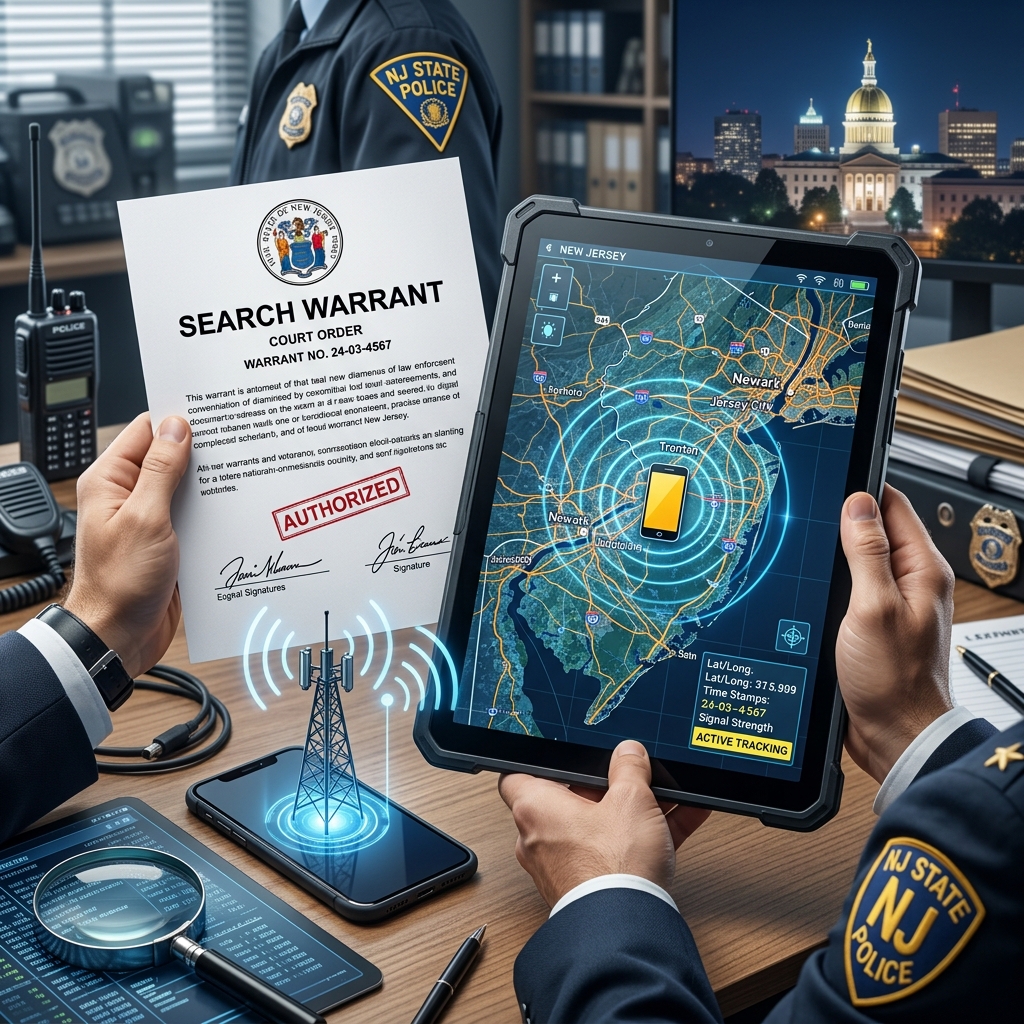
Digital devices have become an essential part of everyday life, and the legal system has been forced to catch up with the powerful surveillance capability that phones create. In New Jersey, the courts have taken a notably strong position on privacy when it comes to police tracking of cell phone location information, requiring warrants in most situations where officers want to access that data. This article explains how those rules developed, how they connect to national Fourth Amendment doctrine, and what practical protections they offer to people in the state.
Cell Phone Location Data: Why the Law Treats It Differently
Modern cell phones constantly communicate with nearby towers and, in many cases, send detailed location information to service providers and app developers. Those records can show where a device has been over days, weeks, or months, allowing law enforcement to reconstruct a person’s movements with striking precision. This kind of information raises unique concerns because:
- Continuous tracking: Location logs can reveal movements at all hours, not just isolated snapshots.
- Sensitive patterns: Data may expose visits to medical clinics, religious centers, political meetings, or other private activities.
- Involuntary collection: Phones create much of this data automatically as soon as they are powered on and connected to a network.
Because this tracking potential is far greater than traditional surveillance methods, courts have had to reassess how constitutional privacy protections apply to location information generated by digital devices.
The Legal Background: Search Warrants and the Third-Party Doctrine
To understand New Jersey’s approach, it is helpful to look first at the broader constitutional framework in the United States.
The Fourth Amendment to the U.S. Constitution protects against unreasonable searches and seizures, generally requiring law enforcement to obtain a warrant supported by probable cause before conducting a search. Historically, courts held that people had a reduced expectation of privacy in information voluntarily shared with third parties, such as telephone companies or banks. Under this third-party doctrine, police often did not need warrants to obtain certain records from providers.
However, as phones became more sophisticated, the Supreme Court signaled that digital data may require stronger safeguards:
- Riley v. California: The Court ruled that officers must obtain a warrant before searching the contents of a cell phone seized during an arrest, recognizing the vast amount of personal information stored on modern devices.
- Carpenter v. United States: The Court later held that historical cell site location information (CSLI) is not governed by the traditional third-party doctrine and usually requires a warrant because it can reveal comprehensive details about a person’s movements.
These federal cases established that digital information, including phone contents and long-term location data, can receive heightened Fourth Amendment protection compared to older categories of records.
New Jersey’s Constitutional Path: Privacy Under Article I, Paragraph 7
New Jersey’s Supreme Court has interpreted the state constitution to provide robust privacy protections, sometimes going beyond the minimum requirements of federal law. Article I, Paragraph 7 of the New Jersey Constitution operates similarly to the Fourth Amendment but can offer additional safeguards where the state’s high court finds them necessary.
In a key decision involving cell phone location tracking, the New Jersey Supreme Court concluded that individuals have a protected privacy interest in the location of their phones and that police generally must obtain a warrant before accessing that information. The court explicitly recognized that treating a phone as a tracking device has serious implications, given how integral cell phones are to daily life and how difficult it would be for most people to function without one.
Importantly, the ruling emphasized that:
- The state constitution shields the location information of a person’s cell phone from warrantless tracking by police.
- Law enforcement must demonstrate probable cause and obtain a valid warrant, or fit within a recognized exception, to access such data.
- Less demanding standards, such as proving only “reasonable grounds,” are not sufficient for ongoing location monitoring.
This approach placed New Jersey among the jurisdictions that treat cell phone location tracking as a serious intrusion requiring judicial oversight.
From “Reasonable Grounds” to Probable Cause: Raising the Bar
Before these developments, New Jersey officers could often rely on statutory procedures that required only a lower threshold than probable cause to access certain phone data. For example, law enforcement might show “reasonable grounds” to obtain location information under state laws governing electronic surveillance. After the state Supreme Court’s privacy-focused ruling, that more lenient standard was no longer sufficient for location tracking.
Now, when police seek to monitor or reconstruct a suspect’s movements using cell phone data, they generally must satisfy the classic warrant requirements:
- Probable cause: A reasonable belief, based on specific facts, that evidence of a crime will be found in the data requested.
- Judicial authorization: A neutral judge must review the application and decide whether the warrant should issue.
- Scope and time limits: The request should be tailored to a relevant period and specific investigative needs, rather than broadly sweeping in large volumes of unrelated data.
By aligning cell phone tracking with traditional warrant standards, New Jersey courts have sought to balance investigative tools with strong privacy protections.
Location Tracking vs. Phone Records: Different Rules, Different Risks
It is important to distinguish between tracking where a phone goes and accessing phone records like call logs or subscriber information, because they may be governed by different legal procedures.
| Type of Data | Description | Typical Legal Standard in NJ |
|---|---|---|
| Real-time or historical location data | Records showing where a phone was at specific times, often using cell towers or GPS. | Generally requires a warrant based on probable cause, subject to recognized exceptions. |
| Telephone records | Information about calls made or received, numbers dialed, and certain subscriber details. | May be obtained through court orders or similar judicial processes; the exact requirement can differ from location tracking. |
| On-device contents | Messages, photos, app data stored directly on the phone. | Generally requires a search warrant under both New Jersey and U.S. Supreme Court precedent. |
Although the procedures are not identical, New Jersey decisions consistently stress the need for judicial oversight and a clear showing of necessity before police obtain highly revealing digital information.
Geofence Warrants and Group Location Searches
Newer investigative techniques, such as geofence warrants, raise additional privacy issues. These warrants involve asking a technology company to provide anonymized location data for all devices that were present within a defined area during a specific time window, often near the scene of a crime. Investigators then narrow down the results to identify potential suspects or witnesses.
New Jersey courts have allowed geofence warrants under certain conditions, but they require a proper factual foundation and judicial scrutiny. The essential principles include:
- Police must establish probable cause to believe that relevant evidence will be found in the location data from the defined area.
- Requests should be structured to limit intrusion, often by starting with anonymized data and only later requesting identifying information for devices that appear closely linked to the crime.
- Courts recognize that most people carry phones, so warrants may proceed even without proof that a specific suspect was using a device at the time of the offense.
While geofence warrants broaden the volume of data initially collected, judicial controls and staged disclosure procedures aim to reduce unnecessary exposure of personal information.
When Police Can Act Without a Warrant
Even in a warrant-centered system, there are limited scenarios where officers may access some cell phone data without first obtaining judicial approval. These situations fall under traditional exceptions to the warrant requirement:
- Exigent circumstances: If there is an immediate threat to life or serious safety risk, such as kidnapping or an active violent crime, police may seek rapid access to location data to respond, with court review occurring later.
- Consent: If the phone owner voluntarily agrees to provide access to certain data, law enforcement may use it without a warrant.
- Plain view and similar doctrines: When officers lawfully possess a device or encounter limited information incidentally, some data may be used without conducting a broader search.
However, these exceptions are narrow, and New Jersey courts have emphasized that routine investigative use of cell phone location data should proceed through warrant procedures to protect privacy.
What This Means for People in New Jersey
For residents, the combination of state constitutional protections and modern case law carries concrete implications:
- You have a recognized privacy interest in the location information of your cell phone under New Jersey’s constitution.
- Police typically must obtain a warrant supported by probable cause to track your phone’s movements, whether in real time or through historical records, unless a valid exception applies.
- Access to phone records and device contents is also subject to judicial oversight, often through warrants or court orders, rather than informal or purely administrative requests.
These protections do not prevent lawful investigations, but they require law enforcement to follow established procedures and persuade a judge that intrusion into cell phone data is justified in light of the evidence.
Practical Tips: Navigating Digital Privacy and Law Enforcement Requests
While individual cases can be complex, there are general steps people can take to better understand and assert their rights:
- Know your right to ask: If approached by law enforcement about your phone, you may ask whether they have a warrant and what they are seeking.
- Consider legal counsel: Consulting an attorney is advisable before consenting to broad access to your phone or its data, particularly in criminal investigations.
- Review privacy settings: Configuring location services, app permissions, and data sharing options can reduce unnecessary exposure of your movements.
- Understand provider policies: Many service providers publish guidelines on how they respond to government requests, including whether they require warrants for certain categories of data.
While no settings can completely shield data from lawful warrants, informed choices can help limit routine collection and secondary sharing, thereby lowering the amount of information potentially available in future investigations.
FAQs: New Jersey Cell Phone Tracking and Warrants
Do police in New Jersey always need a warrant to track my phone?
In most investigative situations, New Jersey courts require law enforcement to obtain a warrant before accessing cell phone location information, recognizing a privacy interest in that data under the state constitution. Exceptions may apply in emergencies or when the owner voluntarily consents.
How is New Jersey’s approach different from general federal law?
Federal decisions like Carpenter and Riley already require warrants for certain kinds of digital data, including phone contents and long-term location records. New Jersey builds on that foundation by relying on its own constitution to emphasize strong privacy protection and by clarifying that less demanding standards, such as “reasonable grounds,” are inadequate for ongoing tracking.
What is the difference between location data and ordinary phone records?
Location data shows where a phone has been and can reveal detailed patterns of movement. Phone records generally list call activity and some subscriber information. New Jersey standards for location tracking are particularly strict because of the sensitive nature of movement data, while access to phone records may proceed through tailored court orders or similar processes.
Can police use geofence warrants in New Jersey?
Yes, New Jersey decisions permit geofence warrants when police establish a proper factual basis and follow staged procedures that limit unnecessary disclosure of identifying information. Courts examine whether the geographic area, time frame, and investigative rationale are sufficiently focused on the crime under investigation.
What should I do if officers ask to search my phone?
Individuals generally have the option to decline consent and ask whether a warrant has been obtained. Because the legal implications can be significant, many people choose to speak with an attorney before agreeing to a broad search of phone contents or data. Whether or not a warrant is present, legal advice can clarify your rights and obligations.
References
- New Jersey Supreme Court: Police Must Obtain Warrant Before Accessing Cell Phone Location Information — Harvard Journal of Law & Technology Digest. 2013-07-18. https://jolt.law.harvard.edu/digest/new-jersey-supreme-court-police-must-obtain-warrant-before-accessing-cell-phone-location-information
- Balancing privacy and safety, N.J. high court says cops need warrant to track cell data — WHYY News. 2013-07-21. https://whyy.org/articles/balancing-privacy-and-safety-nj-cops-now-need-warrant-to-track-cell-data/
- Do Police Need a Warrant to Get Your Phone Records? — NJ Ticket Attorneys. 2016-02-23. https://www.njticketattorneys.com/do-the-police-need-a-warrant-to-get-your-phone-records/
- Cellphone Privacy and Warrant Requirements — FindLaw. 2022-05-10 (updated). https://www.findlaw.com/criminal/criminal-rights/cell-phone-privacy-and-warrant-requirements.html
- Supreme Court Rules Police Need Warrant for Your Phone’s Location Data — YouTube / Major U.S. news segment. 2018-06-22. https://www.youtube.com/watch?v=Cr8aSkTHZ-Q
- New Jersey Decision Permits Geofence Warrants Upon a Proper Predicate — eDiscovery LLC. 2023-04-20. https://www.ediscoveryllc.com/new-jersey-decision-permits-geofence-warrants-upon-a-proper-predicate/
- State v. Missak: Small Cellphone Suppression Decision — New Jersey Courts. 2021-09-15. https://www.njcourts.gov/sites/default/files/small-cell-sup-let.pdf
Similar Articles








Read full bio of Sneha Tete




