
Breathalyzer Refusal: Rights, Risks, and Legal Consequences
Understand how refusing a breathalyzer under implied consent laws can affect your license, your case, and your future.
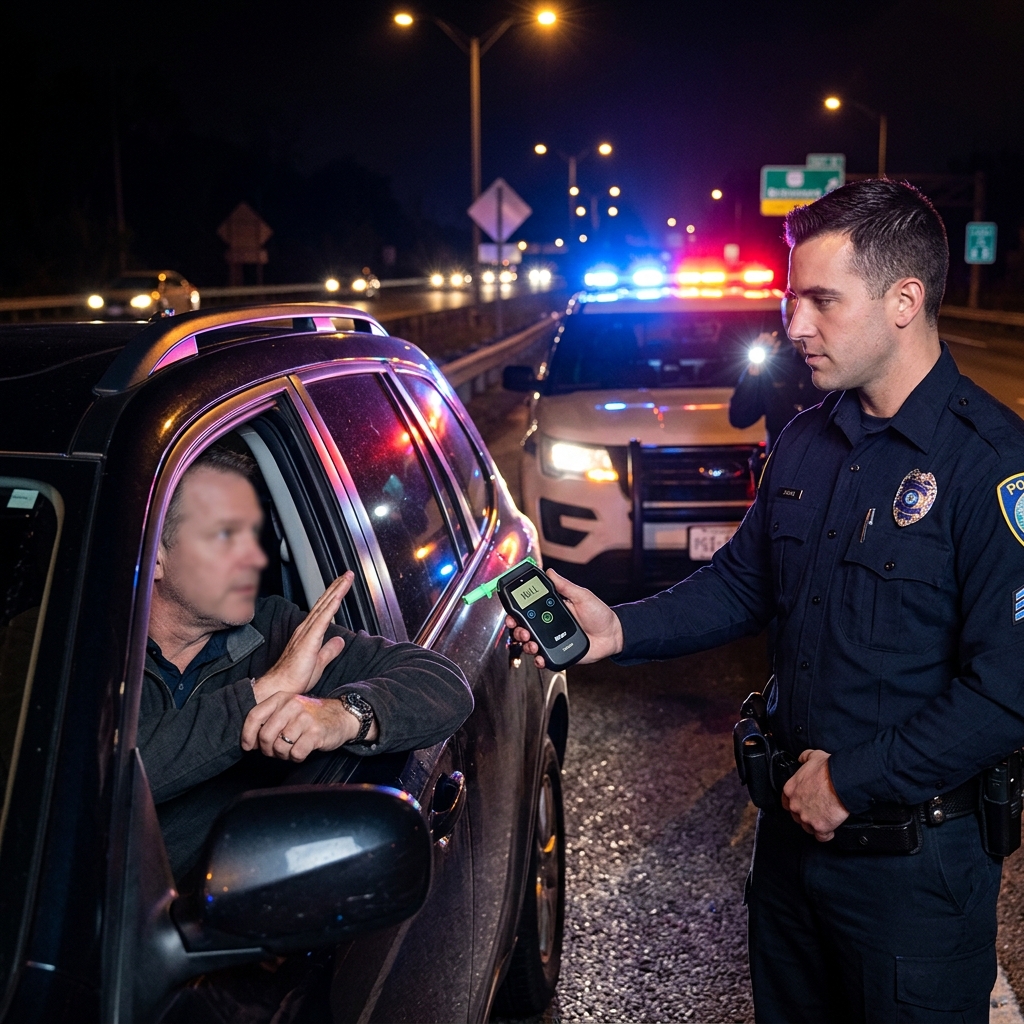
Drivers frequently wonder whether they can decline a breathalyzer test and avoid a driving under the influence (DUI) or driving while intoxicated (DWI) conviction. The reality is more complex: while you often have the practical ability to refuse, nearly every U.S. state has implied consent laws that impose serious consequences when you do so. Understanding how these laws work, and the difference between various kinds of tests, is critical before you make a decision at the roadside or after arrest.
Understanding Breathalyzer Tests and Implied Consent
A breathalyzer is a device that estimates a driver’s blood alcohol concentration (BAC) by analyzing alcohol in exhaled breath. In DUI enforcement, officers rely on breath, blood, or urine tests to obtain objective BAC evidence that can be used in court.
All states except one (Wyoming) have adopted implied consent statutes for licensed drivers. These laws treat the act of driving on public roads as your advance agreement to submit to chemical testing—typically breath or blood—when an officer has lawful grounds to suspect impaired driving.
Key features of implied consent laws include:
- Automatic obligations: As soon as you drive on public roads, you are deemed to have consented to chemical BAC testing when properly requested by law enforcement.
- Separate penalties: Refusing a lawful test usually triggers administrative penalties (such as license suspension) that are independent of any DUI charge or conviction.
- Condition of licensure: Submitting to testing is treated as a condition of holding a driver’s license; refusal allows the state to suspend or revoke that privilege.
Types of Breath Tests: Roadside vs. Official Chemical Tests
Not every breath test carries the same legal weight. Many states distinguish between preliminary, roadside tests and official, post-arrest chemical tests administered on certified equipment.
| Test Type | When Used | Primary Purpose | Admissibility in Court | Consequences for Refusal |
|---|---|---|---|---|
| Preliminary / roadside breath test | During the traffic stop, often before arrest | Helps establish probable cause for arrest | Often limited or not admissible as substantive BAC evidence | In some states, little or no immediate penalty; refusal may prompt further investigation or arrest |
| Official chemical breath test (post-arrest) | After arrest, on certified equipment at station or mobile unit | Provides BAC evidence for prosecution | Typically admissible if administered according to legal and technical standards | Refusal usually triggers automatic license suspension and possibly additional penalties |
For example, in Indiana, refusing a preliminary roadside breath test is permitted, but refusal of a certified chemical test after an implied consent warning leads to an automatic license suspension, and officers may seek a warrant for a blood test.
Can You Legally Refuse a Breathalyzer Test?
From a practical standpoint, a driver can refuse to blow into a breathalyzer or decline a blood or urine test. However, that refusal typically violates implied consent laws and may itself be a separate offense or trigger substantial administrative sanctions.
Important distinctions include:
- Refusal of preliminary tests: Many jurisdictions allow drivers to decline roadside screening breath tests and field sobriety tests without immediate license penalties, though refusal may increase the likelihood of arrest.
- Refusal of official tests: After arrest, declining a requested chemical test—especially after an implied consent advisement—almost always leads to license suspension and may bring additional fines or jail time.
- Unreasonable refusal: In some states, statutes expressly make it unlawful to unreasonably refuse a chemical test after proper procedure, and courts can treat the refusal as evidence against the driver.
According to national traffic safety authorities, all states except Wyoming impose administrative sanctions when drivers refuse BAC testing under implied consent laws.
Consequences of Refusing a Breathalyzer
Refusing a breathalyzer does not guarantee avoiding a DUI charge. Instead, it tends to create a second layer of problems: one related to the alleged impaired driving, and another directly tied to test refusal.
License Suspension and Revocation
The most immediate and common consequence is an automatic suspension of your driver’s license. The length can vary by state and by your prior record:
- First-time refusals often result in suspensions of several months up to one year.
- Repeat refusals or prior DUI convictions usually bring longer suspensions, sometimes multiple years or even lifetime revocation in extreme cases.
- Suspension for refusal is typically administrative—handled by the motor vehicle agency—and is separate from any suspension ordered by a criminal court after a DUI conviction.
Some legal standards additionally make refusal suspensions more restrictive, such as limiting eligibility for special or occupational driving privileges.
Civil and Administrative Penalties
Because implied consent frameworks are tied to your driving privileges, refusal often triggers civil or administrative penalties beyond license loss:
- Administrative license revocation (ALR): A streamlined process where the motor vehicle authority suspends your license solely based on refusal, sometimes even if the DUI charge is later reduced or dismissed.
- Fines: Many states impose monetary penalties on top of suspension for those who refuse testing.
- Mandatory fees and programs: You may have to pay reinstatement fees, attend alcohol education, or meet other conditions to restore driving privileges.
Criminal Consequences
In certain jurisdictions, refusal is not only an administrative issue but can carry criminal penalties as well.
- Refusal may be defined as a specific offense, especially when repeated or when combined with aggravating factors such as prior DUI convictions.
- Courts can impose additional jail time or higher fines on DUI defendants who refused testing compared to those who complied.
- Refusal might be treated as an aggravating circumstance, affecting eligibility for diversion programs or more lenient sentencing.
Use of Refusal as Evidence
Even without a BAC number, prosecutors may use the fact that a driver refused testing as evidence of consciousness of guilt.
Potential courtroom impacts include:
- Prosecutors arguing that refusal indicates the driver expected the test to show illegal intoxication.
- Courts allowing jury instructions permitting adverse inferences from refusal, depending on state law.
- Refusal undermining defense arguments that the driver was confident about being under the legal limit.
State-to-State Variations and Examples
While the overall pattern—permission to refuse paired with serious penalties—is consistent, details vary across states. A few examples illustrate the range of approaches:
New Jersey
New Jersey’s implied consent law treats breath test refusal as a separate violation, with penalties comparable to a DWI in seriousness.
- Refusal can lead to substantial fines and mandatory license suspension.
- Prosecutors need only establish probable cause for the stop and proof of refusal to secure a conviction on the refusal charge.
Texas
Texas allows drivers to refuse, but implied consent triggers civil consequences through an administrative license revocation process.
- First-time refusal typically results in a 180-day suspension; prior DUI or refusal can increase that to two years.
- The refusal is handled as a civil matter, but the driver can request a hearing to challenge the suspension.
Indiana
Indiana law permits refusal of preliminary roadside breath testing but treats refusal of certified chemical tests after implied consent warnings as grounds for immediate suspension.
- Refusal of a certified test generally leads to a one-year suspension.
- Officers may still obtain a warrant and pursue blood testing, which can be admissible in court if properly conducted.
Does Refusing a Breathalyzer Help or Hurt Your DUI Case?
The strategic impact of refusal is highly situational and often misunderstood. Many drivers hope that without a numeric BAC result, prosecutors will struggle to prove impairment. In reality, refusal often makes the legal picture more complicated.
Potential Advantages of Refusal
In some scenarios, refusal may limit the evidence available to the state:
- No direct BAC number, which could otherwise show a very high level.
- Reduced risk of challenges over test accuracy, calibration, or medical conditions that affect breath analysis.
Even so, these potential benefits must be weighed against significant drawbacks.
Significant Drawbacks of Refusal
- Independent penalties: You may face harsh license suspension and fines for refusal, even if the DUI charge is later reduced or dismissed.
- Alternative evidence: Officers can and often do rely on field sobriety tests, observations, dash or body camera footage, and witness testimony to prove impairment.
- Court perception: Refusal can be framed as evidence that you expected an incriminating result, potentially weakening defense arguments.
- Compelled testing: In some cases officers may obtain a warrant for blood testing or rely on statutory authority for nonconsensual tests, thereby securing BAC evidence despite refusal.
Because of these factors, legal practitioners often emphasize that refusal is not a simple strategy to “beat” a breathalyzer or a DUI case.
Practical Steps If You Have Refused or Are Considering Refusal
If you are facing a decision at the roadside or already refused a breathalyzer, understanding your immediate options is essential.
During a Traffic Stop
- Remain polite and avoid arguing with the officer.
- Know that you may have the ability to decline preliminary tests, depending on state law, but you could still be arrested based on other signs of impairment.
- Understand that once arrested and read an implied consent warning, refusing a chemical test can trigger automatic penalties.
After Refusal
- Expect prompt notice of license suspension from your state’s motor vehicle agency.
- Pay close attention to deadlines for requesting an administrative hearing; in some states you may have only a short window to contest the suspension.
- Consult an experienced DUI/DWI attorney to evaluate whether your refusal may be challenged (for example, if advisements were incomplete or procedures not followed).
Frequently Asked Questions About Breathalyzer Refusal
Will refusing a breathalyzer prevent me from being arrested?
No. Officers can arrest based on driving behavior, physical signs of intoxication, field sobriety performance, and other observations, even without breathalyzer results. Refusal does not shield you from arrest.
Can I avoid a DUI conviction by refusing the test?
Not necessarily. Prosecutors frequently secure convictions using non-chemical evidence such as officer testimony, video, and witness statements. Refusal may simply add penalties without eliminating the underlying DUI risk.
Is refusing a breathalyzer a crime?
In some states, refusal is mostly an administrative matter leading to license suspension. In others, statutes make unreasonable refusal a separate offense with potential criminal sanctions. The classification depends heavily on local law.
Can the officer force me to take a blood test if I refuse the breathalyzer?
Officers in many jurisdictions may seek a warrant or rely on specific statutes authorizing nonconsensual blood draws in certain circumstances, such as serious crashes or repeat offenses. If a judge issues a warrant and procedures are followed, the resulting blood test can be admissible in court.
Do implied consent laws apply to field sobriety tests?
Generally, implied consent laws focus on chemical testing of blood, breath, or urine. Many states do not impose automatic license penalties for refusing field sobriety tests, though refusal may influence the officer’s decision to arrest.
Should I agree to a breathalyzer or refuse?
This is a legal strategy decision that depends on your jurisdiction, your prior record, and the facts of the incident. Because refusal carries distinct risks and consequences, you should seek individualized legal advice from a qualified attorney rather than relying on general guidance.
References
- What Happens if You Refuse a Breathalyzer Test? — FindLaw. 2023-04-20. https://www.findlaw.com/dui/arrests/can-i-refuse-a-breathalyzer-test.html
- BAC Test Refusal Penalties — National Highway Traffic Safety Administration (NHTSA). 2019-06-01. https://www.nhtsa.gov/book/countermeasures-that-work/alcohol-impaired-driving/countermeasures/legislation-and-licensing-2
- Can You Refuse a Breathalyzer in NJ? Breath Test Refusal — New Jersey Criminal Law Attorney. 2022-11-10. https://www.newjerseycriminallawattorney.com/dui-drunk-driving/proof-of-intoxication/breath-tests/breath-test-refusal/
- What Happens If I Refuse a Breathalyzer Test in Texas? — Ryan Deck, Round Rock Criminal Defense Lawyer. 2023-09-12. https://www.roundrockcriminaldefenselawyer.com/blog/can-you-refuse-a-breathanalyzer-in-texas
- Indiana Breathalyzer Laws — Keffer Hirschauer LLP. 2023-02-15. https://www.indyjustice.com/blog/indiana-breathalyzer-laws/
- The Consequences of Refusing a Breathalyzer Test — Zachary McCready Law. 2022-08-01. https://zacharymccreadylaw.com/blog/the-consequences-of-refusing-a-breathalyzer-test/
- Breath Test Refusal Laws in New York, the Basics — Aidala, Bertuna & Kamins. 2021-05-10. https://aidalalaw.com/breath-test-refusal-laws-in-new-york-the-basics-2/
Similar Articles








Read full bio of medha deb




