
Arrested in the U.S.? How to Know if Your Rights Were Violated
A practical, plain‑language guide to what should happen during an arrest, what police may not do, and how to respond if your rights are violated.
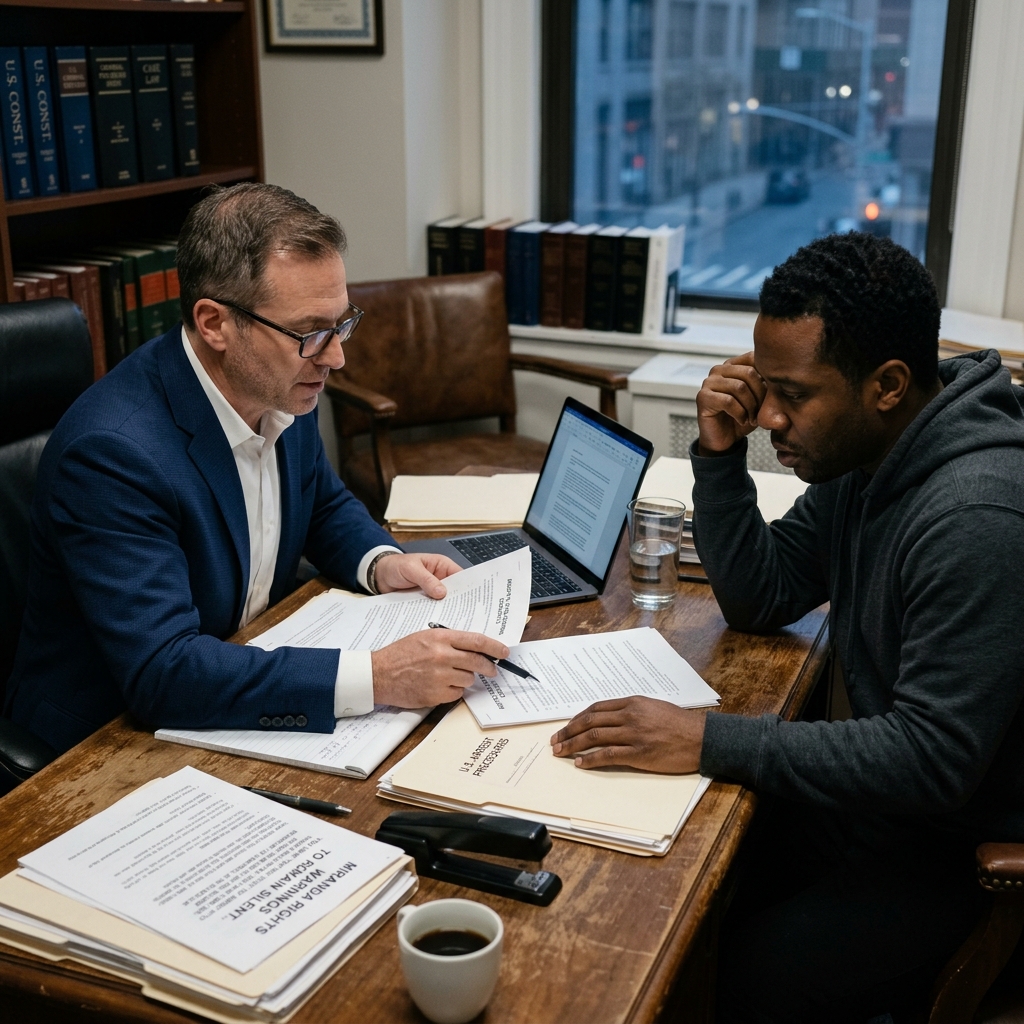
Being placed in handcuffs and taken into custody is frightening, confusing, and often humiliating. Yet an arrest is also a moment when some of your most important constitutional rights are supposed to protect you. Knowing what those rights are, what officers are allowed to do, and what crosses the line can make a major difference in your case and your safety.
This guide explains, in practical terms, how arrests are supposed to work, the role of Miranda warnings, how to identify potential rights violations, and what steps you can take afterward. It is not legal advice, but it can help you spot red flags and better understand conversations with a lawyer later on.
1. What an Arrest Is (and Is Not)
In everyday language, people use the word “arrest” loosely, but in law it has a specific meaning. You are generally considered under arrest when an officer intentionally restrains your freedom of movement and makes it clear you are not free to leave.
- Formal arrest: You are told you are under arrest, often handcuffed and transported to a police station or jail.
- De facto arrest: You may not hear the words “you are under arrest,” but your movement is significantly restricted and a reasonable person would not feel free to go.
- Temporary stop (detention): A brief stop, such as a traffic stop or a “stop and frisk,” where you may be detained for a short period for investigation but not taken into custody yet.
Whether a situation is an arrest or simply a temporary detention affects which rights apply and when, especially regarding questioning and searches.
Key legal foundations
| Constitutional Amendment | Main Protection During Arrest |
|---|---|
| Fourth Amendment | Protection against unreasonable searches and seizures; requires probable cause or a valid warrant for an arrest. |
| Fifth Amendment | Right against self-incrimination; basis for the right to remain silent and Miranda warnings. |
| Sixth Amendment | Right to counsel in criminal prosecutions; includes the right to consult a lawyer during critical stages, such as post-arrest questioning. |
| Fourteenth Amendment | Due process and equal protection; limits abusive treatment and discriminatory enforcement. |
2. Your Core Rights When Police Arrest You
Many rights apply throughout the criminal process, but several are especially important at the moment of arrest and immediately afterward.
2.1 Right to know why you are being arrested
In general, you have the right to be informed of the reason for your arrest and the nature of the charges either at the time of arrest or soon afterward. If you are arrested on a warrant, you have the right to see the warrant within a reasonable time and confirm that your name and the stated charge are correct.
- You may politely ask, “Am I under arrest?”
- If the answer is yes, you may ask, “What am I being arrested for?”
2.2 Right to remain silent
The right to remain silent is one of the most powerful protections you have. You are not required to answer questions about alleged criminal activity beyond basic identifying information in some jurisdictions.
- You may say, “I am exercising my right to remain silent.”
- Once you clearly invoke this right, officers must stop questioning you about the crime unless you later choose to re-initiate conversation.
- Anything you choose to say can be used against you in court.
Remaining silent is not an admission of guilt; it is a constitutional protection.
2.3 Miranda warnings: when they must be given
Miranda warnings flow from a landmark U.S. Supreme Court decision and are required before custodial interrogation—that is, when you are in police custody and officers want to question you about a crime.
A typical warning includes:
- Your right to remain silent.
- A warning that anything you say may be used against you in court.
- Your right to talk to an attorney before and during questioning.
- Your right to have a lawyer appointed if you cannot afford one.
Police are not required to read Miranda warnings at the moment they place you under arrest; the requirement kicks in before they interrogate you while you are in custody. Failure to give Miranda warnings can, in some circumstances, lead to suppression of your statements in court, though the arrest itself may still be legally valid.
2.4 Right to an attorney
Once you are arrested, you have the right to consult with a lawyer and to have a lawyer present during custodial questioning. If you cannot afford an attorney, the court will appoint one for you in cases where jail time is a possible penalty.
- Clearly say, “I want to talk to a lawyer” or “I am not answering questions without an attorney.”
- After you ask for a lawyer, officers should stop questioning you about the crime.
2.5 Protection from unreasonable searches
The Fourth Amendment usually requires probable cause or a valid warrant for searches and for arrest itself. During and after an arrest, officers may conduct a limited search of your person and the immediate area for weapons or evidence, but they do not automatically have unlimited authority to search everything you own.
- You generally have the right to refuse consent to a search of your vehicle, home, or belongings if officers do not have a warrant or another legal justification.
- You may say, “I do not consent to a search.”
- Even if you object, do not physically resist a search; your objection helps preserve your rights for later legal challenges.
2.6 Right to humane treatment and basic needs
The Constitution prohibits excessive force and cruel or unusually harsh treatment by officers and jail staff. This includes the right to necessary medical attention when you are injured or have serious health needs while in custody.
- You should not be subjected to unnecessary physical violence once you have been restrained.
- You are entitled to food, water, and appropriate care based on the facility’s rules and state law.
3. Practical “Do and Don’t” Checklist During an Arrest
Your immediate behavior during an arrest can affect your safety and how your case unfolds. Here is a practical checklist drawn from guidance by legal organizations and civil rights groups.
What to do
- Stay as calm as possible. Take slow breaths and avoid sudden movements.
- Keep your hands visible. This reduces the risk of officers misinterpreting your actions.
- Politely assert your rights. Use clear, simple phrases like “I wish to remain silent” and “I want a lawyer.”
- Provide basic identification if required by law. Some states require you to state your name or show ID during certain stops; refusing may itself be a minor offense.
- Pay attention to details. Try to remember badge numbers, patrol car numbers, and what each officer said and did.
What not to do
- Do not run or physically resist. Resistance can lead to additional charges and greater use of force.
- Do not argue on the street. You are very unlikely to talk your way out of an arrest.
- Do not lie or provide false documents. Lying can create new criminal charges.
- Do not consent to searches you wish to challenge later. Verbally say you do not consent, but do not interfere physically.
- Do not discuss your case with others in custody. Conversations with cellmates are not privileged and can be used against you.
4. Warning Signs Your Rights May Have Been Violated
Not every unpleasant or stressful aspect of an arrest is illegal. However, certain red flags suggest possible constitutional violations that you should later discuss with a lawyer.
4.1 Problems with the basis for the arrest
- You were arrested with no explanation and never informed of the alleged offense, even after you asked.
- You believe there was no warrant and no clear reason (probable cause) to think you committed a crime.
- Officers appeared to single you out based on race, ethnicity, religion, or other protected characteristics.
An arrest without a warrant and without probable cause may be unlawful and could give rise to legal remedies.
4.2 Issues with questioning and Miranda rights
- You were in custody and officers questioned you about a crime but never gave Miranda warnings.
- After you clearly said you wanted a lawyer or wanted to remain silent, questioning continued.
- You were pressured, threatened, or promised special treatment in exchange for a confession.
In these situations, a court might later rule that some or all of your statements cannot be used as evidence, though outcomes depend on the details.
4.3 Unreasonable searches or seizures
- Officers searched your home, car, or belongings without a warrant and without your consent, and there was no clear emergency or other legal exception.
- Property was seized or destroyed without documentation or a legal basis.
Because search and seizure law is complex, even officers sometimes misunderstand its limits. A defense lawyer can analyze whether a particular search was lawful and may be able to challenge evidence obtained from it.
4.4 Excessive force or abusive treatment
- Force continued after you were restrained and no longer posed a threat.
- You requested medical help for a serious condition or visible injuries and were ignored for a long period.
- You were subjected to sexual harassment, humiliation, or discriminatory slurs by officers.
Such conduct can violate constitutional rights and may support both internal complaints and civil lawsuits.
5. What to Do After the Arrest
Once you are safe and have been released or transferred to a facility, your focus should shift from surviving the encounter to preserving your rights and building your defense.
5.1 Write down everything you remember
Memories fade quickly, especially after frightening events. As soon as you can, write a detailed account of what happened.
- Time, date, and location of each step in the encounter.
- Names, badge numbers, and descriptions of officers (if known).
- Statements by officers and your responses.
- Whether you asked for a lawyer or invoked your right to remain silent and what happened next.
- Any witnesses, including bystanders who might have recorded video.
5.2 Document injuries and property damage
- Seek medical attention for any injuries and keep copies of medical records.
- Take photographs of injuries as soon as possible and periodically as they heal.
- List any damaged or missing property and save receipts if you repair or replace items.
5.3 Contact a criminal defense attorney
Legal advice tailored to your situation is crucial. A defense lawyer can:
- Evaluate whether the arrest and any searches were lawful.
- Seek suppression of illegally obtained evidence.
- Represent you at arraignment and later court dates.
- Discuss options such as plea bargaining, dismissal motions, or trial.
If you cannot afford a lawyer, inform the court and request that counsel be appointed. Public defenders and court-appointed attorneys are licensed lawyers bound by professional obligations to represent you.
5.4 Filing complaints and considering civil action
If you believe your rights were violated, you may be able to take action beyond your criminal case.
- Internal complaint: Most departments have internal affairs units or civilian review boards that investigate misconduct. Their contact information is typically available on the agency’s website.
- Civil lawsuit: In some situations, you may file a lawsuit against the officers or the agency for damages. These cases are complicated and often require experienced civil rights counsel.
Your criminal defense and any civil case can affect one another, so discuss the timing and strategy with your attorney before filing complaints or speaking publicly.
6. Frequently Asked Questions About Arrest and Rights
Do police have to read me my rights every time they arrest me?
No. Miranda warnings are required before custodial interrogation. If officers arrest you but do not question you about a crime, or if you are not in custody, they may not be required to read Miranda warnings. However, any statements made after a required warning is skipped may be challenged later.
If officers never showed me a warrant, was my arrest illegal?
Not necessarily. Police can often arrest without a warrant when they have probable cause to believe a crime has been committed, especially for offenses committed in their presence. The legality depends on the facts: what officers knew, when they knew it, and what state law allows. Ask a lawyer to review the circumstances.
Can I refuse to give my name during an arrest?
Some states have “stop-and-identify” laws that require you to provide your name during certain lawful stops. Refusing in those states can itself be a minor offense. Beyond basic identification where required, you generally do not have to answer other questions about the incident. Because rules differ by state, consult a local attorney or legal aid organization.
What if I already answered questions before I remembered to stay silent?
You can still invoke your rights at any time. Tell officers you wish to remain silent and want a lawyer. Even if some statements have already been made, later statements might be excluded if your rights are violated afterward.
Is it a rights violation if officers are rude or impatient?
Not every rude or unprofessional behavior is a constitutional violation. For a legal claim, you typically must show excessive force, unlawful search or seizure, discrimination, or similar serious misconduct. That said, you may still file a complaint about unprofessional conduct with the agency.
7. Using This Knowledge to Protect Yourself
Understanding your rights does not guarantee that officers will always respect them. It does, however, give you tools to respond calmly, preserve your options, and recognize when to seek help. By staying quiet, asserting your right to counsel, declining consent to searches, and documenting what happens, you put yourself in the strongest possible position for your defense and any future complaint or lawsuit.
Ultimately, only a qualified lawyer can tell you whether your rights were violated in a specific situation and what remedies might be available. If you believe something went wrong during your arrest, do not ignore that instinct—raise it with your attorney and provide as many factual details as possible.
References
- Your Rights If You Are Arrested — Oregon State Bar. 2023-01-01. https://www.osbar.org/public/legalinfo/1077_ArrestRights.htm
- Your Rights if Questioned, Stopped or Arrested by Police — Ohio State Bar Association. 2022-01-01. https://www.ohiobar.org/globalassets/law-facts/pamphlet-pdfs/lf_police_stop_pdf.pdf
- Rights during arrest in Georgia — Georgia Legal Services Program. 2022-05-01. https://www.georgialegalaid.org/resource/rights-during-arrest
- My rights when I’m under arrest or in custody — Illinois Legal Aid Online. 2023-06-01. https://www.illinoislegalaid.org/legal-information/my-rights-when-im-under-arrest-or-custody
- Stopped by Police — American Civil Liberties Union. 2022-08-01. https://www.aclu.org/know-your-rights/stopped-by-police
- When stopped by an officer — ACLU of Southern California. 2022-08-01. https://www.aclusocal.org/know-your-rights/when-stopped-officer/
- Understanding Your Rights During an Arrest — Dan Mellen, Attorney at Law. 2021-03-01. https://www.danmellenattorney.com/blog-1/understanding-your-rights-during-an-arrest/
Similar Articles








Read full bio of medha deb




