
Understanding Tax Loss Limits Under the Wash Sale Rule
Learn how the wash sale rule can limit your ability to claim investment losses and how to structure trades to preserve valuable tax benefits.
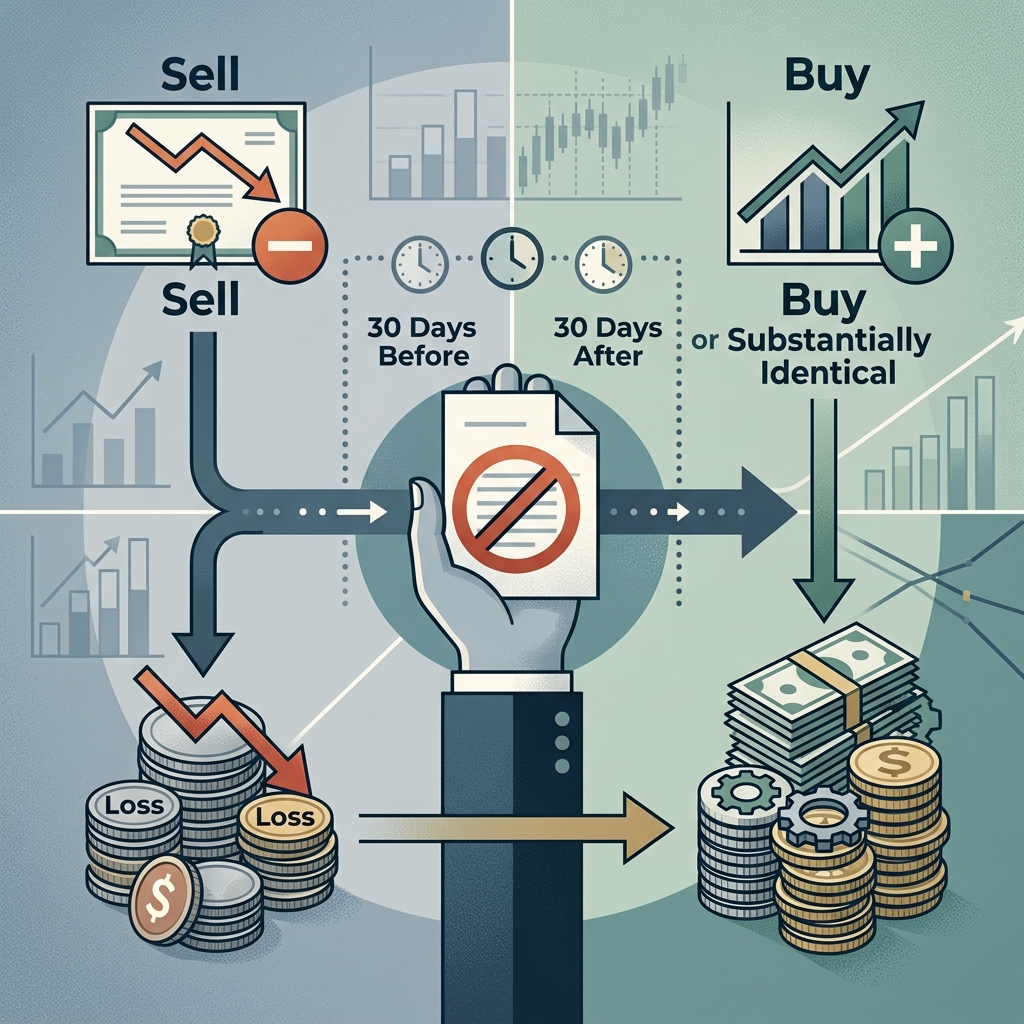
The wash sale rule is a key provision of U.S. tax law that can block you from claiming a loss when you sell and quickly repurchase the same or substantially identical securities. It is designed to stop investors from generating purely tax-driven losses while keeping essentially the same investment. If you actively trade stocks, exchange-traded funds (ETFs), mutual funds, or options, knowing how this rule works is essential to preserving your tax benefits.
What Is a Wash Sale?
A wash sale occurs when you sell or trade securities at a loss and, within 30 days before or after the sale, you acquire the same or substantially identical securities or a contract or option to buy them. In that case, the Internal Revenue Service (IRS) disallows the immediate deduction of the loss on your tax return.
- Applies to stocks, bonds, ETFs, mutual funds, and options treated as securities.
- Covers a 61-day window: 30 days before the sale, the day of sale, and 30 days after.
- Targets loss transactions only; gains are not affected by the wash sale rule.
According to Investor.gov, an official U.S. government site, you cannot deduct losses from wash sales for federal income tax purposes. Instead, the disallowed loss is generally added to the cost basis of the replacement securities, deferring the tax benefit until a later sale.
Why the Wash Sale Rule Exists
The wash sale rule’s purpose is to prevent what the tax law considers artificial losses. Without this rule, an investor could sell a security at a loss solely to reduce taxable gains, immediately repurchase the same investment, and end up in essentially the same economic position but with a lower tax bill.
Key policy goals behind the rule include:
- Preserving tax integrity: Ensuring losses reflect real economic changes, not short-term maneuvers.
- Discouraging abusive tax-loss harvesting: Limiting aggressive strategies that rely on rapid repurchases of the same security.
- Aligning tax treatment with economic risk: Requiring a meaningful break in ownership to recognize a deductible loss.
Internal Revenue Code section 1091 codifies this rule for losses on stock and securities transactions. It applies broadly to individual investors, businesses, and professional traders, with limited exceptions for certain dealers in securities.
When Does a Loss Become Non-Deductible?
You trigger a wash sale—and lose the immediate deduction—when three elements occur together:
- You sell stock or securities at a loss in a taxable transaction.
- Within the 61-day period, you buy the same or substantially identical securities, or a contract/option to buy them.
- The acquisition is in a transaction where the full gain or loss would otherwise be recognized for tax purposes.
Official guidance describes the core test as whether you sell securities at a loss and then buy substantially identical securities within 30 days before or after the sale date. If you do, IRS rules prohibit you from deducting the loss in that tax year.
Types of Transactions Covered
The rule applies to a wide range of instruments treated as securities.
- Common and preferred stock of corporations.
- Debt securities such as corporate bonds and some other fixed-income instruments.
- Mutual fund and ETF shares, when they are substantially identical to the original holding.
- Options, warrants, and convertible securities that give you the right to acquire substantially identical stock or securities.
- Short sales and certain derivative positions, when they result in acquiring substantially identical securities within the wash sale window.
The rule generally does not apply to asset classes that are not treated as stock or securities for tax purposes, such as real estate or many commodities. Some digital assets may be affected if they are classified as securities, but many digital tokens are currently treated differently under tax law.
Understanding the 61-Day Timeline
The IRS evaluates wash sales over a specific timeframe surrounding your loss-generating trade.
| Period | Days | What the IRS Examines |
|---|---|---|
| Pre-sale window | 30 days before sale | Did you acquire substantially identical securities or options during this period? |
| Sale date | Day of sale | Did you realize a loss on stock or securities in a taxable transaction? |
| Post-sale window | 30 days after sale | Do you repurchase substantially identical securities or contracts? |
The combination of these windows creates a 61-day period during which any acquisition of substantially identical securities can cause your loss to be disallowed. To fully avoid wash sale treatment, you must stay out of the security for this entire span or choose a non-identical substitute.
How the Wash Sale Rule Affects Your Tax Loss
When a wash sale occurs, you do not lose the economic loss—you lose the immediate deduction. The tax law defers that loss to a later sale through adjustments to your cost basis and holding period.
Basis Adjustment
The disallowed loss is added to the cost basis of the replacement securities.
- This increases the basis, which can reduce future taxable gains when you eventually sell the replacement shares.
- It effectively preserves the loss but shifts it into the future instead of allowing an immediate deduction.
Financial education resources explain that basis adjustments are a central mechanism that turns a disallowed current-year loss into a later tax benefit, assuming you sell the replacement securities in a non-wash-sale transaction.
Holding Period Impact
The holding period of the original securities typically carries over to the replacement securities. This can affect whether the eventual gain or loss is classified as short-term or long-term for tax purposes, which may change your tax rate.
Common Triggers and Risk Areas
For active investors, wash sales can happen unintentionally. Several common situations create risk:
- Automatic dividend reinvestment into the same fund or stock during the 61-day period.
- Using options or warrants to re-establish positions quickly in the same security.
- Year-end tax-loss harvesting followed by early January repurchases of the same securities.
- Switching between similar funds that may be treated as substantially identical.
- Short sales and covered calls that result in reacquiring the same security within the wash sale window.
Brokerage platforms often flag potential wash sales on account statements, but the responsibility for accurate tax reporting ultimately rests with the taxpayer.
Strategies to Reduce Wash Sale Problems
While you cannot avoid the rule itself, you can structure trades to reduce the risk of losing valuable loss deductions.
1. Respect the 31st-Day Repurchase Guideline
To stay outside the wash sale window, wait until the 31st day after a loss sale before repurchasing the same security.
- If you sell on July 1 at a loss, do not repurchase the same security until at least August 1.
- Similarly, avoid selling at a loss within 30 days of a purchase of substantially identical securities.
2. Use Non-Identical Substitute Investments
To maintain market exposure without triggering a wash sale, consider acquiring securities that track a similar sector or index but are not substantially identical.
- Choosing a different ETF or mutual fund in the same asset class.
- Selecting stocks in the same industry rather than the exact name you sold.
- Ensuring the replacement security has a different structure or issuer to reduce similarity concerns.
3. Keep Detailed Trade Records
Accurate records help you identify when the wash sale rule might apply and document adjustments for tax reporting.
- Track trade dates, quantities, prices, and CUSIP identifiers for securities.
- Note any automatic reinvestments, exercises of options, or corporate actions that affect your holdings.
4. Coordinate With Tax-Loss Harvesting Plans
Investors often harvest losses to offset gains, especially near year-end. Effective planning should integrate the wash sale rule:
- Space loss sales and repurchases so they do not fall within the 61-day window.
- Consider using substitute securities rather than repurchasing the identical position too soon.
- Review all accounts (including retirement accounts) for trades that might interact and create wash sale consequences.
Reporting Wash Sales to the IRS
When a wash sale occurs, you must reflect the disallowed loss and basis adjustment on your tax forms.
Typical reporting steps include:
- Confirm whether a wash sale occurred by reviewing purchase and sale dates for substantially identical securities.
- Identify the amount of disallowed loss, often reported on information returns such as Form 1099‑B.
- Adjust the cost basis of replacement shares by adding the disallowed loss.
- Report the transaction on the appropriate schedule for capital gains and losses, following IRS instructions.
Investor.gov and IRS publications emphasize that rules concerning basis, holding periods, and loss limitations can be complex, so consulting IRS materials or a qualified tax professional is recommended for specific situations.
Frequently Asked Questions
Does the wash sale rule apply if I sell at a gain?
No. The wash sale rule only applies to transactions where you realize a loss on stock or securities. If you sell at a gain, the rule does not disallow that gain, even if you repurchase the same security quickly.
Are mutual funds and ETFs subject to the wash sale rule?
Yes, when they are treated as securities and are considered substantially identical to the securities sold at a loss. Many ETFs and mutual funds have unique structures, so the determination of “substantially identical” can depend on the specific facts.
Do digital assets such as cryptocurrencies trigger wash sale rules?
The wash sale rule applies only to assets treated as stock or securities for tax purposes. Some digital assets may fit these classifications, but many do not; current guidance suggests that most commonly traded cryptocurrencies are not subject to traditional wash sale rules, though tax treatment can evolve.
What happens to my disallowed loss?
When a loss is disallowed under the wash sale rule, it is generally added to the cost basis of the replacement securities and the holding period carries over. This defers the tax benefit until you sell the replacement securities in a transaction not subject to wash sale restrictions.
Is the wash sale rule limited to one calendar year?
No. The rule applies whenever the 61-day window spans a loss sale and a repurchase of substantially identical securities, even if those trades cross from one tax year into the next.
References
- Wash Sales — Investor.gov, U.S. Securities and Exchange Commission. 2023-02-15. https://www.investor.gov/introduction-investing/investing-basics/glossary/wash-sales
- What Is the Wash Sale Rule and Impact on Taxes — H&R Block. 2024-01-10. https://www.hrblock.com/tax-center/income/investments/wash-sales/
- Wash-Sale Rules — Fidelity Investments. 2023-11-01. https://www.fidelity.com/learning-center/personal-finance/wash-sales-rules-tax
- Wash-Sale Rule: How It Works & What to Know — Charles Schwab. 2023-09-12. https://www.schwab.com/learn/story/primer-on-wash-sales
- Tax-Loss Harvesting Part II: The Wash Sales Rule — ASKramer Law. 2022-07-20. https://www.askramerlaw.com/publications/tax-loss-harvesting-part-ii
- For your year-end tax planning, beware the wash sale rule — J.P. Morgan Private Bank. 2022-12-05. https://privatebank.jpmorgan.com/nam/en/insights/wealth-planning/for-your-year-end-tax-planning-beware-the-wash-sale-rule
- How the Wash-Sale Rule Could Affect Your Taxes — Prudential Financial Education. 2023-08-30. https://www.prudential.com/financial-education/how-the-wash-sale-rule-could-affect-your-taxes
Similar Articles








Read full bio of medha deb




