
When Police Can Legally Search Your Garbage
Understand when trash is protected by privacy laws, when it is treated as abandoned property, and how garbage searches affect criminal investigations.
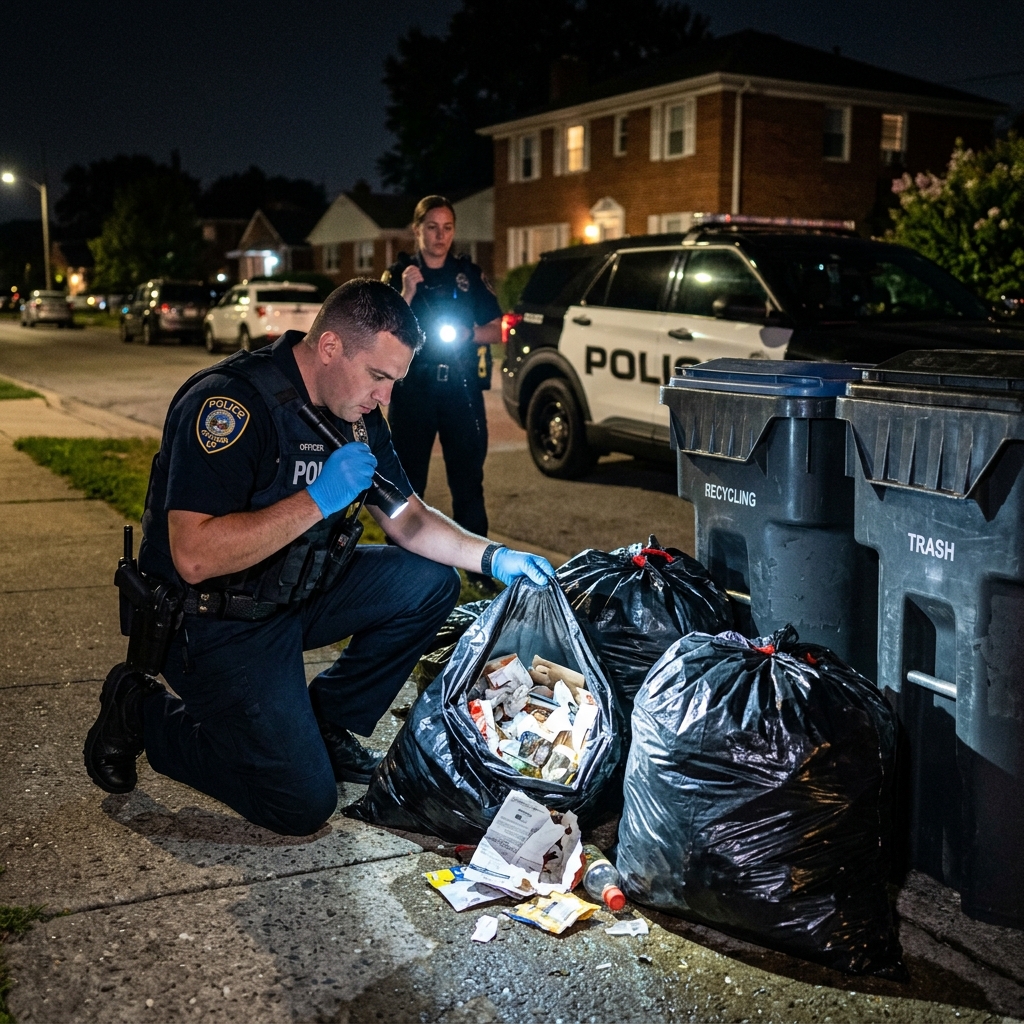
Garbage might feel private, but under United States law, trash can be a powerful tool for law enforcement. Whether police may go through your garbage without a warrant depends largely on where the trash is located and whether you still have a reasonable expectation of privacy in it.
This article explains how courts treat trash under the Fourth Amendment, when officers can legally search your garbage without a warrant, and what happens if police cross the line and conduct an unlawful search of your refuse.
Garbage and the Fourth Amendment: Basic Principles
The Fourth Amendment to the U.S. Constitution protects people against unreasonable searches and seizures by the government. In practice, this means police generally need a warrant supported by probable cause to search areas where you have a reasonable expectation of privacy, such as your home or personal belongings.
Courts have repeatedly held that once trash is placed in certain locations for collection, people lose their reasonable expectation of privacy in that garbage. At that point, the trash may be treated as abandoned property, and officers can inspect it without a warrant.
- Protected trash: Garbage that remains inside your home or in clearly private areas generally requires a warrant or an applicable exception before officers may search it.
- Unprotected trash: Trash placed at the curb or other publicly accessible areas for pickup is commonly treated as abandoned and may be searched without a warrant.
Where Your Trash Is Matters: Location and Privacy
The law on garbage searches is driven by location. Courts look at whether the trash is placed where the public – including garbage collectors and anyone else – can freely access it, or whether it remains within the protected sphere of your private property.
Trash Inside the Home or Fully Private Areas
Trash located inside your home, in an attached garage, or in similarly private spaces is generally treated like any other item in your residence. Police must usually obtain a warrant or rely on a recognized exception (such as consent or exigent circumstances) before searching it.
Courts recognize that even if you intend to throw something away, you still have a significant privacy interest in items inside the four walls of your home. As a result:
- Officers cannot lawfully enter your home just to look through your kitchen trash can without a warrant or valid consent.
- Trash in closed spaces like a private garage, locked shed, or similar areas typically receives the same protection as the rest of the structure.
Trash in Vehicles, Bags, or Personal Containers
When trash is stored in personal containers—such as sealed bags in your car, a backpack, or a purse—courts often treat it as part of the protected contents of those spaces. Police usually need probable cause and, in most circumstances, a warrant or a recognized vehicle-search exception before they can go through that garbage.
Key points include:
- Sealed trash bags in a parked car are often considered to carry a reasonable expectation of privacy, similar to other closed containers in the vehicle.
- Bags of trash you are carrying in your hand or keeping in a personal tote will generally be treated like any other personal effect.
Trash in the Yard, Driveway, or Near the Home
The area immediately around a home is known as the curtilage, and it usually receives some constitutional protection. However, the degree of privacy for trash in these areas can be fact-specific.
Courts often ask whether the trash was “readily accessible to the public” when deciding if it was abandoned or still protected. Factors include:
- Whether the trash is behind a fence or gate that signals a private area.
- Whether it is in a place where strangers are not ordinarily expected to go, such as next to your back door.
- Whether the trash is clearly set out for collection or still appears to be stored on your property.
In some cases, courts have found that garbage left in places that are accessible to the public may be considered abandoned even if it has not yet been taken all the way to the curb.
Trash at the Curb or Public Collection Point
Trash placed at the curb for pickup is generally treated differently. Many courts have held that once you move your garbage to a public collection area, you no longer have a reasonable expectation of privacy in it.
According to these decisions:
- Rolling your bin to the curb or leaving bags on the sidewalk commonly signals that the trash is being discarded and may be accessed by garbage collectors or any member of the public.
- Police may seize and search that curbside trash without a warrant, and any evidence they find can be used to support criminal charges or search warrants.
However, some state courts interpret privacy protections differently under their own constitutions, and not every jurisdiction treats curbside trash exactly the same way. Still, the general trend favors viewing garbage at the curb as abandoned.
Abandoned Property: Why Curbside Trash Is Treated Differently
The central legal idea behind warrantless trash searches is abandonment. When you put garbage out for collection in a place where the public can access it, courts typically consider that you have relinquished your privacy interest in the contents.
Under this view:
- Your act of placing trash at the curb implies you expect it to be removed and destroyed, not kept secret.
- If any passerby or scavenger could lawfully access the trash, police may do so as well.
- Because the garbage is no longer within a protected zone, the Fourth Amendment does not require officers to obtain a warrant before examining it.
Courts in various jurisdictions, including federal appellate courts, have used this reasoning to uphold trash pulls (targeted garbage searches) as a lawful investigative technique.
How Police Use Garbage Searches in Criminal Investigations
Law enforcement agencies routinely use trash searches in investigations ranging from drug cases to fraud and homicide. Officers collect garbage from a targeted address and sift through the contents looking for evidence of criminal activity.
Common types of evidence found in trash include:
- Drug packaging, burnt foil, or other items associated with narcotics use or distribution.
- Financial documents, receipts, and mail that link a suspect to an address or business operation.
- Notes, correspondence, or other records that refer to criminal plans or co-conspirators.
Trash pulls are often used to build probable cause for a later search warrant of the residence. Courts assess whether the garbage, combined with other information, creates a fair probability that evidence of crime will be found inside the home.
Probable Cause and Limits on Trash-Based Warrants
Court decisions emphasize that not every item found in garbage is sufficient to justify a residential search warrant. For example, one legal analysis notes that a single trash pull showing minor drug use may be insufficient on its own to establish probable cause for searching a home.
Judges typically look for:
- Evidence of an ongoing pattern of activity, such as repeated trash pulls showing drug distribution materials.
- Additional information, such as anonymous tips, surveillance observations, or prior arrests that tie the suspect to the alleged crime.
- Connections between the trash contents and the residence itself, such as mail with the address or documents naming the occupants.
If the only evidence is minimal or ambiguous, courts may find that the warrant was improperly issued and suppress any evidence obtained from the subsequent home search.
When Trash Searches Cross the Line: Suppression of Evidence
If police search garbage in a way that violates the Fourth Amendment or state constitutional protections, a criminal defense attorney can ask the court to suppress the evidence – meaning it cannot be used against the defendant at trial.
For example, suppression may be sought if:
- Officers retrieved trash from a protected area, such as inside the home or a locked space, without a valid warrant or exception.
- The garbage was not clearly abandoned or accessible to the public, and police crossed private boundaries to get it.
- Local law or state constitutional provisions recognize stronger privacy rights than federal courts do, and those rights were violated.
Successful suppression can substantially weaken a criminal case, especially when the trash search was a key element in establishing probable cause for later warrants.
Practical Examples: Comparing Trash Situations
| Trash Location | Typical Privacy Expectation | Warrant Needed? |
|---|---|---|
| Trash can inside the home | High – treated like any item in your residence | Yes, absent consent or emergency circumstances |
| Sealed trash bags in a car | High – considered part of protected vehicle contents | Usually yes; vehicle search rules apply |
| Bagged trash behind a locked gate | Moderate to high – inside curtilage, not easily accessible | Generally yes; depends on case-specific facts |
| Trash bin at the curb for pickup | Low – frequently treated as abandoned property | Often no; warrantless search is commonly allowed |
Frequently Asked Questions About Police Trash Searches
Can police always search trash at the curb without a warrant?
In many jurisdictions, yes. Courts often hold that you have no reasonable expectation of privacy in trash placed on the curb for public collection, so officers may search it without a warrant. However, some states provide broader privacy protections under their own constitutions, so local rules can vary.
What if I keep my trash can next to my garage, not on the curb?
Trash in areas that are part of the home’s curtilage, such as next to the garage or inside a fenced yard, may still be protected, depending on how accessible the area is to the public. Courts will consider whether the space is clearly private. If police must enter a private area to access the garbage, a warrant will usually be required.
Does it matter if the trash bag is sealed?
Sealed bags inside the home or vehicle are generally treated as closed containers, supporting a strong expectation of privacy. But once those sealed bags are placed in a publicly accessible location for collection, they can still be considered abandoned, even though they are tied or sealed.
Can a single trash pull give police enough probable cause to search my home?
Not necessarily. Legal analysis from Florida, for example, indicates that a single trash pull showing evidence of drug use may be insufficient to establish probable cause for searching a residence, especially if it is unsupported by other information. Courts usually look for a pattern of activity or additional corroborating facts.
What happens if a trash search is ruled unlawful?
If a court finds the search violated your constitutional rights, your attorney can seek suppression of the trash evidence and any information that flowed from it, such as a later search warrant for your home. This can significantly impact the prosecution’s case.
Protecting Your Rights When Trash Becomes Evidence
Because garbage can reveal intimate details about your life, understanding how the law treats trash is important. While you cannot stop officers from lawfully searching trash that you have abandoned at the curb, you do retain strong privacy rights in garbage kept within your home and other protected spaces.
If you are facing criminal charges and believe a trash search played a role in the investigation, consider discussing the following with a qualified attorney:
- Exactly where the trash was located when police retrieved it.
- Whether officers entered a private, protected area to seize your garbage.
- How the trash contents were used to build probable cause for any subsequent warrants.
- Whether state constitutional law provides stronger privacy protections than federal law in your jurisdiction.
Courts assess garbage searches on a case-by-case basis, and small factual differences—such as a fence, gate, or property boundary—can change the legal outcome. Knowing these nuances can help you better understand your rights when your trash becomes part of a criminal investigation.
References
- Can Police Legally Search Your Trash Left by the Curb? — Roth Davies LLC. 2023-01-10. https://www.rothdavies.com/criminal-defense/frequently-asked-questions-about-criminal-defense/searches/can-police-legally-search-your-trash-left-by-the-curb
- Can Police Search Through Your Trash? — FindLaw. 2020-08-18. https://www.findlaw.com/legalblogs/criminal-defense/can-police-search-through-your-trash/
- Can the police search through your trash? — Mauzy Law Office, P.A. 2022-10-06. https://www.mauzylawfirm.com/blog/2022/10/can-the-police-search-through-your-trash/
- Can police in Florida search a person’s trash can? — Scott & Richardson, P.A. 2021-10-07. https://www.scottnrichardsonlaw.com/blog/2021/10/can-police-in-florida-search-a-persons-trash-can/
- The State of Our Trash in Florida: The Use of Evidence Found in Residential Garbage to Establish Probable Cause to Search a Citizen’s Home — The Florida Bar Journal. 2018-11-01. https://www.floridabar.org/the-florida-bar-journal/the-state-of-our-trash-in-florida-the-use-of-evidence-found-in-residential-garbage-to-establish-probable-cause-to-search-a-citizens-home/
Similar Articles








Read full bio of medha deb




