
Advance Parole for Pending Immigration Cases
Understand how advance parole allows certain immigrants with pending applications to travel abroad without jeopardizing their U.S. immigration status.
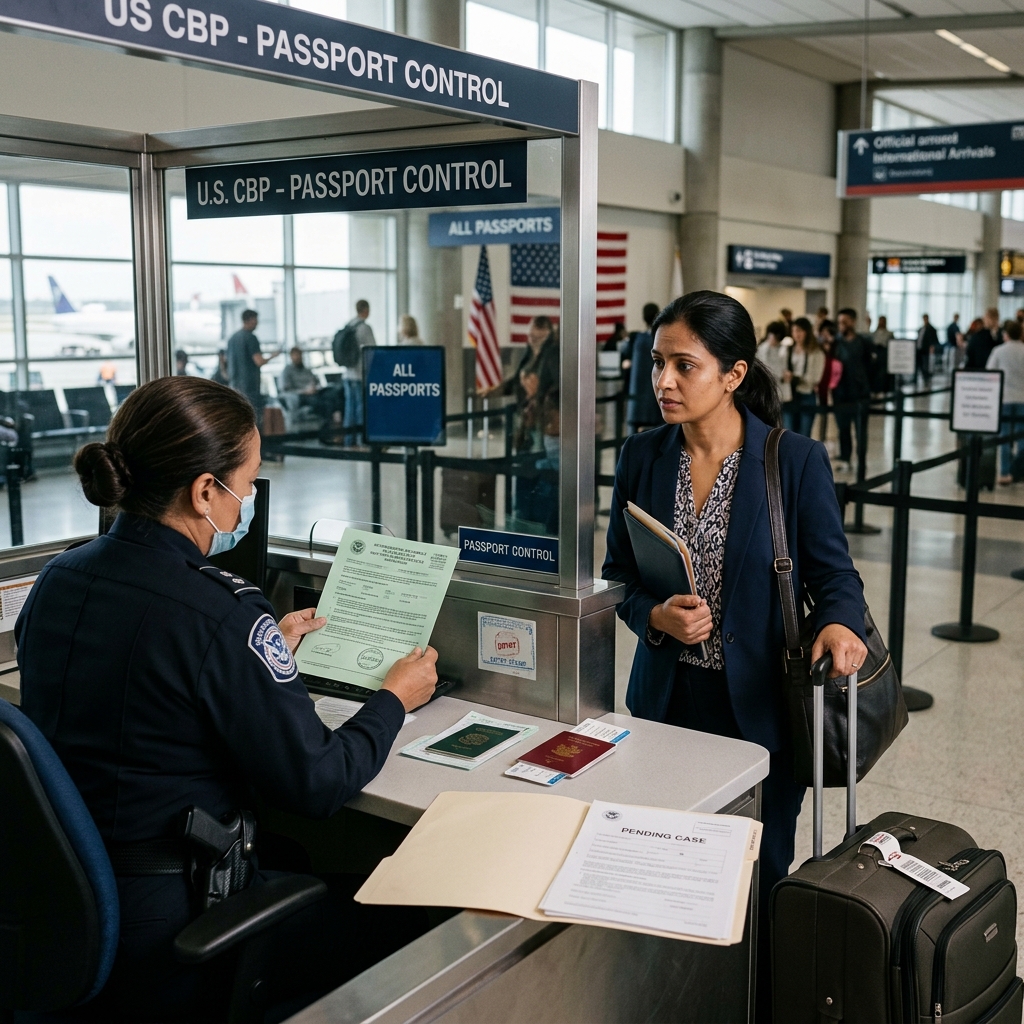
For many immigrants in the United States, international travel becomes complicated once a major immigration application is pending. Advance parole is the key travel document that can allow certain noncitizens to leave the country temporarily and return legally, without being treated as if they abandoned their case. This guide explains what advance parole is, who needs it, how to request it, and what risks to consider before traveling.
What Is Advance Parole?
Advance parole is an official travel authorization issued by U.S. Citizenship and Immigration Services (USCIS) using Form I-131, Application for Travel Documents. It allows certain noncitizens who are already inside the United States to travel abroad and seek reentry while an immigration application or status request is still pending.
Key characteristics of advance parole include:
- It is a travel document, not a visa or a grant of permanent status.
- It authorizes an airline or carrier to board you and allows you to request entry at a U.S. port of entry.
- It helps prevent certain pending applications, especially adjustment of status (green card), from being considered abandoned when you travel.
- It does not guarantee admission; you must still pass inspection by U.S. Customs and Border Protection (CBP).
Why Advance Parole Matters for Pending Applications
Leaving the United States while an application is pending can have serious consequences. In many situations, departing without advance parole means USCIS will treat your case as abandoned and deny it. This is especially critical for people applying for a green card through adjustment of status.
According to USCIS, if you have a pending Form I-485, Application to Register Permanent Residence or Adjust Status, and you depart the United States without advance parole, your application will generally be denied unless you qualify for a narrow exception based on certain nonimmigrant statuses.
Protecting your pending case may be important if you are:
- Seeking a green card through family or employment-based adjustment of status.
- Applying for asylum or withholding of removal using Form I-589.
- Waiting for Temporary Protected Status (TPS) approval or already holding TPS and needing to travel.
- A DACA recipient who must demonstrate humanitarian, educational, or employment reasons for travel.
Who Commonly Uses Advance Parole?
Advance parole is available to several categories of noncitizens. It is most commonly used by individuals with these pending or current statuses:
- Adjustment of status applicants with pending Form I-485 green card applications.
- Asylum applicants with pending Form I-589, who must avoid abandoning their asylum claim when traveling.
- TPS recipients who wish to travel abroad temporarily without losing their protections.
- DACA recipients traveling for qualifying humanitarian, educational, or employment purposes.
- Recipients of humanitarian parole or noncitizens with urgent humanitarian needs or significant public benefit reasons to travel.
Each group may face different evidentiary requirements and risks, so understanding how advance parole applies to your particular status is crucial.
Situations Where Advance Parole Is Not Available
Advance parole is not an option for everyone. CBP notes that certain individuals in the United States are not eligible to obtain advance parole, including:
- Noncitizens who are currently in the United States without lawful status (illegally).
- Some exchange visitors subject to the foreign residence requirement.
Additionally, people who already have valid multiple-entry nonimmigrant visas and who are not otherwise required to maintain a pending adjustment case may not need advance parole for short travel, though they should still consult immigration guidance before leaving.
Core Benefits and Limits of Advance Parole
| Aspect | What Advance Parole Provides | What It Does Not Provide |
|---|---|---|
| Protection of pending case | Helps you travel without your adjustment, asylum, or TPS case being automatically treated as abandoned. | Does not cure other issues such as ineligibility, prior immigration violations, or inadmissibility grounds. |
| Travel authorization | Allows you to seek boarding and inspection at a U.S. port of entry after temporary travel abroad. | Does not guarantee that CBP will admit you; you remain subject to inspection and possible denial of entry. |
| Immigration status | Facilitates continued processing of your pending application while you travel. | Does not grant permanent residence, nonimmigrant status, or citizenship by itself. |
| Eligibility scope | Available to various noncitizens with pending benefits or humanitarian needs. | Unavailable to some categories, such as those without lawful presence or certain exchange visitors. |
Applying for Advance Parole: Step‑by‑Step Overview
USCIS uses Form I-131 to process requests for several types of travel documents, including advance parole. Although requirements vary by category, most applicants follow a general sequence.
1. Confirm Your Eligibility and Risks
Before preparing any application, review whether you qualify and whether travel could cause harm to your immigration case or trigger inadmissibility issues. USCIS warns that leaving the United States while an adjustment of status application is pending and before obtaining advance parole usually leads to denial of the green card case. Consulting with an immigration professional is strongly recommended, especially if you have prior unlawful presence or other complications.
2. Complete Form I-131
You must use Form I-131, Application for Travel Documents, to request advance parole. When completing the form, applicants generally must:
- Indicate that they are seeking an advance parole document for travel.
- Specify the purpose of travel, such as business, personal, humanitarian, educational, or employment.
- List the countries they intend to visit and the expected duration of each trip.
- Provide information on any pending immigration application, such as an I-485 or I-589 receipt number.
3. Gather Supporting Documents
Documentation requirements can differ based on your category and whether the request is routine or emergency-based. Common items include:
- Copy of your passport or other government-issued photo ID.
- Copy of your pending application receipt notice (for example, Form I-797 for a pending I-485 or I-589).
- Evidence explaining the reason for travel, especially for emergency or humanitarian requests (medical records, death certificates, letters from institutions, etc.).
- Passport-style photographs as required by USCIS instructions.
4. Pay the Filing Fee
Most advance parole requests require payment of a filing fee to USCIS. For standard applications, fee waivers are generally not available, so applicants should review the current fee schedule provided by USCIS. Always check the latest instructions, because fees and payment methods may change.
5. Submit Your Application to USCIS
Once the form and supporting documents are prepared, you send the packet to the appropriate USCIS filing address. USCIS will then issue a receipt notice confirming that it has received your Form I-131. In some cases, USCIS may request additional evidence or schedule you for biometrics (fingerprinting) before making a decision.
6. Wait for USCIS Adjudication
Processing times for advance parole can vary. Many non-emergency requests take several months, with estimates often ranging from roughly 3 to 4 months or more, depending on workload and case type. Applicants should avoid departing the United States until the advance parole document is actually approved and issued.
7. Receive and Use the Advance Parole Document
If USCIS approves the request, it will issue an advance parole document, which often resembles a paper travel authorization or card. You must:
- Carry the document with you when traveling abroad.
- Present it to the airline or carrier before boarding for your return flight to the United States.
- Provide it to CBP officers when seeking admission at a U.S. port of entry.
CBP will inspect you and has discretion to admit or deny entry, even if your advance parole document is valid.
Emergency vs. Routine Advance Parole
Advance parole can be requested for both non-emergency and emergency travel. The process and evidentiary burden can differ substantially.
Routine, Non‑Emergency Requests
For adjustment of status applicants and TPS recipients, USCIS often grants non-emergency advance parole for legitimate business or personal reasons without requiring detailed proof of the purpose. These requests are typically filed well before anticipated travel dates, following the standard Form I-131 process.
Emergency Requests
Emergency advance parole may be available when urgent situations arise, such as a serious illness or death in the family. Applicants may need to visit a USCIS office and present:
- A completed Form I-131.
- Proof of emergency circumstances (for example, medical letters or death certificates).
- Two passport photos and the required fee.
USCIS may decide emergency requests more quickly, but approval is never guaranteed.
Important Risks and Limitations
Even with advance parole, international travel carries risks that applicants should carefully evaluate.
Abandonment of Applications
Traveling without advance parole when required can result in USCIS treating your pending application as abandoned and denying it. In addition, departing the U.S. while a Form I-131 for advance parole is still pending may lead USCIS to consider that I-131 itself abandoned and deny the travel request.
Inspection and Possible Denial of Entry
CBP emphasizes that advance parole does not guarantee admission to the United States. When you return, CBP officers will inspect you and may review:
- Your identity and travel document.
- Your immigration history and any past violations.
- Possible grounds of inadmissibility, such as criminal issues or prior unlawful presence.
If problems are identified, CBP could refuse entry or refer you to additional proceedings, even if you possess a valid advance parole document.
Unlawful Presence and Other Complications
For some individuals, departing the United States may trigger bars to reentry based on prior periods of unlawful presence or other inadmissibility grounds. Advance parole does not erase those legal consequences. That is why applicants with complicated histories should obtain individualized legal advice before using advance parole to travel.
Practical Travel Tips for Advance Parole Holders
To reduce risk and confusion, applicants who receive advance parole should keep several practical guidelines in mind:
- Do not depart the United States until USCIS has formally approved and issued your advance parole document.
- Check validity dates on your document and ensure your travel plans fit within those dates.
- Carry copies of your pending application receipts (such as I‑485 or I‑589 notices) when traveling.
- Maintain easy access to contact information for your attorney or accredited representative in case issues arise at the port of entry.
- Monitor any changes in immigration policy that might affect DACA, TPS, or other statuses associated with your case.
Frequently Asked Questions (FAQs)
1. Do I need advance parole if I have a pending green card application?
In most cases, yes. If you have a pending Form I‑485 and depart the United States without advance parole, USCIS will usually treat your adjustment of status application as abandoned and deny it, unless you qualify for a limited exception based on certain nonimmigrant statuses.
2. Is advance parole the same as a visa?
No. Advance parole is a travel document issued by USCIS to individuals already inside the United States. It does not replace a visa or grant immigration status by itself. Instead, it allows you to request inspection and reentry after temporary travel.
3. Can DACA recipients use advance parole for any type of trip?
DACA recipients may apply for advance parole, but only for specific purposes categorized as humanitarian, educational, or employment reasons. Routine tourism or general personal travel usually does not qualify.
4. Does advance parole guarantee that I will be admitted back into the United States?
No. CBP clearly states that advance parole does not guarantee admission. It allows you to present yourself at a port of entry and request permission to enter, but CBP officers still have authority to approve or deny admission based on applicable laws and your individual circumstances.
5. What happens if I leave the United States while my I‑131 for advance parole is still pending?
Under current USCIS policy, if you depart the United States while your advance parole application is pending, that I‑131 may be considered abandoned and subsequently denied. You should avoid travel until you receive an approved advance parole document.
6. How long does it take to get advance parole?
Processing times vary depending on category, workload, and whether the request is emergency-based. Many routine advance parole applications take several months, with estimates often around 3 to 4 months or more. Always check current USCIS processing information, as timelines can change.
References
- Travel Documents — U.S. Citizenship and Immigration Services (USCIS). 2023-08-01. https://www.uscis.gov/green-card/green-card-processes-and-procedures/travel-documents
- I-131, Application for Travel Documents — U.S. Citizenship and Immigration Services (USCIS). 2024-01-30. https://www.uscis.gov/i-131
- Advance Parole — U.S. Customs and Border Protection (CBP). 2014-05-08. https://www.cbp.gov/travel/us-citizens/advance-parole
- While Your Green Card Application Is Pending with USCIS — U.S. Citizenship and Immigration Services (USCIS). 2022-11-02. https://www.uscis.gov/green-card/while-your-green-card-application-is-pending-with-uscis
- When Is Advance Parole an Option? — Catholic Legal Immigration Network, Inc. (CLINIC). 2022-02-15. https://www.cliniclegal.org/resources/parole/advance-parole/when-advance-parole-option
- Advance Parole: Frequently Asked Questions — Immigrants Rising. 2021-10-10. https://immigrantsrising.org/resource/advance-parole-frequently-asked-questions/
- Advance Parole Guide: Travel Without Risking Your Status — Alamo Law Group. 2023-05-12. https://alamolawgroup.com/immigration/advance-parole/
Similar Articles








Read full bio of medha deb




