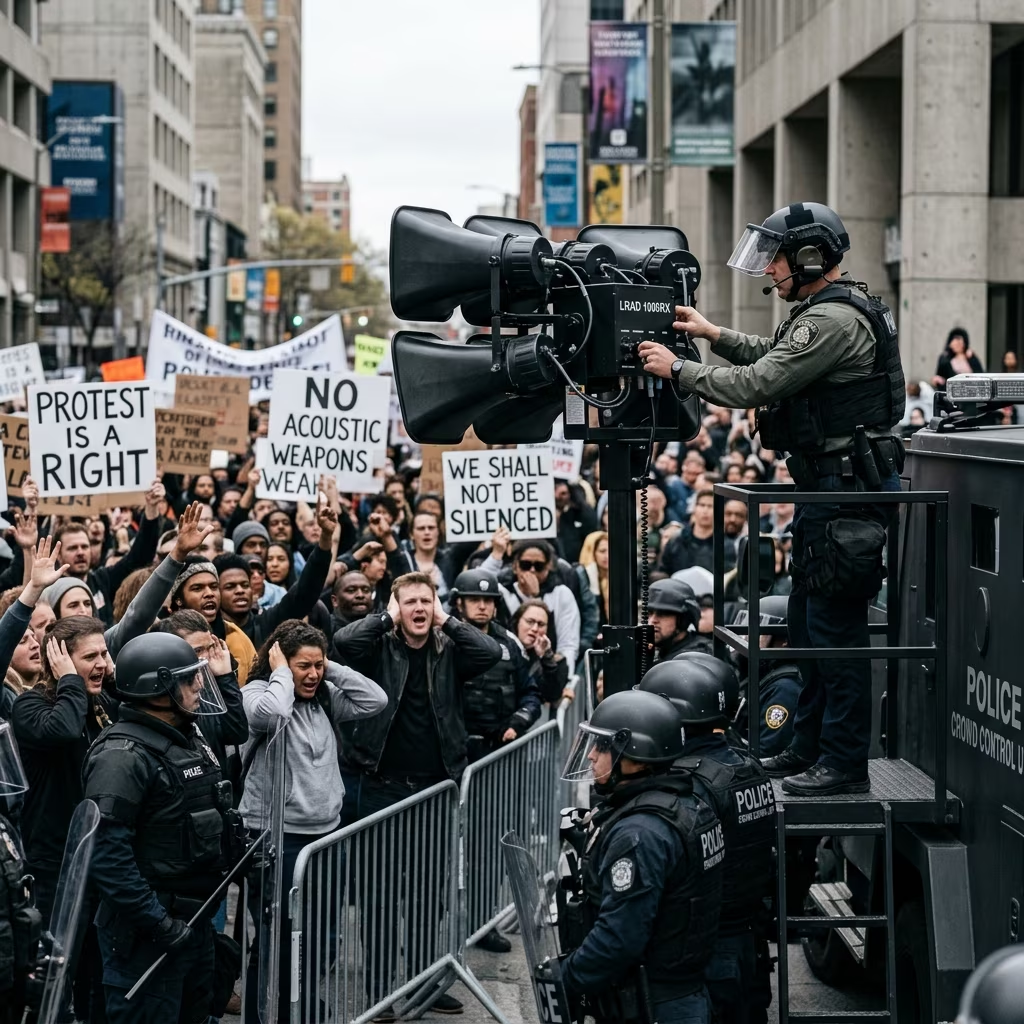
Police departments in the United States and other countries increasingly rely on long-range acoustic devices (LRADs), sometimes called sound cannons, to manage or disperse crowds. These devices raise difficult questions about legality, safety, and civil liberties: when are they lawful, and under what conditions does their use become a violation of rights or human rights norms?
This article explains how sound cannons work, the health risks they pose, and the overlapping legal frameworks that govern their use in protests and public gatherings. It is based on legal analysis and public health research, but presents the material in fresh language and structure for clarity and accessibility.
Understanding Sound Cannons and LRAD Technology
Sound cannons are part of a broader class of acoustic weapons designed to project highly concentrated, extremely loud sound over long distances. They were originally developed for military and maritime applications, but have been adopted by police and security forces for crowd-control and communication purposes.
Basic Technical Features
- Highly directional sound beam: LRADs can focus sound into a narrow cone, targeting people in a specific area without affecting others nearby to the same degree.
- Very high sound levels: Some models can reach up to around 160 decibels (dB), far above the threshold at which unprotected ears suffer permanent damage.
- Dual use modes: Devices typically offer a voice mode for broadcasting messages and a deterrent tone or siren mode that emits painful, high-intensity noise.
- Frequency targeting: Many LRADs emphasize frequencies around 2,000–4,000 Hertz, where human hearing is most sensitive, to maximize perceived loudness and discomfort.
Because sound cannons occupy a gray area between loudspeakers and weapons, legal systems have struggled to categorize them. They are marketed as “non-lethal” tools, yet their deterrent function depends on the potential for serious harm to hearing and balance.
Health Risks and Public Health Concerns
Medical and human rights organizations warn that acoustic crowd-control devices can cause significant health harms, particularly to the ears and nervous system. The technology is relatively new, so research is limited, but existing evidence raises serious concerns.
Known and Suspected Health Effects
- Acute ear pain and tinnitus: Exposure to high-intensity sound can trigger immediate pain, ringing in the ears, and temporary hearing loss.
- Permanent hearing damage: Case reports document lasting hearing loss and chronic tinnitus after sustained or close-range LRAD exposure.
- Balance and disorientation: Very loud sound at sensitive frequencies can cause dizziness, nausea, and disorientation, which may lead to falls and secondary injuries.
- Indiscriminate impact: Directional beams still affect bystanders, children, older adults, journalists, and police officers who may not be the intended targets.
Physicians for Human Rights notes that there is little medical literature on acoustic weapons, yet existing case reports between 1990 and 2015 already describe hearing loss and prolonged ear pain linked to such devices. Because comprehensive scientific studies are lacking, experts caution against routine or widespread use on crowds.
Why Sound Cannons Are Uniquely Controversial
Compared to other so-called “less-lethal” tools such as tear gas, pepper spray, or rubber bullets, acoustic weapons are controversial for several reasons:
- Invisible mechanism: Harm is caused by intense sound, which is not visible; people may not realize the risk until injury occurs.
- Difficulty in self-protection: Even with earplugs or covering ears, very high decibel levels can transmit through bone conduction to the inner ear.
- Lack of clear safety standards: There are no widely accepted public-health standards defining safe exposure duration or intensity for LRAD use on crowds.
- Potential for permanent injury: Hearing damage can be irreversible, which complicates claims that these devices are merely “non-lethal”.
Because of these concerns, some human rights organizations have called for moratoriums or strict limits on sound cannons until more robust safety data and regulatory frameworks are in place.
Core Legal Questions Around Police Use
The law does not treat sound cannons as automatically illegal; instead, legality depends on how, when, and why they are used. Key legal issues arise under domestic constitutional law, civil litigation, and international human rights standards.
Domestic Law: Use of Force and Civil Rights
In the United States, police conduct is primarily judged under the Constitution—especially the First Amendment right to assemble and the Fourth Amendment protection against unreasonable seizures and excessive force. Courts ask whether police actions were objectively reasonable given the circumstances, including the level of threat and the harm caused.
| Legal Issue | Key Question | Relevance to Sound Cannons |
|---|---|---|
| Excessive Force | Was the sound level and duration reasonable relative to any threat? | Prolonged, painful siren blasts on peaceful crowds can be argued as excessive. |
| First Amendment | Did LRAD use interfere with lawful protest or assembly? | Using painful sound to clear peaceful demonstrators may chill free speech and assembly. |
| Equal Protection | Were certain groups disproportionately targeted? | Selective use on particular communities can raise discrimination claims. |
| Negligence / Liability | Did authorities fail to train officers or adopt safe protocols? | Poor training and lack of guidelines can support negligence or civil rights claims. |
Real-world litigation has already led to important precedents. For example, an LRAD siren used at a protest in Pittsburgh resulted in permanent hearing loss for a bystander, leading to a significant settlement and recognition that sound can function as a weapon capable of causing lasting physical injury. In New York, police agreed after years of litigation to limit sound cannon use on crowds and bar certain high-intensity modes except under defined conditions.
International Human Rights Law
Beyond domestic law, international human rights instruments protect the right to peaceful assembly and require states to exercise restraint when using force in managing protests. Key principles include:
- Necessity: Force, including acoustic weapons, may only be used when strictly necessary to prevent serious harm.
- Proportionality: The level of force must be proportionate to the actual threat, avoiding methods that cause excessive injury relative to the situation.
- Non-discrimination: Tools must not be used in ways that disproportionately harm specific groups.
- Duty to protect assemblies: States have an obligation to facilitate and protect peaceful gatherings, not simply disperse them for convenience.
Physicians for Human Rights argue that, given the risk of serious and permanent injury and the lack of robust safety research, using acoustic weapons on protests is incompatible with these human rights standards and should be suspended until safeguards are developed.
When Sound Cannon Use Is More Likely to Be Seen as Unlawful
Legality turns on context. While there is no blanket ban in most jurisdictions, certain uses carry high legal risk and are more likely to be found unlawful or lead to successful civil suits.
High-Risk Uses From a Legal Perspective
- Deployment against peaceful demonstrators where there is no serious, immediate threat, especially if the aim is simply to disperse or silence lawful protest.
- Prolonged siren blasts at close range, particularly when people have little opportunity to leave or protect themselves.
- Lack of warning and clear instructions, using the deterrent tone without prior audible orders explaining what people must do to avoid harm.
- Use in confined spaces like narrow streets or indoor settings, where sound can be amplified and escape routes are limited.
- Use on vulnerable populations, including children, older adults, or individuals with known auditory or neurological conditions.
These factors not only increase the likelihood of physical injury, but also make it harder for authorities to argue that LRAD deployment was necessary and proportionate, both under constitutional standards and international human rights norms.
Conditions Under Which Use May Be Deemed Lawful
Even critics recognize that there are scenarios where limited use of sound cannons may be considered lawful, especially if authorities follow strict safeguards and aim to protect public safety while minimizing harm.
Best Practices for Minimizing Legal and Health Risks
Policies consistent with human rights guidance and public health caution typically emphasize the following safeguards:
- Primary reliance on voice mode: Use LRADs primarily as loudspeakers to communicate clear orders, safety information, and dispersal instructions at moderate volumes.
- Limited use of siren or deterrent tones: Siren mode should be reserved for rare, high-risk situations, kept as brief as possible, and used only after warnings and opportunities to disperse.
- Distance and positioning rules: Operators should maintain a minimum distance and avoid pointing the beam directly at individuals at very close range.
- Strict training and protocols: Officers must be trained on health effects, safe exposure limits, and legal standards governing use of force.
- Documentation and accountability: All deployments should be recorded, including decibel settings and duration, to allow review and accountability if injuries occur.
When such conditions are met, courts are more likely to treat sound cannon use as a form of regulated crowd management rather than excessive or arbitrary force. Nonetheless, the risk of injury and litigation remains, and some jurisdictions have chosen to restrict or ban certain LRAD functions entirely.
Practical Implications for Protesters and the Public
While the focus of legality is on police conduct, people participating in protests or public events should understand the risks and their rights. Public health and legal guidance suggest several practical steps:
- Awareness: Recognize LRAD devices—often flat, circular or rectangular panels mounted on vehicles or tripods—and note their orientation.
- Distance: If siren mode begins or the device is clearly aimed at the crowd, increasing distance can significantly reduce exposure.
- Ear protection: Earplugs or earmuffs reduce some risk, though very high decibel levels may still cause harm via bone conduction.
- Documentation: If people suffer pain or injury, recording video, noting time and location, and seeking medical attention can be important for later legal action.
- Legal support: Civil rights organizations and public-interest lawyers may assist individuals who experience health impacts or believe their rights were violated.
Frequently Asked Questions (FAQ)
1. Are sound cannons banned under international law?
No major treaty specifically names sound cannons or LRADs, but international human rights law imposes general limits on weapons that cause unnecessary suffering or disproportionate harm, particularly in the context of policing assemblies. Some experts argue that acoustic weapons for crowd control are incompatible with these principles and should be suspended until better evidence and regulation exist.
2. Are police always allowed to use LRADs in protests?
Not always. Domestic law requires police to use only necessary and proportionate force. Deploying LRAD sirens on peaceful demonstrators, for long durations, or at close range can be challenged as excessive force or as violating rights to free speech and assembly. Several cities have faced lawsuits and settlements over such use.
3. Can exposure to a sound cannon cause permanent damage?
Yes, permanent hearing loss and chronic tinnitus have been reported after LRAD exposure, particularly when individuals were close to the device or exposed for extended periods. Because safe exposure thresholds for crowd situations are not well established, public health experts urge caution and limited use.
4. Are sound cannons considered “non-lethal” weapons?
They are commonly marketed as “less-lethal” or “non-lethal” tools. However, that label refers only to the low likelihood of causing death, not the absence of serious injury. Permanent hearing damage, disorientation, and psychological impact can be substantial, so the term “non-lethal” should not be confused with harmless.
5. What reforms do experts recommend?
Human rights and public health organizations call for: rigorous independent research on health effects, clear legal standards and exposure limits, strict training and protocols for police, robust accountability mechanisms for misuse, and in some cases temporary suspension of acoustic weapons in crowd-control until these safeguards are in place.
References
- Long-range acoustic device — Wikipedia (summary of technical features and civil liberties concerns, citing primary sources). 2024-03-15. https://en.wikipedia.org/wiki/Long-range_acoustic_device
- Health Impacts of Crowd-Control Weapons: Acoustic Weapons — Physicians for Human Rights. 2022-02-01. https://phr.org/our-work/resources/health-impacts-of-crowd-control-weapons-acoustic-weapons/
- What’s an LRAD? Explaining the ‘sonic weapons’ police use for crowd control and communication — The Conversation. 2022-02-22. https://theconversation.com/whats-an-lrad-explaining-the-sonic-weapons-police-use-for-crowd-control-and-communication-177442
- New York Police Department agrees to limit use of sound cannons — 1010 WINS / Audacy News report on legal settlement. 2021-06-16. https://www.facebook.com/1010wins/posts/10158267935372339/
- LRADs and Sound Cannons Are NOT Safe. Here’s How To Minimize Their Effects. — YouTube educational video summarizing acoustic risk data. 2020-10-05. https://www.youtube.com/watch?v=3sqIvak-4Ek