
Alabama Terroristic Threat Laws: Charges, Penalties, and Rights
Understand how Alabama defines terroristic threats, the degrees of the offense, penalties, and what to expect if you or a loved one faces these serious charges.
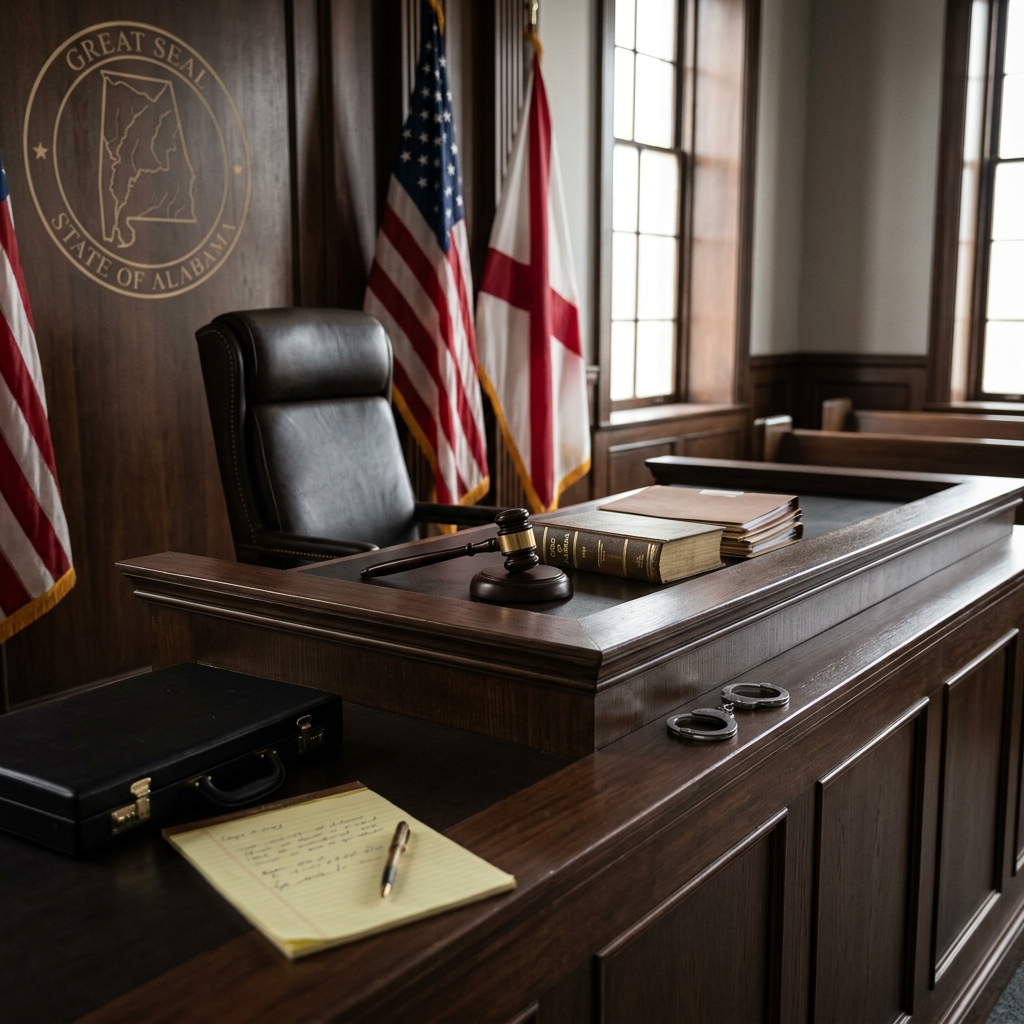
Alabama treats terroristic threats as serious crimes that can lead to jail or prison, permanent criminal records, and long‑term consequences for work and education. These laws apply in a wide range of situations, from social media posts and phone calls to threats against schools, churches, or government offices. Understanding how the law defines a terroristic threat, and what prosecutors must prove, is critical for anyone under investigation or charged with this offense.
This guide explains the current structure of Alabama’s terroristic threat laws, the difference between first‑degree and second‑degree charges, the penalties that may follow a conviction, and key issues to discuss with a criminal defense attorney.
1. How Alabama Defines a Terroristic Threat
Under Alabama law, a terroristic threat generally involves a credible, objectively evaluated threat to commit a crime of violence or to damage property. A threat can be spoken, written, posted online, or communicated in any other way, as long as it is directed toward a person or place and conveys an intent to cause serious harm.
1.1 Core Elements of the Offense
While the exact wording differs by statute, the basic building blocks of a terroristic threat charge in Alabama include:
- A communicated threat – The person must communicate a threat to another individual or entity.
- Crime of violence or property damage – The threat involves violence against a person or damage to property, often using weapons such as bombs, explosives, or firearms.
- Objective credibility – The threat is evaluated from the standpoint of a reasonable person, not just the speaker’s claimed intent.
- Specific harmful consequences – For higher‑degree charges, the threat must trigger or be aimed at causing serious disruption, evacuation, or retaliation against certain protected individuals.
In practice, this means that not every angry remark qualifies. Prosecutors typically look for threats that appear serious, would cause a reasonable person to be afraid or disrupt normal activities, and are tied to specific locations or people.
1.2 Key Legal Terms
Several legal concepts appear repeatedly in Alabama’s terroristic threat statutes:
- Crime of violence – Generally refers to offenses involving force or threatened force against persons, as defined elsewhere in Alabama’s criminal code.
- Evacuation – Leaving a building or property due to perceived danger, such as a bomb threat.
- Disruption – Significant interference with the normal operations of a school, church, or government activity.
- Objective evaluation – The court considers how a reasonable person would perceive the threat, regardless of what the accused says they meant.
2. First‑Degree vs. Second‑Degree Terroristic Threats
Recent changes to Alabama law divide terroristic threats into two degrees. This allows prosecutors and courts to distinguish between less serious, one‑off threats and more severe conduct that disrupts public life or targets specific victims.
2.1 First‑Degree Terroristic Threat (Class C Felony)
First‑degree terroristic threat is the more serious version of the offense and is classified as a Class C felony. Under Alabama Code § 13A‑10‑241, a person commits this crime when they credibly threaten a crime of violence against a person or to damage property using a bomb, explosive, weapon of mass destruction, firearm, deadly weapon, or similar mechanism, and at least one of the following occurs:
- The threat causes the evacuation of any real property.
- The threat causes the disruption of a school, church, or government activity.
- The threat is made to retaliate against someone because of their role in a judicial or administrative proceeding or for providing information to law enforcement.
- The threat is made against an elected public official or their staff.
This degree targets threats that either cause broad disruption or are directed at individuals who play key public roles, such as witnesses, informants, or elected officials.
2.2 Second‑Degree Terroristic Threat (Class A Misdemeanor)
Second‑degree terroristic threat is typically a Class A misdemeanor and applies to threats that do not meet the additional aggravating factors of first‑degree, but still involve a credible threat to commit a crime of violence or damage property. While the full statutory language is separate from the first‑degree statute, practitioners and commentary describe second‑degree as covering the broader category of serious threats that have not caused evacuation or targeted protected individuals.
Even though it is a misdemeanor, a second‑degree terroristic threat can still lead to arrest, detention, and long‑term collateral consequences.
2.3 At a Glance: Comparing the Two Degrees
| Feature | First‑Degree Terroristic Threat | Second‑Degree Terroristic Threat |
|---|---|---|
| Classification | Class C felony | Class A misdemeanor |
| Typical Conduct | Credible threat using weapons + evacuation, disruption, or retaliation; or threat against elected official. | Credible threat of violence or property damage without the aggravating factors of first‑degree. |
| Potential Incarceration | 1–10 years in prison (general Class C felony range). | Up to 1 year in jail (general Class A misdemeanor range). |
| Long‑Term Impact | Felony record; loss of certain civil rights; significant impact on employment and housing. | Misdemeanor record; can affect jobs, licensing, and schooling. |
3. Penalties and Sentencing Consequences
Penalties depend on the degree of the offense and the defendant’s prior criminal history, but even a first arrest can expose a person to substantial punishment.
3.1 Incarceration and Fines
- First‑degree (Class C felony)
- Imprisonment for 1 to 10 years in state prison.
- Fines that can reach several thousand dollars under Alabama’s general felony sentencing statutes.
- Second‑degree (Class A misdemeanor)
- Up to 1 year in a county or local jail.
- Fines up to $6,000 for a Class A misdemeanor under Alabama law.
Judges may also impose probation, community service, mandatory counseling, or other conditions. Sentencing can be harsher if the offense involved schools, vulnerable populations, or repeat criminal behavior.
3.2 Restitution and Costs
Under Alabama law, courts may order defendants convicted of making terroristic threats to repay the costs incurred by law enforcement and other agencies responding to the threat. This can include expenses such as:
- Police and emergency personnel overtime;
- Use of specialized units (e.g., bomb squad);
- Costs associated with evacuations or closures of buildings; and
- Other documented investigative or mitigation expenses.
Because evacuations and security sweeps are expensive, restitution orders can reach tens of thousands of dollars in serious cases.
3.3 Collateral Consequences
Beyond jail or prison, a terroristic threat conviction can affect many aspects of life:
- Criminal record – Employers, landlords, and schools may be reluctant to work with someone convicted of making violent threats.
- Professional licensing – Certain licenses (e.g., healthcare, education, finance) can be denied or revoked.
- Firearms rights – Felony convictions often affect the right to possess firearms.
- Education opportunities – Scholarship eligibility and admission decisions may be impacted, especially when threats involve schools.
4. School, Church, and Public‑Space Threats
Threats against schools and other public spaces have received particular legislative attention in Alabama, especially in light of national concerns about school violence. The legislature and governor have taken steps to increase penalties and create specific consequences for students.
4.1 Enhanced Penalties for School‑Related Threats
A recent Alabama law, signed by the governor, strengthens penalties for terroristic threats made against schools and broadens protections to include hospitals, nursing homes, and similar facilities housing vulnerable individuals. Under this enhanced framework:
- Credible threats against schools and certain public spaces are more likely to be charged as first‑degree due to the disruption they cause.
- Threats targeting locations with disabled or immobile people may receive particular scrutiny.
These policies reflect the state’s intention to deter bomb threats, active‑shooter hoaxes, and similar conduct that forces lockdowns or evacuations.
4.2 Student‑Specific Consequences
When a student is accused of making a terroristic threat against a school, the consequences often go beyond the criminal case. Under current policy:
- The student may be removed from the classroom while a due‑process hearing is pending.
- They cannot return to school until the charges are resolved and they have completed a mental health evaluation.
- If found guilty, the student may face expulsion from school.
Because these school disciplinary actions can significantly alter a young person’s educational trajectory, families often need both criminal defense counsel and educational or juvenile law advice.
5. Common Issues and Potential Defenses
Each terroristic threat case is fact‑specific, and only a qualified attorney can evaluate defenses in a particular situation. However, some recurring issues often arise under Alabama law.
5.1 Was the Threat “Credible” and Objectively Serious?
Prosecutors must usually show that the threat was credible based on an objective evaluation, not merely offensive or hyperbolic speech. Possible defense arguments may include:
- The statement was clearly a joke or sarcasm in context, and no reasonable person would interpret it as a real threat.
- The alleged threat was taken out of context (for example, partial screenshots or incomplete recordings).
- No person actually felt fear or altered their behavior as a result of the statement.
Courts will weigh not only the words used but also the surrounding circumstances—prior conflicts, the defendant’s actions, and how others reacted.
5.2 Free Speech and Overbreadth Concerns
Because terroristic threat laws regulate speech, they must be applied consistently with the First Amendment. Federal courts have held that laws targeting true threats—serious expressions of intent to commit violence—are generally permissible, but statutes cannot criminalize mere political hyperbole, jokes, or vague angry comments. Defendants sometimes challenge terroristic threat statutes on the grounds that they are too broad or vague, arguing that they sweep in protected speech. Courts then examine whether the statutes are narrowly tailored to punishing genuine threats.
5.3 Identity and Proof Issues
In cases involving anonymous messages, online posts, or voice‑altered calls, prosecutors must prove that the accused was the one who made the threat. Defense strategies may focus on:
- Challenging the reliability of digital or phone records;
- Questioning eyewitness identifications;
- Highlighting the possibility that another person using the same device could have made the statement.
5.4 Overcharging and Degree of the Offense
Sometimes, the arresting agency or prosecution initially charges first‑degree even when a threat caused minimal disruption. Defense counsel may argue that, even if a crime occurred, it should be classified as second‑degree based on the absence of evacuation, disruption, or retaliation motives. Reducing the degree of the charge can dramatically lower exposure to prison time and collateral consequences.
6. Practical Guidance if You Face a Terroristic Threat Charge
Anyone under investigation or formally charged with making a terroristic threat in Alabama should proceed carefully. The following steps are generally prudent, though they are not a substitute for legal advice.
6.1 Exercise Your Right to Remain Silent
Statements made to law enforcement, school officials, or others can be used in court. Politely invoking the right to remain silent and requesting an attorney before answering questions is often critical in protecting your legal position.
6.2 Contact an Experienced Criminal Defense Attorney
Because terroristic threat cases involve technical legal standards and potentially severe penalties, consulting a lawyer who handles Alabama criminal cases is essential. An attorney can:
- Review the statutory elements and evaluate whether the alleged conduct meets them.
- Analyze the strength of the evidence, including digital and witness evidence.
- Negotiate with prosecutors regarding charge reductions or diversion programs where available.
- Represent you in court and at school or employment‑related disciplinary hearings.
6.3 Preserve Evidence and Document Context
In many cases, context determines whether speech is a criminal threat or a bad joke. Preserving texts, social media threads, emails, and any other communications that show context may be crucial. Potential witnesses who can explain the situation should also be identified as early as possible.
6.4 Consider the Impact on Mental Health Evaluations
For students and some adult defendants, mental health evaluations may play a role in court or school decisions. Being proactive about counseling or treatment, when appropriate, can demonstrate responsibility and may influence how prosecutors, judges, or school boards respond.
7. Frequently Asked Questions (FAQs)
Is a terroristic threat in Alabama always a felony?
No. Alabama now distinguishes between first‑degree and second‑degree terroristic threats. First‑degree is a Class C felony, while second‑degree is generally a Class A misdemeanor. However, both are treated as serious offenses that can result in incarceration.
Can I be charged even if I never intended to carry out the threat?
Yes. Terroristic threat laws focus on the threat itself and how a reasonable person would interpret it, not on whether the accused actually planned to follow through. A person may be prosecuted even without weapons or concrete plans if the threat appears credible and causes fear or disruption.
Do online posts and social media messages count as terroristic threats?
They can. Threats communicated by text, email, social media, or other electronic means are treated similarly to spoken threats if they convey an intent to commit violence or damage property and meet the statutory criteria. Anonymous or pseudonymous posts can still lead to investigations based on digital evidence.
What if the threat targets only property, not people?
Alabama’s statutes explicitly cover threats to cause serious property damage, especially when bombs, explosives, or other deadly mechanisms are referenced. Threats that cause evacuations, disrupt public functions, or are aimed at retaliation may qualify for first‑degree charges even if no specific person is named.
Can a juvenile be charged with a terroristic threat?
Yes. Juveniles can be charged in delinquency proceedings for conduct that would be a crime if committed by an adult. In school‑related cases, they may also face suspension, mental health evaluation requirements, and expulsion under education policies, in addition to any juvenile‑court consequences.
Is it possible to have a terroristic threat charge reduced or dismissed?
In some cases, yes. Outcomes vary depending on the facts, the defendant’s history, and the prosecutor’s discretion. Defense attorneys may negotiate plea agreements to lesser charges, seek dismissal where evidence is weak, or argue that the alleged conduct does not legally qualify as a terroristic threat.
References
- Terroristic Threat Defense Lawyers in Alabama — JB Brown. 2024-09-01. https://thepeoplesdefender.com/practice-areas/terroristic-threats-alabama
- Code of Alabama § 13A-10-241: Making a Terrorist Threat in the First Degree — Alabama Legislature / Justia. 2024-01-01. https://law.justia.com/codes/alabama/title-13a/chapter-10/article-10/section-13a-10-241/
- Governor Ivey Signs into Law Stronger Penalties for Terrorist Threats in Schools and Other Public Spaces — Office of the Governor of Alabama. 2026-04-23. https://governor.alabama.gov/newsroom/2026/04/governor-ivey-signs-into-law-stronger-penalties-for-terrorist-threats-in-schools-and-other-public-spaces/
- Making Terroristic Threat 1st Degree — The Stoves Law Firm. 2024-06-01. https://www.stoveslawfirm.com/criminal-defense-attorney/violent-crimes/making-terroristic-threat-1st-degree/
- Alabama Code § 13A-10-243 — Alabama Legislature. 2023-09-01. https://alison.legislature.state.al.us/code-of-alabama?section=13A-10-243
- State Terrorism Threat Laws — Republican Policy Committee (U.S. House of Representatives). 2023-01-15. https://republicanpolicy.house.gov/sites/evo-subsites/republicanpolicy.house.gov/files/evo-media-document/Republican%20Policy%20Committee%20State%20Terrorism%20Threat%20Laws.pdf
Similar Articles








Read full bio of Sneha Tete




