
Debt After Death: Estate Liability Explained For Families Today
Understand when family members, executors, and the estate itself must handle debts after someone dies, and how the law limits your personal liability.
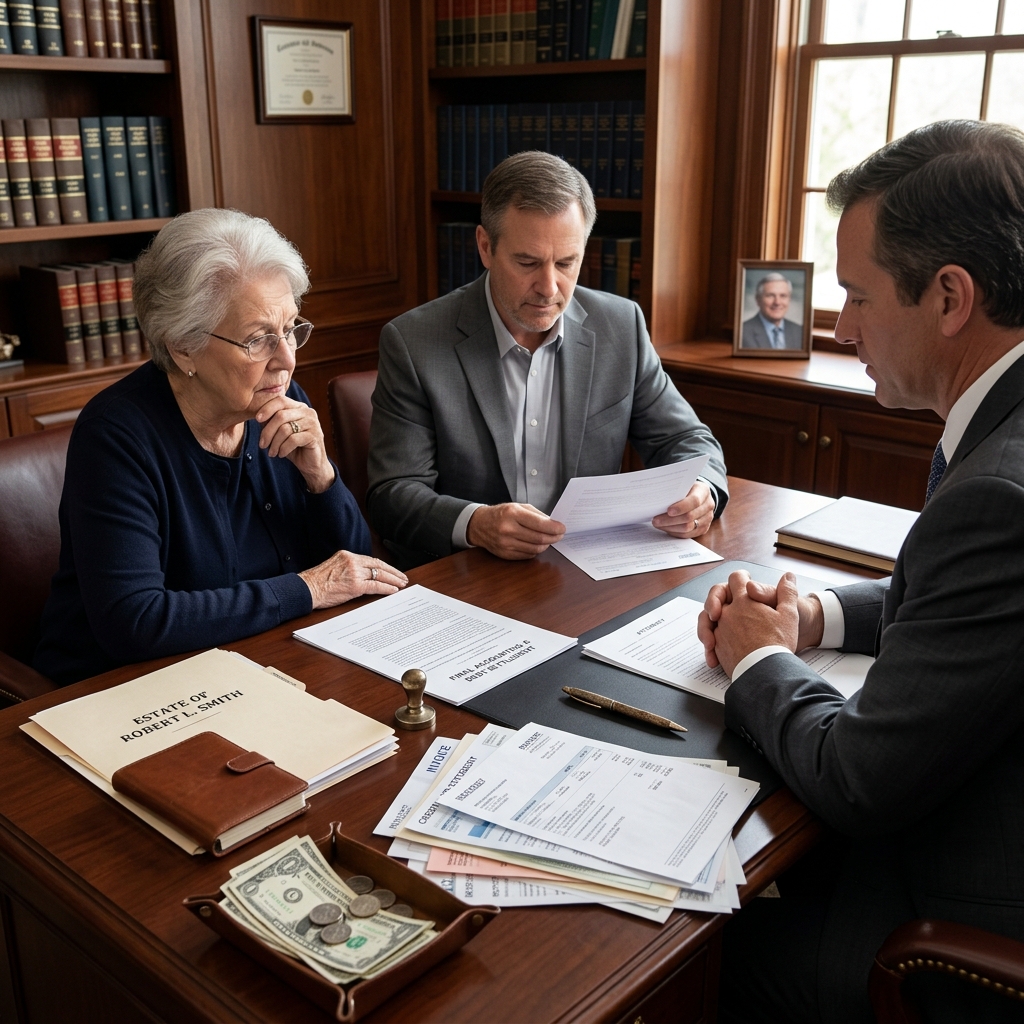
When a family member dies, bills and creditor notices often keep arriving, raising a stressful question: who is actually responsible for paying these debts? Many people worry that they must use their own money to satisfy credit cards, medical bills, or loans left behind. In most situations, that fear is unfounded. The law generally requires that valid debts are paid from the deceased person’s estate, not from the pockets of grieving relatives.
This article explains how debt is handled after death, when an estate must pay creditors, and the limited circumstances in which family members, spouses, or co-signers can become personally liable. It also offers practical steps for executors and administrators who must navigate these obligations during probate.
Key Legal Principles: Debts Survive, But Liability Is Limited
Death does not automatically erase a person’s financial obligations. Most debts legally continue and become claims against the estate—the collection of property, accounts, and rights the person owned at death. The estate is treated as a separate legal entity that must gather assets, verify claims, and pay creditors in an order set by state law.
At the same time, core principles offer important protection:
- Estate-first liability: Creditors must look to the estate, not to relatives, for payment of the deceased’s debts.
- No automatic family responsibility: Children and other family members are usually not personally responsible for a deceased relative’s debts, unless they co-signed or are otherwise legally tied to the obligation.
- Limited spousal liability: Surviving spouses may owe certain debts incurred during the marriage depending on state law, especially in community property states.
- Priority rules: When an estate cannot pay everything, statutes determine which debts are paid first and which may go unpaid.
What Is an Estate and Who Manages It?
An estate is the total of everything a person owns or has legal rights to at death, including real estate, bank accounts, investments, business interests, and personal property. It does not automatically include assets that bypass probate, such as certain joint accounts or payable-on-death designations, though those assets may still be relevant for creditor claims in some jurisdictions.
The court typically appoints a personal representative—often called an executor (if named in a will) or administrator (if there is no will)—to manage the estate. This person has legal authority to act on behalf of the estate, subject to court supervision and state law.
| Role | How Selected | Core Debt-Related Duties |
|---|---|---|
| Executor | Named in the will; formally appointed by probate court | Collects assets, identifies creditors, pays valid claims from estate funds. |
| Administrator | Appointed by court when there is no will or no executor available | Performs the same functions as an executor under state law. |
| Personal Representative | Umbrella term used in many statutes and courts | Responsible for the overall administration, including debts and taxes. |
Executor’s Responsibilities in Paying Debts
The executor or administrator is the central figure in managing debts of the deceased. According to the Internal Revenue Service, the estate administrator must account for all assets and debts, verify them, and then pay creditors from estate property before distributing anything to heirs. Other legal guides emphasize similar duties.
Key steps typically include:
- Inventory assets: Identify and, if necessary, appraise all property, bank accounts, investments, business interests, and personal items.
- Identify and verify debts: Review bills, loan documents, tax notices, and credit card statements to determine which debts are valid and how much is owed.
- Notify creditors: Follow state procedures for giving notice of the death and the probate proceeding, often through mail and sometimes newspaper publication.
- Apply priority rules: Use statutory order of payment to decide which obligations must be paid first.
- Pay from estate funds: Use cash in bank accounts or liquidate assets as necessary to satisfy approved claims and taxes.
- Distribute remaining assets: Only after debts, expenses, and taxes are properly handled may the executor distribute remaining property to beneficiaries.
Generally, an executor does not owe these debts personally. The executor’s legal obligation is to manage and pay them using estate assets, following the law and court orders.
When Are Family Members Personally Responsible?
While relatives are usually shielded from personal liability, there are notable exceptions. Several authoritative sources explain that individuals can become personally responsible if they have a direct legal connection to the debt.
Co-signers and Joint Account Holders
If you co-signed a loan or were a joint credit card holder, you generally remain liable for the balance after the other person dies. That is because the creditor has a contract with you as well as with the deceased. The estate may pay part or all of the debt, but if the estate is insufficient, the creditor can pursue the surviving co-signer or joint account holder.
- Co-signers on mortgages, car loans, or personal loans typically remain fully liable.
- Joint cardholders (not merely authorized users) can be responsible for credit card balances.
- Being only an “authorized user” on a credit card usually does not create legal responsibility for the debt.
Surviving Spouses
Spousal liability is more complex and depends heavily on state law. Legal resources note that a surviving spouse may be responsible for debts that were incurred together with the deceased, especially for household expenses, or under community property rules.
Important factors include:
- Joint obligations: Debts both spouses signed for or agreed to may bind the surviving spouse, particularly if the estate cannot fully pay them.
- Community property states: In these jurisdictions, many debts incurred during the marriage are treated as shared, and a surviving spouse may be responsible even if only the deceased’s name appears on the account.
- Separate debts: Obligations incurred solely by the deceased may or may not involve the surviving spouse, depending on local law and the nature of the expense.
People Who Received Certain Transfers
In some states, individuals who receive money or property from a deceased person around the time of death can be required to return or use part of those funds to pay valid debts, if the estate itself lacks resources. This does not make them liable beyond what they received; instead, creditors can reach those assets as if they were still part of the estate.
What Happens If the Estate Is Insolvent?
An insolvent estate is one where debts, taxes, and expenses exceed available assets. In that situation, the executor must apply statutory priority rules to determine which creditors are paid and which may receive little or nothing.
Although exact rules vary by state, a typical priority order includes:
- Estate administration costs: Court fees, executor compensation, legal and accounting expenses.
- Funeral and last illness expenses: Often subject to caps or reasonableness requirements.
- Taxes and government claims: Certain federal, state, or Medicaid-related obligations.
- Unpaid medical bills from the final illness: Recognized as priority in many jurisdictions.
- Other unsecured debts: Such as credit cards, personal loans, and general bills.
If there are not enough assets, lower-priority creditors may simply go unpaid. Family members do not step in to make up the difference unless they have independent legal responsibility for the debt, such as co-signing.
Common Types of Debts After Death
Executors and families often encounter the same categories of obligations. Understanding how each type is treated helps determine who must pay and how.
- Credit Card Debt: Survives the debtor and typically becomes a claim against the estate. Family members are generally not liable unless they are joint account holders, co-signers, or, in some states, surviving spouses in community property regimes.
- Medical Bills: Claims for medical care leading up to death are common and often have priority in insolvent estates.
- Mortgages and Other Secured Loans: These are backed by collateral such as a home or vehicle. If the estate or surviving co-borrower does not continue payments, the lender may enforce its security interest and foreclose or repossess.
- Taxes: Income taxes and, in some cases, estate taxes must be reported and paid before distributions to heirs.
- Personal Loans: Treated like other unsecured claims; they are paid according to available assets and priority rules.
How Beneficiaries and Heirs Are Affected
Beneficiaries named in a will and heirs under state intestacy laws generally receive property only after debts, expenses, and taxes are resolved. In practice, this means:
- If the estate has sufficient assets, creditors are paid and beneficiaries receive the remaining property.
- If the estate is insolvent, beneficiaries may receive less than expected or nothing at all.
- In certain jurisdictions, if assets are distributed prematurely and unpaid creditors later appear, those who received distributions may be required to use part of what they received to pay outstanding claims, though usually not beyond that amount.
Crucially, beneficiaries are usually not personally liable for the deceased’s debts beyond the value of assets they received from the estate.
Practical Tips for Executors and Family Members
Handling debts during a time of grief can be daunting. These practical steps reflect guidance from official and professional sources.
- Do not rush into paying bills personally: Consult with an attorney or knowledgeable advisor before using your own funds.
- Secure and organize records: Collect bank statements, loan documents, tax returns, medical bills, and credit card statements.
- Open an estate bank account: Keep estate transactions separate from personal finances.
- Follow court procedures: File required probate documents and observe deadlines for creditor claims.
- Communicate with creditors: Provide notice of the death and the probate process; ask for itemized statements and verify debts.
- Seek professional guidance: Tax professionals can help with final income tax returns and any estate tax obligations.
Frequently Asked Questions
Am I responsible for my parent’s credit card debt?
In most cases, no. Children are generally not personally liable for a parent’s credit card balances unless they co-signed the account or were joint cardholders. Authorized users are typically not responsible.
Can debt collectors demand payment from me directly?
Collectors may contact the executor or certain family members to discuss the estate, but they cannot lawfully misrepresent that you must pay from your own funds if you have no legal responsibility. Your obligation depends on whether you are a co-signer, joint debtor, or surviving spouse under applicable state law.
What if the estate does not have enough money to pay all debts?
The executor applies statutory priority rules, paying higher-priority claims first. Lower-priority creditors may receive partial payment or nothing. Relatives are not required to cover shortfalls unless they are independently liable for specific debts.
Do I need to pay medical bills for a deceased spouse?
Possibly, but it depends on state law. Some jurisdictions treat certain medical and household expenses incurred during marriage as joint obligations, especially in community property states. Local legal advice is critical.
When should beneficiaries expect to receive their inheritance?
Only after the executor has gathered assets, settled debts, paid taxes, and obtained any necessary court approvals. This process can take many months or longer, depending on the complexity of the estate and the creditor issues involved.
References
- Responsibilities of an estate administrator — Internal Revenue Service. 2023-03-01. https://www.irs.gov/individuals/responsibilities-of-an-estate-administrator
- Paying Debts From an Estate & Legal Issues — Justia Probate Law Center. 2023-06-15. https://www.justia.com/probate/probate-administration/the-duties-of-an-executor-of-an-estate/paying-debts-from-an-estate/
- Is an Executor of an Estate Liable for Debt? — InCharge Debt Solutions. 2022-05-10. https://www.incharge.org/debt-relief/executor-credit-card-debt/
- After a person dies, his or her debts live on — Capell & Howard P.C. 2021-09-01. https://www.capellhoward.com/insights/after-a-person-dies-his-or-her-debts-live-on/
- Debts and Deceased Relatives — TexasLawHelp.org. 2023-02-20. https://texaslawhelp.org/article/debts-and-deceased-relatives
- Estate Administration: A Comprehensive Guide — Brighton Jones LLC. 2022-11-05. https://www.brightonjones.com/blog/estate-administration/
- Who Pays the Debts? Understanding Liability in Estate Administration — Peck Bloom, LLC. 2020-08-10. https://pecktrust.com/blog/who-pays-the-debts-understanding-liability-in-estate-administration/
Similar Articles








Read full bio of medha deb


