
Who Keeps The Car After Divorce: Practical Steps For Your Car
Understand how courts decide who keeps the car in a divorce, how loans and titles are handled, and how to protect your finances.
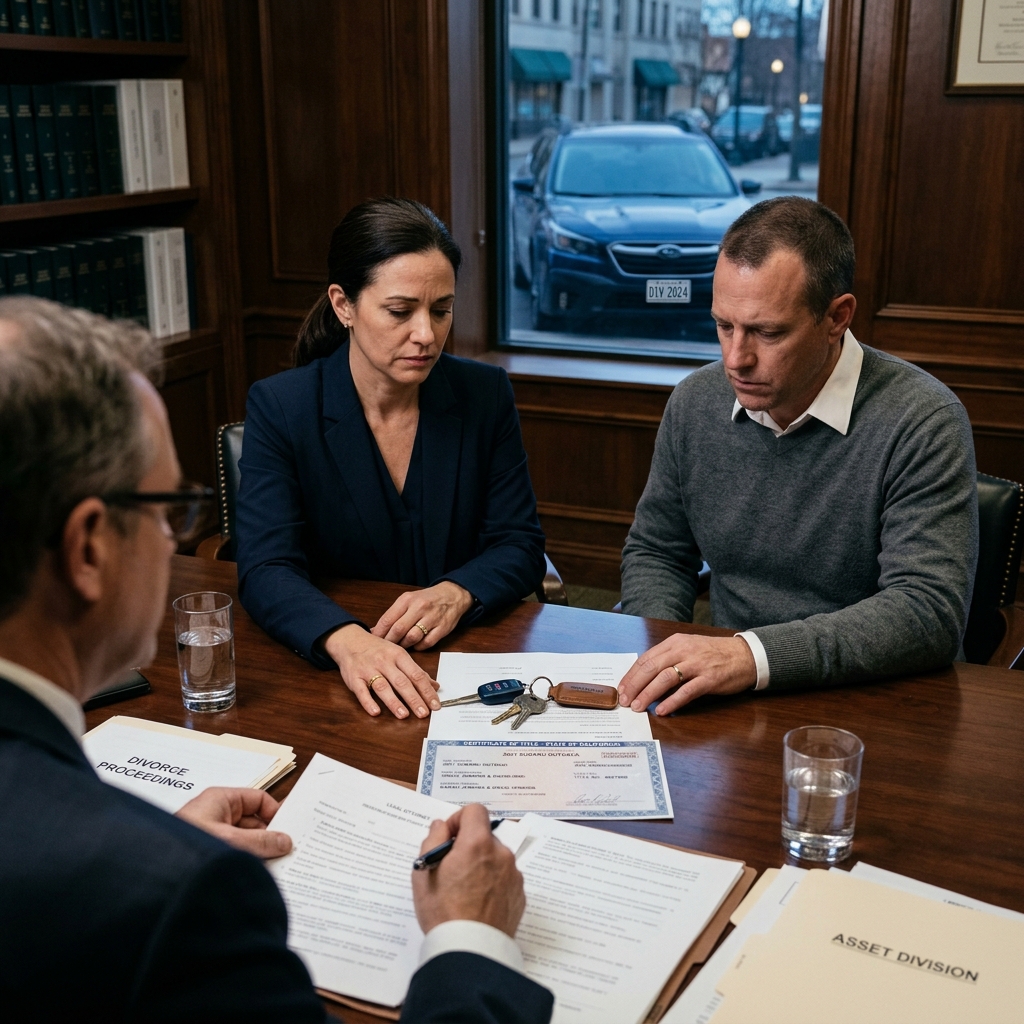
When couples separate, the question of who keeps the car after divorce often becomes just as emotionally charged as decisions about the home or savings. A vehicle can be essential for commuting, caring for children, and maintaining independence, so understanding how the law treats cars in divorce is critical for planning your next steps.
This guide explains how courts classify vehicles, how they are valued and divided, what happens to car loans and leases, and practical strategies you can use to protect both your transportation and your finances.
How Divorce Law Looks at Cars: Property Basics
In most jurisdictions, courts distinguish between marital (or community) property and separate property when dividing assets in a divorce. This distinction applies to vehicles just like it applies to bank accounts, furniture, or investments.
- Marital/community property: generally includes assets acquired by either spouse during the marriage, using income earned during the marriage.
- Separate property: typically includes assets acquired before marriage or received during marriage as a gift or inheritance to one spouse alone.
Because a car is a form of personal property, the court first needs to decide whether the vehicle is marital/community property (to be divided) or separate property (likely kept by one spouse).
Is the Vehicle Marital or Separate Property?
The answer to who keeps the car often starts with how and when the vehicle was acquired. Judges look at several factors to classify the vehicle:
- Purchase date: Was the car bought before or during the marriage?
- Source of funds: Were marital funds (income earned during the marriage) or separate funds used to buy or maintain the car?
- Gift or inheritance: Was the vehicle given to one spouse as a gift or inherited by one spouse only?
- Title: Whose name appears on the registration and title documents? While important, title alone does not always control the outcome.
| Scenario | Likely Classification | Typical Result |
|---|---|---|
| Car bought before marriage with one spouse’s funds | Separate property | That spouse usually keeps the car |
| Car bought during marriage with marital income | Marital/community property | Vehicle value divided; one spouse may keep car, the other compensated |
| Car inherited by one spouse during marriage | Separate property (inheritance to one person) | Inheriting spouse usually keeps the car |
| Car given as a personal gift to one spouse | Separate property (gift to one spouse) | Recipient spouse usually keeps the car |
| Car titled in one name but bought with marital funds | Often treated as marital/community property | Subject to division despite single-name title |
Community Property vs. Equitable Distribution States
State law also affects how cars are divided. There are two main approaches courts use when dividing marital assets, including vehicles:
- Community property states: Marital property is generally split 50/50 between the spouses.
- Equitable distribution states: Marital property is divided in a way that is considered fair, which is not always a strict 50/50 split.
Community property states (such as California, Texas, and others identified by many legal resources) treat most assets acquired during marriage as jointly owned and divide them equally. Equitable distribution states look at a broader set of circumstances, like each spouse’s income, needs, and contributions, to reach a fair outcome.
Valuing the Vehicle for Property Division
Because a car cannot be physically split, judges focus on its value rather than the metal itself. The process typically involves:
- Listing all of the couple’s assets, including vehicles.
- Assigning a dollar value to each vehicle, often based on market guides, appraisals, or recent sales of similar cars.
- Balancing the distribution of assets and debts so each spouse receives a fair share overall.
In practice, one spouse might receive the car and the other might receive other assets (like cash, retirement funds, or furniture) of similar value. This balancing act allows each spouse to leave the marriage with a fair portion of the total property without trying to literally cut a vehicle in half.
Factors Courts Consider When Deciding Who Keeps the Car
When spouses cannot agree, courts look not only at legal ownership but also at practical considerations. Legal practice guides and family law firms describe common factors judges may weigh:
- Daily use: Which spouse relies on the vehicle to get to work, medical appointments, or school?
- Parenting responsibilities: Is the car critical for transporting children or dependent relatives?
- Driver’s license and insurance: Which spouse holds a valid license and is able to insure and maintain the vehicle?
- Number of vehicles: How many cars exist in the marital estate, and is there an alternative vehicle available for each spouse?
- Financial ability: Which spouse can afford ongoing costs like loan payments, fuel, repairs, and registration fees?
By factoring in both ownership and need, judges aim to ensure that vehicles end up in the hands of the person who can realistically use and maintain them.
What Happens to Car Loans in Divorce?
Vehicle ownership is only half the story. If the car is financed or leased, the underlying debt must also be addressed. Courts divide both assets and liabilities as part of the property settlement.
Loan Responsibility vs. Legal Liability
A key point many people misunderstand is that a divorce decree cannot change what a lender sees on the loan contract. If both spouses signed the car loan, the lender treats both as fully responsible until the loan is paid off or refinanced, even if the divorce decree says only one spouse should make payments.
- Courts can assign responsibility for paying the loan to one spouse.
- However, the lender still sees both names and can pursue either borrower if payments stop.
- A missed payment by the spouse keeping the car can harm the credit score of the other spouse who remains on the loan.
Because of this, financial counseling and legal sources strongly recommend proactive steps to manage car loans during divorce, particularly when both spouses are on the contract.
Refinancing, Paying Off, or Selling the Car
Common strategies for dealing with car loans during divorce include:
- Refinancing in one name: The spouse who is keeping the car applies to refinance the loan solely in their name, removing the other spouse from legal liability.
- Paying off the loan: If resources allow, the spouses may pay off the remaining balance, convert the car to unencumbered property, and then divide its value as part of the asset settlement.
- Selling the vehicle: When neither spouse wants to keep the car, or refinancing is not possible, selling the car can be the most practical option. Sale proceeds are used to pay off the loan, with any remaining amount divided according to the property settlement.
Whatever option is chosen, the divorce agreement should clearly spell out who is responsible for the loan, what deadlines apply, and what happens if payments are not made.
Joint Titles, Leases, and Ongoing Obligations
If both spouses are on the vehicle title or lease, untangling ownership requires carefully coordinated legal and financial steps.
Joint Titles
When both names appear on the title, courts may order one spouse to transfer their interest to the other as part of the divorce judgment. This often occurs when one spouse is awarded the car and assumes responsibility for the associated loan or lease.
Vehicle Leases
For leased vehicles, the parties must follow the lease contract, which may include early termination fees or restrictions on transfer. The divorce agreement can assign responsibility for lease payments, but just like loans, the leasing company will still look to anyone listed on the contract for payment.
Negotiating Who Keeps the Car
Most couples do not want a judge to make all of their decisions. Negotiation, mediation, or collaborative divorce can allow spouses to craft arrangements that fit their real-world needs, while still complying with state property laws.
Common Negotiation Approaches
- Trade-offs: One spouse keeps the car, and the other receives a different asset of similar value (for example, a portion of a retirement account or other personal property).
- Buyout: The spouse who wants the car pays the other spouse their share of the vehicle’s equity and then takes full ownership and responsibility for the loan.
- Shared use (temporary): In some situations, spouses may agree to a short-term shared use arrangement until finances or alternative transportation are sorted out, though courts generally prefer clear, long-term solutions.
- Sale and split: When neither wants the car or it is too expensive to maintain, selling the vehicle, paying off debt, and splitting any remaining proceeds is a straightforward option.
Protecting Your Credit and Finances
Cars are often financed, and missed payments can quickly damage credit scores. Legal and financial guidance emphasizes several protective steps:
- Ensure the divorce agreement clearly states who pays the loan, lease, insurance, and major repair costs.
- If your name remains on the loan, monitor the account regularly until the balance is paid or refinanced.
- Keep written records of payments, communications with your ex, and any letters or emails from the lender.
- Act quickly if payments are missed—consult your lawyer about enforcing the agreement or seeking court remedies.
- Consider speaking with a financial advisor or credit counselor if you risk falling behind on payments due to post-divorce income changes.
Practical Checklist: Deciding What to Do With the Car
To help structure your thinking, consider this checklist before finalizing your divorce:
- Confirm whether the car is likely marital/community or separate property in your state.
- Gather key documents: title, registration, purchase agreement, loan or lease contract, and maintenance records.
- Obtain an objective estimate of the car’s current market value.
- List the total loan or lease balance and monthly payment amount.
- Assess each spouse’s need for the vehicle (work, children, health, distance to public transport).
- Discuss realistic options: keep and refinance, buyout, trade for another asset, or sell.
- Work with your lawyer or mediator to include clear terms in the divorce documents about ownership, debt responsibility, and transfer deadlines.
FAQs About Cars and Divorce
Does the person whose name is on the title automatically get the car?
Not necessarily. Courts often look at when and how the car was acquired. If marital funds were used to buy a car titled in only one spouse’s name, many judges still treat it as marital or community property and divide its value accordingly.
What if I bought the car before marriage?
In many states, a car purchased before marriage with one spouse’s own money is considered separate property, and that spouse typically keeps it. However, if marital funds later paid for major improvements or loan payments, some courts may consider reimbursement or a partial marital interest.
Can a judge make me sell the car?
Yes, in some cases. If neither spouse can afford the vehicle, or if the only fair way to divide the asset is to convert it to cash, a judge may order that the car be sold and the proceeds applied to debts and distributed between the spouses.
Who is responsible for the car loan after divorce?
The divorce decree will assign responsibility for making payments, but the lender still holds every borrower listed on the loan contract liable. The safest approach is to refinance or pay off the loan so that only the spouse keeping the car remains legally responsible.
Can I remove my ex’s name from the loan just by court order?
No. A divorce judgment does not alter the lender’s contract on its own. To remove a name from a car loan, you must refinance the loan or fully pay it off. Until then, all borrowers on the contract remain legally obligated.
What should I do before negotiating who keeps the car?
Collect accurate information about the car’s value, the loan or lease balance, your budget, and your transportation needs. Then discuss options with your lawyer or mediator so that any agreement you reach is realistic, legally sound, and clearly reflected in your divorce paperwork.
References
- Who Gets the Car After Divorce? — DivorceNet (Nolo). 2023-05-01. https://www.divorcenet.com/resources/who-gets-car-after-divorce.html
- Who Gets the Car in a No-Fault Divorce Case? — Arnold & Smith PLLC. 2022-08-15. https://www.arnoldsmithlaw.com/who-gets-the-car-in-a-no-fault-divorce-case.html
- Divorce & Car Loans: A Dealer’s Take on Ownership — Shabana Motors. 2021-09-10. https://shabanamotors.com/in-case-of-divorce-what-happens-to-the-vehicle-a-used-car-dealers-perspective/
- Five Factors When Dividing Vehicles in a Divorce — Goostree Law Group. 2023-03-20. https://www.familydivorcelaw.com/kane-county-divorce-attorney/five-factors-when-dividing-vehicles-in-a-divorce
- What Happens to a Car Loan During Divorce? How to Protect Your Finances — National Debt Relief. 2024-02-05. https://www.nationaldebtrelief.com/blog/debt-guide/marital-debt/what-happens-to-a-car-loan-during-divorce-how-to-protect-your-finances/
- Divorce and Auto Loans: Who Pays? — RateGenius. 2022-11-14. https://www.rategenius.com/car-loans-and-divorce
Similar Articles








Read full bio of medha deb


