Can a Store Make You Pay for Something You Broke?
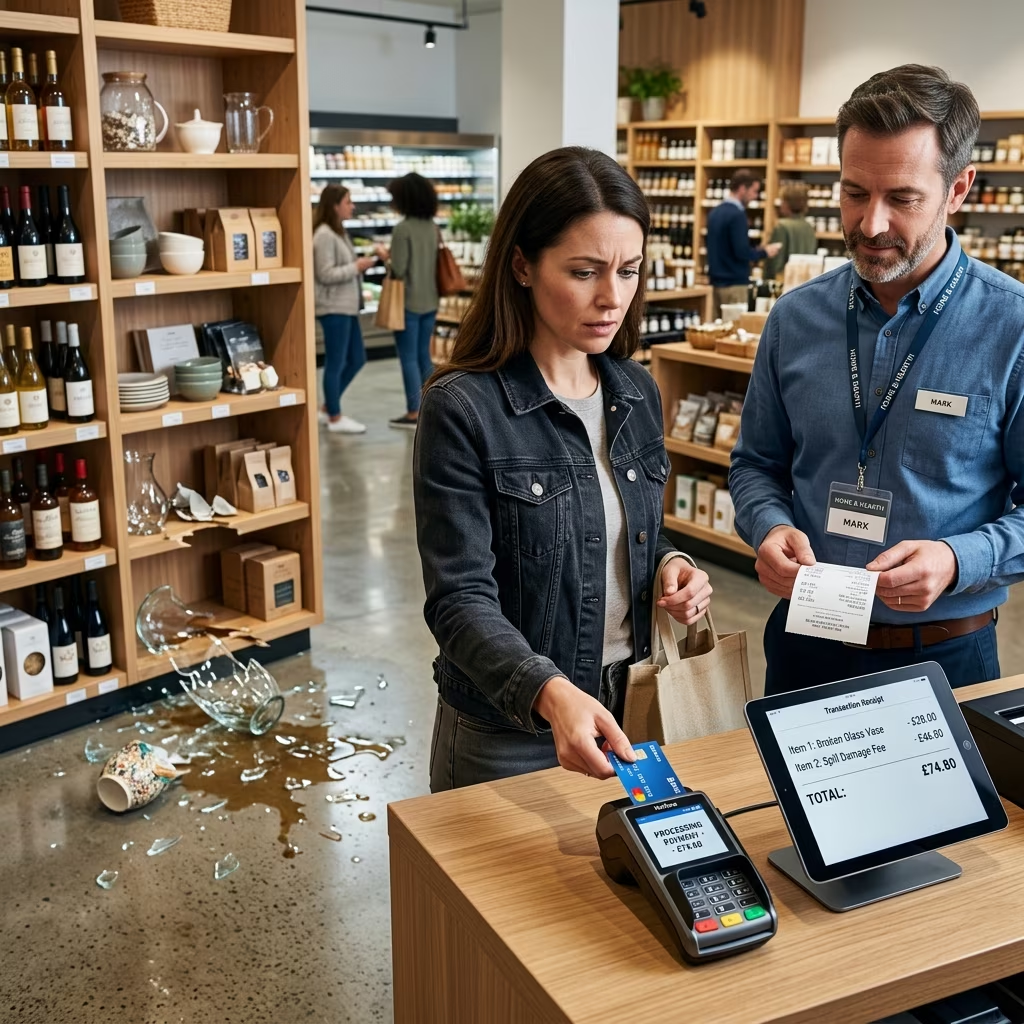
In many retail settings, the short answer is yes: if a shopper damages merchandise, the store may ask for payment. Consumer authorities describe these situations as claims for damages, because the business has lost the chance to sell the item at its normal price. That does not mean every accidental breakage automatically turns into a bill, but it does mean shoppers should understand when liability may arise and what facts matter most.
The legal issue is usually not a special “you break it, you buy it” slogan. Instead, it is a question of ordinary responsibility: did the shopper’s conduct cause the loss, and would a reasonable person view the shopper as at fault? Consumer protection law exists to prevent unfair or deceptive practices, while still allowing businesses to seek compensation when a customer causes real damage.
Why Retailers Raise the Issue
Stores stock goods for resale, and if an item is destroyed before purchase, the retailer may lose its ability to sell that product at full price. From the store’s perspective, the damaged item is a financial loss, much like any other property damage claim. That is why a store may ask a shopper to reimburse the retail value or another amount tied to the loss.
At the same time, a request for payment is not the same thing as immediate proof that the customer must pay. Liability depends on the circumstances, including whether the item was fragile, where it was placed, whether the store created a dangerous layout, and whether the customer acted carelessly or reasonably.
When Accidental Damage May Create Responsibility
Retailers are most likely to seek compensation when a shopper clearly caused the damage through careless conduct. Examples can include knocking over a display, mishandling merchandise after ignoring posted instructions, or failing to use ordinary caution in a crowded aisle. In those situations, the retailer may argue that the shopper’s actions directly caused the loss.
Consumer law generally recognizes that businesses may protect themselves against unfair losses, but those claims still need a factual basis. If the store’s own setup contributed to the incident, or if the item was positioned in a way that made accidental contact likely, the store’s claim may be weaker than it first appears.
When the Store May Not Have a Strong Claim
Not every breakage leads to valid liability. A customer may have a strong defense if the merchandise was stacked unsafely, left in a walkway, or displayed in a way that invited accidental contact. In a busy store, ordinary movement is expected, and businesses have a duty to manage their premises with care. If the retailer’s display caused the item to fall with minimal contact, fault may be shared or may rest primarily with the store.
Another important point is that consumer protection law is designed to stop unfair conduct by businesses, including misleading demands or pressure tactics. A store cannot simply declare that a customer owes money without considering the actual facts.
How Consumer Rights Fit Into the Picture
Consumer rights are meant to protect buyers from unfair treatment and give them ways to challenge unreasonable business practices. Those rights include being treated fairly, receiving accurate information, and having access to remedies when something goes wrong. If a store demands payment for a damaged item, the consumer can ask for an explanation, request evidence, and dispute the claim if the facts do not support it.
Federal agencies such as the Federal Trade Commission play a central role in consumer protection, especially when businesses use unfair or deceptive practices. While the FTC is not a courtroom referee for every store dispute, the broader framework of consumer law supports fair dealing and helps shape what businesses can reasonably demand from shoppers.
What a Store Typically Needs to Show
To justify payment, a store generally must show more than disappointment or inconvenience. It must connect the damage to the shopper’s conduct and demonstrate that the loss was real. Consumer Affairs Victoria explains that when a consumer breaks a product while shopping, the store is effectively making a damages claim for the lost retail opportunity. That concept reflects a common legal idea: compensation should match the harm actually caused.
In practice, the store may rely on employee observations, security video, witness statements, or the condition of the display. The shopper may respond with a different version of events, especially if the item was unstable or the store’s layout made the accident likely. The key issue is causation, not just the fact that an item is broken.
Questions to Ask Before Paying
- Did the store show that I caused the damage?
- Was the item displayed safely and in a way that customers could reasonably avoid?
- Was I following ordinary shopping behavior at the time?
- Is the amount requested tied to the actual loss?
- Is the store asking for a payment without evidence or explanation?
These questions help separate a legitimate claim from a reflexive demand. If the answer to several of them is unclear, the consumer may have grounds to challenge the request.
How to Respond Calmly in the Moment
If store staff say you must pay for damaged merchandise, remain calm and ask for the basis of the claim. Request the name of a manager, ask what evidence the store is relying on, and avoid admitting fault before you understand the facts. A polite, factual response often helps resolve the issue faster than a confrontation.
It can also help to document what happened. If you are able to do so, note the location of the item, the condition of the display, and whether any warning signs were present. If witnesses are nearby, their observations may matter later. If the store escalates the matter, your notes may become important evidence.
Possible Outcomes After an Accident
Not every dispute ends with payment. Sometimes the store decides not to pursue the matter after reviewing the facts. In other cases, the store may ask for reimbursement, offer a reduced amount, or refer the matter to insurance or a claims process. A consumer may accept a fair resolution, contest an unfair one, or ask to provide a written explanation later.
If the situation involves a large loss or a serious disagreement about fault, a business may consider a formal damages claim rather than an informal request. That is more common when the item is expensive or the facts are disputed. Even then, the consumer still has the right to challenge unsupported accusations.
How This Differs From Return Policies and Cooling-Off Rights
People sometimes confuse accidental damage claims with return rights or cancellation rights, but these are separate legal ideas. The FTC’s Cooling-Off Rule gives consumers three business days to cancel certain sales made in specific off-premises settings, such as a home, workplace, or temporary seller location. That rule concerns buyer’s remorse and contract cancellation, not accidental breakage inside a store.
Similarly, state and federal consumer laws can allow cancellation in some settings, but those rules do not erase a shopper’s responsibility for causing property damage. If you accidentally break a product in a store, the issue is usually liability for damage, not a right to return the item.
Practical Ways to Protect Yourself as a Shopper
Most shoppers never face a damage claim, but simple habits can reduce risk. Give fragile displays extra space, watch for unstable stacks, and ask for help when an item is hard to reach. If a store creates a narrow or crowded path, slow down and proceed carefully. Ordinary caution helps avoid both accidents and disputes.
It is also smart to keep receipts and take photos if a disagreement arises. Consumer rights are strongest when the facts are clear and documented. Good records can show what happened and whether the retailer’s account matches the scene.
When to Push Back
You should consider pushing back when the store’s demand seems unsupported, inflated, or aggressive. If the merchandise was already unstable, if staff directed you into a risky area, or if the amount demanded seems unrelated to the damage, a polite refusal may be justified. Consumer protection law is built to guard against unfair business practices, including demands that are not properly grounded.
If needed, ask the store to put its claim in writing. Written communication creates a record and may make the business more careful about how it presents its case. If the matter does not resolve, local consumer agencies or legal advice may help you assess whether the store’s position is reasonable.
Common Misunderstandings About “You Break It, You Buy It”
| Myth | More Accurate View |
|---|---|
| Any broken item must be paid for immediately. | Payment usually depends on fault, causation, and the specific facts. |
| The store’s policy always controls the outcome. | A store policy does not replace legal responsibility or consumer protections. |
| Accidental damage automatically means negligence. | Accidents can happen without legal fault, especially if the display was unsafe. |
| The customer has no right to question the bill. | Consumers may ask for evidence and dispute an unsupported claim. |
Frequently Asked Questions
Can a store legally ask me to pay if I accidentally break something?
Yes, a store can ask, and consumer authorities explain that such a request is treated as a damages claim. Whether you must actually pay depends on the facts, including fault and causation.
What if the item was displayed unsafely?
If the retailer created a hazardous display or placed merchandise in a way that made an accident likely, the store’s claim may be weaker. In that case, the business may share responsibility.
Should I admit fault right away?
No. Ask for the facts first. A calm request for explanation is better than an immediate admission, especially if you are unsure whether the store’s setup contributed to the accident.
Does consumer law protect me here?
Yes, consumer protection law is designed to prevent unfair or deceptive practices and to support fair treatment in the marketplace. Those protections can matter when a store makes an unsupported demand.
Is this the same as a return or cancellation right?
No. Cooling-off rules and return policies address cancellations and refunds in specific situations, while breakage claims deal with alleged property damage.
References
- ‘You break, you buy’ policies – Consumer Affairs Victoria — Consumer Affairs Victoria. 2026-07-10. https://www.consumer.vic.gov.au/consumers-and-businesses/products-and-services/business-practices/store-policies/you-break-you-buy
- Consumer protection | Law | Research Starters — EBSCO. 2026-07-10. https://www.ebsco.com/research-starters/law/consumer-protection
- consumer protection laws | Wex — Cornell Law School. 2026-07-10. https://www.law.cornell.edu/wex/consumer_protection_laws
- Buyer’s Remorse: The FTC’s Cooling-Off Rule May Help — Federal Trade Commission. 2026-07-10. https://consumer.ftc.gov/articles/buyers-remorse-ftcs-cooling-rule-may-help
- Cooling Off Periods and Consumer Rights to Legally Cancel Contracts — Justia. 2026-07-10. https://www.justia.com/consumer/consumer-protection-law/canceling-contracts-cooling-off-rules/
- Basic Consumer Rights – Know Your Legal Protection — LegalShield. 2026-07-10. https://www.legalshield.com/blog/basic-consumer-rights-know-your-legal-protection