
When Police May Enter a Home Without Knocking
A clear look at the emergency-aid exception and how courts limit warrantless home entry.
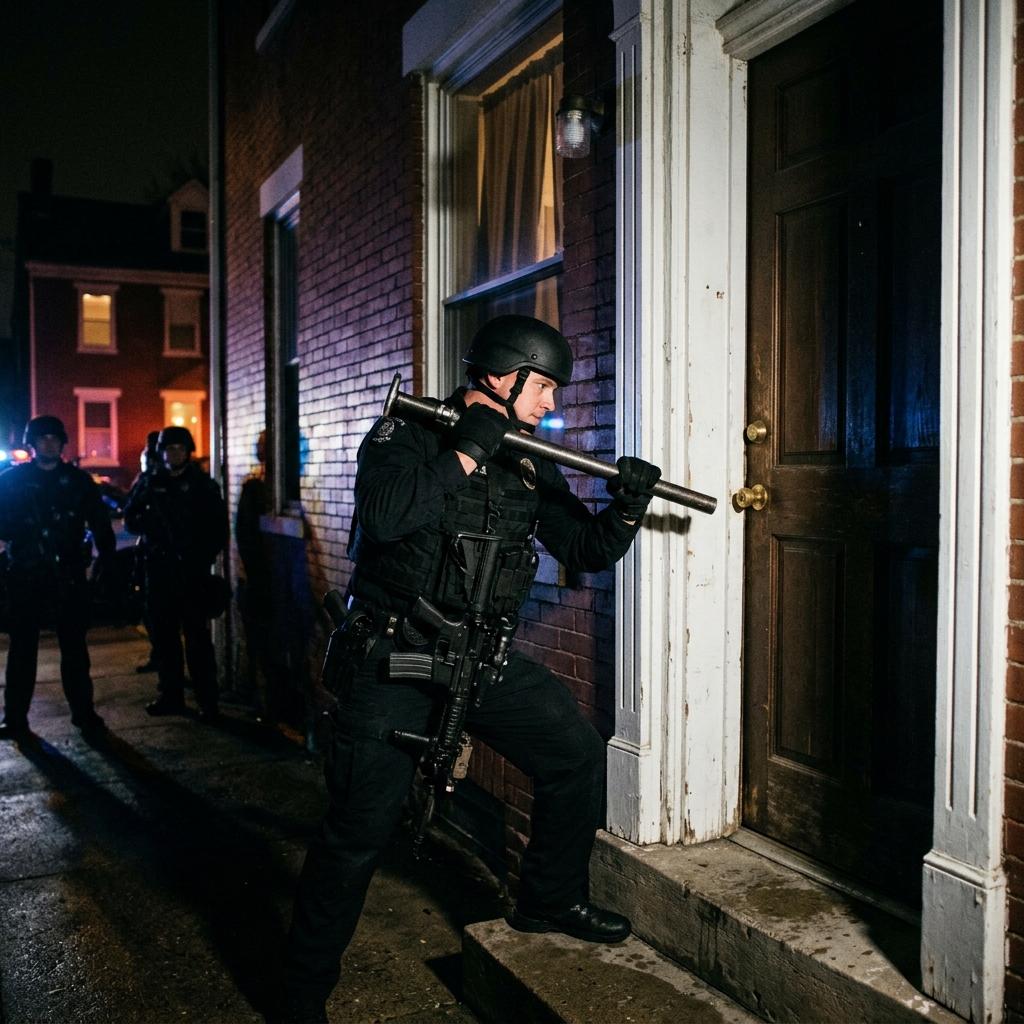
The general rule in American law is simple: the home receives the strongest privacy protection under the Fourth Amendment. But that protection is not absolute. When officers reasonably believe someone inside is in serious danger, courts have long recognized an emergency exception that can allow immediate entry without a warrant or a traditional knock-and-announce step.
That principle matters because real emergencies do not always wait for paperwork. If police are responding to a possible medical crisis, a suicide threat, or another urgent danger inside a residence, the law asks whether an objectively reasonable officer would think immediate action is necessary. The question is not whether the officer later turns out to have been correct; the question is whether the decision to enter was justified by the facts available at the time.
The Basic Rule: A Home Is Not Open to Routine Entry
Under the Fourth Amendment, police ordinarily need a warrant to enter a home. The Supreme Court has repeatedly treated the home as the core of privacy protection, and a routine criminal investigation does not erase that protection. In other words, officers cannot enter just because they want to investigate further, question an occupant, or see what is happening inside.
This rule is why the question of “knock first” matters so much. In the normal case, officers must announce themselves, seek consent, or obtain a warrant before crossing the threshold. Only recognized exceptions justify a different approach.
The Emergency-Aid Exception Explained
One of the most important exceptions allows officers to enter a home when they are responding to an emergency. The Supreme Court has said that police may act without a warrant when they have an “objectively reasonable basis” to believe that someone inside is seriously injured or is imminently threatened with serious injury.
That standard is practical and limited. It does not require officers to prove a crime before entering. It also does not require certainty that someone is in danger. Instead, the law asks whether the circumstances would lead a reasonable officer to believe that urgent help may be needed right away.
The result is a legal balance: the Constitution protects the home, but it does not force officers to wait outside when delay could put a person at risk of death or serious harm.
What the Supreme Court Said in the Montana Case
In a 2026 decision arising from Montana, the Supreme Court reaffirmed that officers do not need probable cause to enter a home under the emergency-aid rule. The Court rejected the idea that the emergency context should borrow the same probable-cause standard used in ordinary criminal cases.
Instead, the Court said the inquiry remains whether officers had an objectively reasonable basis to think someone inside was seriously injured or under immediate threat of serious injury. The Court also emphasized that the entry must be limited to addressing the emergency, not a general search of the residence.
That distinction is important. The ruling did not create a blanket license for police to enter homes whenever they feel uneasy. It confirmed a narrow constitutional pathway for urgent situations, while preserving the rule that home entries remain closely regulated.
How Courts Judge Whether the Entry Was Reasonable
Courts do not ask whether officers had perfect information. They look at the total picture known to the officers at the moment they acted. Relevant facts may include visible signs of distress, conflicting reports from bystanders, threats of self-harm, unexplained silence after a distress call, medical concerns, or other circumstances that suggest immediate danger.
The key is objective reasonableness. That means a court focuses on what a reasonable officer would have understood from the facts, not on an officer’s later explanation or a homeowner’s later criticism. A reasonable belief is enough if it is grounded in specific facts and rational inferences from those facts.
By contrast, vague curiosity or a desire to investigate a hunch is not enough. Courts still require a concrete emergency-related basis for entering without a warrant.
Emergency Aid Versus Criminal Investigation
It is useful to separate emergency aid from ordinary criminal enforcement. These are not the same thing. In a criminal case, police may need probable cause, a warrant, or another recognized exception before entry. In an emergency-aid case, the central question is whether immediate entry was needed to protect life or prevent serious injury.
The distinction explains why the same conduct can be lawful in one setting and unlawful in another. If officers go inside to render aid because they reasonably believe someone is in danger, the entry may be valid even if no crime is ultimately found. But if they use an emergency as a pretext to hunt for evidence, courts are likely to reject the entry.
Limits That Still Apply After Entry
Even when officers may enter without a warrant, the Fourth Amendment does not disappear. The scope of the intrusion must match the emergency. Once inside, officers may do only what is reasonably necessary to address the apparent risk.
- Officers may check the area connected to the reported emergency.
- Officers may provide aid or secure the scene if danger is present.
- Officers may not turn the response into a broad search for unrelated evidence.
This is one of the most important protections remaining in the doctrine. Courts allow rapid intervention for safety, but they still police the boundary between a focused welfare response and a broader criminal search.
Why the Rule Matters in Real Life
Emergency home-entry cases often arise in tense, fast-moving settings. Officers may be responding to 911 calls, reports of suicide threats, signs of domestic violence, or behavior suggesting a person may be injured and unable to respond. In those circumstances, the law recognizes that waiting for a warrant can sometimes be dangerous.
At the same time, the rule affects homeowners directly because it defines when the government can cross the threshold without advance judicial approval. For that reason, courts have tried to preserve a strict link between entry and urgent need. The doctrine is meant for emergencies, not convenience.
Common Questions About Knock-and-Announce Rules
| Question | General Answer |
|---|---|
| Do police always need a warrant to enter a home? | No. Warrantless entry is allowed in recognized exceptions, including emergency aid. |
| Do officers need probable cause of a crime to enter under the emergency-aid rule? | No. The governing standard is objective reasonableness about a serious medical or safety emergency. |
| Can police search the whole house once inside? | No. The entry and any actions inside must be limited to the emergency that justified entry. |
| Does the rule apply only to medical emergencies? | No. It can also apply to other situations involving immediate threats of serious harm. |
What Homeowners Should Understand
The most important point for homeowners is that an officer’s failure to knock is not automatically unconstitutional. If the facts suggest an urgent threat, immediate entry can be lawful. The better question is whether the officer had a sound emergency-based reason to enter.
At the same time, police cannot rely on a vague claim of concern after the fact. The justification must be tied to specific, observable circumstances. That safeguard helps ensure the emergency-aid exception does not swallow the general warrant requirement.
What Police Departments Should Train For
For law enforcement agencies, the lesson is that emergency entries require disciplined decision-making. Officers should be trained to identify facts supporting immediate danger, explain those facts clearly in reports, and limit their actions once inside. Good documentation matters because courts will later assess whether the response was objectively reasonable.
Training should also emphasize that urgency is not the same as discretion. If the facts do not point to an actual emergency, officers should seek a warrant or use a different lawful method of investigation.
Practical Takeaways
- The home normally cannot be entered without a warrant.
- The emergency-aid exception allows entry when serious injury or imminent harm is reasonably suspected.
- Police do not need probable cause of a crime in that emergency setting.
- The entry must be based on specific facts, not a general hunch.
- Any actions inside must stay focused on resolving the emergency.
FAQs
Can police enter without knocking if they think someone is unconscious?
Yes, if the circumstances give officers an objectively reasonable basis to believe immediate help is needed.
Is a welfare check always a valid reason to enter?
No. A welfare check supports entry only when the officer can point to concrete facts suggesting serious injury or imminent danger.
Can officers use an emergency entry to look for evidence of a crime?
No. The emergency exception is limited to addressing the apparent danger and does not authorize a broad search for unrelated evidence.
What standard did the Supreme Court reject in the Montana case?
The Court rejected the idea that officers must establish probable cause before entering under the emergency-aid exception.
Does the Constitution protect the home even in emergencies?
Yes. The Fourth Amendment still applies, but it permits narrowly tailored entry when urgent aid is reasonably necessary.
References
- Case v. Montana, No. 24–624 — Supreme Court of the United States. 2026-01-14. https://www.supremecourt.gov/opinions/25pdf/24-624_b07d.pdf
- Case v. Montana — Cornell Law School, Legal Information Institute. 2026. https://www.law.cornell.edu/supremecourt/text/24-624
- Search & Seizure Supreme Court Cases — Justia. 2026. https://supreme.justia.com/cases-by-topic/search-seizure/
- U.S. Supreme Court Clarifies Fourth Amendment Standard for Emergency Aid Home Entries in Case v. Montana — K&L Gates / KTJ Law summary. 2026. https://www.ktjlaw.com/blog/u-s-supreme-court-clarifies-fourth-amendment-standard-for-emergency-aid-home-entries-in-case-v-montana-607-u-s-___-2026/
- Brigham City v. Stuart — Supreme Court of the United States. 2006-05-22. https://supreme.justia.com/cases/federal/us/547/398/
Similar Articles








Read full bio of Sneha Tete




