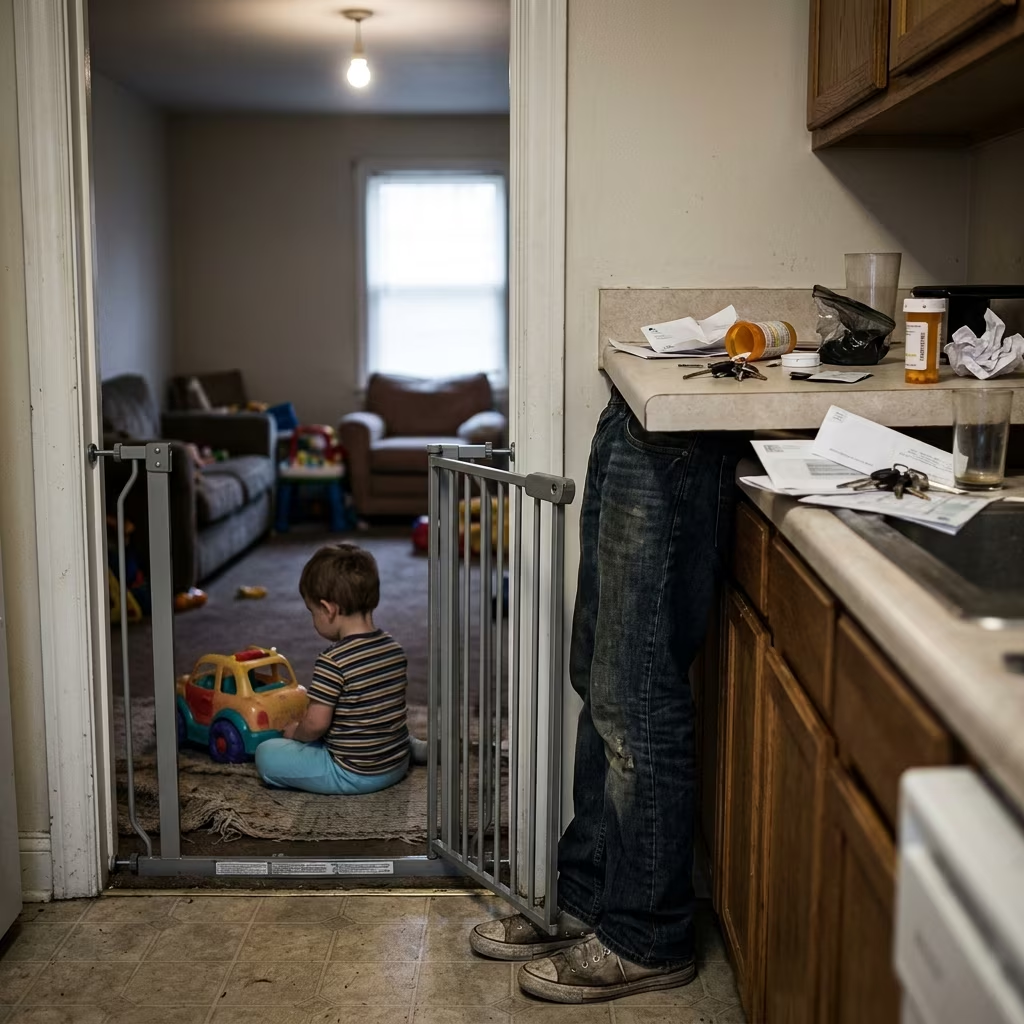
Parents and caregivers are often shocked to learn that a single incident can lead not only to the underlying criminal charge, like DUI or drug possession, but also a separate and serious charge of child endangerment when a child is present or affected.
Child endangerment laws are designed to protect children from situations that place their life, health, or emotional well‑being at risk, even if no actual injury occurs. These laws frequently turn otherwise “ordinary” criminal cases into complex matters involving higher penalties, possible felony charges, and long‑term consequences for custody and parental rights.
What Child Endangerment Means in Criminal Law
While the exact wording varies by state, child endangerment generally involves a parent, guardian, or other adult placing a child in a dangerous, unhealthy, or inappropriate situation, or allowing the child to remain in such a situation. In many states, this is treated as a separate crime from child abuse, although some jurisdictions classify endangerment as a form of abuse.
Common Elements Found in State Laws
Across the United States, child endangerment statutes typically include some or all of these elements:
- There is a child or minor under a specified age (often under 16, 17, or 18).
- The defendant is a parent, guardian, or caregiver, or has some duty of care toward the child.
- The adult creates or allows a situation that endangers the child’s life, health, or morals.
- The risk involves a likelihood of harm, not just a remote or hypothetical danger.
- The conduct is at least reckless (careless disregard of a substantial risk), and in some states, it must be knowing.
Crucially, actual injury is not required. A caregiver can face child endangerment charges even when the child is never physically hurt, as long as the situation presented an unreasonable danger.
How Routine Crimes Trigger Endangerment Charges
Many criminal incidents that would otherwise be treated as relatively “ordinary” offenses become far more serious once a child is involved. Prosecutors often add child endangerment counts when a crime either happens in front of a child or places the child at risk.
1. Driving Under the Influence with a Child in the Vehicle
Driving under the influence (DUI or DWI) is one of the clearest examples of a routine offense that changes dramatically when a child is a passenger. Many states treat DUI with a minor in the car as automatic grounds for child endangerment, sometimes with enhanced penalties or mandatory jail.
- The adult is intoxicated or impaired while driving.
- A child passenger falls within the statute’s age definition of “minor.”
- The impaired driving creates a substantial risk of injury or death to that child.
Even if the trip is short and there is no accident, prosecutors can argue that any drunk driving with a child is inherently dangerous and satisfies the “likelihood of harm” standard.
2. Drug Possession, Manufacturing, or Use Around Children
Drug offenses become far more serious when they occur in a home or vehicle where children live or are present. States often treat both the presence of drugs and the conditions created by drug activity as endangerment.
- Running a meth lab or growing operations in a home where a child lives.
- Leaving fentanyl, heroin, prescription opioids, or other dangerous substances within a child’s reach.
- Using illegal drugs or abusing prescriptions while solely responsible for a child’s care.
- Storing used needles, glass pipes, or toxic chemicals where children can access them.
The risk in these situations often extends beyond overdose or poisoning. Kids can be exposed to fires, explosions, dangerous fumes, or violent confrontations related to drug dealing.
3. Domestic Violence in the Presence of a Child
Domestic violence cases frequently lead to separate child endangerment counts when children witness the violence, hear it happening, or are nearby when it occurs. Even if the child is not physically touched, many states recognize that exposure to severe conflict or assault can seriously harm a child’s emotional or psychological well‑being.
- Physical fights between adults in the same room as a child.
- Violent confrontations where a child is nearby in the home and can hear or see the event.
- Situations where a child is used as leverage or shield in an argument or assault.
Courts often consider whether a reasonable person would understand that such conduct jeopardizes the child’s welfare, even if the accused did not focus on the child at the time.
4. Leaving Children in Dangerous Situations
Neglectful behavior that might normally lead to a lesser charge, or even just a warning, can rise to criminal child endangerment when the risk is substantial.
- Leaving a young child alone in a vehicle, especially in extreme heat or cold.
- Leaving children home alone without adequate supervision or means to handle emergencies.
- Failing to secure firearms, knives, or hazardous tools in a home with children.
- Allowing children to be around known violent individuals or unsafe environments.
In these cases, prosecutors emphasize that caregivers have a legal duty of care and that failing to meet this duty in a way that creates a substantial risk of harm can be criminal.
5. Other Crimes That Often Lead to Endangerment Charges
Beyond DUI, drugs, and domestic violence, many other offenses can be linked to child endangerment if the circumstances place a child at risk:
- Theft or burglary committed with small children present in a getaway car or at the scene.
- Reckless driving or street racing with children as passengers.
- Fraud or identity theft schemes conducted from the home that expose children to raids, arrests, or dangerous associates.
- Sex‑related offenses that occur in the home or involve exposing minors to obscene material.
Misdemeanor vs. Felony Child Endangerment
Child endangerment can be charged as either a misdemeanor or a felony, depending on the severity of the risk, whether the child was harmed, and whether the defendant has prior offenses.
| Factor | Typical Misdemeanor Scenario | Typical Felony Scenario |
|---|---|---|
| Level of danger | Short‑term, less severe risk; child is uncomfortable or moderately at risk. | Substantial risk of serious injury, permanent harm, or death. |
| Actual injury | No serious injury; often no physical harm at all. | Serious physical injury, ongoing abuse, or extreme neglect. |
| Mental state | Reckless or careless conduct, but not necessarily intentional harm. | Knowing or purposeful conduct, or extreme recklessness. |
| Criminal history | First‑time offense, no prior endangerment or abuse cases. | Repeat offenses, or prior convictions for similar conduct. |
| Potential penalties | Up to about 6–12 months in jail and fines that may reach several thousand dollars, depending on the state. | Years of imprisonment, higher fines, and longer probation or parole. |
Each state uses its own classification system, but many treat basic child endangerment as a high‑level misdemeanor, and escalate to felony when aggravating factors are present, such as serious injury, use of deadly weapons, or very young victims.
What Prosecutors Must Prove
In most jurisdictions, prosecutors must prove more than a simple error in judgment. The law generally requires proof that the defendant’s conduct made it more likely than not that the child would be exposed to harm.
Typical Legal Requirements
- Duty of care: The defendant had a legal responsibility toward the child (parent, guardian, babysitter, or similar role).
- Dangerous situation: The child was placed in or allowed to remain in circumstances that could endanger life, health, or morals.
- Mental state: The defendant acted knowingly or recklessly, depending on the statute, rather than making a purely accidental mistake.
- Likelihood of harm: The risk was substantial, not trivial or remote.
Courts often apply a reasonable person standard: even if the defendant claims they did not realize the danger, the question becomes whether a reasonable adult in the same position would have understood that the conduct placed the child at risk.
Real‑World Consequences Beyond Criminal Penalties
Child endangerment charges do more than expose defendants to jail or prison. They can affect nearly every aspect of a person’s life, especially if the case involves their own children.
- Loss or restriction of custody: Courts may restrict contact, order supervised visitation, or transfer custody to another parent or relative.
- Protective orders: The accused may be barred from the family home or prohibited from contact with the child while the case is pending.
- Permanent criminal record: A conviction for harming or endangering a minor can impact employment, housing, and professional licensing.
- Immigration consequences: For non‑citizens, crimes involving children can lead to removal proceedings or bar certain immigration benefits.
- Mandatory services: Courts may require parenting classes, substance‑abuse treatment, mental‑health counseling, or domestic‑violence programs.
Defenses and Mitigating Factors
Every case is fact‑specific, and not every questionable parenting decision is a crime. In many instances, the defense focuses on disproving the required mental state or the alleged level of risk.
Possible Legal Defenses
- No substantial risk: Arguing that the situation did not actually pose a significant danger, especially when prosecutors overstate the risk.
- Lack of knowledge: Showing that the defendant did not know and could not reasonably have known about the danger (for example, an unknown hazard created by someone else).
- Reasonable care taken: Demonstrating that reasonable precautions were in place, and the event was an unforeseeable accident rather than reckless conduct.
- False accusations: Challenging the credibility of witnesses or evidence in contentious domestic disputes or custody battles.
- Constitutional issues: Suppressing evidence obtained through unlawful searches or questioning.
Even when the evidence is strong, mitigating factors such as remorse, completion of treatment programs, lack of prior record, and steps taken to improve home safety can influence charging decisions, plea negotiations, and sentencing.
Practical Tips for Caregivers and Adults Around Children
Because many child endangerment cases arise from split‑second decisions during stressful events, it is helpful to understand in advance what kinds of conduct tend to trigger charges.
- Never drive after drinking or using drugs, especially with a child in the vehicle.
- Keep all weapons, medications, and hazardous substances secured and out of children’s reach.
- Do not involve children in adult conflicts, and seek help if arguments are escalating toward violence.
- Use child care or trusted adults when you are impaired, overwhelmed, or unable to supervise adequately.
- Ask questions about new environments where your child spends time: who is present, what safety measures are in place, and whether there is exposure to criminal activity.
From a legal perspective, consistently acting like a reasonable, cautious caregiver is the best way to avoid conduct that might later be framed as endangerment.
Frequently Asked Questions About Child Endangerment
Does there have to be an injury for child endangerment charges?
No. In most states, prosecutors do not need to show that a child was actually injured. It is enough that the child was placed in a situation that could reasonably endanger their life, health, or emotional well‑being.
Can a single mistake lead to a criminal case?
It depends on the severity of the risk and the state’s statute. Laws generally require conduct that goes beyond a minor lapse in judgment; the situation must present a substantial likelihood of harm. However, even one serious incident can lead to charges if the danger is significant.
Is child endangerment always a felony?
No. Child endangerment is commonly charged as a misdemeanor for less severe risks, but it can be elevated to a felony when the conduct is egregious, when serious injury occurs, or when the defendant has prior relevant convictions.
Can I be charged if I am not the child’s parent?
Yes. Anyone who has assumed responsibility for a child—such as babysitters, relatives, or partners living in the home—can be charged if they knowingly or recklessly place a child in danger. The key question is whether a duty of care existed under the circumstances.
What should I do if I am under investigation?
If you learn that you are being investigated or have been arrested for child endangerment related to another crime, it is critical to speak with a qualified criminal defense attorney as early as possible. Anything you say to police or child protective services can be used in the criminal case, and these cases have both criminal and family‑law consequences.
References
- Is Child Endangerment a Felony or Misdemeanor? — FindLaw Editorial Team. 2023-05-02. https://www.findlaw.com/criminal/criminal-charges/is-child-endangerment-a-felony-or-misdemeanor.html
- Child Endangerment Laws — The Morales Law Firm. 2022-08-15. https://sfcriminallawspecialist.com/blog/child-endangerment-laws/
- What Is Considered Child Endangerment? — NOLO / CriminalDefenseLawyer.com. 2021-11-10. https://www.criminaldefenselawyer.com/resources/criminal-defense/criminal-offense/child-endangerment.htm
- Child Endangerment in Ohio: Laws, Penalties, and Defenses — The Meade Law Group. 2023-04-19. https://themeadelawgroup.com/blog/child-endangerment-ohio/
- Child Endangerment Laws in Illinois — Hirsch Law Group. 2022-09-06. https://hirschlawgroup.com/child-endangerment-illinois/