
Can Police Search Your IPhone: 2025 Guide To Your Rights Now
Understand your digital privacy rights, when warrants are required, and what to do if officers ask to search your smartphone.
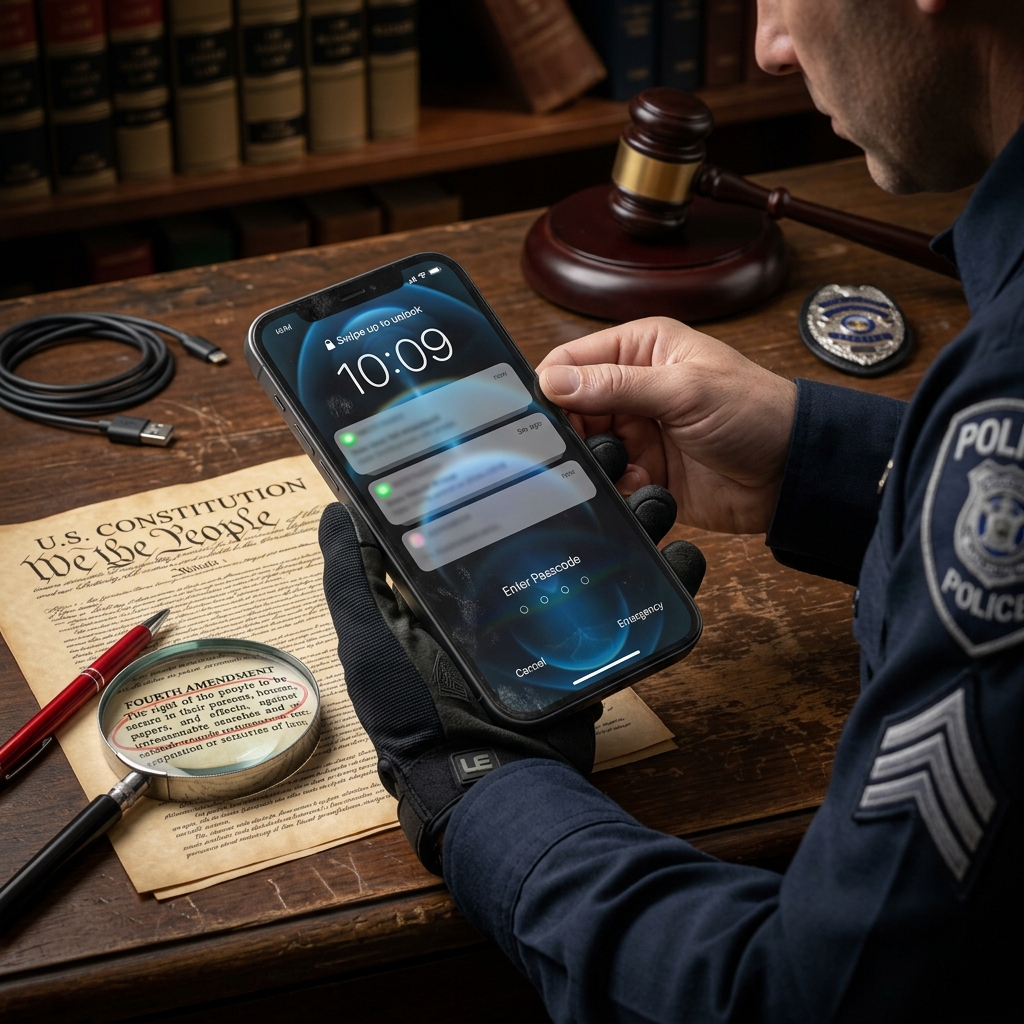
Your iPhone holds far more personal information than a wallet, a notebook, or even your home filing cabinet. Because smartphones concentrate so much data, courts and legislatures have had to adapt traditional search-and-seizure rules to the reality of modern technology. This guide explains when police can legally search your iPhone, what constitutional protections apply, which exceptions law enforcement relies on, and how you can assert your rights in a calm, effective way.
Why Smartphone Searches Raise Special Legal Concerns
Searches of physical items—like bags or vehicles—have long been regulated under the law. But smartphones are different: they store photos, messages, location history, banking information, health data, and more, often dating back years. Courts have recognized that accessing this digital information is more intrusive than looking inside a pocket or glove compartment.
In the United States, the core protection against intrusive searches comes from the Fourth Amendment, which prohibits unreasonable searches and seizures and generally requires police to get a warrant supported by probable cause before searching private areas or property. This protection has been explicitly extended to the contents of cell phones.
- High privacy expectations: Courts treat the data inside your phone as highly sensitive, similar to personal papers stored at home.
- Mass storage of information: Phones can hold thousands of messages, photos, and documents, magnifying the impact of a single search.
- Continuous tracking: Apps and cellular networks generate detailed location records, which raise separate privacy concerns.
The General Rule: Police Usually Need a Warrant
The starting point in most situations is straightforward: police generally must obtain a search warrant from a judge to access the contents of your iPhone. A warrant requires a showing of probable cause—specific facts indicating that evidence of a crime will be found on the device.
In a landmark 2014 case, the U.S. Supreme Court held that officers may not simply browse through a phone’s data after an arrest without a warrant. The Court recognized that modern smartphones differ dramatically from traditional physical objects and require heightened protection.
Key implications of this rule:
- Police can usually seize your phone as evidence during an arrest, but seizing is different from searching.
- Even if officers have your iPhone in hand, they cannot lawfully access its digital contents without a warrant or a valid exception.
- Evidence obtained through an unlawful search may be suppressed in court, meaning it cannot be used against you.
Seizing Your iPhone vs. Searching Its Data
It is important to distinguish between physical possession of the device and access to the data stored on it.
| Action | What It Means | Legal Standard |
|---|---|---|
| Seizure | Police take physical custody of your iPhone (for example, during an arrest or as evidence). | Requires lawful grounds, such as probable cause, incident to a lawful arrest, or certain border powers. |
| Search | Police access the phone’s contents: apps, photos, messages, call logs, cloud accounts, and other data. | Typically requires a warrant based on probable cause, unless a specific exception applies. |
In most jurisdictions, courts have made clear that simply holding your phone does not give officers a free pass to explore its contents. The legal threshold for opening and reviewing data is substantially higher than for taking physical possession.
Key Exceptions: When Police May Search Without a Warrant
Although warrant protection is strong, the law recognizes several narrow exceptions where police may search a phone without first going to a judge. These exceptions are carefully defined and often contested in court.
1. Consent
If you voluntarily allow officers to search your iPhone, that consent can make the search lawful even without a warrant. For consent to be valid, it must be given freely and not coerced.
- You generally have the right to refuse consent to a phone search.
- Verbal permission (e.g., “Yes, you can look”) may be enough to validate a search.
- Handing over an unlocked phone can be interpreted as consent.
Because consent is such a powerful exception, many civil rights organizations advise clearly stating that you do not consent if you do not want officers to search your device.
2. Exigent Circumstances
Exigent circumstances exist when urgent conditions make waiting for a warrant impractical or dangerous. Courts have allowed warrantless searches in limited situations such as:
- Preventing imminent harm or danger to life.
- Stopping the destruction of critical evidence, including remote wiping of a phone.
- Pursuing a fleeing suspect in a rapidly evolving situation.
Even in emergencies, officers must still act reasonably and be prepared to explain why immediate access to the device was necessary.
3. Border and Customs Searches
Searches at international borders and certain airport checkpoints operate under special rules. U.S. Customs and Border Protection officers have broader authority to inspect electronic devices entering or leaving the country.
Courts have started to place limits on wide-open digital searches at the border, but the government still retains significant leeway in this context. Travelers should be aware that privacy expectations are lower at international crossings than in ordinary domestic police encounters.
4. Parole and Probation Conditions
Individuals on parole or probation may be subject to supervision terms that partially waive their standard privacy rights. Depending on the exact conditions, law enforcement may be allowed to search a supervisee’s phone without a warrant, particularly if they suspect a violation.
5. Search Incident to Arrest (Limited to Physical Aspects)
Historically, officers could search items within an arrestee’s immediate reach without a warrant. For smartphones, courts generally permit limited physical inspection (for safety or to secure evidence) but have drawn a clear line against searching the phone’s digital contents without a warrant.
Special Case: Accessing Location Data and Phone Records
Not all searches involve physically scrolling through your iPhone. Police may try to obtain information about where the phone has been or what calls and messages were sent by approaching telecommunications providers or cloud services.
In a major decision on cell-site location information—records showing where a phone has connected to cellular towers— the U.S. Supreme Court held that accessing this data without a warrant violates the Fourth Amendment. This ruling reflects the heightened privacy interest in pervasive, long-term tracking information.
Implications for users:
- Officers will usually need a warrant to obtain detailed historical location data from phone companies.
- Tracking information and certain metadata receive stronger protection than traditional business records.
- Law enforcement still has tools to obtain limited information under specific legal standards, but broad, long-term tracking generally requires judicial approval.
How Different States Apply These Principles
Federal constitutional rules apply nationwide, but individual states can provide additional privacy protections. Some state courts have explicitly held that accessing any information from a cell phone without a warrant violates constitutional guarantees. In these jurisdictions, officers face even tighter restrictions.
Regardless of state, however, the basic structure is similar:
- Warrants are the default requirement for phone data searches.
- Exceptions like consent and exigent circumstances are interpreted narrowly and often litigated in court.
- Unlawfully obtained evidence may be excluded from trial through suppression motions filed by defense attorneys.
Your Rights If Police Ask to Search Your iPhone
Knowing the legal framework is useful, but you also need practical steps for real-world encounters. These rights apply broadly, though details can vary by jurisdiction and situation.
Core Rights During Police Encounters
- Right to remain silent: You generally do not have to answer questions about your phone’s contents or your passcode.
- Right to refuse consent: You may lawfully decline a requested search of your iPhone and personal belongings.
- Right to ask about a warrant: You can calmly ask whether officers have a warrant to search your device, and to see it if they claim they do.
- Right to an attorney: You can request legal counsel and choose not to discuss your phone or its contents until you have spoken with a lawyer.
Practical Steps to Protect Your Digital Privacy
If officers ask to look through your iPhone, consider the following actions:
- Politely state: “I do not consent to a search of my phone.”
- Do not provide your passcode, PIN, or pattern lock unless advised by counsel and required under a valid court order.
- Avoid unlocking the phone, even briefly, when officers are watching; this can be interpreted as consent.
- Ask whether you are under arrest or free to leave; if you are not being detained, you may be able to end the encounter.
- Request an attorney if you feel pressured or unsure about your rights.
What Happens If Police Search Your Phone Unlawfully?
When law enforcement accesses an iPhone without a valid warrant or exception, courts may find that the search violated the Fourth Amendment or state constitutional provisions. The typical remedy is suppression of improperly obtained evidence.
Possible consequences for the case:
- Digital evidence (messages, photos, location records) may be ruled inadmissible at trial.
- Derivative evidence discovered because of the unlawful search may also be challenged.
- Defense counsel can file motions to suppress and question officers under oath about how and when the phone was accessed.
In some situations, civil rights lawsuits may be available for serious or repeated violations, though these claims involve their own complex legal standards.
Common Myths About iPhone Searches
Misunderstandings about digital searches are widespread. Clearing up a few myths can help you make informed choices.
- Myth: “If I am arrested, police can automatically read everything on my phone.”
Reality: Arrest allows officers to seize your phone, but they generally still need a warrant—or a narrow exception—to search its contents. - Myth: “Deleting messages before an encounter means I am safe.”
Reality: Deleted data can often be recovered from backups or service providers. Destroying evidence can also create separate legal problems. - Myth: “Sharing a passcode with friends or family means police can search without limits.”
Reality: While a person with legitimate shared access could give consent, courts still examine the scope and voluntariness of that consent. - Myth: “Border agents can do anything they want with my phone.”
Reality: Border authority is broader than in domestic contexts, but still subject to constitutional limits. Courts continue to refine how far these powers extend.
Frequently Asked Questions (FAQs)
Can police make me unlock my iPhone with my passcode?
Whether officers can compel you to reveal a passcode involves complex issues about self-incrimination and varies by jurisdiction. Many legal practitioners advise declining to share your passcode and seeking legal counsel immediately, especially if officers have not presented a clear court order.
Is using Face ID or a fingerprint different from a passcode?
Some courts have treated biometric unlocking—such as fingerprint or facial recognition—differently from disclosing a memorized passcode, but rules are evolving and can vary. In some places, law enforcement may attempt to use biometrics under a warrant, even while you retain the right not to speak or reveal a code.
Can police search my phone during a routine traffic stop?
During an ordinary traffic stop, officers can ask for consent to search your phone, but they generally cannot search its contents without a warrant or a valid exception like consent or exigent circumstances. You are usually allowed to decline such a request.
If officers have a warrant, do I have to help them?
If police present a valid warrant to search your iPhone, they are legally authorized to access the specified data. You still have the right to read the warrant, remain silent, and consult a lawyer. Whether you must actively assist (for example, by unlocking the device) depends on local law and how courts balance privacy, self-incrimination, and technical realities.
What should I say if I feel nervous or pressured?
In many encounters, a simple and calm statement is effective: “I do not consent to a search of my phone. I wish to remain silent and speak with a lawyer.” This assertion of rights, if made politely and without resistance, can help protect both your legal position and your safety.
References
- Stopped by Police: Know Your Rights — American Civil Liberties Union. 2021-06-28. https://www.aclu.org/know-your-rights/stopped-by-police
- Police and Privacy: Can Officers Legally Search Your Phone Without a Warrant? — Horn Wright, LLP. 2023-08-15. https://www.hornwright.com/civil-rights-law/police-and-privacy-can-officers-legally-search-y/
- Can Police Search Your Phone Without a Warrant? — Ejiofor Law Firm. 2023-09-05. https://www.ejioforlaw.com/blog/can-police-search-your-phone-without-a-warrant/
- Can the Police Access Your Cell Phone Data? — Ketchel Law. 2022-07-12. https://ketchellaw.com/2021/04/mobile-data-police-laws-pennsylvania-laws/
- When Police Seize & Search Your Computer: Your Legal Rights — Neal Davis Law Firm. 2021-05-10. https://www.nealdavislaw.com/blog/criminal-defense/search-seizure-legal-rights/
Similar Articles








Read full bio of Sneha Tete




