
Understanding State Fair Employment Practices Agencies
How state fair employment practices agencies work alongside federal protections to address workplace discrimination and harassment.
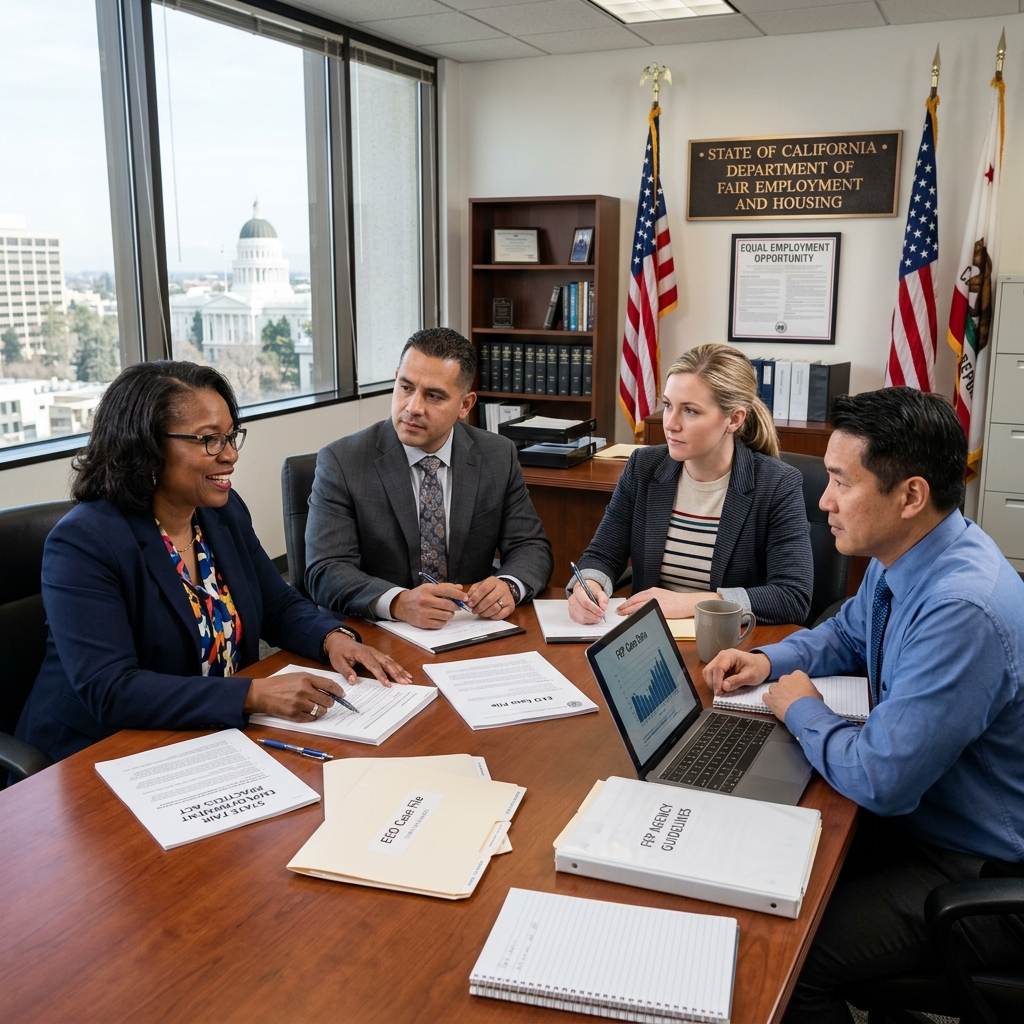
Across the United States, state fair employment practices agencies (often called FEPAs) play a central role in enforcing laws that prohibit workplace discrimination and harassment. These agencies complement federal protections and offer local avenues for workers and employers to resolve disputes under state and local law.
This guide explains what FEPAs are, how they work with the federal Equal Employment Opportunity Commission (EEOC), what kinds of complaints they handle, and how employees and employers can navigate the process effectively.
What Are Fair Employment Practices Agencies?
Fair Employment Practices Agencies are state or local government bodies empowered to investigate and enforce laws that bar discrimination in employment, such as hiring, firing, promotions, pay, and other terms and conditions of work. These laws typically protect workers based on characteristics such as race, color, religion, sex, national origin, disability, age, and other categories identified in each jurisdiction’s statutes.
At a high level, FEPAs:
- Receive and investigate complaints of discrimination, harassment, and retaliation.
- Apply state and local civil rights or fair employment statutes.
- Provide remedies such as back pay, reinstatement, policy changes, and sometimes civil penalties.
- Conduct outreach and education to prevent future violations.
In some states, a dedicated civil rights or human rights commission serves as the FEPA; in others, the role may be housed within a labor department or similar agency.
How FEPAs Relate to the EEOC
The EEOC is the federal agency that enforces nationwide employment discrimination laws, including Title VII of the Civil Rights Act, the Age Discrimination in Employment Act, and the Americans with Disabilities Act. Many FEPAs enter into formal work-sharing agreements with the EEOC, allowing them to coordinate investigations and avoid duplicating effort.
Key aspects of the relationship include:
- Dual filing: In many jurisdictions, when an employee files a discrimination charge with a FEPA, the complaint is automatically considered filed with the EEOC if federal law also applies.
- Shared enforcement: FEPAs can investigate charges under state law while the EEOC focuses on federal claims, or the agencies may decide which will take the lead in a particular case.
- Recognition of FEPA decisions: Because some state agencies are formally designated as FEPAs, the EEOC may accord their findings certain procedural weight and coordinate on case handling.[10]
This arrangement gives workers a single entry point for both state and federal relief and helps ensure that discrimination laws are applied consistently while respecting local differences.
Why States Use FEPAs Instead of Only Federal Enforcement
While federal law provides a baseline of protections, states often choose to create FEPAs and additional statutes to address local needs. According to guidance from state civil rights agencies, state law may:
- Cover smaller employers than federal law (for example, employers with fewer than 15 employees).
- Recognize additional protected characteristics, such as marital status, sexual orientation, gender identity, reproductive health decisions, or veteran status.
- Provide different time limits (filing deadlines) for bringing a complaint.
- Offer broader remedies or different procedures suited to local priorities.
Because of these differences, a claim that might not qualify under federal law could still be actionable under state or local law. FEPAs are therefore an important resource for workers whose situations fall outside the federal framework.
Common Types of Cases Handled by FEPAs
FEPAs typically investigate allegations that an employer has made decisions or allowed conduct that unlawfully targets an employee or applicant based on a protected characteristic. Examples include:
- Disparate treatment discrimination
An employee is treated less favorably than others because of a protected characteristic, such as being passed over for promotion due to race or gender. - Hostile work environment harassment
Severe or pervasive unwelcome conduct (such as slurs, sexual comments, or threats) creates an abusive work environment tied to a protected characteristic. - Failure to reasonably accommodate
An employer refuses to provide reasonable adjustments for an employee’s disability, religious practices, or pregnancy where required by law. - Retaliation
An employer punishes a worker for filing a complaint, participating in an investigation, or asserting rights under anti-discrimination laws. - Unequal pay or benefits
Different compensation or benefits for substantially similar work based on protected traits.
In addition, some FEPAs enforce laws that reach related issues such as genetic information use, credit history in hiring, or use of criminal records, depending on state legislation.
Basic Steps in a FEPA Complaint Process
Procedures vary by state, but many FEPAs follow a similar sequence when handling a complaint:
- Initial contact and intake
The employee contacts the agency—often by phone, online form, or in person—to describe the situation. The agency determines whether it has jurisdiction and whether the alleged facts suggest a potential violation. - Filing a formal charge
If appropriate, the worker signs a written charge of discrimination. This document identifies the employer, the protected characteristic at issue, and key adverse actions (such as demotion or termination). - Notice to the employer
The agency serves the charge on the employer, who is asked to respond with relevant facts, documentation, and arguments. - Investigation
Investigators may interview witnesses, request documents, review policies, and gather data to assess whether the law was violated. - Mediation or conciliation
Many agencies invite the parties to negotiate a resolution, such as reinstatement, compensation, or changes to workplace policies. - Determination
The agency issues findings—often stating whether there is probable cause to believe discrimination occurred—and may pursue further action or close the file. - Right to sue or further proceedings
Depending on the law, the employee may receive a notice allowing a lawsuit in court or the agency may proceed with an administrative hearing.
Throughout this process, deadlines and documentation requirements are critical. Missing a filing deadline can bar a claim, and incomplete information can slow investigation.
Examples of Protected Characteristics
Both federal and state laws define which characteristics are protected from discrimination. While each jurisdiction has its own list, the categories below are frequently protected under either federal or state law:
| Common Protected Category | Typical Coverage |
|---|---|
| Race and color | Bias or unequal treatment based on racial identity or skin tone. |
| Religion | Discrimination or failure to accommodate sincerely held religious beliefs. |
| Sex and gender | Includes pregnancy, sexual harassment, and in many states gender identity and expression. |
| National origin | Treatment based on ancestry, accent, place of birth, or ethnicity. |
| Age | Typically protects individuals 40 years of age and older. |
| Disability | Physical or mental impairments that substantially limit major life activities, with a duty to reasonably accommodate. |
| Other state-specific categories | Marital status, sexual orientation, veteran status, genetic information, or reproductive decisions, depending on state law. |
Advantages of Using a FEPA
For many workers and employers, turning to a FEPA offers practical benefits compared to relying solely on federal channels:
- Local expertise – Staff understand regional industries, local norms, and state legal nuances.
- Additional protections – State laws may cover smaller employers, broader protected classes, or unique forms of discrimination.
- Alternative remedies – Some state statutes provide specific remedies tailored to issues like housing-related employment or public sector jobs.
- Coordinated enforcement – Dual filing ensures federal rights are preserved while state claims are investigated.
- Preventive education – FEPAs often deliver training and technical assistance to help employers comply proactively, reducing disputes.
What Employers Should Know About FEPAs
Employers interacting with a FEPA need to understand both their legal duties and practical responsibilities in the complaint process. Guidance from state and federal agencies emphasizes that employers should:
- Maintain written anti-discrimination and anti-harassment policies, including complaint procedures.
- Provide mandatory training where required by law and encourage reporting of concerns without retaliation.
- Respond promptly, accurately, and completely to FEPA requests for information.
- Preserve relevant records such as personnel files, emails, and performance evaluations.
- Participate in mediation or conciliation in good faith when offered.
Failure to cooperate with a FEPA investigation can lead to additional legal consequences, including presumptions against the employer or separate enforcement actions under state law.[10]
How to Find Your State’s FEPA
Most states and many large cities have a designated agency that serves as the primary contact for employment discrimination complaints. Workers looking for their FEPA can:
- Visit the EEOC’s official list of state and local partner agencies.
- Check state government websites for civil rights, human rights, or labor departments that reference discrimination enforcement.
- Review directories published by civil rights organizations or legal services groups that compile FEPA contacts.
In jurisdictions without a dedicated FEPA, employees may need to file directly with the EEOC or with another state office, such as a department of labor.
Frequently Asked Questions (FAQs)
Is filing with a FEPA different from filing with the EEOC?
In many places, filing with a FEPA automatically counts as filing with the EEOC if the complaint falls under federal law. This is known as dual filing and is enabled by work-sharing agreements between the agencies. However, specific rights and procedures under state law may differ from federal rules, so it is important to confirm details with the FEPA handling your case.
Do I need a lawyer to file a FEPA complaint?
Most agencies allow individuals to file complaints without legal representation, and staff often assist with drafting charges and explaining the process. Still, because the outcome can affect employment rights and deadlines for filing lawsuits, some workers choose to consult attorneys, especially in complex or high-stakes cases.
What happens if the FEPA finds no probable cause?
If an investigation concludes that there is not enough evidence to support a claim, the agency may close the case. Even then, employees might receive notices explaining whether and how they can pursue claims in court or with another agency, subject to applicable statutes of limitations.
Can an employer face penalties beyond paying damages?
Depending on state law, FEPAs may order employers to change policies, undergo training, modify practices, or, in some cases, pay civil penalties. Remedies are designed to both compensate affected workers and prevent future violations.
Are all forms of unfair treatment illegal?
Not every example of unfairness or conflict at work violates anti-discrimination laws. To fall under FEPA jurisdiction, the treatment typically must be connected to a protected characteristic or involve retaliation for asserting legal rights. Workplace disputes unrelated to protected categories may be handled through other channels, such as internal HR processes or different legal regimes.
References
- State and Local Programs — U.S. Equal Employment Opportunity Commission. 2023-05-10. https://www.eeoc.gov/state-and-local-programs
- Fair Employment Practices Agencies (FEPAs) and Dual Filing — U.S. Equal Employment Opportunity Commission. 2023-05-10. https://www.eeoc.gov/fair-employment-practices-agencies-fepas-and-dual-filing
- List of Fair Employment Practice Agencies — Federal Register. 2013-09-06. https://www.federalregister.gov/documents/2013/09/06/2013-21545/list-of-fair-employment-practice-agencies
- Employment Discrimination – Civil Rights Department — State of California. 2024-01-01. https://calcivilrights.ca.gov/employment/
- Employment Discrimination — Texas Workforce Commission. 2023-06-15. https://www.twc.texas.gov/programs/civil-rights/employment-discrimination
- Filing with Other Federal Agencies — U.S. Department of Labor, Civil Rights Center. 2022-02-10. https://www.dol.gov/agencies/oasam/civil-rights-center/external/how-to-file-compliant/other-agencies
- State Agencies That Enforce Fair Employment Laws — Nolo. 2021-08-20. https://www.nolo.com/legal-encyclopedia/fepa.html
Similar Articles








Read full bio of Sneha Tete




