
Employee Strikes: Rights and Employer Responses
A practical guide to strike rights, legal limits, and workplace response strategies.
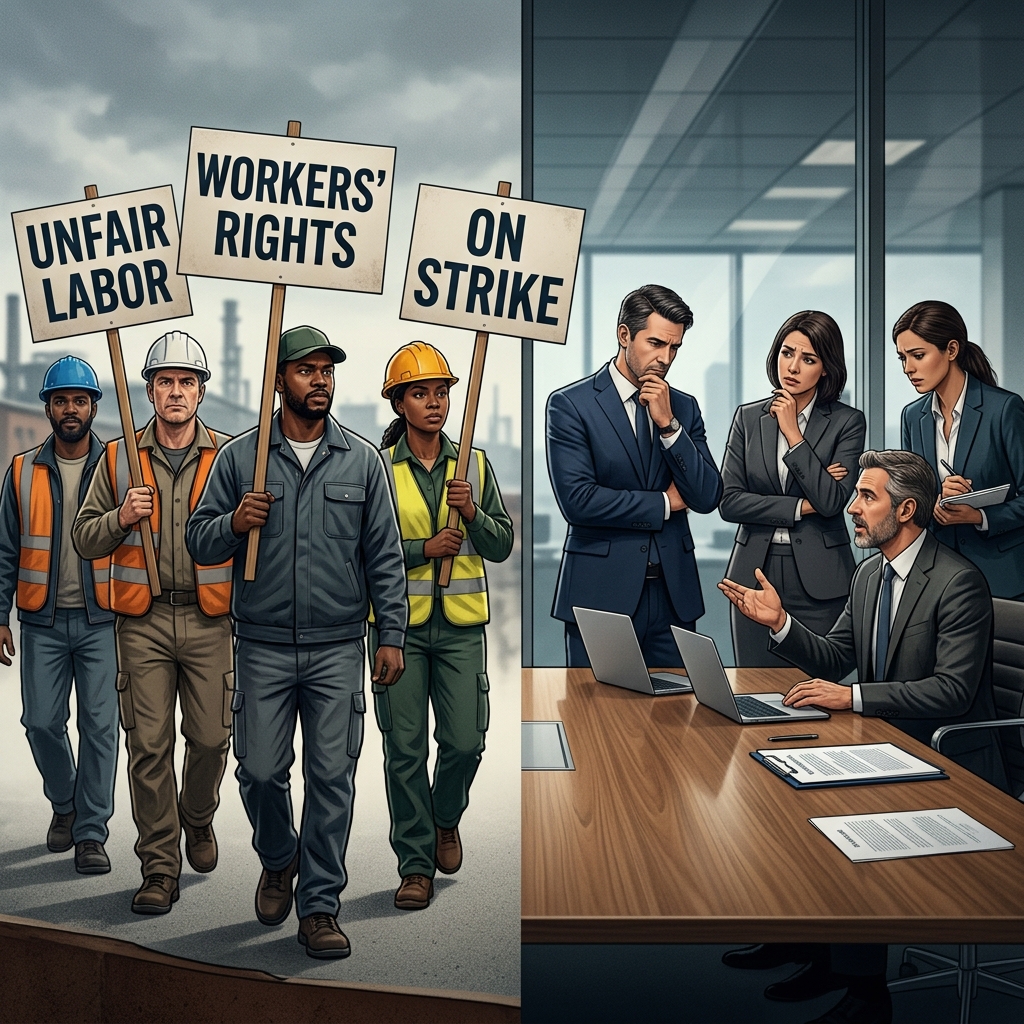
Employee strikes are one of the most visible tools workers can use to pressure an employer over wages, safety, scheduling, staffing, or other workplace concerns. In the private sector, the right to strike is often protected by federal labor law, but that protection is not absolute. Whether a strike is lawful depends on the reason for the walkout, the setting, and the conduct of the workers involved.
For employers, a strike can create urgent operational and legal questions. For workers, it can raise issues about reinstatement, discipline, and whether the activity is protected at all. The key is understanding that not every work stoppage is treated the same way under the law.
What a strike means in the legal sense
A strike is generally a coordinated refusal to work used to advance collective demands against an employer. It is more than a simple absence from work. The law typically looks for concerted action by employees who are trying to improve working conditions, protest alleged misconduct, or obtain some other workplace-related outcome.
Strikes can happen in unionized workplaces and in some nonunion settings as well. Federal labor law protects many forms of concerted activity by employees, which means the legal analysis does not depend only on whether a union is involved. What matters is whether the action is protected, how it is carried out, and what it is intended to accomplish.
When striking is protected
In the private sector, the National Labor Relations Act gives employees the right to engage in concerted activity for mutual aid or protection. That protection can cover a strike when workers are responding to economic issues, such as pay, hours, benefits, or working conditions. It can also cover a strike that protests an employer’s unfair labor practice.
Protected strikes usually fall into one of two broad categories:
- Economic strikes, where employees seek better wages, benefits, hours, or other job terms.
- Unfair labor practice strikes, where employees protest conduct that violates labor law.
Both types may be lawful, but they do not create the same reinstatement rights. That difference matters when the strike ends and employees want their jobs back.
When a strike loses legal protection
Not every walkout is protected. A strike can lose legal protection if it has an unlawful purpose, conflicts with a valid no-strike obligation, or involves misconduct that goes beyond peaceful protest. The details are important because the same word, “strike,” can cover very different conduct in practice.
Examples of unprotected or risky conduct include:
- Strikes aimed at an unlawful objective.
- Partial or selective work stoppages where employees pick and choose duties while claiming strike protection.
- Violent conduct or serious threats during the strike.
- Blocking entrances, trapping property, or interfering with access in a way that crosses the line from protest to unlawful conduct.
Some employees may also be bound by a contract that includes a no-strike clause. In that situation, the contract can affect whether the stoppage is protected, although the analysis can still depend on the underlying dispute and the exact language of the agreement.
Economic strikes versus unfair labor practice strikes
The distinction between economic strikes and unfair labor practice strikes shapes what happens after the work stoppage ends. Economic strikers are usually seeking improvements in pay or conditions. They are generally protected from discharge for striking, but they may be replaced if the employer lawfully hires permanent replacements.
Unfair labor practice strikers receive stronger protection. If the strike is motivated in whole or part by an employer’s unlawful labor conduct, workers generally have a stronger right to reinstatement. In many cases, they must be returned to their jobs even if temporary replacements were hired during the strike.
| Type of strike | Main purpose | Job protection after strike |
|---|---|---|
| Economic strike | Wages, benefits, hours, working conditions | Workers may be replaced by permanent replacements and may have preferential recall rights |
| Unfair labor practice strike | Protest of unlawful employer conduct | Workers generally have stronger reinstatement rights |
What employers can and cannot do
When a strike begins, employers often need to make quick decisions. The law allows some responses, but it also forbids retaliation against protected activity. That means employers should avoid impulsive discipline and instead evaluate the strike carefully.
Permissible responses often include:
- Continuing operations with managers, supervisors, or non-striking employees.
- Hiring temporary replacements in appropriate circumstances.
- Hiring permanent replacements for an economic strike, when lawful.
- Explaining the employer’s position in factual, nonthreatening terms.
Actions that are generally not allowed include firing or disciplining workers simply because they participated in a protected strike. Threats, retaliation, or discriminatory treatment based on lawful strike activity can create serious liability.
For unfair labor practice strikers, benefits and reinstatement issues become especially important. Employers may need to continue certain benefits and restore workers when the strike ends, depending on the facts and the governing rules.
Reinstatement after the strike ends
What happens when the work stoppage ends depends on why the strike occurred and whether replacement workers were used. Protected strikers are often entitled to return to work, but the timing and priority can differ.
Unfair labor practice strikers typically have the strongest reinstatement rights. If they are lawfully entitled to return, the employer generally must restore them to their positions, even if that means displacing temporary replacements. Economic strikers have a weaker claim to immediate reinstatement if the employer has lawfully filled those positions with permanent replacements, though they may still have preference for future openings.
Misconduct can change the outcome. A worker who engages in serious violence or comparable misconduct may lose reinstatement rights even if the strike itself was otherwise protected. That is one reason why conduct during a strike is often as important as the strike’s underlying cause.
Public-sector strikes are different
Rules for government workers are much stricter than those for private-sector employees. In many states, public employees are prohibited from striking altogether. Federal workers also face substantial restrictions. Some states allow limited strike activity after specific procedures are completed, but many prohibit it outright.
Because public-sector rules vary widely by jurisdiction, the legality of a strike by teachers, transit workers, sanitation workers, or other government employees often turns on state statute or local law rather than only on federal labor principles. In some places, unlawful strikes can trigger wage loss, discipline, union sanctions, or contempt proceedings.
Practical steps for employers during a strike
Employers benefit from a calm, documented, and legally informed response. A strike creates both business disruption and legal risk, so the first steps should focus on classification, communication, and continuity.
- Determine whether the strike is protected, economic, unfair labor practice-related, or unprotected.
- Review any collective bargaining agreement, no-strike clause, or past practice that may apply.
- Document employee conduct, statements, and the employer’s own responses.
- Plan how to maintain operations without retaliating against protected activity.
- Consult labor counsel before issuing discipline or replacement notices.
Employers should also be careful about communications. Public statements should be factual and restrained. Threatening language, false claims, or statements designed to chill protected activity can create additional labor law problems.
Practical steps for employees considering a strike
Employees should understand that a strike can have lasting consequences if the stoppage is not protected or if the conduct during the strike crosses legal lines. Before joining a work stoppage, workers should consider what law applies, whether a contract restricts the action, and whether the protest is organized in a way that preserves protection.
Useful questions include:
- Is the dispute about wages, hours, safety, or another workplace issue?
- Is there a union contract with a no-strike provision?
- Is the planned action a full strike or a partial refusal to work?
- Will the protest remain peaceful and lawful?
Workers who act individually without coordination may not receive the same protection as employees acting together. Likewise, strikes that involve sabotage, threats, or property interference can create discipline and even legal exposure.
Common misconceptions about strike rights
Several misunderstandings regularly create confusion. One common myth is that every employee strike is automatically legal. Another is that employers can always fire striking workers. Neither statement is correct.
The law is more nuanced. Protected strikers generally cannot be punished simply for participating in lawful concerted activity, but unprotected strikes can lead to discharge or other discipline. Also, being allowed to strike does not mean employees can engage in any conduct they want while striking. The manner of protest still matters.
Another misconception is that only union members can strike. In reality, nonunion employees may also be protected when they engage in concerted activity over workplace conditions. The issue is not simply union status; it is whether the activity is legally protected and properly carried out.
Frequently asked questions
Can an employer permanently replace striking workers?
In some economic strikes, yes. Permanent replacement may be allowed under federal labor law, but unfair labor practice strikers usually have stronger reinstatement rights.
Can workers be fired for striking?
Workers generally cannot be fired for participating in a protected strike, but they may be disciplined or discharged if the strike is unprotected or if they engage in serious misconduct.
Do nonunion employees have strike rights?
Yes, in some situations. Nonunion workers can also be protected when they engage in concerted activity about work-related concerns.
What if the strike becomes violent?
Violence, threats, and similar misconduct can remove legal protection and may also justify denial of reinstatement.
Are public employees covered by the same rules?
No. Public-sector strike laws are different and often far more restrictive than private-sector rules.
Why legal advice matters early
A strike can move quickly from a workplace dispute to a high-stakes legal event. The same facts that make one work stoppage lawful may make another unprotected. A few early decisions about discipline, replacements, public statements, or benefits can affect back pay exposure, reinstatement obligations, and future bargaining leverage.
That is why both employers and employees should treat strike questions as legal questions, not just operational ones. Careful review of the facts, the workplace relationship, and the applicable law is the best way to avoid mistakes that are difficult to undo later.
References
- Right to strike and picket — National Labor Relations Board. 2026-07-10. https://www.nlrb.gov/about-nlrb/rights-we-protect/the-law/employees/right-to-strike-and-picket
- Labor Strikes & Workers’ Legal Rights — Justia. 2026-07-10. https://www.justia.com/employment/unions/strikes/
- Employee Strikes: Legal Rights, Risks, and How to Respond — Breakroom. 2026-07-10. https://www.breakroomapp.com/glossary/employee-strike
- The Right to Strike — Tanner and Associates, P.C. 2026-07-10. https://www.rodtannerlaw.com/news/the-right-to-strike
- Legal Landscape of Public Sector Strikes — National Education Association. 2026-07-10. https://www.nea.org/legal-landscape-public-sector-strikes
Similar Articles








Read full bio of Sneha Tete




