What Is a Criminal Case?
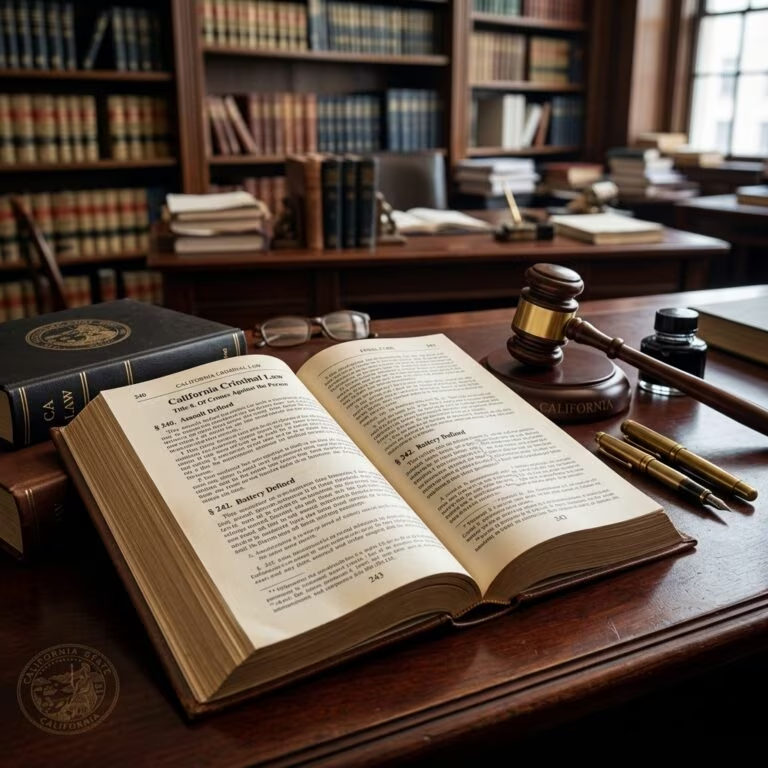
A criminal case is a court proceeding brought by the government against a person accused of breaking the law. In these matters, the alleged offense is treated as a harm against the public, not just a private disagreement between two people. That difference shapes everything from how the case begins to the type of punishment that may follow.
Unlike a civil dispute, where one party usually asks for money or another remedy from another party, a criminal case can lead to fines, probation, community supervision, jail, or prison. The government must prove its claims, and the accused person is protected by important constitutional safeguards throughout the process.
How Criminal Cases Begin
Most criminal cases begin with an investigation. Police officers, investigators, or other law-enforcement agencies gather information, interview witnesses, review reports, and examine physical evidence. If they believe a crime may have occurred, the matter is usually sent to a prosecutor for review.
The prosecutor decides whether enough evidence exists to file formal charges. Depending on the court system and the seriousness of the alleged offense, the case may begin with a complaint, information, citation, or indictment. In some jurisdictions, a judge or grand jury must first find probable cause before the case can move forward.
The People Involved in a Criminal Case
Several roles appear repeatedly in criminal proceedings, and each has a specific function. Understanding who does what makes the process easier to follow.
- Prosecutor: Represents the government and presents the case against the accused.
- Defendant: The person charged with the offense.
- Defense attorney: Advises and defends the accused person.
- Judge: Oversees the case, rules on legal issues, and may impose sentence.
- Jury: In many cases, decides whether the government has proved guilt.
- Law enforcement officers: Investigate alleged crimes and collect evidence.
In federal criminal cases, prosecutors are typically U.S. attorneys, while state and local cases are handled by district attorneys, county prosecutors, or similarly titled officials. The exact titles vary, but the basic structure is the same: the government brings the case, and the defendant responds.
Common Types of Criminal Charges
Criminal laws cover a wide range of conduct, from relatively minor offenses to serious felonies. A case may involve one charge or several charges arising from the same event.
| Charge Type | Typical Example | Possible Outcome |
|---|---|---|
| Misdemeanor | Minor theft, simple assault, disorderly conduct | Fine, probation, short jail term |
| Felony | Robbery, burglary, serious drug offenses, violent crimes | Longer incarceration, supervised release, substantial fines |
| Traffic-related criminal offense | Driving under the influence, reckless driving | Suspended license, fines, jail, probation |
The misdemeanor-felony divide matters because it often affects where the case is heard, the procedures used, and the severity of the potential sentence. Even a charge labeled “minor” can create lasting consequences, especially if it appears on a criminal record.
The First Court Appearance
After an arrest or summons, the accused person usually appears in court for an initial hearing. The purpose of this first appearance is to make sure the defendant understands the allegations and has the opportunity to respond. In many courts, the judge also addresses counsel, bail, and the next scheduled date.
At this stage, the defendant is generally informed of the charges. If the case is serious, the court may also discuss whether the accused should remain in custody, be released on bond, or be subject to other conditions while the case is pending.
Arraignment and Plea Choices
The arraignment is one of the most important early steps in the criminal process. During this hearing, the formal charges are read or explained, and the defendant enters a plea. The most common pleas are guilty, not guilty, and, in some courts, no contest.
A guilty plea usually ends the need for trial and moves the case toward sentencing. A not-guilty plea means the prosecution must continue preparing its evidence for a later hearing or trial. In many cases, a defendant initially pleads not guilty even if a resolution may later be negotiated.
What Happens Before Trial
Much of a criminal case takes place outside the trial courtroom. Once the case is filed, both sides begin preparing by exchanging information, reviewing evidence, and filing motions. This pretrial stage can be just as important as the trial itself.
Discovery allows each side to learn more about the case. The prosecution may provide police reports, witness statements, test results, video footage, or other evidence, while the defense may disclose certain materials required by court rules. Pretrial motions may ask the judge to exclude evidence, dismiss charges, compel disclosure, or resolve other legal questions before trial.
- Discovery: The exchange of evidence and case information between the parties.
- Pretrial motions: Requests asking the judge to decide legal issues before trial.
- Plea negotiations: Discussions that may lead to a guilty plea in exchange for reduced charges or a recommended sentence.
- Bond review: A hearing to decide whether release conditions should change.
In some cases, a plea agreement resolves the matter before trial. That can save court time and reduce uncertainty for both sides. Even then, the judge usually must approve the agreement and confirm that the plea is knowing and voluntary.
The Trial Stage
If the case is not resolved beforehand, it proceeds to trial. A criminal trial is a formal process in which the government attempts to prove the defendant committed the charged offense. The prosecution presents evidence first because the government carries the burden of proof.
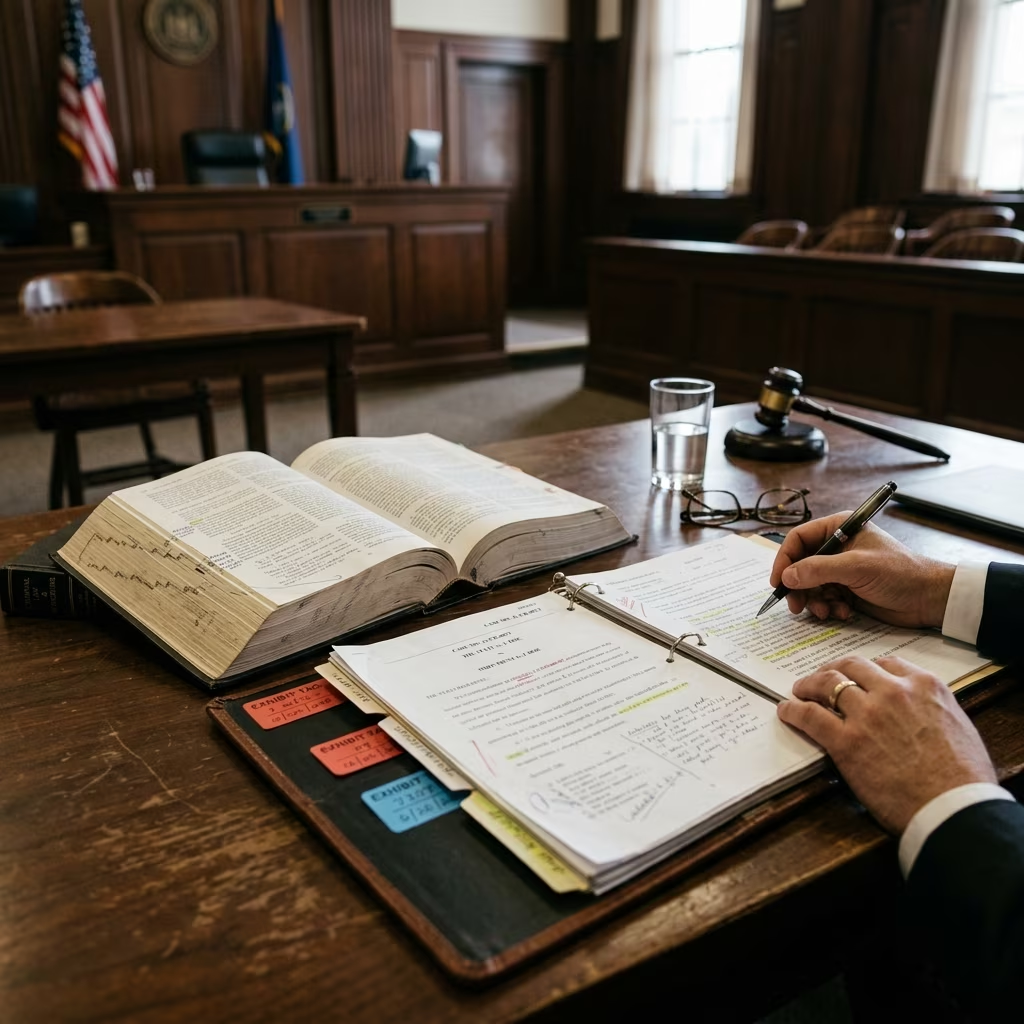
After opening statements, the prosecutor calls witnesses and introduces exhibits. The defense may cross-examine those witnesses, challenge the strength of the evidence, and call its own witnesses if it chooses. The defendant is not required to testify or prove innocence.
The most important standard in a criminal trial is proof “beyond a reasonable doubt.” This is a much higher standard than the one used in civil cases. It means the prosecution must present evidence strong enough to convince the fact-finder that the defendant is guilty to a very high level of certainty.
Jury Trial or Bench Trial?
Criminal cases may be decided by a jury or by a judge alone. The type of trial often depends on the offense, the court rules, and the defendant’s choice. Each format has a different decision-maker, but the same basic legal standards still apply.
| Trial Type | Who Decides? | Typical Feature |
|---|---|---|
| Jury trial | Jury | Ordinary citizens hear the evidence and decide guilt or innocence |
| Bench trial | Judge | The judge hears the evidence and issues the verdict |
In either format, the defense may challenge the prosecution’s witnesses, question whether evidence should be admitted, and argue that the government has not met its burden. The final decision is based on the evidence presented in court, not on rumor, suspicion, or assumption.
Possible Outcomes After Trial
Once the evidence is complete, the court or jury returns a verdict. If the defendant is found not guilty, the case ends without a criminal conviction on that charge. If the defendant is found guilty, the court moves to sentencing.
Sentencing can include several different penalties, depending on the offense and the defendant’s history. Judges often consider the seriousness of the crime, the harm caused, the need to protect the public, and any mitigating factors such as cooperation or a lack of prior convictions.
- Incarceration: Jail or prison time.
- Fines: Monetary penalties paid to the court.
- Probation: Supervised release under court rules.
- Community service: Required work performed for the public benefit.
- Restitution: Payment to compensate a victim for losses in some cases.
Some offenses also trigger collateral consequences beyond the sentence itself. These may affect employment, housing, licensing, immigration status, or future sentencing if the person is charged again.
How Criminal Cases Differ From Civil Cases
People often confuse criminal cases with civil lawsuits, but the two systems serve different goals. A civil case usually involves a private dispute, such as a contract problem, a property dispute, or a personal injury claim. A criminal case involves the government accusing someone of conduct that violates a criminal law.
The strongest practical difference is the burden of proof. Civil cases often rely on a lower standard, while criminal cases require proof beyond a reasonable doubt. Criminal defendants also receive stronger protections because the stakes can include loss of liberty.
Another difference is the remedy. Civil courts usually award money or order a party to do or stop doing something. Criminal courts can impose punishment, including incarceration, supervised release, and criminal fines.
Rights a Defendant Usually Has
Criminal procedure includes several rights designed to reduce the risk of wrongful conviction. These rights are central to the fairness of the process and apply at different stages of the case.
- Presumption of innocence: The defendant starts the case as innocent in the eyes of the law.
- Right to counsel: The defendant may hire a lawyer, and in many cases an attorney is appointed if the person cannot afford one.
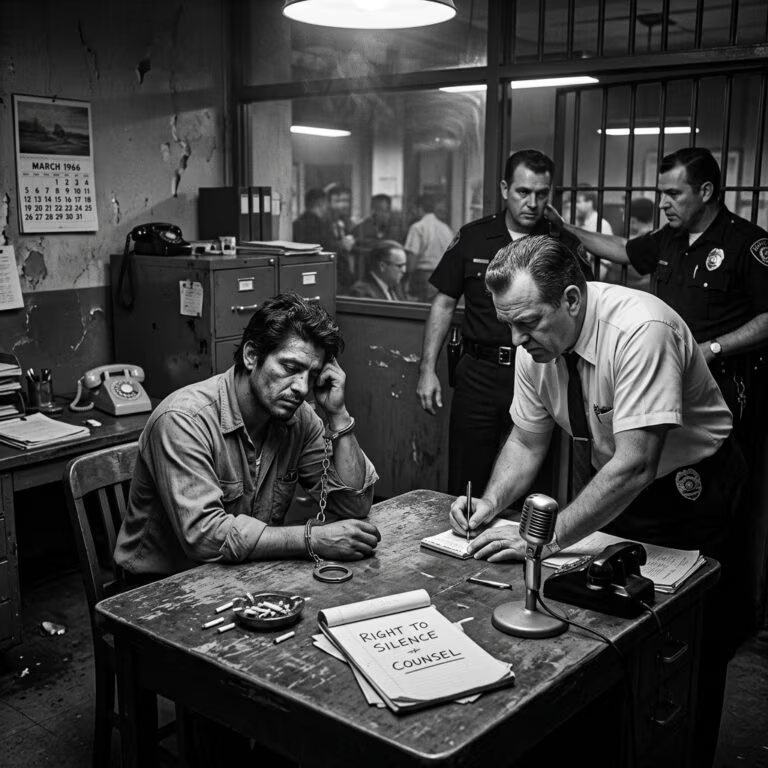
- Right to remain silent: The defendant generally cannot be forced to testify against themselves.
- Right to confront witnesses: The defense may question the prosecution’s witnesses.
- Right to a fair and public hearing: Criminal proceedings are generally conducted under court supervision and procedural rules.
These protections do not guarantee acquittal, but they help ensure that the government must follow the rules before a person can be convicted.
Why Criminal Cases Matter
A criminal case can change a person’s life long after the court date ends. Beyond the immediate risk of jail, prison, or fines, a conviction may affect family life, work opportunities, and future interactions with the justice system. That is why the process includes notice, hearings, defense rights, and a demanding standard of proof.
For someone facing charges, understanding the process is often the first step toward making informed decisions. It helps to know what each hearing means, what the government must prove, and what options may still be available before trial.
Frequently Asked Questions
What starts a criminal case?
A criminal case usually begins after law enforcement investigates alleged wrongdoing and a prosecutor decides to file formal charges. In some jurisdictions, a complaint, information, citation, or indictment may initiate the case.
Can a criminal case be resolved without trial?
Yes. Many cases end through a plea agreement, dismissal, or other pretrial resolution. A trial is only necessary if the parties do not resolve the charges beforehand.
Who has the burden of proof?
The prosecution has the burden of proof in a criminal case. The government must prove the defendant’s guilt beyond a reasonable doubt.
Is every criminal case a felony?
No. Criminal cases may involve misdemeanors, felonies, or other offense levels depending on the law and the seriousness of the conduct.
What happens if the defendant is found guilty?
If the defendant is convicted, the court moves to sentencing. The possible penalties may include jail or prison, probation, fines, community service, or restitution.
References
- Criminal Case — Legal Information Institute, Cornell Law School. n.d. https://www.law.cornell.edu/wex/criminal_case
- Criminal Cases — United States Courts. n.d. https://www.uscourts.gov/about-federal-courts/types-cases/criminal-cases
- The Difference Between a Civil and Criminal Case — Mississippi Bar. n.d. https://www.msbar.org/for-the-public/consumer-information/the-difference-between-a-civil-and-criminal-case/
- The Legal Process In The United States: A Criminal Case — Animal Legal Defense Fund. n.d. https://aldf.org/article/the-legal-process-in-the-united-states-a-criminal-case/
- What Happens in a Criminal Case — 5th Judicial District Court. n.d. http://www.5thjudicialdistrict.com/district-court/what-happens-in-a-criminal-case/
- Steps in a Criminal Case — City of Oak Harbor. n.d. https://www.oakharbor.gov/197/Steps-in-a-Criminal-Case