
Understanding Motor Vehicle Theft Laws and Prevention
A practical legal guide to motor vehicle theft, penalties, common scenarios, defenses, and how to reduce your risk of becoming a victim.
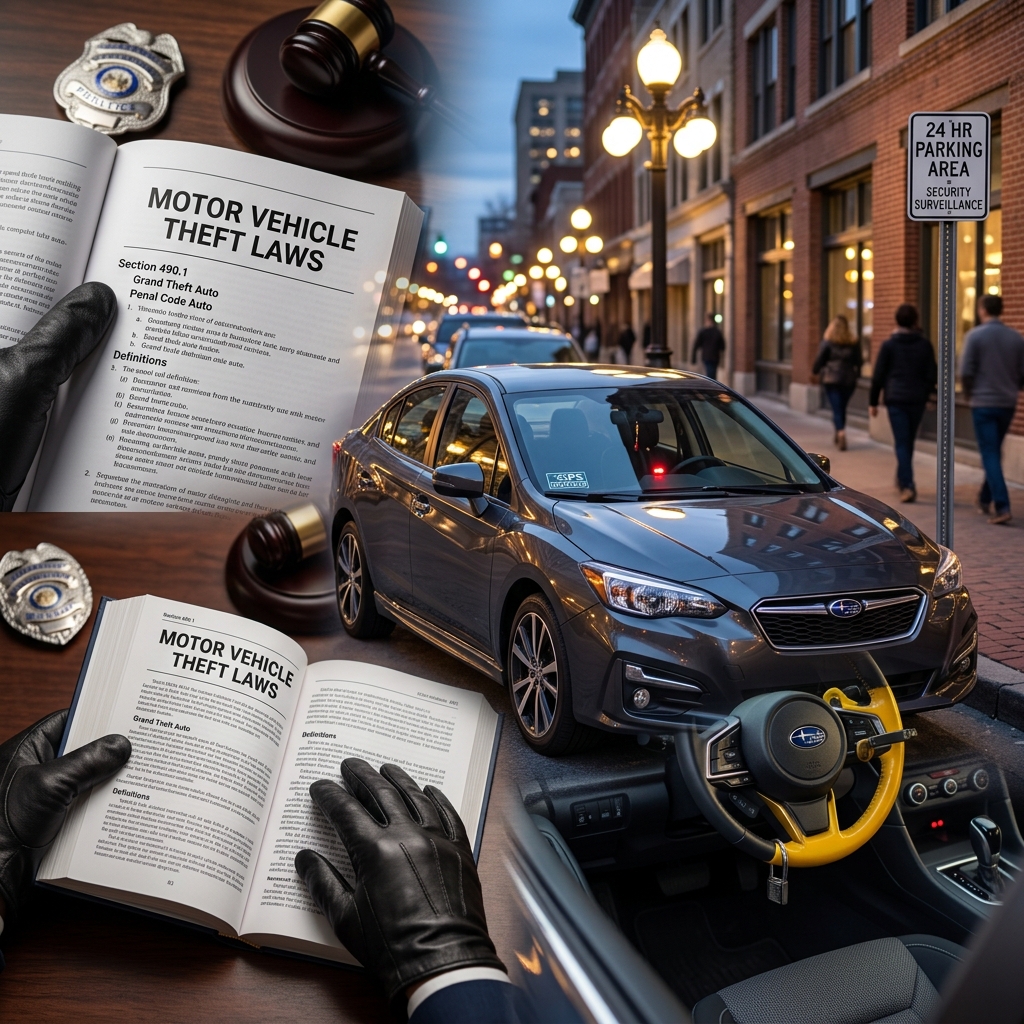
Motor vehicle theft is one of the most common property crimes in the United States and a major concern for both law enforcement and everyday drivers. It affects not only car owners, but also insurers, communities, and the criminal justice system as a whole. This guide explains how motor vehicle theft is defined, how it is prosecuted, what penalties may apply, and what steps you can take to reduce your risk and protect your legal rights.
What Counts as Motor Vehicle Theft?
In U.S. criminal law, motor vehicle theft generally refers to the theft or attempted theft of a motor vehicle, such as a car, truck, motorcycle, or similar self-propelled land vehicle. While each state has its own statutes, several core elements tend to appear in most laws.
Core Legal Elements
To secure a conviction, prosecutors typically must prove specific elements beyond a reasonable doubt. These often include:
- Taking or exercising control over a motor vehicle owned by someone else.
- Lack of consent from the owner or lawful possessor.
- Intent to deprive the owner of the vehicle for a significant period, usually permanently.
- That the item taken meets the legal definition of a motor vehicle (self-propelled and running on land surfaces).
Using a vehicle temporarily with the owner’s permission typically does not qualify as motor vehicle theft. The FBI’s Uniform Crime Reporting (UCR) definition specifically excludes situations where a person with lawful access temporarily uses a vehicle.
Motor Vehicle Theft vs. Related Crimes
Motor vehicle theft is closely related to other offenses, but important distinctions affect charges and penalties:
| Offense | Key Characteristics | Typical Legal Classification |
|---|---|---|
| Motor vehicle theft | Theft or attempted theft of a vehicle, usually without direct confrontation with the owner. | Property crime; often charged as theft, grand theft, or specific auto-theft statute. |
| Carjacking | Taking a vehicle directly from a person by force, intimidation, or violence. | Violent crime; often a separate, more serious offense and can be a federal crime. |
| Joyriding | Unauthorized temporary use of a vehicle, usually without intent to permanently keep it. | May be charged as a lesser theft offense or unauthorized use, depending on state law. |
| Receiving or trafficking stolen vehicles | Possessing, selling, or moving stolen vehicles or parts, often across state lines.[10] | Can involve distinct state and federal offenses, sometimes targeting organized crime.[10] |
Common Types of Motor Vehicle Theft Cases
Although the underlying legal concept is similar, motor vehicle theft can arise in a variety of ways. Recognizing these patterns can help you understand how the law may treat different scenarios.
Classic Auto Theft
This type of case involves someone stealing a parked car without confronting the owner. Typical fact patterns include:
- A stranger breaking into a vehicle and driving away while it is parked on a street or in a lot.
- Using stolen keys, copied keys, or hacked electronic systems to bypass security and start the vehicle.
- Towing or otherwise moving a vehicle without consent, sometimes under the appearance of legitimate towing.
States handle such conduct through general theft statutes or specialized auto theft laws. For example, Washington explicitly defines “theft of a motor vehicle” and classifies it as a Class B felony.
Grand Theft Auto
The phrase grand theft auto is a formal legal term in some jurisdictions for stealing a car of sufficient value to meet the threshold for grand theft. In many states, theft becomes “grand” when the property’s value exceeds a legislatively defined amount.
To charge grand theft auto, a prosecutor generally must show:
- That the defendant took or drove a vehicle belonging to another.
- That the defendant did so without the owner’s permission.
- That the defendant intended to deprive the owner of the vehicle for a long period or permanently.
- That the vehicle’s value meets or exceeds the state’s monetary threshold for grand theft.
Because the value of modern cars is often high, many vehicle thefts qualify for felony charges, even where general theft statutes apply.
Carjacking
Carjacking is a distinct offense involving the taking of a vehicle from a person by force or threats. It is considered a violent crime rather than a property-only crime. Under federal law, carjacking can be prosecuted when it involves interstate or foreign commerce, and penalties may be significantly more severe than for nonviolent auto theft.
Organized Theft and Chop Shops
In many cases, motor vehicle theft is part of organized criminal activity. Stolen vehicles or parts may be moved across state lines, cloned using fraudulent vehicle identification numbers (VINs), or dismantled in “chop shops” for resale.[10]
Federal and state laws target this activity by criminalizing:
- Interstate trafficking of stolen vehicles or parts.[10]
- Altering or removing VINs and other identifying marks.
- Owning, operating, or maintaining a chop shop.
These offenses can lead to substantial prison sentences and fines, especially when part of a larger organized crime investigation.
Penalties and Sentencing for Motor Vehicle Theft
Penalties for motor vehicle theft vary widely by state, but they are often serious. Factors influencing sentencing include the vehicle’s value, the defendant’s prior record, whether violence was involved, and whether the theft was part of organized crime.
Felony vs. Misdemeanor
Many auto theft cases are charged as felonies, particularly when the vehicle’s value is substantial or the crime involves aggravating circumstances. For example:
- Some states treat theft of any motor vehicle as a felony regardless of value, as in Washington’s Class B felony classification.
- Other states distinguish between lesser theft (often a misdemeanor) and grand theft auto (a felony) based on value and intent.
Felony convictions can lead to incarceration in state prison, while misdemeanor convictions typically involve shorter jail sentences or probation.
Sample Sentencing Ranges
To illustrate the range of possible penalties, consider some examples drawn from state law summaries and practice materials.
- In California, grand theft auto can carry up to one year in county jail, or longer felony terms depending on circumstances.
- In Massachusetts, motor vehicle theft may lead to up to 15 years in state prison, or shorter terms in local facilities.
- In New York, stealing a vehicle of a certain value can be charged as grand larceny in various degrees, with maximum penalties increasing as value rises.
In addition to incarceration, courts may impose fines and require restitution to the vehicle’s owner for economic losses. If the stolen vehicle was crashed or used in another crime, the defendant may face additional charges and civil liability to anyone injured.
Civil and Insurance Consequences
Motor vehicle theft has ramifications beyond criminal sentencing. Victims, insurers, and drivers may face significant financial and legal consequences.
Impact on Victims
According to federal agencies, motor vehicle theft costs Americans billions of dollars each year. Victims may experience:
- Loss of transportation and disruption of work or family responsibilities.
- Deductibles and coverage limits under their insurance policies.
- Increased insurance premiums after claims.
- Emotional distress or safety concerns, especially after carjacking.
Insurance Claims
Most insurers require prompt reporting of a stolen vehicle to both law enforcement and the insurance company. The National Highway Traffic Safety Administration (NHTSA) advises contacting the police immediately and filing a claim within 24 hours. Necessary information typically includes:
- License plate number.
- Vehicle make, model, and color.
- Vehicle Identification Number (VIN).
- Any unique identifying features or modifications.
Some policies cover rental vehicles or alternative transportation, while others do not. Understanding your coverage before a loss occurs is important for financial planning.
Key Federal and State Legal Frameworks
Motor vehicle theft is addressed through a combination of state criminal codes and federal statutes aimed at organized or interstate crime.
State-Level Auto Theft Statutes
States typically handle the majority of motor vehicle theft cases. Laws may be structured as:
- General theft statutes that include vehicles as property.
- Specific “auto theft” or “theft of a motor vehicle” provisions, often with tailored penalties.
- Graded theft statutes that increase penalties based on the vehicle’s value.
Because state law varies, the precise charge, degree, and sentencing range differ from jurisdiction to jurisdiction. Consulting a local criminal defense attorney is essential for case-specific advice.
Federal Tools to Combat Vehicle Theft
The federal government focuses primarily on large-scale or interstate vehicle theft operations. Historical and current legislation includes:
- Federal laws criminalizing interstate trafficking of stolen vehicles, often referred to in discussions of the National Motor Vehicle Theft Act.[10]
- Statutes penalizing alteration or removal of motor vehicle identification numbers (VINs).
- Offenses that make it illegal to own or operate a chop shop dealing in stolen vehicles or parts.
- Federal carjacking provisions, especially when vehicles are transported, shipped, or received in interstate or foreign commerce.
These laws complement state efforts by targeting organized criminal networks and complex schemes that cross state lines.
How to Prevent Motor Vehicle Theft
While no measure is foolproof, law enforcement and safety agencies provide clear, practical steps to reduce the likelihood of theft. NHTSA and the National Insurance Crime Bureau (NICB) offer overlapping recommendations that focus on basic vigilance plus technology.
Everyday Precautions
Simple habits can significantly lower your risk:
- Always take your keys with you; do not leave them in or on the vehicle.
- Lock doors and close windows every time you leave the vehicle.
- Park in well-lit areas or near visible locations where criminals are less likely to act.
- Hide valuables from view, such as in the trunk or glove compartment, to reduce opportunistic crime.
- Never leave a vehicle idling unattended, even briefly. A running car is an easy target.
Additional Security Measures
For higher-risk areas or valuable vehicles, consider strengthening your defenses:
- Use visible deterrents such as steering wheel locks or brake locks.
- Install audible alarms and immobilizers that make theft more difficult and conspicuous.
- Deploy GPS tracking or aftermarket location devices to help recover the vehicle if stolen.
- Stay informed about manufacturer recalls or software updates related to keyless entry or security systems.
NHTSA emphasizes public education and vehicle design standards to reduce theft opportunities, while NICB highlights the importance of quick reporting and documentation for recovery.
What to Do If Your Vehicle Is Stolen
Rapid and organized action can improve the chances of recovering a stolen vehicle and protect you from additional legal or financial complications.
Immediate Steps
- Contact law enforcement right away to file a stolen-vehicle report.
- Call 911 if you are in immediate danger, such as during or after a carjacking.
- Provide essential information, including license plate, VIN, make, model, color, and any distinctive features.
The FBI notes that quick reporting increases the chance of recovery; you can contact local police and, in some cases, federal authorities if interstate trafficking is suspected.
Insurance and Documentation
- Notify your insurance company promptly, often within 24 hours, to start the claims process.
- Keep copies of the police report and case number for your records and the insurer.
- Maintain a written list of your vehicle’s key details (VIN, plate number, make, model, color) to simplify reporting and verification.
If you later locate the vehicle, inform both law enforcement and your insurer immediately to avoid misunderstandings and to adjust any claim appropriately.
Rights and Defenses in Motor Vehicle Theft Cases
Anyone accused of motor vehicle theft should be aware of fundamental legal rights and potential defenses. Because penalties can be substantial, early legal representation is critical.
Basic Legal Rights
- The right to remain silent and avoid self-incrimination.
- The right to an attorney, and to have one appointed if you cannot afford counsel.
- The right to challenge evidence, including vehicle identification, ownership, and witness testimony.
- The right to a fair trial and, in most felony cases, a jury trial.
Common Defense Strategies
Depending on the facts and applicable state law, defenses may include:
- Lack of intent: Arguing that there was no intention to permanently or significantly deprive the owner of the vehicle.
- Owner’s consent: Showing that the accused reasonably believed they had permission to use the vehicle.
- Mistaken identity or ownership: Contesting whether the correct person was charged or whether ownership was properly established.
- Insufficient evidence: Challenging the strength or reliability of the prosecution’s case.
Each case is fact-specific. Anyone facing charges should consult a qualified criminal defense lawyer familiar with local motor vehicle theft laws.
Frequently Asked Questions About Motor Vehicle Theft
Is motor vehicle theft always a felony?
No. Many jurisdictions treat serious or high-value auto theft as a felony, but lesser or first-time offenses may be charged as misdemeanors depending on state law, the value of the vehicle, and aggravating factors.
How is carjacking different from auto theft?
Carjacking involves taking a vehicle directly from a person by force, violence, or intimidation, making it a violent crime. Motor vehicle theft without confrontation is typically classified as a property crime.
Can I be charged if I only helped move or sell a stolen car?
Yes. Receiving, transporting, or selling stolen vehicles or parts can be a separate crime, and federal laws may apply when activity crosses state lines or involves organized networks.[10]
What should I do first if my car is stolen?
Immediately contact local law enforcement to file a report, then notify your insurance company. Provide your license plate number, VIN, and vehicle details to both.
Are there national programs to help prevent vehicle theft?
Yes. Federal agencies such as NHTSA and the FBI cooperate with state and local authorities to promote theft prevention, public education, and enforcement efforts to reduce auto theft and related crimes.
References
- Motor Vehicle Theft — Federal Bureau of Investigation. 2024-05-01. https://www.fbi.gov/investigate/transnational-organized-crime/motor-vehicle-theft
- Vehicle Theft Prevention — National Highway Traffic Safety Administration. 2025-03-15. https://www.nhtsa.gov/vehicle-safety/vehicle-theft-prevention
- Prevent Vehicle Theft — National Insurance Crime Bureau. 2025-04-10. https://www.nicb.org/prevent-vehicle-theft
- Facts + Statistics: Auto Theft — Insurance Information Institute. 2025-07-01. https://www.iii.org/fact-statistic/facts-statistics-auto-theft
- Grand Theft Auto Laws | Criminal Law Center — Justia. 2024-09-10. https://www.justia.com/criminal/offenses/theft-crimes/auto-theft/
- 1359. Motor Vehicle Theft Prevention Statutes — General Overview — U.S. Department of Justice. 2015-06-01. https://www.justice.gov/archives/jm/criminal-resource-manual-1359-motor-vehicle-theft-prevention-statutes-general-overview
- Motor Vehicle Theft: Definition, Statistics & Law — Study.com. 2023-11-20. https://study.com/academy/lesson/video/motor-vehicle-theft-definition-statistics-law.html
Similar Articles








Read full bio of medha deb




