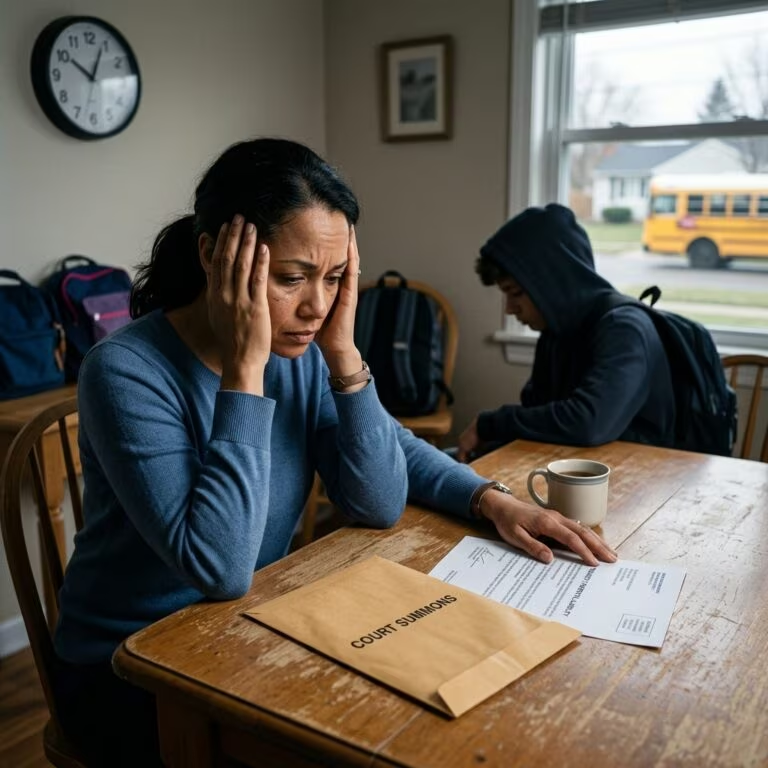
Divorce is more than a legal event that ends a marriage. It is a major life transition that touches nearly every aspect of family life, from finances and housing to emotional health and long‑term opportunities for children. Research shows that divorce can bring both immediate upheaval and lasting consequences, especially when children are involved. At the same time, many families manage this transition successfully with the right support, planning, and conflict‑reduction strategies.
Divorce as a Life Transition, Not Just a Court Order
When spouses file for divorce, they enter a multi‑layered process that often includes legal proceedings, financial separation, relocation, and redefining parental roles. For adults, this may feel like a complex mix of relief, grief, and uncertainty. For children, it is frequently experienced as a profound change in their sense of security and stability.
Key dimensions of this transition typically include:
- Legal separation of assets, debts, and parental responsibilities.
- Economic adjustment as households split and income must support two homes instead of one.
- Emotional reorganization of relationships, loyalties, and daily routines.
- Social changes, such as moving schools, neighborhoods, or distancing from extended family.
Financial and Practical Consequences for Parents
One of the most immediate effects of divorce is financial. Court orders related to property division, spousal support, and child support restructure how money flows in the family. Empirical studies indicate that custodial parents, especially mothers, often experience a substantial drop in income after divorce.
Economic Impact on Households
When two spouses maintain separate households, shared resources stretch farther, and expenses increase. Peer‑reviewed research has found that custodial mothers can lose around 25–50% of their pre‑divorce income, which may affect housing, nutrition, healthcare, and educational opportunities for children.
Common financial effects include:
- Reduced household income and savings capacity.
- Difficulty maintaining previous living standards.
- Increased reliance on credit, public assistance, or extended family.
- Less money available for enrichment activities such as tutoring, sports, or arts.
Practical Challenges After Separation
Divorce often requires major practical adjustments. Parents may need to relocate, change jobs, or alter work schedules to accommodate new custody arrangements. These changes influence daily logistics, such as who picks children up from school, where they live, and how much time they spend with each parent.
Typical practical impacts include:
- Relocation to more affordable housing or different school districts.
- Shift work or reduced hours to match parenting schedules.
- More complex coordination around holidays, vacations, and special events.
- Re‑negotiation of household responsibilities previously shared between spouses.
Emotional and Mental Health Effects on Adults
Divorce can be emotionally taxing. Many adults experience a combination of grief, anger, and anxiety, particularly in high‑conflict or unexpected separations. The psychological strain may manifest as depression, sleep difficulties, or stress‑related physical symptoms.
Common Emotional Responses in Parents
Research on family structure and health has identified that parents who divorce face increased risks of emotional and physical health problems. While individual experiences vary, typical reactions include:
- Grief and loss over the end of the marital relationship and shared dreams.
- Guilt related to the impact of the divorce on children.
- Anxiety about finances, future relationships, and parenting alone.
- Loneliness and social isolation after social circles shift.
Access to mental health support, such as counseling or support groups, can significantly help adults manage these emotions and make more thoughtful decisions about co‑parenting and conflict resolution.
How Divorce Shapes Children’s Experiences
Children are often at the center of concerns about divorce, and for good reason. A growing body of research indicates that parental divorce is linked to a range of short‑ and long‑term outcomes in academic performance, mental health, and future economic well‑being.
Immediate Emotional Reactions in Children
In the short term, children frequently experience intense emotional responses as they absorb the news that their parents are separating. Family organizations and clinical studies report that children commonly feel loss, anger, confusion, and anxiety as they adapt to new routines and living arrangements.
Common short‑term reactions include:
- Fear that one or both parents may abandon them.
- Self‑blame or belief that their behavior caused the divorce.
- Sadness and grief over changes to daily life and family traditions.
- Behavioral changes such as withdrawal, aggression, tantrums, or clinginess.
Academic and Behavioral Outcomes
Studies suggest that children of divorced parents are more likely to encounter academic and behavioral difficulties than peers from stable two‑parent households. These patterns do not mean that every child of divorce will struggle, but they highlight areas where extra support may be needed.
| Domain | Possible Effects | Sources |
|---|---|---|
| Education | Lower grades, higher likelihood of repeating a school year, reduced educational attainment. | Peer‑reviewed family structure research; graduate studies on divorce. |
| Behavior | Increased risk of delinquency, aggression, and substance use in adolescence. | Longitudinal studies of children from divorced homes. |
| Mental health | Higher rates of depression, anxiety, and emotional disturbance in childhood and adolescence. | Systematic reviews on divorce and child health. |
Long‑Term Effects into Adulthood
Recent work by the U.S. Census Bureau has provided detailed evidence on how parental divorce can affect children’s outcomes well into young adulthood. For example, divorce during early childhood (ages 0–5) is associated with lower income in the mid‑ to late twenties, higher teen birth rates, and increased risk of incarceration and early death compared with children whose parents remain married.
Key long‑term patterns identified include:
- Reduced earnings in the mid‑ to late twenties, with income drops of around 9–13% after early‑childhood divorce.
- Higher rates of teen pregnancy and birth among children of divorce.
- Increased risk of incarceration in young adulthood.
- Elevated child and youth mortality rates following divorce.
These outcomes are influenced by multiple factors, including declines in household income, changes in neighborhood quality, and increased physical distance between children and non‑resident parents. Importantly, many of these risks can be moderated with policies and family decisions that protect children’s economic and emotional stability.
Impact on Parenting and Co‑Parenting Relationships
Divorce transforms the parenting relationship. Some parents move from shared decision‑making under one roof to parallel parenting in separate homes. The quality of this new dynamic significantly affects children’s adjustment and well‑being.
Changes in Parent–Child Bonds
Following divorce, children may experience shifts in closeness with each parent. Time spent with the non‑resident parent often decreases, particularly when parents live far apart or conflict is high. If parents are able to maintain consistent contact, clear communication, and emotionally supportive relationships, children tend to fare better.
Potential shifts in relationships include:
- Children aligning strongly with one parent and distancing from the other.
- Different children in the same family favoring different parents.
- One parent becoming marginalized if communication or visitation deteriorates.
Co‑Parenting Quality and Conflict
High‑conflict divorce can intensify stress for children. Ongoing disputes about custody, schedules, or child‑rearing decisions expose children to chronic tension and may worsen behavioral and emotional problems. Conversely, cooperative co‑parenting—where parents minimize conflict, communicate constructively, and keep children out of adult disagreements—supports better adjustment.
Co‑parenting practices that tend to help include:
- Using written parenting plans to clarify expectations and reduce misunderstandings.
- Agreeing on consistent rules and routines across households.
- Shielding children from arguments and legal disputes.
- Encouraging healthy relationships with the other parent where safety allows.
Effects on Extended Family and Social Networks
The ripple effects of divorce extend beyond the immediate household. Grandparents, aunts, uncles, and close family friends often experience feelings of sadness, confusion, or divided loyalties when a couple separates.
Common changes in the wider family system include:
- Shifts in holiday and celebration routines, sometimes excluding one side of the family.
- Relational strain when extended relatives feel compelled to “choose sides.”
- Grandparents stepping in to provide childcare or financial help.
- Restructuring of social circles when friends or neighbors were strongly connected to both spouses.
Broader Social and Community Implications
On a societal level, higher divorce rates can contribute to broader patterns in health, education, and public spending. Academic reviews note that divorce has been associated with increased crime rates, substance abuse, and diminished educational attainment, all of which carry economic costs for communities and governments.
Societal effects may include:
- Greater demand for social services, such as housing and income support.
- Higher public expenditure associated with justice system involvement and healthcare needs.
- Changes in neighborhood stability as families move or household structures shift.
Reducing Harm and Supporting Healthy Adjustment
While research highlights significant risks associated with divorce, these outcomes are not inevitable. Many children and adults adapt well over time, especially when given emotional support, stable routines, and adequate economic resources. Effective legal and therapeutic interventions can reduce harm and promote resilience.
Practical Strategies for Parents
Parents can take concrete steps to support their children and themselves during and after divorce:
- Prioritize stability by maintaining predictable schedules, school continuity where possible, and familiar routines.
- Open age‑appropriate communication, allowing children to ask questions without feeling responsible for adult decisions.
- Seek professional help from counselors, mediators, or parenting coordinators experienced in post‑divorce family dynamics.
- Protect finances through careful budgeting, exploring legal rights related to support, and planning for housing and childcare needs.
- Model respectful behavior toward the other parent, which can reduce children’s stress and conflicting loyalties.
Legal Guidance and Rights
Understanding legal rights and responsibilities is essential in managing the effects of divorce. A family law attorney can explain how local laws handle property division, spousal support, child support, and custody. In many jurisdictions, courts focus on the best interests of the child when determining parenting arrangements, which includes consideration of stability, safety, and the child’s relationship with each parent.
Frequently Asked Questions About the Effects of Divorce
Does divorce always harm children?
Not always. Although statistical trends show increased risks for academic, behavioral, and economic challenges among children of divorce, individual outcomes vary widely. Children in high‑conflict or unsafe marriages may benefit emotionally when the conflict ends. Protective factors—such as stable caregiving, economic security, and cooperative co‑parenting—can significantly reduce negative impacts.
Which children are most vulnerable to negative effects?
Evidence suggests that children who experience divorce in early childhood (ages 0–5) face higher risks of reduced income, teen pregnancy, incarceration, and early mortality than children whose parents divorce later. Those exposed to ongoing conflict, repeated family disruptions, or economic hardship are also at greater risk.
Can good co‑parenting reduce the long‑term consequences?
Yes. Consistent, supportive relationships with both parents, minimal exposure to conflict, and coordinated parenting practices are linked to better outcomes for children. While co‑parenting cannot erase all risks associated with divorce, it can strengthen resilience and help children maintain secure attachments.
How long do the effects of divorce last?
Some effects are short‑lived, such as initial emotional reactions. Others can persist into adulthood, influencing education, income, and health. The duration and intensity of impact depend on factors like family resources, parental behavior, and access to social support.
What professional help is available for families going through divorce?
Families can access various types of support, including family therapists, child psychologists, divorce mediators, parenting coordinators, and legal counsel. These professionals help address emotional needs, resolve disputes, and design parenting plans that focus on children’s best interests.
References
- Divorce Can Negatively Affect Children, Even Into Adulthood — U.S. Census Bureau. 2026-01-10. https://www.census.gov/library/stories/2026/01/divorce-affects-children.html
- The impact of family structure on the health of children: Effects of divorce — Patrick F. Fagan et al., Current Problems in Pediatric and Adolescent Health Care. 2014-11-01. https://pmc.ncbi.nlm.nih.gov/articles/PMC4240051/
- New Study Finds Lasting Effects of Divorce on Kids — Institute for Family Studies. 2026-01-18. https://ifstudies.org/blog/new-study-finds-lasting-effects-of-divorce-on-kids
- What Are the Effects of Divorce on Children? — FamilyMeans. n.d. https://www.familymeans.org/effects-of-divorce-on-children.html
- The effects of divorce in a society with ever-changing family structures — University of Northern Iowa ScholarWorks (Graduate Research Paper). 2008-01-01. https://scholarworks.uni.edu/cgi/viewcontent.cgi?article=1281&context=grp
- The Ripple Effect: How Divorce Impacts Your Family — Sunstone Counseling. n.d. https://www.sunstonecounselors.com/the-ripple-effect-how-divorce-impacts-your-family/