
Understanding West Virginia Computer Crime Laws
A practical guide to West Virginia’s Computer Crime and Abuse Act, key offenses, penalties, defenses, and civil remedies.
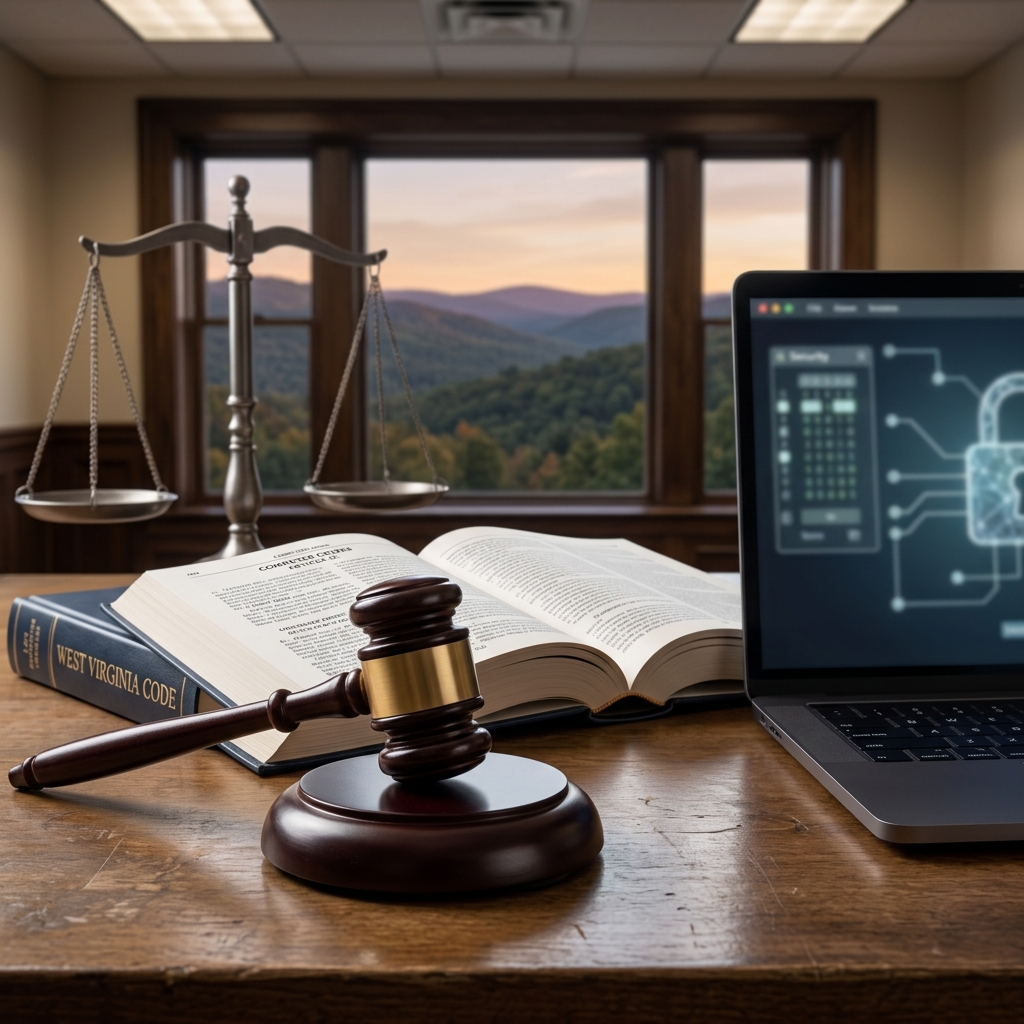
West Virginia has a detailed set of laws addressing misconduct involving computers, mobile devices, and electronic networks. These laws, found in the West Virginia Computer Crime and Abuse Act (West Virginia Code Chapter 61, Article 3C), define criminal offenses, outline penalties, and provide civil remedies for victims of computer-related harm.
This guide explains the major computer crimes recognized in West Virginia, the mental state required for prosecution, potential defenses, and how individuals and businesses can seek compensation in civil court. It is an informational overview and not a substitute for legal advice.
Legal Foundations of Computer Crime in West Virginia
The primary source of computer crime law in West Virginia is the Computer Crime and Abuse Act, codified at W. Va. Code § 61-3C-1 et seq. Lawmakers adopted this statute in recognition that computer-related offenses can cause substantial economic and sometimes physical harm, and that traditional criminal laws did not adequately address electronic conduct.
Key Legislative Purposes
- Recognize that computer-related crime affects commerce and public safety in West Virginia.
- Provide clear definitions of computer crimes to guide courts, law enforcement, and citizens.
- Allow both criminal prosecution and civil remedies for injured parties.
By focusing on unauthorized access, misuse of data, and harmful electronic communications, the Act reflects a broad policy goal: protecting the integrity and security of computer systems and the information they hold.
Core Concepts and Definitions
Before exploring specific offenses, it is useful to understand some core concepts that appear throughout West Virginia’s computer crime laws.
What Counts as a Computer or Computer Network?
Although definitions are laid out in the statute, in practical terms West Virginia’s computer crime laws apply to a wide range of technology:
- Computers – desktops, laptops, servers, and similar devices used for processing data.
- Computer networks – connected systems that allow communication or data exchange between devices.
- Computer data and programs – digital information, software, and instructions stored or transmitted electronically.
- Electronic communication devices – cell phones and other devices used to send messages or access the internet.
Authorization and Intent
Most computer crimes in West Virginia hinge on two recurring ideas: authorization and intent (mental state).
- Authorization – generally means having permission or legal right to access or use a computer, network, data, or services. Access without authorization or after authorization has been revoked is a central feature of many offenses.
- Knowingly and willfully – the statute typically requires that the defendant acted intentionally, not by accident or mistake. For example, accidentally damaging a computer by spilling a drink, without any intent to cause harm or access data, is not a computer crime.
This emphasis on mental state prevents routine mishaps from being treated as crimes, while still allowing prosecution of deliberate misconduct.
Major Computer Crimes Recognized in West Virginia
Under the Computer Crime and Abuse Act, West Virginia identifies several distinct categories of offenses. Many involve accessing systems without authorization, misusing data, or interfering with computer operations.
Computer Fraud
Computer fraud generally means using a computer or network to obtain property, services, or something of value through deception, unauthorized access, or manipulation of electronic systems. While each case is evaluated under specific statutory language, typical scenarios might include:
- Accessing an online banking system without authorization to transfer funds.
- Using stolen login credentials to make purchases or alter account balances.
- Manipulating digital records or invoices to obtain services or money fraudulently.
Depending on the value involved and the manner of the offense, computer fraud can be charged as a misdemeanor or a felony, with fines and possible imprisonment.
Unauthorized Access and Theft of Computer Services
West Virginia law makes it a crime to access or cause access to a computer or network without authorization, with the intent to obtain computer services. Computer services can include time on a system, processing power, storage, or similar functions.
Key points include:
- Knowingly and willfully accessing a computer or network without authorization to obtain services is a misdemeanor, punishable by fines and possible jail time.
- Possessing data, programs, or supplies that were obtained through unlawful computer access can also lead to criminal charges.
Damage, Disruption, or Degradation of Computer Systems
The Act also covers situations where a person knowingly and willfully disrupts, degrades, or causes a computer or network to malfunction. Examples might include:
- Introducing malware that disables systems or corrupts data.
- Overloading a network to make services unavailable (similar to denial-of-service attacks).
- Deliberately altering system configurations to impair operations.
The severity of penalties can be influenced by the scope of disruption, financial impact, and whether critical systems (such as government or essential services) were involved.
Computer Invasion of Privacy
West Virginia law prohibits using a computer or network to examine financial or personal information of another person without authorization. This often involves information such as employment records, salary data, banking or credit details, and other sensitive personal or identifying information.
In many cases, computer invasion of privacy is treated as a misdemeanor, with possible fines and confinement for accessing private financial or personal information after the offender knows or should know they are not authorized to view it.
| Scenario | Potential Concern |
|---|---|
| Employee accesses co-worker’s salary information without permission | Unauthorized examination of employment and salary records |
| Person uses someone else’s banking login to view balances | Unauthorized access to financial information |
| Individual accesses private credit data on a shared computer | Viewing credit or identifying information without authorization |
Obscene, Anonymous, Harassing, and Threatening Communications
Beyond financial or access-related crimes, West Virginia law specifically addresses certain types of harmful electronic communication. Under W. Va. Code § 61-3C-14a and related provisions, it is unlawful to use computers, cell phones, or other electronic devices for obscene, anonymous, harassing, or threatening communications.
Conduct that may be covered includes:
- Sending repeated messages intended to harass, intimidate, or threaten another person.
- Distributing obscene material via electronic means.
- Using anonymous accounts or devices to make credible threats of harm.
These offenses are typically classified as misdemeanors, with specified maximum fines and jail terms for violations.
Cyber Harassment, Cyberstalking, and Related Conduct Involving Minors
Separate but related provisions address conduct using computers to harass, intimidate, or bully a minor. For instance, West Virginia law prohibits posting personal or sexual information about a minor online, or associating a minor with obscene material in real or altered images, when done with intent to harass or intimidate.
Key characteristics include:
- Use of a computer or network to engage in harassing or bullying behavior toward minors.
- Posting or encouraging the posting of private or sexual information about minors.
- Creating or sharing images of minors with obscene content.
Violations may result in misdemeanor penalties, and repeat offenses can lead to increased fines and longer potential jail sentences.
Attempted Computer Crimes
Attempting to commit a computer crime, even if the effort fails or causes limited harm, can still be criminal. For example:
- Trying to break into a network but being blocked by security controls.
- Preparing malware and sending it, even if it is caught before reaching the target.
West Virginia law recognizes attempts as punishable, which allows law enforcement to intervene early when intentional misconduct is evident.
Mental State and Proof Requirements
For most computer crimes in West Virginia, the prosecution must demonstrate that the defendant acted knowingly and willfully.
What “Knowingly and Willfully” Means
- Knowingly – the person was aware of their conduct and what they were doing (for example, accessing a system or sending a particular message).
- Willfully – the person acted intentionally, rather than by accident or under coercion.
Accidental damage, such as unintentionally deleting files or damaging hardware without any intent to cause harm, does not typically satisfy the mental state required for these offenses.
Defenses to Computer Crime Charges
As with other criminal charges, individuals accused of computer crimes may raise various defenses. Some are general defenses, while others are specific to the Computer Crime and Abuse Act.
General Criminal Defenses
- Factual innocence – arguing that the defendant did not perform the alleged acts.
- Lack of intent – showing that any access, communication, or data handling was accidental, or lacked the required willful intent.
- Insufficient evidence – challenging the sufficiency or reliability of the prosecution’s proof.
Statutory Defense: Reasonable Belief of Authorization
The statute provides a specific defense when a person had reasonable grounds to believe they had the right to access, alter, copy, or disclose the computer, data, programs, or accessories.
For example:
- An employee who reasonably understands their job description to allow certain access to company systems may invoke this defense if authorization is unclear.
- A person who uses a shared account or device with prior consent but later faces allegations of unauthorized access may argue that they reasonably believed they remained authorized.
The success of this defense depends on circumstances and evidence of the defendant’s belief and the reasonableness of that belief under the facts.
Civil Remedies for Computer-Related Harm
West Virginia’s computer crime laws do not only establish criminal penalties. They also allow individuals and businesses harmed by computer crimes to seek relief through civil lawsuits.
Available Civil Relief
Victims of computer crimes may seek one or more of the following in civil court:
- Compensatory damages – financial compensation for actual losses, including lost profits or costs incurred due to the computer crime.
- Punitive damages – additional amounts intended to punish particularly wrongful conduct and deter similar behavior.
- Injunctive relief – court orders directing a defendant to stop certain conduct, preserve data, or adopt specific measures to prevent further harm.
- Other appropriate remedies – depending on the case, courts may order tailored relief, such as destruction of unlawfully obtained data or corrective measures in affected systems.
Protection of Sensitive Information in Civil Proceedings
Recognizing that litigation itself can expose sensitive information, West Virginia law allows civil proceedings under the Computer Crime and Abuse Act to be conducted in ways that protect the secrecy and security of computer networks, data, programs, and trade secrets.
This may involve protective orders, sealed filings, or restricted access to particular documents, balancing the need for open judicial processes with the importance of preserving confidentiality and security.
Time Limits for Filing Civil Claims
West Virginia imposes specific time limits (statutes of limitations) for bringing civil claims based on computer crimes:
- A victim generally must file suit within five years of the date of the computer crime.
- If the violation is not discovered immediately, a victim may file within two years after discovering or reasonably should have discovered the violation.
These time limits encourage prompt action while recognizing that some computer-related harm is only discovered after significant delay, such as long-term unauthorized access or concealed data breaches.
Relationship to Cybersecurity and Data Protection Laws
The Computer Crime and Abuse Act exists alongside other West Virginia laws that address data protection and electronic transactions. For example, West Virginia’s breach notification and consumer credit protection statutes require businesses to safeguard personal information and notify individuals when data is compromised.
While these laws focus on preventive obligations and disclosure, the Computer Crime and Abuse Act focuses on punishing and redressing deliberate misconduct. Together, they form a broader legal framework for cybersecurity and privacy in the state.
Practical Tips for Individuals and Businesses
Although this overview focuses on legal rules, understanding these laws can help individuals and organizations reduce risk and respond appropriately when incidents occur.
For Individuals
- Use strong, unique passwords and enable multi-factor authentication to reduce unauthorized access.
- Be cautious when sharing devices or accounts; ensure authorization boundaries are clear.
- Document suspicious incidents (e.g., unauthorized logins or harassing messages) and consider contacting law enforcement or legal counsel.
- Act promptly if you suspect your financial or personal information has been accessed without authorization.
For Businesses and Organizations
- Implement policies that define authorized access to systems and data.
- Provide training so employees understand proper use of computer resources and legal consequences of misconduct.
- Maintain logging and monitoring tools to detect unauthorized access or system disruptions.
- Develop incident response plans, including how to preserve evidence and comply with any breach notification obligations.
Frequently Asked Questions (FAQs)
1. What is the main statute governing computer crimes in West Virginia?
The primary law is the West Virginia Computer Crime and Abuse Act, codified at W. Va. Code § 61-3C-1 et seq., which defines offenses involving unauthorized access, fraud, harassment, and related computer misuse.
2. Are accidental computer mishaps treated as crimes?
Generally no. Most computer crimes require that the person acted knowingly and willfully. Accidentally damaging hardware or unintentionally deleting data, without intent to cause harm or access information unlawfully, usually does not meet this standard.
3. Can a victim of computer crime sue for damages?
Yes. Individuals and businesses harmed by computer crimes may file civil lawsuits seeking compensatory damages, punitive damages, injunctive relief, and other appropriate remedies, subject to specified time limits for filing.
4. Is attempting to hack or access a system without authorization still illegal if no harm occurs?
Yes. Attempting to commit a computer crime, even if unsuccessful, can be prosecuted under West Virginia law, allowing authorities to address intentional misconduct at an early stage.
5. How do computer crime laws interact with cybersecurity and data breach requirements?
Computer crime laws primarily address intentional misconduct, such as hacking or harassment, while cybersecurity and breach notification laws focus on protective duties and transparency when data is compromised. Both sets of laws work together to enhance digital security and accountability in West Virginia.
References
- West Virginia Code Chapter 61, Article 3C — West Virginia Legislature. 2025-01-01. https://code.wvlegislature.gov/61-3C/
- West Virginia Code §61-3C-2 – Legislative Findings — West Virginia Legislature. 2025-01-01. https://law.justia.com/codes/west-virginia/chapter-61/article-3c/section-61-3c-2/
- Obscene, Anonymous, Harassing and Threatening Communications by Computer, Cell Phones and Electronic Communication Devices; Penalty — West Virginia Legislature. 2025-01-01. https://code.wvlegislature.gov/email/61-3C/
- West Virginia Computer Crimes Laws — FindLaw. 2025-06-01. https://www.findlaw.com/state/west-virginia-law/west-virginia-computer-crimes-laws.html
- West Virginia Cybersecurity Laws You Should Know — Pivit Strategy. 2026-01-10. https://pivitstrategy.com/west-virginia-cybersecurity-laws-you-should-know-2026/
- WV Cyberstalking Laws — Foundation for Individual Rights and Expression. 2024-02-01. https://fris.org/laws/cyberstalking-laws/
Similar Articles








Read full bio of Sneha Tete




