
Understanding Vermont Traffic Laws for Everyday Drivers
A practical, plain‑English guide to Vermont traffic rules, from speed limits to right‑of‑way and distracted driving.
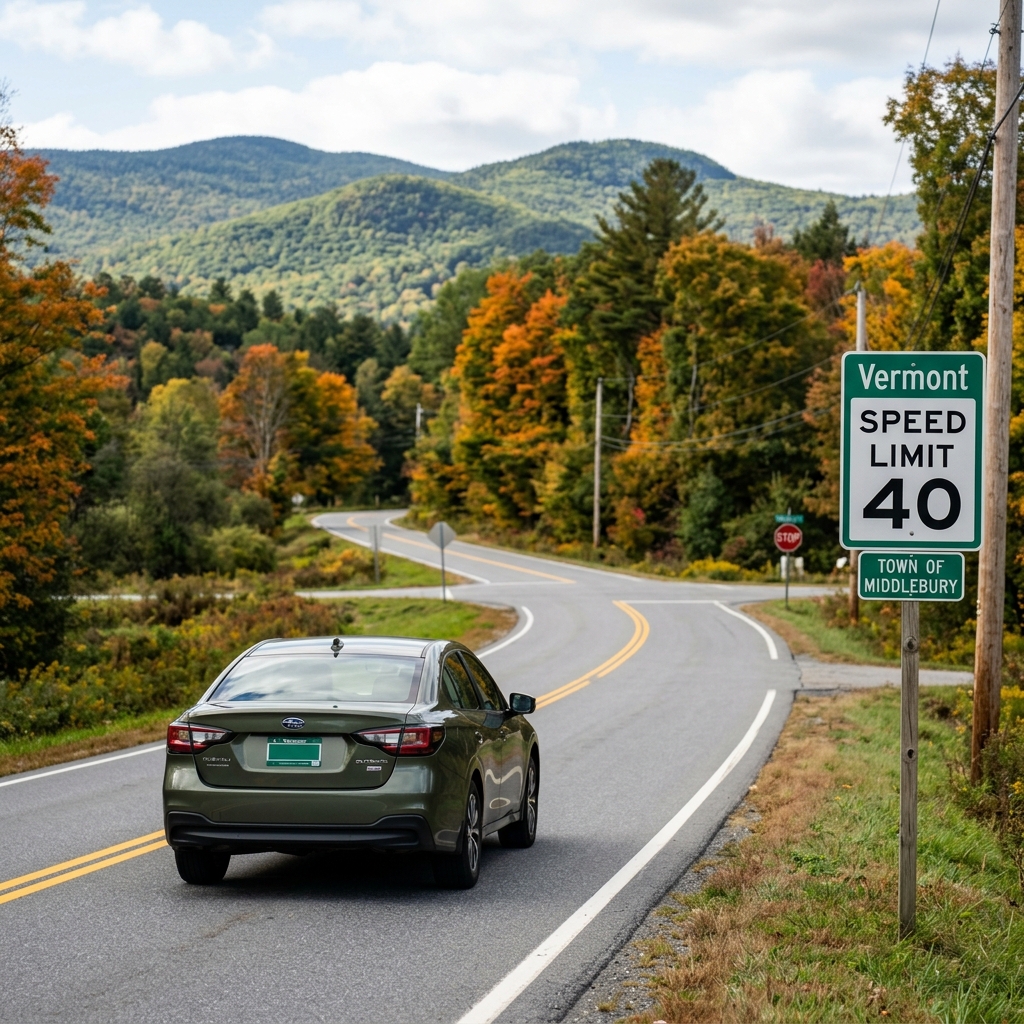
Vermont’s traffic laws are designed to balance safety, mobility, and fairness on the road. While the detailed rules live in Title 23 of the Vermont Statutes and related regulations, everyday drivers mostly need to understand how those rules translate into practical, real-world driving behavior. This guide explains Vermont traffic rules in plain language, focusing on speed limits, right-of-way, passing, parking, vehicle safety requirements, and common violations.
Because laws can change, nothing here is legal advice. If you face a ticket or collision, consult the Vermont statutes or a qualified attorney. Still, knowing the basics will help you avoid violations and stay safer on the road.
1. How Vermont Organizes Its Traffic Laws
Most traffic rules in Vermont are collected in Title 23 – Motor Vehicles of the Vermont Statutes, particularly Chapter 13, which includes speed zones, parking rules, and other core traffic regulations. Additional rules apply specifically to limited-access highways (like interstates) through traffic committee regulations.
- Title 23, Chapter 13 – Contains general rules of the road, covering speed, parking, passing, and driving behavior.
- Vermont DMV resources – Provide official guidance on crashes, child passenger safety, off-road vehicle requirements, and more.[10]
- Limited-access highway regulations – Set special rules for interstate and other controlled-access roads, including maximum speed, restrictions on pedestrians, and bans on certain activities.
Understanding this structure helps you know where to look when you need more detail than this overview can provide.
2. Speed Limits and Speed-Related Offenses
Speed rules in Vermont combine posted limits with a general requirement to drive at a speed that is reasonable and prudent for conditions. Driving too fast for weather, traffic, or road conditions can be illegal even if you stay under the posted limit.
2.1 General Speed Rules
Vermont law prohibits operating a motor vehicle at extreme speeds or far above the posted limit. One statute targets drivers traveling 60 miles per hour or more and at least 30 miles per hour above a state or local speed limit, making this a higher-level offense with potential jail time and fines.
On limited-access highways (such as interstates), Vermont regulations set a default maximum speed of 65 mph, unless the Traffic Committee posts a different limit or conditions make 65 mph unsafe.
| Road Type / Situation | Rule |
|---|---|
| Local roads and state routes | Obey posted limits and drive at a speed appropriate for conditions; extreme speeding (30+ mph over, at or above 60 mph) is a criminal offense. |
| Limited-access highways | Maximum default speed is 65 mph unless otherwise posted or unsafe. |
| Special hazards (curves, intersections, weather) | Drivers must reduce speed appropriately when approaching intersections, curves, hills, or hazards, even if staying below the posted limit. |
2.2 Penalties for Major Speeding
For the most serious speeding violations—meeting the threshold of 60 mph or more and at least 30 mph over the applicable limit—Vermont law allows up to three months of imprisonment, a fine of up to $300, or both for a first conviction. Lesser speeding offenses typically carry civil fines and points on your license, but they still affect your driving record and insurance.
Because speeding laws intertwine with conditions (weather, visibility, traffic), enforcement often depends on the officer’s assessment of whether your speed was reasonable. When in doubt, slow down.
3. Passing, Lane Use, and Following Distance
Safe lane use and passing are central to Vermont traffic safety. The state requires drivers to pass carefully, maintain a prudent following distance, and avoid certain dangerous behaviors like lane-splitting on motorcycles.
3.1 Passing Other Vehicles
While the general duty to pass safely arises from the rules of the road, Vermont law and guidance emphasize several basic principles:
- Pass on the left – Drivers are expected to overtake other vehicles on the left side, except in specific limited situations where right-side passing is clearly legal and safe.
- Return to lane only when clear – You may not move back to the right until you have fully overtaken the other vehicle and can do so without cutting them off.
- Centerline restrictions – When crossing the center line to pass, you must complete the pass before coming within about 200 feet of oncoming traffic and avoid passing on hills or curves where you cannot see far enough ahead.
These rules seek to prevent head-on collisions and sideswipes, especially on two-lane rural roads.
3.2 Lane Use and Motorcycle Positioning
Vermont prohibits certain risky lane behaviors. For example, motorcyclists may not ride between lanes of traffic or between adjacent lines or rows of vehicles—commonly known as lane-splitting. Additionally, motorcycles and motor-driven cycles may not travel in the same lane directly alongside or too close ahead of or behind another vehicle; a minimum separation of 10 feet in front or behind is required.
Slow-moving vehicles must generally keep to the right as much as reasonably possible to avoid impeding traffic. This requirement supports smoother traffic flow and reduces risky passing maneuvers by faster drivers.
3.3 Following Distance
Under Vermont law, a driver must not follow another vehicle “more closely than is reasonable and prudent,” considering the speed of both vehicles, traffic density, and road conditions. There is no fixed distance (such as a mandatory number of seconds), but the standard effectively requires that you leave enough room to stop or maneuver if the vehicle in front brakes suddenly.
Practically, drivers are often taught the “three-second rule” or more in bad weather. While this rule is not written into the statute, it aligns with the law’s requirement for reasonable and prudent spacing.
4. Parking, Stopping, and Standing Rules
Parking regulations in Vermont aim to keep travel lanes clear and protect sight lines at intersections, while also addressing dangerous locations identified through traffic engineering.
4.1 Parking on the Roadway
Vermont law generally prohibits stopping, parking, or leaving a vehicle standing on the paved or main-traveled part of a highway, or within a right-of-way area designated as a no-parking zone by the Traffic Committee. These no-parking zones are marked with appropriate signs, often at higher-risk locations where parked vehicles could contribute to collisions.
On one-way streets, vehicles must be parked parallel to the curb, within 12 inches of the curb or roadway edge, and facing the direction of authorized traffic. Local ordinances can add additional rules, such as time limits and residential permit requirements.
4.2 Emerging from Alleys and Driveways
A driver emerging from an alley, private road, legal trail, class 4 town highway, certain class 3 town highways serving only one residence, or driveway must stop immediately before entering a sidewalk or the sidewalk area that extends across the alleyway or driveway. This requirement protects pedestrians and cyclists who may be traveling along the sidewalk, especially in more built-up areas.
After stopping, the driver must yield to sidewalk users and oncoming traffic before entering the roadway. This is a core aspect of Vermont’s commitment to shared-road safety for people walking and biking.
5. Right-of-Way and Intersections
Right-of-way rules determine which driver proceeds first when vehicles meet at intersections or when one vehicle turns across another’s path. Vermont follows broadly similar right-of-way principles to most states, but it is important to understand their details.
5.1 Four-Way and Uncontrolled Intersections
When two vehicles approach or enter an intersection from different highways at approximately the same time, the driver on the left must yield to the driver on the right. This “vehicle on the right” rule applies commonly at uncontrolled intersections or when signals are malfunctioning.
- If two vehicles arrive at a stop sign at the same time, the driver to the left yields to the driver on the right.
- If there is a clear arrival order, the vehicle that stops first generally proceeds first, provided it is safe to do so.
5.2 Left Turns Across Oncoming Traffic
Before making a left turn, a driver must yield to oncoming vehicles that are close enough to pose a safety hazard. The turning driver must wait until it is reasonably safe to complete the turn without forcing oncoming traffic to brake abruptly or swerve.
This rule applies regardless of whether the left turn is at a signalized intersection, a stop sign, or a driveway. When a traffic signal offers a protected left-turn arrow, following the signal indications still requires scanning for pedestrians and other vehicles.
6. Special Rules for Limited-Access Highways
Limited-access highways in Vermont—roads with controlled entry and exit points, such as interstates—have additional restrictions beyond ordinary traffic laws. These rules are set by the Vermont Traffic Committee and codified in regulation.
6.1 Activities Prohibited on Limited-Access Highways
Regulations for these highways specifically prohibit a wide range of non-driving activities that could threaten safety or interfere with traffic.
- Littering – Throwing or dropping bottles, cans, paper, garbage, sewage, or other material onto limited-access highways is banned.
- Advertising displays – Erecting or placing posters, placards, or advertising materials of any kind is prohibited on the highway right-of-way.
- Parades and demonstrations – Organized marches or demonstrations are not allowed on limited-access highways.
- Hunting and fishing – Hunting, trapping, or molesting wildlife, and fishing on or from the highway, are forbidden except at designated locations.
- Firearms and fireworks – Display or discharge of firearms or fireworks is prohibited except by authorized persons.
- Soliciting and hitchhiking – Asking for rides (hitchhiking), alms, or contributions is prohibited, as is loitering in the highway area for such purposes.
- Commercial activities – Selling, hiring, leasing goods or services, or distributing samples or pamphlets is not allowed, except for official state information.
These restrictions support the goal that limited-access highways remain high-speed, low-distraction corridors focused on vehicle movement.
6.2 Rest Areas and Overnight Use
Regulations also govern use of rest areas along limited-access highways. Overnight camping is generally banned unless a rest area is specifically designated for that purpose by the committee. Parking in rest areas must be for using the available facilities, not for unrelated activities or long-term vehicle storage.
7. Child Passenger Safety and Seat Belt Requirements
Vermont emphasizes child passenger safety through specific rules on car seats and restraints. The Vermont DMV and related guidance outline age and weight-based requirements.[10]
7.1 Child Restraint Basics
Children must be properly restrained in an appropriate car seat or booster based on age, weight, and height. Guidance for new Vermont residents notes, for example, that children ages 8 to 17 who weigh more than 20 pounds must be restrained and may use an adult safety belt. Younger or smaller children typically need child safety seats or booster seats that meet federal standards.
Importantly, Vermont allows police officers to stop a vehicle solely for suspected child safety seat violations, underscoring the priority placed on protecting children in crashes.
7.2 Seat Belts for Adults
While specific seat belt rules are not fully detailed in the sources reviewed here, Vermont generally follows modern norms that require seat belt use for drivers and many passengers. Seat belt laws complement child restraint rules and significantly reduce serious injuries in collisions.
8. Distracted Driving and Electronic Devices
Like most states, Vermont regulates the use of handheld devices and texting behind the wheel. Distracted driving laws aim to reduce crashes caused by drivers looking at phones instead of the road.
8.1 Texting While Driving
Under Vermont traffic law, a driver may not engage in texting while operating a motor vehicle on a public highway, including when the vehicle is stationary in traffic. The restriction applies to reading or sending text messages using handheld devices.
Violations can result in fines and points, and in serious cases may lead to more severe consequences if texting contributes to a collision. Combined with general careless or negligent driving statutes, texting that causes a crash may support more serious charges.
8.2 Broader Distracted Driving Concerns
In addition to texting, drivers can face enforcement for broader inattentive driving behavior under existing rules requiring careful and prudent operation. Using navigation devices, eating, or other distractions do not have specific bans in the sources cited here, but they may be considered evidence of negligent operation if they contribute to unsafe driving.
9. Commonly Ignored Traffic Rules
Vermont attorneys and safety advocates frequently highlight a set of rules that drivers often neglect, despite clear legal requirements. Paying attention to these commonly ignored laws can significantly reduce your risk of collisions and tickets.
- Turn signals – Using turn signals when changing lanes, turning, or merging is legally required but frequently skipped.
- Yielding at intersections – Many drivers misapply the “vehicle on the right” rule or fail to yield when making left turns across traffic.
- Maintaining safe following distance – Tailgating remains common, even though Vermont law clearly prohibits following more closely than is reasonable and prudent.
- Staying right when driving slowly – Slow-moving vehicles often remain in left or center lanes rather than keeping to the right, contrary to Vermont’s guidance.
- Stopping before sidewalks when exiting driveways – Drivers sometimes focus only on oncoming traffic and forget to stop and yield at the sidewalk line.
Improving compliance with these rules makes roads safer for everyone, including pedestrians and cyclists.
10. FAQs About Vermont Traffic Laws
10.1 Is there a statewide minimum speed in Vermont?
No. Vermont does not set a single statewide minimum speed limit. Instead, drivers must travel fast enough not to block or impede normal traffic flow, and slow-moving vehicles are expected to keep as far to the right as reasonably practicable.
10.2 Can I be ticketed for speeding if I am under the posted limit?
Yes. Vermont’s standard requires driving at a speed that is reasonable and prudent for conditions. If weather, visibility, or traffic make the posted limit unsafe, you may be cited for driving too fast for conditions even without exceeding the signposted limit.
10.3 Is lane-splitting legal for motorcycles in Vermont?
No. Operating a motorcycle or motor-driven cycle between lanes of traffic or between adjacent lines or rows of vehicles is prohibited in Vermont.
10.4 Can police stop me only for a child safety seat violation?
Yes. Guidance for new residents notes that police may stop vehicles solely for suspected child passenger safety violations, reflecting the strong emphasis on protecting children.
10.5 Is texting banned only while the car is moving?
No. Vermont prohibits texting while operating a motor vehicle on a public highway, including when the vehicle is stationary, such as at a red light or in stop-and-go traffic.
References
- Title 23, Chapter 13 – Motor Vehicles — Vermont General Assembly. Accessed 2026-07-10. https://legislature.vermont.gov/statutes/fullchapter/23/013
- 2025 Vermont Statutes, Title 23 – Motor Vehicles, Chapter 13 — Justia. 2025. https://law.justia.com/codes/vermont/title-23/chapter-13/
- 14-004 Code Vt. R. 14-053-004-X (Limited Access Highways) — Vermont Regulations, Legal Information Institute. Accessed 2026-07-10. https://www.law.cornell.edu/regulations/vermont/14-004-Code-Vt-R-14-053-004-X
- Motor Vehicle Laws — Vermont Department of Motor Vehicles. Accessed 2026-07-10. https://dmv.vermont.gov/enforcement-and-safety/laws
- Vermont New Resident Guide — Traffic School Online. Accessed 2026-07-10. https://trafficschoolonline.com/resources/vermont-new-resident-guide
- 7 Vermont Traffic Laws Drivers Commonly Ignore — Injury Claim Coach. Accessed 2026-07-10. https://www.injuryclaimcoach.com/vermont/traffic-laws.html
- Rules of the Road — Local Motion (Vermont). Accessed 2026-07-10. https://www.localmotion.org/rules_of_the_road
Similar Articles








Read full bio of Sneha Tete


