
Understanding Termite Bonds and Letters in Real Estate
Learn how termite bonds and termite letters protect buyers, sellers, and lenders from costly wood-destroying insect damage.
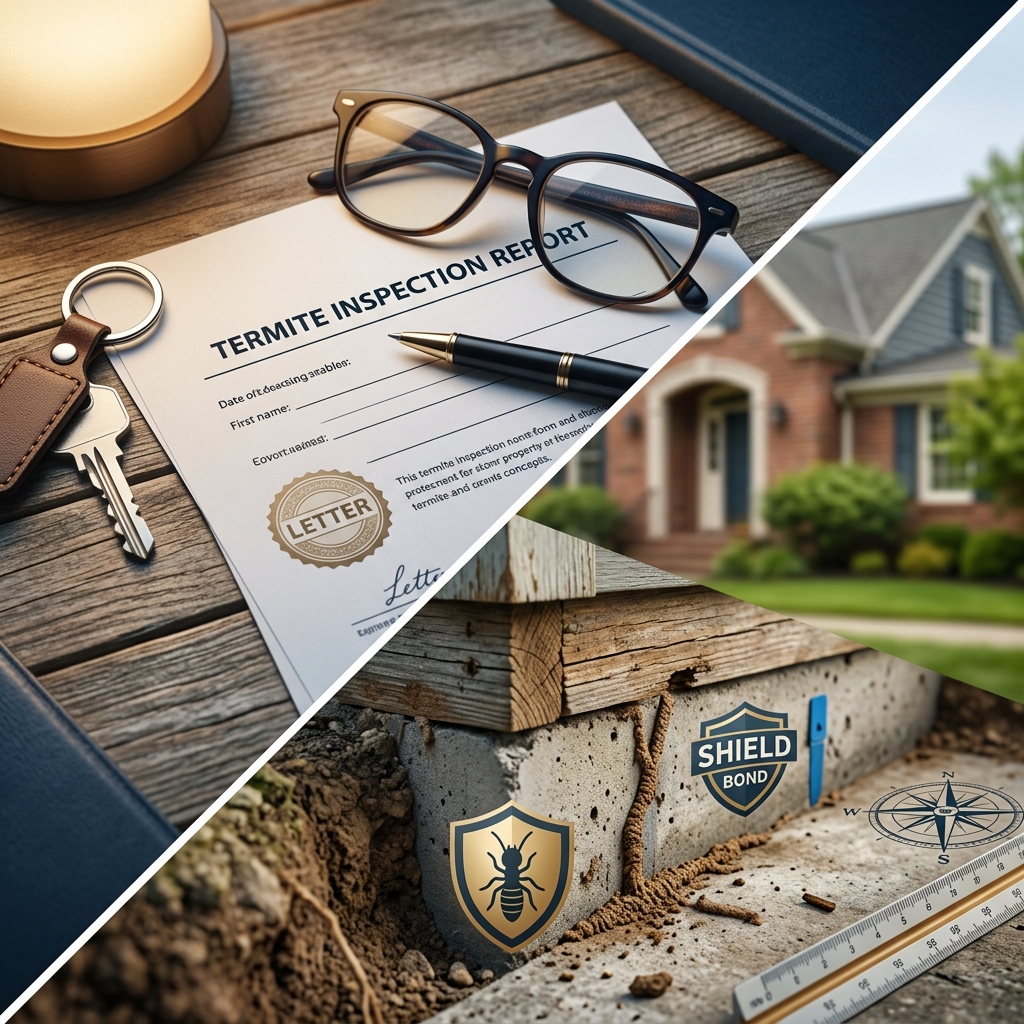
Termites and other wood-destroying insects can quietly cause thousands of dollars in structural damage long before a homeowner notices a problem. To manage this risk, the real estate industry relies on two key tools: termite letters, which document the condition of a property at the time of inspection, and termite bonds, which serve as ongoing warranties or service agreements against future infestations.
This article explains what these documents are, how they are used in home purchases and refinancing, and how homeowners can evaluate and compare termite coverage options. The goal is to help buyers, sellers, and lenders understand exactly what protection they are getting—and what gaps may still exist.
Why Termite Documentation Matters in Home Buying
Termites are among the most destructive household pests in the United States, causing an estimated billions of dollars in damage annually to wood structures. Because termite damage may be hidden inside walls, floors, and foundations, standard home inspections do not always detect it. Lenders, buyers, and sellers therefore often rely on specialized termite inspections and warranties as part of the closing process.
- Buyers want assurance that there is no active infestation or undisclosed damage.
- Sellers need clearance documents to satisfy lender requirements and make the property attractive.
- Lenders require evidence that the collateral for the loan is not compromised by wood-destroying insects.
Termite letters and termite bonds respond to these different needs: letters provide a snapshot of current conditions, while bonds provide a promise of future inspections, treatment, and sometimes repair coverage.
Termite Letters: Inspection-Based Reports for Closings
A termite letter is commonly used as shorthand for a formal inspection report such as a Wood Infestation Inspection Report (WIR) or Wood-Destroying Insect Report (WDIR). It is not a warranty by itself; instead, it documents what an inspector sees on the day of inspection.
What a Termite Letter Typically Includes
While formats vary by state and pest control company, a comprehensive termite letter usually addresses the following elements:
- Type of inspection: a visual review of accessible areas, such as crawlspaces, basements, attics, and exposed framing.
- Evidence of activity: notes on any current termite or other wood-destroying insect activity, including swarmers, mud tubes, or damaged wood.
- Past infestation information: documentation of previous treatment or historic damage if visible or disclosed.
- Conducive conditions: conditions that could encourage infestation, such as wood-to-soil contact, excessive moisture, or poor drainage.
- Recommendations: suggested treatment, repairs, or further evaluation where needed.
- Limitations of inspection: disclosures about areas that could not be inspected, such as inaccessible crawlspaces or concealed structural elements.
The letter presents a professional opinion based on the inspection date. It does not guarantee that the structure is free from hidden termites or that no future infestation will occur.
When Lenders Require a Termite Letter
In many regions, especially where termites are prevalent, mortgage lenders and refinance companies require a clear termite letter before closing. A clear letter generally means that the inspector found:
- No active termite or wood-destroying insect infestation.
- No visible unrepaired structural damage attributed to past infestation.
- Any needed treatment or repairs have been performed or scheduled.
Because requirements vary, both buyers and sellers should ask the lender specifically what type of report is necessary and from what type of licensed company. Some states impose additional regulations on how termite inspection reports must be written and delivered.
Termite Bonds: Warranty-Style Agreements with Pest Companies
Unlike a termite letter, a termite bond is an ongoing agreement between a property owner and a pest control company. In practice, it is often structured as a warranty or service contract that includes periodic inspections and treatment obligations.
Core Features of a Termite Bond
Although specific terms differ from one provider to another, most termite bonds share several common features:
- Initial treatment or prevention: application of termiticides or other approved methods to prevent or eliminate an infestation.
- Scheduled inspections: annual or periodic visits to look for new signs of termites or wood-destroying organisms.
- Retreatment obligations: if termites reappear during the bond period, the company must retreat the property, sometimes at no additional cost beyond the bond fee.
- Repair or damage coverage (when included): some bonds include payment for structural repairs caused by covered infestations, up to specified limits.
- Term length and renewal: a defined period—often one to several years—with options for renewal at a set fee.
Homeowners typically pay an initial fee for treatment and bond issuance, plus annual renewal fees to keep the warranty active. Prices vary by region, provider, and whether repair coverage is included.
Common Types of Termite Bonds
Termite bonds may be classified based on the scope of coverage they provide. Two major categories are frequently cited in industry discussions:
| Type of Bond | Main Focus | Typical Coverage |
|---|---|---|
| Retreatment Warranty | Ongoing treatment | Includes inspections and retreatment if termites reappear, but often excludes payment for structural repairs. |
| Repair Warranty | Damage protection | Covers certain structural repairs resulting from covered infestations, usually with higher fees and stricter eligibility criteria. |
Because repair warranties are more comprehensive and costly, some providers offer them only under specific conditions, such as for new construction or after extensive initial treatment.
Termite Bond vs. Termite Letter: Key Differences
Although the terms are sometimes used interchangeably in casual conversation, a termite bond and a termite letter serve distinct purposes and offer different protections.
- Termite letter: A one-time inspection report documenting visible conditions at a specific date. It does not guarantee future performance or repairs.
- Termite bond: An ongoing agreement or warranty outlining how the pest control company will inspect, treat, and possibly repair termite damage during the contract period.
In real estate transactions, a buyer might receive a termite letter at closing to satisfy lender requirements, while also obtaining the benefit of a transferable termite bond that continues coverage after they take ownership.
How Termite Bonds Work Over Time
Once a termite bond is in place, the relationship between the homeowner and pest control company is governed by the written agreement. Understanding how this agreement functions over time is crucial for evaluating its value.
Typical Lifecycle of a Termite Bond
- Initial inspection and treatment: The company inspects the property, identifies any existing infestations, and performs treatment designed to eliminate or prevent termites.
- Issuance of the bond: The homeowner receives documentation specifying what services, repairs, and limits are included, along with the term length and renewal process.
- Periodic inspections: Inspectors return annually or at defined intervals to look for signs of termites and verify that preventive measures remain effective.
- Responding to a claim: If the homeowner or inspector discovers termites during the bond period, the company provides retreatment and, if the contract promises it, pays for repairs up to stated limits.
- Renewals and adjustments: At the end of each term, the homeowner can renew the bond, sometimes with updated conditions after reinspection or additional treatment.
The value of a termite bond depends heavily on the clarity of its terms, the reputation of the provider, and the homeowner’s willingness to comply with any maintenance requirements, such as controlling moisture or repairing conducive conditions.
Who Typically Purchases Termite Bonds?
Responsibility for obtaining a termite bond can fall on different parties depending on the stage of a property’s life and local market customs.
- Home builders: Frequently purchase bonds or warranties for new construction to assure buyers and meet code or lending requirements in termite-prone areas.
- Homeowners: May buy bonds after discovering an infestation or proactively as part of long-term property maintenance.
- Condominium and homeowners associations: Sometimes maintain bonds for shared structures or common areas where termite damage would affect multiple units.
- Apartment owners and commercial property managers: Often use service agreements similar to termite bonds to protect rental and commercial buildings.
In many states, holding an active termite bond can help streamline future property sales, because buyers and lenders see it as evidence of ongoing protection and oversight.
Evaluating Termite Bonds and Letters Before Closing
Whether you are a buyer or seller, it is important to read termite-related documents carefully and ask questions about any unclear provisions. Some practical steps include:
- Verify licensing: Confirm that the pest control company is properly licensed and authorized in your state to perform termite inspections and treatments.
- Check report details: Ensure the termite letter includes all information required by the lender, including inspection scope, findings, and limitations.
- Understand coverage limits: Read the termite bond to see what types of infestations and damage are covered, maximum payment amounts, and exclusions (for example, mold is generally not covered).
- Ask about renewal costs: Clarify how much it will cost to keep the bond active in future years, and whether rates may change.
- Clarify transferability: Determine whether the bond can be transferred to a new owner at closing and what steps are needed to do so.
Buyers should request copies of both the termite letter and any existing bond well before closing so they have time to review these documents with their real estate agent or attorney.
Common Misunderstandings About Termite Coverage
Termite documentation can be confusing, and several recurring misconceptions often cause frustration or disputes.
- Confusing letters with warranties: A termite letter is an inspection report, not a guarantee. Only a bond or explicit warranty contract promises future treatment or repair obligations.
- Assuming all damage is covered: Many bonds cover retreatment only, not structural repairs. Homeowners must read the bond to know whether repair coverage is included.
- Expecting coverage for non-termite issues: Termite bonds generally address wood-destroying insects or organisms, not unrelated problems such as mold remediation.
- Ignoring inspection limitations: Termite letters rely on visual inspection of accessible areas. Hidden damage behind finished walls or in obstructed spaces may not appear in the report.
- Overlooking maintenance responsibilities: Some warranties require homeowners to correct conducive conditions (for example, chronic moisture) to maintain coverage.
Best Practices for Homeowners in Termite-Prone Areas
For homeowners in regions where termites are common, termite letters and bonds should be part of a broader strategy to protect the structure over the long term.
- Schedule regular inspections: Even with a bond, make sure inspections occur on time and follow up promptly on recommendations.
- Maintain good drainage and ventilation: Termites thrive in moist environments; controlling moisture helps reduce risk.
- Avoid direct wood-to-soil contact: Keep wooden elements, such as siding and deck posts, away from direct soil contact where possible.
- Retain documentation: Keep copies of all termite letters, treatment records, and bond contracts to show future buyers and lenders.
- Review coverage periodically: As the property ages or undergoes renovations, revisit your termite protection plan and adjust coverage if needed.
Frequently Asked Questions (FAQs)
Do I need both a termite letter and a termite bond when buying a home?
Often, yes. The termite letter satisfies the lender’s requirement to confirm the property’s current condition, while the termite bond provides ongoing protection after closing. In some cases, the seller’s existing bond can be transferred to the buyer, but lenders may still insist on a fresh inspection report.
Who pays for the termite letter and bond at closing?
Local customs and contract negotiations determine who pays. In some markets, sellers routinely pay for the termite inspection and letter, while buyers may assume responsibility for bond renewals. The purchase contract can allocate these costs explicitly, so it is important to address them during negotiation.
How long is a termite letter valid?
Termite letters represent conditions on the date of inspection and typically are accepted only for a limited period before closing. Lenders may require the inspection to occur within a specific window, such as 30–90 days of the closing date, but this depends on the lender’s policy and local practice.
Can a termite bond be transferred to a new owner?
Many termite bonds are transferable, but transfer rules vary by company. The new owner may need to notify the provider, pay a transfer fee, or agree to continued inspections and renewal payments. These requirements should be clearly stated in the bond contract.
Does a termite bond cover other issues like mold or general water damage?
Generally, no. Termite bonds are designed for wood-destroying insects and organisms, not mold remediation or unrelated water damage. Homeowners should review the exclusions section of their bond and, if necessary, explore separate coverage or repair options for mold and moisture problems.
References
- Termite Bonds and Termite Letters — FindLaw. 2022-03-01. https://www.findlaw.com/realestate/buying-a-home/termite-bonds-and-termite-letters.html
- What is a Termite Letter or Termite Bond? — Terminix. 2023-05-10. https://www.terminix.com/termite-control/what-is-a-termite-bond/
- What is a Termite Bond — NFP. 2022-08-15. https://www.nfp.com/insights/what-is-a-termite-bond/
- What Are Termite Bonds? — Campbell Law, P.C. 2021-11-05. https://termitetom.com/blog/what-are-termite-bonds/
- What Is a Termite Bond? — Active Pest Control. 2020-02-20. https://activepestcontrol.com/termites/prevention/what-is-a-termite-bond/
- Termite Bonds: Protection Contracts with Exterminators — Orkin. 2019-09-30. https://www.orkin.com/pests/termites/termite-control-methods/termite-service-agreements
- What is a Termite Letter and How Do I Get One? — Breda Pest Management. 2020-06-12. https://www.bredapest.com/blog/what-is-a-termite-letter-and-how-do-i-get-one
Similar Articles








Read full bio of Sneha Tete


