
Key Evidence to Win a Contested Will or Probate Case
Learn which core documents and proof you must gather to build a strong case when challenging a will or fighting over an estate in probate court.
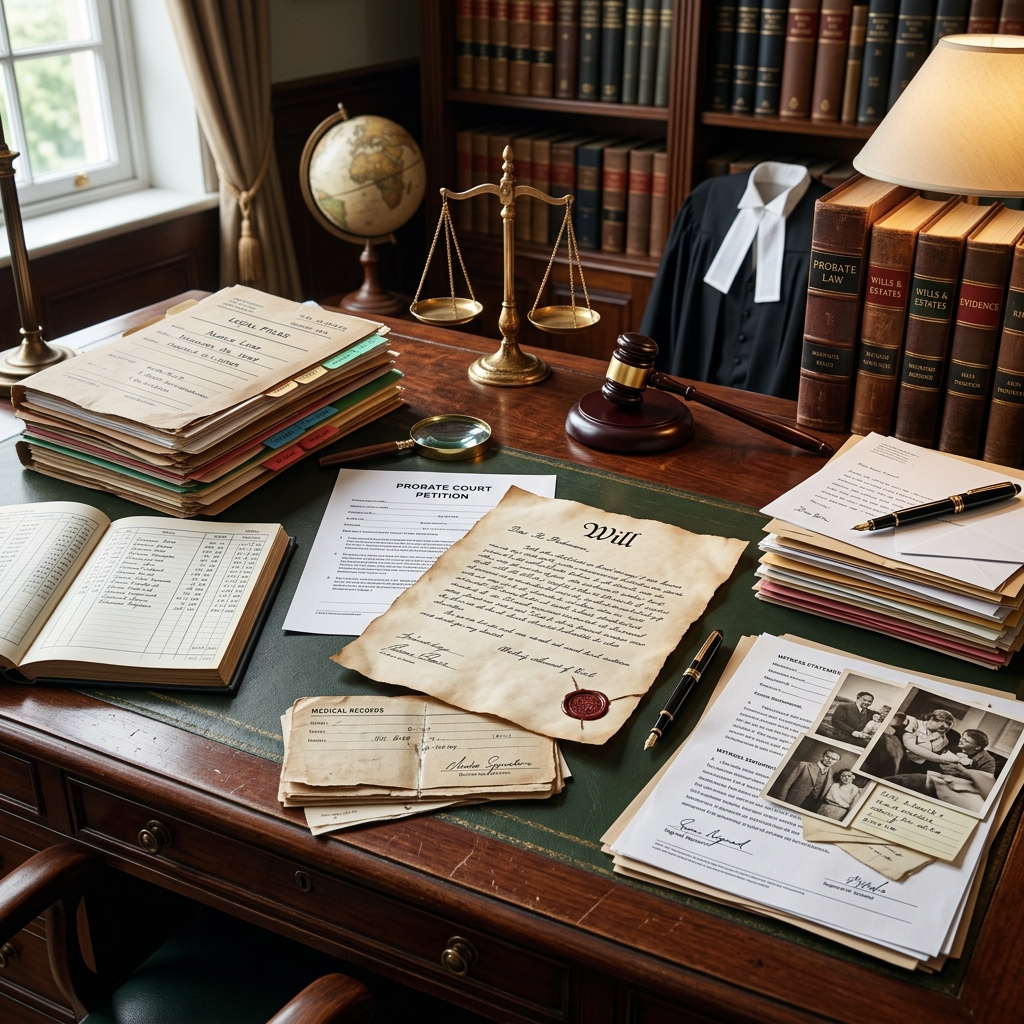
Disputes over a will or the administration of an estate can be emotionally draining and legally complex. To succeed in a contested will or challenging decision made in probate court, you need more than strong feelings or family history—you need solid, organized evidence that meets legal standards and persuades the judge.
This guide explains the most important categories of documents and proof that can strengthen your case when you argue that a will is invalid, has been manipulated, or is being administered improperly. It is written for non-lawyers, but it reflects the types of evidence probate courts routinely consider across many jurisdictions.
Why Evidence Matters in Contested Will and Probate Cases
Contesting a will or challenging what happens in probate is not about whether the outcome feels unfair; it is about whether the law has been followed. Courts focus on specific legal issues such as:
- Testamentary capacity – Did the person who made the will (the testator) understand what they were doing?
- Undue influence – Did someone pressure or manipulate the testator into changing their will?
- Fraud or forgery – Is the will genuine, and were its terms accurately presented to the testator?
- Proper execution – Was the will signed and witnessed according to state law?
- Administration errors – Has the executor or administrator mishandled estate assets or failed to follow court orders?
Each of these issues must be proven with evidence. Judges expect to see documents, records, and testimony that can be examined and tested, not just stories or suspicions.
The Five Core Evidence Categories in Will and Probate Disputes
While every case is unique, most contested will and probate disputes revolve around five major types of evidence:
- Original wills and related estate documents
- Witness statements and testimony
- Medical and capacity-related records
- Correspondence and communications
- Financial and property documentation
Understanding each category—and how to gather, preserve, and present it—will help you and your attorney develop a coherent legal strategy.
1. Original Wills and Key Probate Documents
The starting point in most disputes is the original will and any related estate planning documents. Probate courts rely heavily on these materials to determine the decedent’s intent and whether procedures were followed.
Essential documents to locate
- Original signed will (not just a photocopy)
- Any codicils (written amendments to the will)
- Prior versions of the will that show changes over time
- Trust documents, if the estate uses a living or testamentary trust
- Probate petitions and court filings, including the application to open the estate
- Letters testamentary or letters of administration, which appoint the personal representative
These documents help answer crucial questions: Which version of the will is legally valid? Was it drafted and signed according to state formalities? Are there unexplained last-minute changes in beneficiaries or asset distribution?
How courts use these documents
| Document | What it shows | How it can support a case |
|---|---|---|
| Original will | Final written wishes of the decedent | Supports challenges involving forgery, missing signatures, or improper witnessing. |
| Earlier wills | Pattern of intent over time | Highlights suspicious last-minute changes that may suggest undue influence. |
| Codicils | Specific modifications | Shows whether changes are consistent or isolated and potentially coerced. |
| Letters testamentary / administration | Authority of the executor/administrator | Relevant when challenging who controls the estate or alleging mismanagement. |
Maintaining the integrity of these documents is critical. Avoid writing on them, separating pages, or making marks that could raise questions about authenticity.
2. Witness Statements and Testimony
Documents alone rarely tell the whole story. Courts also rely on witness testimony to understand what happened when the will was created, signed, or changed and how the decedent behaved around that time.
Types of witnesses in contested will cases
- Signing witnesses – Individuals who observed the testator sign the will or codicil and may have signed as official witnesses.
- Family members and close friends – People who can describe the testator’s mental state, relationships, and independence before death.
- Medical professionals – Doctors, nurses, or therapists who can explain diagnoses that may affect capacity, such as dementia.
- Professionals involved in the will – Attorneys, financial advisors, or notaries who participated in drafting or executing the document.
Witnesses can support claims about capacity, undue influence, fraud, and proper execution. For example, a signing witness might confirm that the testator appeared lucid and voluntarily signed the will, while a neighbor could testify that a beneficiary isolated the testator shortly before major changes were made.
Gathering and preserving witness evidence
- Identify anyone present at or involved in the will signing and obtain contact information.
- Write down what each witness remembers as soon as possible to avoid fading memories.
- Work with your attorney to schedule formal depositions or sworn statements, which can be used in court.
- Preserve any written communications from potential witnesses, including emails and letters.
Consistent, detailed witness testimony combined with documentary evidence is often what persuades the court in contested probate litigation.
3. Medical Records and Evidence of Mental Capacity
Many will contests hinge on whether the decedent had testamentary capacity—the legal ability to understand the nature of their assets, the effect of the will, and who would receive property. Medical records are central to proving or disproving capacity.
Relevant medical evidence
- Doctor and hospital records describing cognitive diagnoses, such as Alzheimer’s disease or other forms of dementia.
- Psychiatric or psychological evaluations documenting mental health conditions that may impair judgment.
- Medication lists showing drugs that could affect alertness or comprehension.
- Care facility notes, such as from nursing homes or hospice, describing confusion, memory loss, or orientation.
- Records for dates close to the will signing, which tie the medical condition to the critical time period.
These records should be interpreted carefully. A diagnosis of cognitive decline does not automatically mean the person lacked capacity at all times. Courts look for evidence about the testator’s mental state specifically when the will was executed.
Connecting medical records to legal arguments
- Lack of capacity – Showing that the testator did not understand their estate or the consequences of their decisions due to documented impairment.
- Undue influence – Demonstrating that the testator’s vulnerability made them more susceptible to pressure, especially from caregivers or those controlling access to care.
- Timing of illness – Proving the will was drafted or changed during a period of acute illness or confusion.
Because medical records can be sensitive, they are often introduced with expert testimony from physicians or specialists who explain how specific conditions would affect decision-making capacity.
4. Correspondence and Communications
Emails, letters, text messages, handwritten notes, and even social media messages can provide valuable insight into what the decedent truly intended and how others may have influenced their decisions.
Examples of useful correspondence
- Messages in which the decedent describes how they plan to distribute property or who they want to benefit.
- Communications expressing confusion or concern about the will or pressure from a particular person.
- Drafts or comments sent to the lawyer or executor about changes being requested.
- Emails between potential influencers discussing how to “get” the decedent to sign or alter documents.
Courts often use this type of evidence to corroborate or contradict the terms of the will. For instance, if a will leaves everything to one relative but long-term correspondence shows the decedent repeatedly intended to divide assets equally, that mismatch may support arguments about undue influence or mistake.
Handling digital and written communications
- Preserve entire conversation threads, not just selected messages.
- Avoid editing or reorganizing documents; authenticity matters.
- Back up digital communications in multiple places to avoid accidental deletion.
- Share all relevant materials with your attorney, even if they appear unfavorable; surprises in court can harm your case.
Correspondence is particularly important in cases alleging fraud, where the decedent may have been misled about what they were signing or the effect of certain provisions.
5. Financial Records and Property Documentation
Will and probate disputes frequently involve questions about money—who receives particular assets, whether someone misused funds, or whether the estate has been handled honestly. Financial and property records provide the factual backbone for these claims.
Common financial documents in probate disputes
- Bank statements and account records, including savings, checking, and investment accounts.
- Property deeds and titles for real estate and vehicles.
- Tax returns that reveal income sources and asset holdings.
- Loan and credit records, showing debts and obligations.
- Transaction histories around the time the will was executed, especially large or unusual transfers.
These records can expose patterns of manipulation, such as sudden transfers to one beneficiary, unexplained withdrawals, or property sold below market value right before death.
How financial records support legal claims
- Undue influence – Showing financial dependency or control by a person who benefits suspiciously from the will.
- Fraud or theft – Demonstrating that estate assets were diverted or hidden.
- Executor misconduct – Proving that the personal representative failed to safeguard assets or follow accounting requirements.
- Clarifying asset ownership – Helping the court determine what is part of the probate estate and what is not.
Careful organization of these records—using timelines, summary tables, or spreadsheets—can make complex financial facts easier for the court to understand.
Working with an Attorney to Build Your Evidence Strategy
Knowing which documents matter is only the first step. In most jurisdictions, you will need to file a petition to contest a will or challenge estate administration within strict time limits, and you must follow rules of evidence and procedure. Estate planning and probate attorneys know how to:
- Identify which grounds for contesting are legally viable in your state.
- Use formal discovery tools—such as subpoenas and depositions—to gather records and testimony.
- Work with experts, including doctors and forensic document analysts, to interpret technical evidence.
- Present documents and witnesses in a clear, persuasive way at hearings or trial.
Because contested probate matters can be expensive and time-consuming, lawyers also help evaluate whether a settlement is feasible given the strength of available evidence.
Frequently Asked Questions (FAQs)
Do I need the original will, or is a copy enough?
Probate courts generally prefer the original signed will. A copy may be considered in some situations, but questions about authenticity and possible changes are more likely to arise when the original cannot be produced. If you only have a copy, discuss with your attorney how your jurisdiction handles lost or destroyed wills.
What if I suspect forgery but don’t have proof?
If you believe a will has been forged, your attorney can request handwriting analysis and document examination by qualified experts. They compare known samples of the decedent’s signature and writing to the disputed document and look for altered pages, inconsistent ink, or formatting anomalies.
How important are medical records in a will contest?
Medical records are often critical when arguing lack of capacity or undue influence. They show diagnoses, treatments, and observations that help the court understand how illness or cognitive issues might have affected the decedent’s ability to make independent decisions at the time of the will.
Can text messages and emails really be used in court?
Yes. Courts increasingly treat digital communications as valid evidence, provided they can be authenticated. Messages between the decedent and family members, caregivers, or advisors can support claims about true intentions, pressure, or misrepresentations related to the will.
What should I do first if I’m considering contesting a will?
First, confirm that you have legal standing and that you are within your state’s deadline to file a contest. Then consult a probate attorney as soon as possible. Together, you can identify the most relevant evidence—such as the will itself, medical records, and potential witnesses—and begin preserving and organizing it before memories fade or documents become harder to obtain.
Practical Checklist: Evidence to Start Gathering
To make this guidance more actionable, here is a simple checklist you can use when preparing for a contested will or probate case:
- Locate the original will, any codicils, and earlier versions.
- Collect trust documents and major estate planning records.
- Obtain copies of probate filings and letters testamentary or administration.
- Write down names and contact details of all potential witnesses.
- Request relevant medical records from hospitals, clinics, and care facilities.
- Save emails, letters, text messages, and other communications related to the will or estate.
- Gather bank statements, property deeds, tax returns, and transaction records.
- Store all documents in a safe, organized manner and share them with your attorney.
While this checklist does not replace legal advice, it can help you move quickly to preserve crucial evidence and prepare more effectively for discussions with your lawyer.
References
- What Evidence Is Needed to Contest a Will in Probate Litigation? — Timothy Webb Law. 2023-10-05. https://www.timothywebblaw.com/blog/what-evidence-is-needed-to-contest-a-will-in-probate-litigation/
- How to Contest a Will in New York: Step-by-Step Guide — WNY Lawyers. 2024-07-01. https://www.wny-lawyers.com/2024/07/how-to-contest-a-will-in-new-york-step-by-step-guide/
- Top 5 Types of Documents/Evidence to Gather for Your Contested Wills or Probate Case — LegalMatch. 2023-08-15. https://www.legalmatch.com/law-library/article/top-5-types-of-documents-evidence-to-gather-for-your-contested-wills-or-probate-case.html
- Probate Court Documents — Jules Haas Attorney. 2022-05-10. https://www.juleshaasattorney.com/practice-areas/trust-and-estates/ny-state-probate-process/probate-court-documents/
- What Evidence Is Needed to Contest a Will in Litigation? — Slater Cosme, PC. 2023-09-12. https://slatercosme.com/blog/what-evidence-is-needed-to-contest-a-will-in-litigation/
- 12 Probate Documents to Include in Your Probate Checklist — Vanilla. 2023-02-20. https://www.justvanilla.com/blog/probate-documents
- Estates — North Carolina Judicial Branch. 2023-01-01. https://www.nccourts.gov/help-topics/wills-and-estates/estates
Similar Articles








Read full bio of Sneha Tete


