
Understanding the Sixth Amendment Confrontation Clause
Explore how the Sixth Amendment’s Confrontation Clause protects criminal defendants through face-to-face testimony and cross-examination.
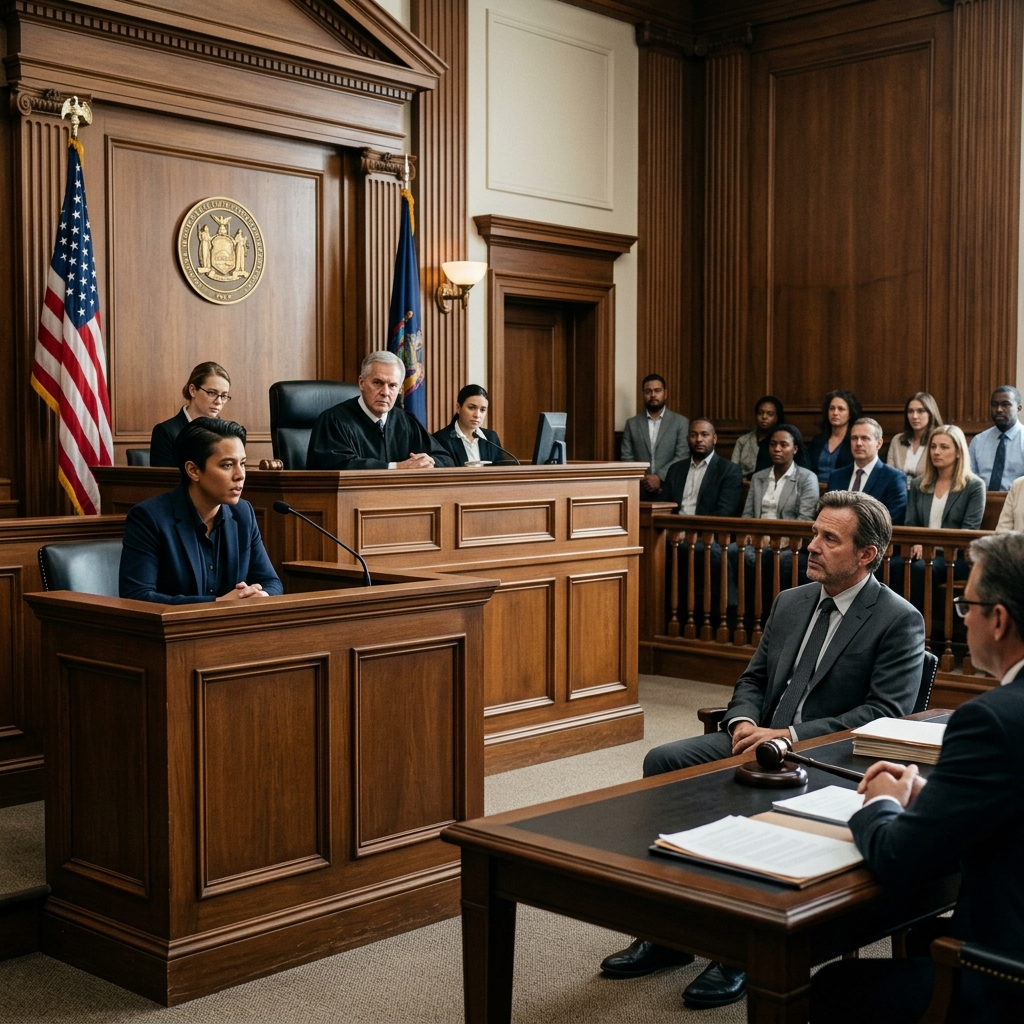
The Confrontation Clause of the Sixth Amendment guarantees that anyone accused of a crime in the United States has the right to face and challenge the witnesses who testify against them. This protection is central to a fair trial because it allows the defense to test the reliability, honesty, and accuracy of prosecution evidence.
What the Confrontation Clause Says and Why It Matters
The Sixth Amendment to the U.S. Constitution provides that, in all criminal prosecutions, the accused shall enjoy the right “to be confronted with the witnesses against him.” Through the Fourteenth Amendment, this right applies in both federal and state courts.
At its core, the Confrontation Clause aims to prevent convictions based solely on written statements or out-of-court declarations without giving the accused a meaningful chance to challenge those statements in front of the jury.
Key Goals of the Confrontation Clause
- Promote reliability of evidence: Witnesses testify under oath and in front of the court, which encourages truthful testimony and allows the jury to observe demeanor.
- Protect the right to cross-examination: Defense counsel can question witnesses about inconsistencies, biases, and motives.
- Preserve adversarial process: Evidence against the accused is tested in open court, rather than accepted at face value from written affidavits or ex parte statements.
- Enhance public confidence: Trials that allow confrontation appear more legitimate and fair to the public and to defendants.
Historical Roots: From English Common Law to the U.S. Constitution
The Confrontation Clause emerged from English common-law practices, which rejected secret examinations and favored in-court testimony. Early American courts viewed confrontation as a fundamental protection against the use of depositions and ex parte affidavits in place of live testimony.
The Supreme Court has characterized the right of confrontation as one of the “fundamental guaranties of life and liberty,” underscoring its importance in criminal procedure. Initially, the Court applied this right only to federal proceedings, but later decisions extended it to state courts through the incorporation doctrine under the Fourteenth Amendment.
Early Confrontation Clause Cases
Early cases focused on preventing the use of written statements when the accused had no opportunity to challenge the authors. The Clause’s primary objective was described as preventing the use of depositions or ex parte affidavits against the defendant and ensuring an opportunity to test the witness’s recollection and conscience.
Over time, the Supreme Court clarified that the Confrontation Clause preserves the common-law right to face adverse witnesses at trial, while recognizing certain exceptions.
Core Components of the Right to Confrontation
Modern doctrine identifies several distinct but related aspects of the Confrontation Clause.
1. Face-to-Face Meeting with Adverse Witnesses
One traditional reading of the Clause is that it guarantees a face-to-face encounter between the accused and witnesses who give evidence at trial. This allows jurors to see how witnesses respond when they must testify in the presence of the person they accuse.
In Coy v. Iowa, the Supreme Court emphasized that the Clause guarantees a face-to-face meeting with witnesses appearing before the factfinder, and disapproved of a screen that blocked the defendant from the complaining witness’s view.
2. Right to Cross-Examine Witnesses
The right to cross-examination is often described as the most important element of confrontation. Cross-examination allows the defense to:
- Expose inconsistencies between a witness’s current testimony and prior statements.
- Probe for biases, such as personal hostility, financial incentives, or cooperation deals with the prosecution.
- Highlight gaps in memory or perception, including lighting conditions, distances, or stress during the event.
- Challenge expert methodology and reliability of scientific evidence.
Courts may impose reasonable limits on cross-examination, but they cannot restrict it so severely that it becomes meaningless or prevents the defense from addressing crucial credibility issues.
3. Defendant’s Presence at Trial
The Confrontation Clause works in tandem with the right of the defendant to be present at trial. Federal Rules of Criminal Procedure Rule 43, for example, ensures that a defendant is present at critical stages of the proceeding, which is integral to the ability to confront witnesses.
When defendants are removed for disruptive behavior or voluntarily absent themselves, courts may treat this as a waiver of the right to confrontation.
4. Limits on Testimonial Hearsay
The Confrontation Clause places special limits on the use of testimonial hearsay—statements made with the primary purpose of serving as evidence in a criminal prosecution. Under modern doctrine, prosecution cannot introduce testimonial statements from an unavailable witness unless the defendant had a prior opportunity to cross-examine that witness.
Non-testimonial hearsay, by contrast, generally falls outside the scope of the Confrontation Clause (though it may still be inadmissible under standard evidence rules).
When Face-to-Face Confrontation Can Be Limited
Although the Clause reflects a strong preference for face-to-face confrontation, the Supreme Court has acknowledged that this preference may yield to other important public policies and necessities in certain cases.
Child Witnesses and Sensitive Testimony
In Maryland v. Craig, the Court held that the Constitution does not guarantee an absolute right to a face-to-face meeting with witnesses. The Court allowed a child abuse victim to testify via one-way closed-circuit television, provided several safeguards were in place:
- The witness testified under oath.
- The defense had full opportunity for contemporaneous cross-examination.
- Judges and jurors could observe the witness’s demeanor.
- The procedure was necessary to further an important public policy, such as protecting vulnerable child witnesses.
These decisions reflect a balancing approach: confrontation rights are strong, but not absolute, especially when weighed against compelling interests like protecting child victims from severe trauma.
Remote Testimony and Modern Technology
Court systems increasingly rely on video conferencing and remote testimony, especially for out-of-state witnesses or public health reasons. The key constitutional questions are whether such arrangements preserve the essential features of confrontation—oath, opportunity for cross-examination, and observation of demeanor—while maintaining reliability.
Courts assess whether the use of technology is necessary and whether it still allows the adversarial testing of evidence. If those core elements are satisfied and the procedure is justified by important interests, limited departures from traditional face-to-face testimony may be permissible.
How Confrontation Relates to Hearsay Evidence
The modern Confrontation Clause largely focuses on the admissibility of out-of-court statements that qualify as hearsay. Not all hearsay raises confrontation issues; the Clause is mainly concerned with testimonial hearsay.
| Type of Statement | Confrontation Clause Impact |
|---|---|
| Testimonial hearsay (e.g., formal police interrogation, sworn statements) | Generally inadmissible against a defendant unless the witness is unavailable and the defendant had a prior opportunity to cross-examine. |
| Non-testimonial hearsay (e.g., casual remarks, emergency calls made for assistance) | Typically outside the direct scope of the Confrontation Clause but subject to ordinary hearsay rules. |
| Live testimony in court | Fully subject to confrontation: the witness appears, takes an oath, and is cross-examined in front of the factfinder. |
Defense counsel must be vigilant in identifying testimonial hearsay and objecting when such statements are offered without a prior opportunity to cross-examine, or risk waiver of confrontation protections.
Waiver and Forfeiture of Confrontation Rights
Confrontation rights belong to the defendant, and like many constitutional rights, they can be waived or forfeited under certain circumstances.
Common Ways Defendants Waive Confrontation
- Failure to object: Not raising a confrontation objection at trial often leads to waiver.
- Stipulating to admissibility: Agreeing in writing or on the record that certain statements may be admitted.
- Compliance issues with notice-and-demand statutes: Some jurisdictions require the defense to respond to prosecution notifications regarding certain evidence, such as laboratory reports. Failing to demand live testimony may waive confrontation on those items.
- Voluntary absence or removal from court: A defendant who deliberately absents themselves or engages in disruptive behavior that leads to removal can be treated as having waived the right to be physically present and confront witnesses.
Forfeiture by Wrongdoing
A defendant can also forfeit confrontation rights by engaging in wrongdoing designed to keep a witness from testifying, such as intimidation, threats, or violence. In those situations, courts may admit the witness’s prior statements despite the lack of cross-examination opportunity, because the defendant’s own misconduct caused the witness’s absence.
Practical Implications for Defendants and Counsel
For defense attorneys and accused persons, effectively using the Confrontation Clause requires planning, vigilance, and strategic decision-making throughout the case.
Defense Strategy Tips
- Identify key witnesses early: Determine which witnesses provide critical testimony and how their credibility might be challenged.
- Analyze statements for testimonial characteristics: Review police reports, affidavits, and recorded statements to see which might trigger confrontation protections.
- Prepare targeted cross-examination: Focus on reliability issues—memory, perception, bias, prior inconsistent statements, and motives to lie.
- Preserve objections: Object explicitly on Confrontation Clause grounds when necessary to avoid waiver.
- Consider the impact of remote testimony: Assess whether alternative procedures compromise the ability to confront and whether legal challenges are appropriate.
For Defendants: What Confrontation Means in Practice
From a defendant’s perspective, confrontation means:
- You can see and hear the people who testify against you.
- Your attorney can question them in front of the judge and jury.
- Witnesses cannot normally accuse you only through unsworn, untested written statements.
- If the government tries to use out-of-court testimonial statements, your prior opportunity to cross-examine becomes crucial.
Understanding these rights helps defendants participate meaningfully in their defense and communicate effectively with counsel about trial strategy.
Frequently Asked Questions About the Confrontation Clause
Does the Confrontation Clause apply in civil cases?
No. The Confrontation Clause applies only to criminal prosecutions. Civil cases rely on different evidentiary rules and constitutional protections.
Is the right to face-to-face confrontation absolute?
No. The Supreme Court has stated that while face-to-face confrontation is central to the Clause’s values, it is not an absolute requirement in every situation. Procedures such as closed-circuit testimony for child witnesses may be allowed if they preserve oath, cross-examination, and reliable observation and are necessary to serve important public interests.
Can a witness’s written statement be used instead of live testimony?
Generally, the prosecution cannot use testimonial written statements in place of live testimony if the witness is available and the defendant has not had a prior opportunity to cross-examine. Exceptions may apply when the witness is unavailable and a prior cross-examination opportunity existed, or when the defendant forfeited rights through wrongdoing.
What happens if a defendant is disruptive in court?
If a defendant’s behavior is so disruptive that the court must remove them from the courtroom, the court may treat that as a waiver of the right to be physically present, which affects the ability to confront witnesses in person. Counsel may still cross-examine, but personal presence may be limited.
Do laboratory reports raise Confrontation Clause issues?
Yes, laboratory reports and similar forensic documents can raise confrontation concerns when treated as testimonial evidence prepared for trial. In many jurisdictions, the prosecution must either produce the analyst for cross-examination or comply with notice-and-demand statutes, giving the defense a chance to insist on live testimony.
Why the Confrontation Clause Still Matters Today
Even as technology and evidentiary practices evolve, the Confrontation Clause remains a cornerstone of criminal justice. It reinforces the idea that the government must present its case openly and subject its evidence to adversarial testing, rather than rely on unchallenged statements.
For defendants, this right can mean the difference between a conviction based on untested allegations and a verdict reached after careful scrutiny of witnesses and evidence. For the justice system, it helps ensure that criminal trials remain fair, accurate, and worthy of public trust.
References
- Confrontation Clause | Wex — Legal Information Institute, Cornell Law School. 2023-01-01. https://www.law.cornell.edu/wex/confrontation_clause
- Right to Confront Witness — Legal Information Institute, Cornell Law School. 2023-01-01. https://www.law.cornell.edu/wex/right_to_confront_witness
- Amdt6.5.1 Early Confrontation Clause Cases — Constitution Annotated, U.S. Congress. 2022-01-01. https://constitution.congress.gov/browse/essay/amdt6-5-1/ALDE_00000944/
- Amdt6.5.3.4 Right to Confront Witnesses Face-to-Face — Constitution Annotated, U.S. Congress. 2022-01-01. https://constitution.congress.gov/browse/essay/amdt6-5-3-4/ALDE_00013459/
- The Right of Confrontation: A Concept for the Ages — Illinois State Bar Association. 2020-06-01. https://www.isba.org/sections/bench/newsletter/2020/06/therightofconfrontationaconceptfortheages
- Confrontation Clause Flowchart — School of Government, University of North Carolina at Chapel Hill. 2025-02-17. https://defendermanuals.sog.unc.edu/sites/default/files/pdf/Confrontation%20Clause%202025-02-17.pdf
Similar Articles








Read full bio of Sneha Tete




