
Email Privacy At Work: Employee Rights And What To Do In 2025
Understand when employers may monitor email and where employee privacy still matters.
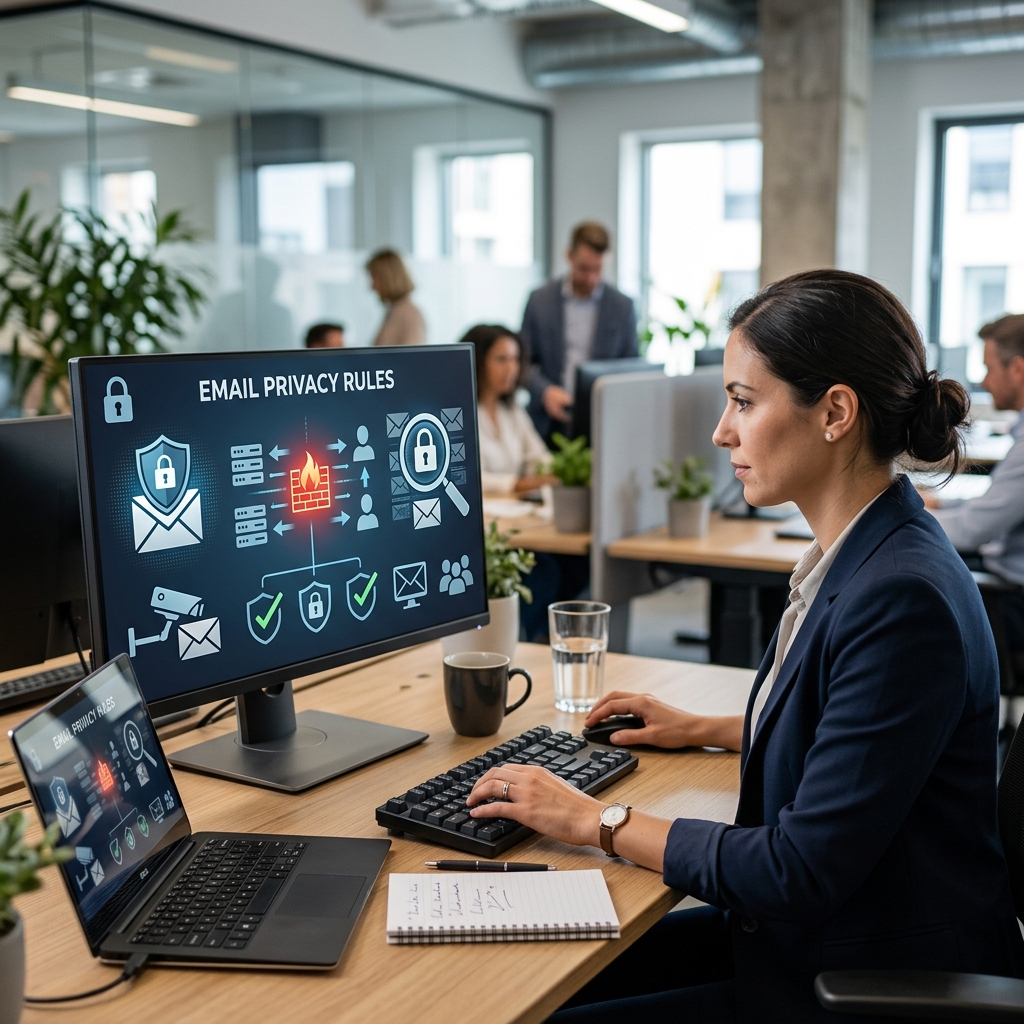
Understanding Email Privacy at Work
Email is one of the most common tools in modern workplaces, but it is not always private. In many employment settings, the answer to whether an employer can read email depends on who owns the account, which device is being used, and whether company policies clearly explain monitoring practices. Federal law and workplace policies often give employers broad access to business communications, especially on systems they control.
That does not mean employees have no privacy rights at all. Personal accounts, personal devices, and certain confidential communications can receive stronger protection, particularly when an employer has not given notice or does not have lawful access.
Why Employers Monitor Email
Companies commonly monitor email for legitimate business reasons. These can include protecting confidential information, preventing harassment, investigating misconduct, ensuring compliance, and maintaining productivity.
- Protecting trade secrets and sensitive company data
- Stopping workplace harassment or threats
- Detecting misuse of company systems
- Responding to internal investigations or legal requests
- Verifying that business communications are handled appropriately
When monitoring is connected to ordinary business operations and is disclosed in a policy, it is more likely to be treated as lawful.
Company Email vs. Personal Email
The type of email account matters a great deal. Work email accounts supplied by an employer are usually treated as company property, so the employer generally has broader authority to access them.
Personal email accounts, by contrast, often receive more protection. If an employee uses Gmail, Outlook, or another personal account on their own device, an employer usually cannot review those messages without consent or another valid legal basis.
| Situation | Typical Privacy Level | Employer Access |
|---|---|---|
| Work account on company system | Lower expectation of privacy | Usually allowed with policy or business justification |
| Personal account on company device | Mixed; device access may still exist | Often limited, especially for message content |
| Personal account on personal device | Higher expectation of privacy | Usually not allowed without consent or legal authority |
The Main Federal Laws That Matter
Workplace email privacy in the United States is shaped by several federal laws. The Electronic Communications Privacy Act (ECPA) and related rules are central because they address interception and access to electronic communications.
The Stored Communications Act, part of the broader federal framework, is also important because it limits unauthorized access to electronic communications stored by service providers.
These laws do not create a blanket right for employers to open any email they want. Instead, they set out exceptions and conditions, such as consent and ordinary-course business use, that can make access lawful in specific circumstances.
Notice and Written Policies
One of the strongest protections for employers is a clear written policy. When a policy tells employees that email may be monitored, the employee is less likely to claim a reasonable expectation of privacy.
Transparent policies usually explain:
- What systems may be monitored
- Whether personal use is allowed
- Who can review messages
- When monitoring may occur
- How long records may be kept
In some situations, notice is not just best practice but a major legal safeguard. Employers that monitor without disclosure may face greater privacy concerns, especially where state law requires notice or consent.
When Privacy Expectations Are Stronger
Employees often have a stronger privacy interest when they use their own devices, their own accounts, and their own time. A personal phone or laptop used away from work is much harder for an employer to inspect lawfully.
Privacy protection may also be stronger when the communication is clearly personal or legally sensitive. For example, messages involving attorneys, medical providers, or union representatives may raise privilege or confidentiality issues.
In addition, an employer should avoid monitoring that appears discriminatory or retaliatory. Even if a company owns the device, the purpose and manner of monitoring can still matter under employment law principles.
Consent and Business Use Exceptions
Consent can make a major difference. Under federal privacy rules, an employer may avoid liability when an employee has expressly or impliedly agreed to monitoring.
The business-use exception is another important concept. If monitoring happens in the ordinary course of business and is tied to legitimate workplace functions, an employer may have greater legal support for reviewing emails on company systems.
Still, neither exception gives unlimited access. Employers should stay within the scope of the stated policy and should not use monitoring in ways that go beyond what employees were told would happen.
Employee Rights and Practical Limits
Employees do not generally have absolute control over messages sent through a company account, but they do retain meaningful rights in certain circumstances. Those rights include being informed about monitoring, having some privacy in personal communications, and being protected from unauthorized access.
Practical limits also matter. Employers usually need a lawful reason to review communications, and they should avoid accessing more information than necessary for the stated purpose.
- Employees should read workplace technology policies carefully
- Personal matters should usually stay off company systems
- Company devices may still be monitored even outside the office
- Shared systems can reduce the chance of privacy expectations
- Confidential or privileged communications should be handled cautiously
State Law Can Add Extra Protection
Federal law is only part of the picture. State constitutions, statutes, and court decisions can create stronger privacy protections than federal law in some places.
That means the legality of email monitoring may change depending on where the employee works and where the employer operates. In some jurisdictions, notice requirements are stricter, and some states are more willing to recognize privacy claims involving personal communications on company equipment.
Because state rules can differ, employers often use broader compliance policies than federal law alone would require.
Best Practices for Employers
Employers that want to reduce legal risk should use a clear and consistent approach to email monitoring. A written policy is helpful, but implementation matters just as much as the policy itself.
- Draft a policy that explains monitoring in plain language
- Tell employees which systems may be reviewed
- Apply the policy consistently across the workforce
- Limit monitoring to legitimate business purposes
- Protect confidential and sensitive data during review
- Update policies when technology or laws change
Consistency is especially important. A policy that is written clearly but enforced selectively can create disputes, employee distrust, and possible legal exposure.
What Employees Should Do to Protect Themselves
Employees can reduce misunderstandings by treating work systems as limited-use tools rather than private channels. Even where employers do not actively review every message, work email should be assumed to have reduced privacy.
- Use personal email for private matters
- Avoid storing personal files on company devices
- Review employee handbooks and IT policies
- Ask about monitoring rules before making assumptions
- Do not rely on deletion alone to create privacy
If a worker believes an employer has gone beyond lawful access, the next step is often to review the policy, preserve relevant records, and seek legal advice about the specific facts.
Common Questions About Workplace Email Privacy
- Can an employer read work email?
- In many cases, yes. Employers generally have broader access to company email systems, especially when a policy says monitoring may occur.
- Can an employer read personal email on a company laptop?
- Sometimes device access exists, but message content in a personal account is often more protected and may require consent or another lawful basis.
- Does notice matter?
- Yes. Notice through a written policy often strengthens the employer’s position and weakens claims of privacy in work communications.
- Are all emails on a work device fair game?
- No. The employer’s authority usually depends on ownership, policy language, access method, and the type of communication involved.
FAQs
Do employees have a right to private email at work?
Employees may have privacy expectations for personal accounts or personal devices, but those expectations are much weaker for company email and company-owned systems.
Can an employer monitor email without telling workers?
Sometimes monitoring can occur without direct notice, but written disclosure is often important and may be required under certain legal rules or workplace policies.
What if the email includes confidential legal or medical information?
Those communications may be subject to special protections, so employers should be careful before reviewing messages that could be privileged or sensitive.
Is deleting an email enough to keep it private?
No. Deletion does not necessarily prevent recovery, access, or lawful review on company systems or in backup records.
References
- What are Email Privacy Laws in the Workplace? — CTemplar. 2024-01-01. https://ctemplar.com/what-are-email-privacy-laws-in-the-workplace/
- An Ultimate Guide to Email Privacy Policy in the Workplace — Jatheon. 2024-01-01. https://jatheon.com/blog/email-privacy-policy/
- Employment Law: Privacy Rights in the Workplace — Murphy Desmond. 2024-01-01. https://www.murphydesmond.com/employment-law-privacy-rights-in-the-workplace
- Can Your Employer Monitor Your Emails? — The Labor Champ. 2024-01-01. https://laborchamp.com/can-your-employer-monitor-your-emails/
- Think Before You Click: Employers Could Violate Federal Law by Reading Employee Emails — Ogletree Deakins. 2024-01-01. https://ogletree.com/insights-resources/blog-posts/think-before-you-click-employers-could-violate-federal-law-by-reading-employee-emails/
- Privacy in the Workplace — Harvard Cyberlaw Clinic. 2024-01-01. https://cyber.harvard.edu/privacy/Module3_Intronew.html
- Personal Emails Aren’t Private on Corporate Devices — SHRM. 2024-01-01. https://www.shrm.org/topics-tools/employment-law-compliance/personal-emails-arent-private-corporate-devices
Similar Articles








Read full bio of Sneha Tete




