
California Special Hazard Zone Disclosure
How California disclosure rules help buyers understand fault, flood, fire, and other mapped hazards before closing.
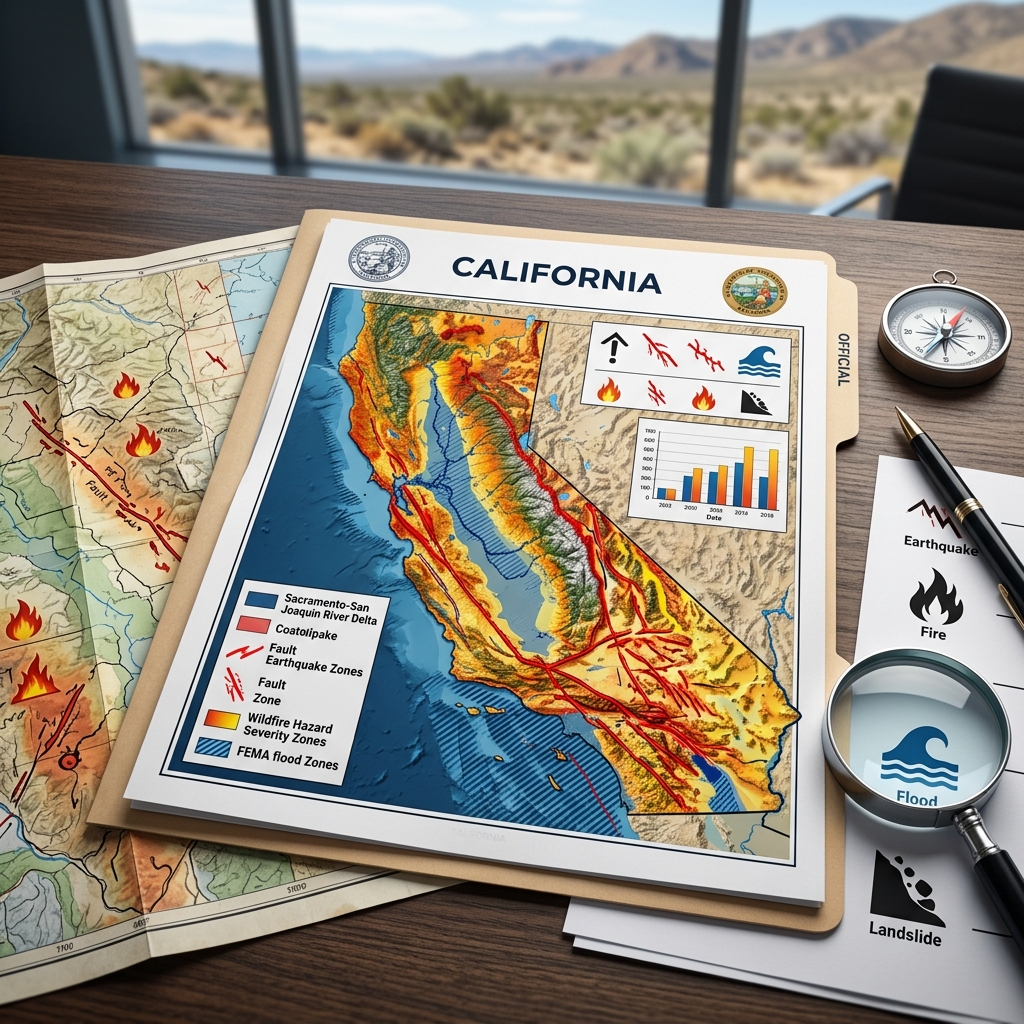
When someone buys property in California, the paperwork is meant to do more than confirm the price and closing date. It also helps reveal whether the home sits in a mapped area where earthquakes, floods, fires, or similar hazards may affect the land. These disclosure rules are designed to reduce surprises, support informed bargaining, and give buyers a clearer picture of what they are purchasing.
California is known for having some of the most detailed real estate disclosure requirements in the country. In many transactions, a seller must provide both a transfer disclosure statement and a natural hazard disclosure. Together, these forms help explain not only the condition of the property, but also whether the parcel falls within a legally recognized hazard zone.
Why hazard disclosures matter in California sales
Real estate is not only about the house itself. The location of the property can affect insurability, construction limits, financing decisions, and future repair costs. A parcel that appears ordinary on a street map may actually fall inside a floodplain, an earthquake fault zone, or a high fire severity area. Those facts matter because they can influence both immediate safety and long-term value.
California law requires disclosure because the state wants buyers to understand risks that are not always obvious during a short walk-through. The goal is not to scare buyers away, but to ensure they have enough information to compare properties honestly and negotiate with eyes open.
What a seller must reveal
In a typical residential sale, the seller is expected to disclose known facts that could affect value or desirability. That includes defects in the home, prior damage, and material conditions that a buyer would likely want to know before completing the purchase.
- Known property defects and prior damage
- Environmental hazards that must be disclosed under state law
- Boundary disputes, easements, or encroachments
- Whether the parcel lies in one of California’s mapped natural hazard zones
The hazard-zone disclosure is especially important because it addresses the land surrounding the home, not just the physical structure. A well-maintained house can still be exposed to serious risk if it sits in the wrong location.
The main hazard zones buyers commonly see
California’s natural hazard framework focuses on six major zone types. These zones are mapped through government or regulatory processes and are used to alert buyers to site-specific dangers.
| Hazard zone | What it generally indicates |
|---|---|
| Special Flood Hazard Area | Land with a higher identified flood risk |
| Dam Inundation Zone | Area that could be affected if a dam fails |
| Very High Fire Hazard Severity Zone | Areas with elevated wildfire exposure |
| Wildland Fire Area | Land near vegetation or terrain that increases fire risk |
| Earthquake Fault Zone | Mapped zone near active fault traces |
| Seismic Hazard Zone | Zone associated with liquefaction or landslide risk |
These categories are not identical, and they do not all carry the same practical consequences. For example, a fault-zone designation raises different questions than a flood or fire designation. Still, each one tells the buyer something meaningful about the property’s setting.
How the disclosure reaches the buyer
California’s disclosure process is built around forms delivered before the sale is finalized. In many cases, the seller or the seller’s agent must give the buyer the required notices before contract acceptance. If the buyer receives the disclosure after acceptance, the buyer may have a limited right to cancel the deal within a short statutory period.
This timing rule matters because disclosure is most useful when it arrives early enough to affect decision-making. A buyer who learns of a hazard zone after already agreeing to the contract may have less leverage, less time to investigate, and less freedom to walk away.
Special study zones and earthquake-related disclosure
The phrase “special study zone” is often used in connection with California earthquake law. In practical terms, it refers to fault-related mapping and disclosure rules intended to warn buyers about surface rupture risk. The state’s Earthquake Fault Zones are regulatory areas drawn around active faults, and the law requires disclosure when real estate falls inside one of these zones.
This type of disclosure has a long history. California began requiring notification for property in these mapped fault areas after lawmakers recognized that buyers should not be surprised by a major seismic condition that could affect construction, insurance, and safety.
For buyers, the key point is that a special study or fault-zone notice is not the same as a guarantee that damage will occur. It is a warning that more careful review may be appropriate, especially if the property will be improved, rebuilt, or heavily financed.
What the disclosure does not mean
A hazard notice should not be confused with a judgment that a property is uninhabitable or unusable. Many homes in California sit in areas with some type of mapped risk and are still bought, sold, insured, and improved every day. The disclosure simply ensures that the risk is visible before closing.
It also does not replace a home inspection or local permit review. A zone disclosure answers a different question: where is the land located, and what mapped dangers are associated with that location? Buyers still need separate due diligence for the structure, neighborhood, title, and financing terms.
Exemptions and transaction types that may be different
Not every transfer is treated the same way. Some sales or transfers are exempt, or they may have a narrower disclosure package because of the nature of the transaction. Examples can include certain court-ordered sales, transfers by fiduciaries, and some transfers between close family members.
That said, exemptions are technical and should not be assumed casually. The details often depend on the type of property, the identity of the transferor, and whether the sale is residential or commercial. A buyer or seller who is unsure should verify the applicable rules before relying on a shortcut.
Why buyers should read the forms closely
Many buyers skim disclosures because the documents can appear repetitive or technical. That is a mistake. The hazard pages may reveal a floodplain, a fire-prone canyon, a fault zone, or another issue that directly affects future ownership costs.
- Insurance can be more expensive in high-risk areas
- Lenders may ask additional questions about hazard exposure
- Future remodels may face stricter planning or engineering review
- Resale value can be affected if buyers later learn of the zone designation
Reading the disclosure carefully also gives buyers a chance to ask the right follow-up questions. For example, a buyer might want to know whether the property has ever flooded, whether the seller has obtained geotechnical reports, or whether local building standards are more restrictive than usual.
Practical steps for sellers before listing
Sellers are better positioned when they gather information early. Before listing, they should review prior survey records, title documents, permit history, and any notices received from local or state agencies. If the property is in or near a mapped hazard zone, the seller should make sure the disclosure forms are complete and consistent with the available records.
Good preparation can reduce conflict later. A complete and accurate disclosure package is less likely to trigger cancellation, renegotiation, or claims that the seller withheld important information. In a state with dense disclosure rules, accuracy is usually cheaper than defensiveness.
How attorneys and agents fit into the process
Real estate agents often help deliver the required notices, but they are not the final decision-makers on legal compliance. Sellers remain responsible for telling the truth about what they know, and agents must understand which forms apply to the transaction. When there is uncertainty, legal advice can help determine whether the property falls within a mapped area or whether an exemption truly applies.
Attorneys may also be useful when a seller has incomplete records or when a buyer believes a disclosure was missing. In those situations, the issue may extend beyond paperwork and into potential liability for misrepresentation or nondisclosure.
Frequently asked questions
Is a hazard-zone disclosure the same as an inspection report?
No. A disclosure identifies known or mapped risks, while an inspection looks at the actual physical condition of the property. They serve different purposes and are often both important.
Does a zone disclosure mean the property is unsafe?
Not necessarily. It means the property is in an area where a recognized hazard exists. Many such properties are still used and sold, but the buyer should understand the risk before proceeding.
Can a buyer cancel if the disclosure is delivered late?
In some cases, yes. California law gives buyers a short cancellation window when required forms are delivered after the contract is already accepted.
Do commercial properties face the same rules?
Some disclosure obligations extend beyond residential property, but the exact forms and requirements can differ depending on the transaction type.
Why are earthquake fault zones treated separately?
Because fault rupture is a distinct geologic hazard. California maps those areas specifically so buyers and planners understand the potential risk tied to active faults.
Bottom line for buyers and sellers
California’s special hazard and natural hazard disclosures are meant to make real estate transactions more transparent. They do not eliminate risk, but they make risk harder to hide. For sellers, the safest approach is to disclose early and accurately. For buyers, the smart approach is to read every hazard notice carefully and treat it as an important part of the decision, not a minor appendix.
References
- Special Study Zones Disclosure in Real Estate in California — LegalMatch. 2026. https://www.legalmatch.com/law-library/article/disclosure-of-special-studies-zones-in-california-real-estate-transactions.html
- California Seller Disclosure Requirements — DocJacket. 2026. https://www.docjacket.com/resources/state-real-estate-disclosure-requirements/california
- Real Estate Agents and Special Studies Zones — National Institute of Standards and Technology / NSF archive. 1984. https://nehrpsearch.nist.gov/static/files/NSF/PB84224922.pdf
- Disclosure Information — First American Natural Hazard Disclosures. 2026. https://orderform.fanhd.com/Resources/DisclosureInformation
- Special Publication 42: Earthquake Fault Zones — California Department of Conservation, California Geological Survey. 2024. https://www.conservation.ca.gov/cgs/documents/publications/special-publications/SP_042-a11y.pdf
Similar Articles








Read full bio of Sneha Tete


