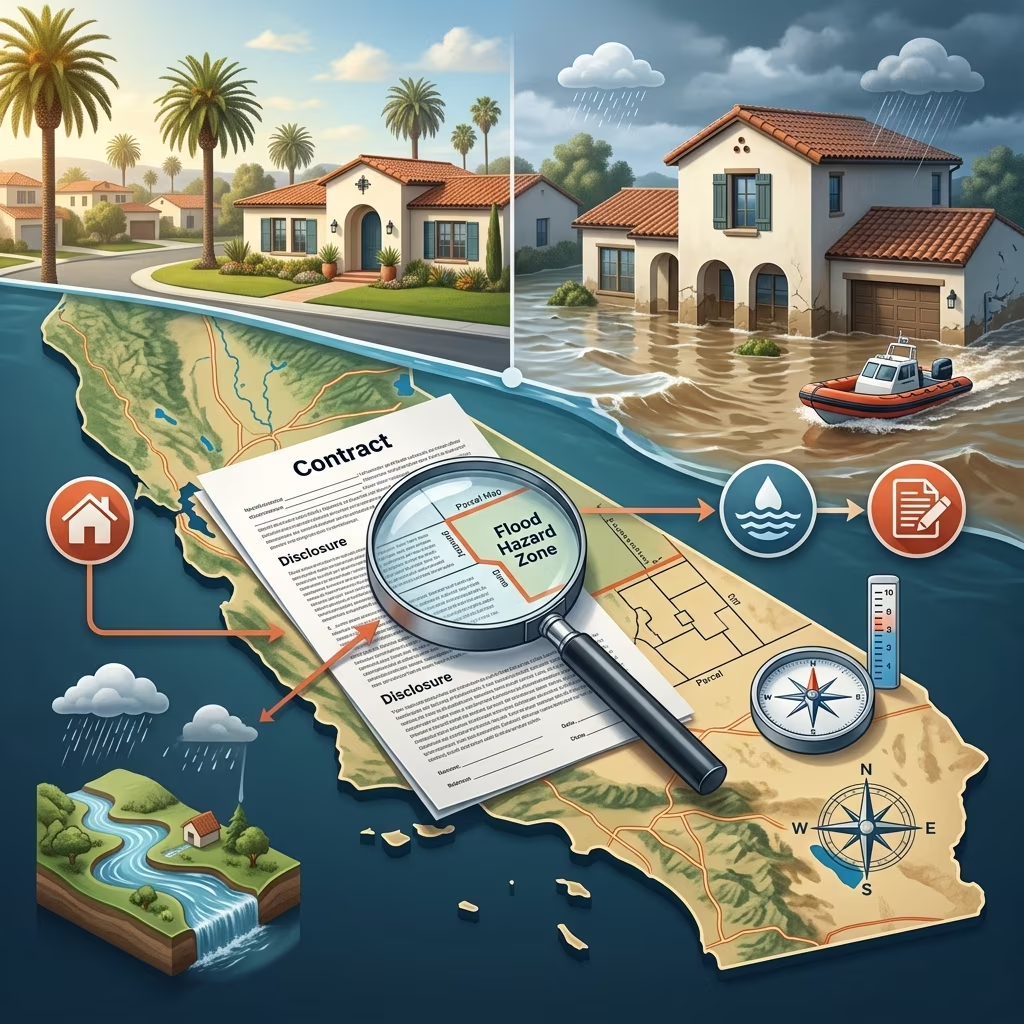
California treats flood risk as a critical part of consumer protection in housing. State law requires clear disclosure of flood-related hazards in many real estate transactions so that buyers and tenants can make informed decisions about insurance, safety, and long‑term costs. At the same time, federal programs like FEMA’s mapping of flood zones shape when lenders require flood insurance and how risk is identified.
This article explains the legal framework behind flood hazard disclosures in California, how those rules apply differently to sales and residential leases, and what practical steps each party in a transaction should take to comply with the law and manage risk. It is intended for owners, landlords, agents, buyers, and tenants who need an accessible overview of the obligations and rights linked to flood hazards.
1. Flood Risk and Why It Matters in California Real Estate
Flooding is one of the most common and costly natural disasters in the United States, and California is no exception. Areas near rivers, dams, and coastlines, as well as low‑lying inland regions, can experience severe flood events driven by heavy rainfall, snowmelt, or infrastructure failure. These risks affect property value, safety, and insurance costs, which is why California folded flood hazards into its broader natural hazard disclosure regime.
- Safety concerns: Flooding can threaten life and health through fast-moving water, contamination, mold growth, and disruption of utilities.
- Financial impact: Repair costs, temporary relocation, and increased insurance premiums can significantly change the economics of owning or renting.
- Regulatory overlay: Lenders may require flood insurance if a property lies in a FEMA Special Flood Hazard Area (SFHA), and building codes or local ordinances may restrict development.
Because many people are not familiar with technical floodplain maps, California law relies on standardized disclosures to bridge the information gap and ensure that risk is communicated in a clear, legally enforceable way.
2. Legal Foundations of Flood Hazard Disclosure in California
California’s flood disclosure rules are anchored in two related sets of statutes:
- Natural Hazard Disclosure for sales: Civil Code provisions require sellers of most residential properties to provide a Natural Hazard Disclosure Statement (NHDS), which includes flood hazard information where applicable.
- Flood disclosure for leases: Government Code rules and subsequent legislation require landlords to give tenants specific warnings when rental property may be subject to flooding.[10]
The state overlays these requirements on top of federal initiatives such as FEMA’s flood maps and National Flood Insurance Program (NFIP) rules. While there is no federal law requiring sellers or landlords nationwide to disclose flood risk, California has chosen to enact comprehensive state-level protections.
2.1 Natural Hazard Disclosure Statement (NHDS)
The NHDS is a standardized form that consolidates several different natural hazards into a single document. It must be delivered in most residential real estate sales where the transfer disclosure statement (TDS) is required, and if the property is located in one of six designated hazard zones, flood hazards are among the items to be disclosed.
For flood-related purposes, the NHDS addresses:
- Special Flood Hazard Areas (SFHAs): Areas that FEMA has mapped as having a high probability of flooding, typically referred to as 100‑year floodplains such as Zones A or V.
- Dam failure inundation zones: Areas that could be affected if a regulated dam fails, which is also treated as a flood hazard.
When the seller or their agent knows that any portion of the property lies in one of these zones, the NHDS must state this fact clearly. In some cases, disclosure is required even if the seller does not have personal knowledge, because local governments have been provided maps or parcel lists and posted notice of their availability.
2.2 Landlord Flood Disclosure Duties
Separate statutes require flood disclosures in residential leases and rental agreements. Under these rules, owners or property managers must inform tenants if they have actual knowledge that the rental property is located in a special flood hazard area or other flood‑prone region.[10]
Typical landlord flood disclosures include:
- Whether the property is in a special flood hazard area or other mapped flood zone, to the extent the landlord knows.
- Notice that public resources such as state hazard tools are available for tenants to research flood risk.
- Warning that a landlord’s insurance generally does not cover a tenant’s personal possessions, with a recommendation to consider renter’s and flood insurance.
- A statement that the landlord is not obligated to provide more detailed technical flood information beyond the required notice, which is deemed adequate under the statute.
These disclosures must be incorporated into leases entered into after specified effective dates, and standardized forms are often used to ensure compliance.[10]
3. What Must Be Disclosed About Flood Hazards?
Although exact wording is set by statute and standardized forms, the substance of flood hazard disclosures in California can be grouped into several key categories.
3.1 Location Within a Special Flood Hazard Area
The core requirement is to disclose whether the property lies within a designated Special Flood Hazard Area according to FEMA’s maps. SFHAs are generally defined as areas with a 1% annual chance of flooding, often called the 100‑year floodplain.
Important aspects include:
- Identification of specific zones: NHDS forms and related reports often flag FEMA zones such as A, AE, or V, which indicate varying types of high‑risk floodplains.
- Insurance implications: Properties in SFHAs may be subject to mandatory flood insurance requirements for federally backed mortgages.
- Development considerations: Local jurisdictions may impose building restrictions or elevation requirements in SFHAs.
3.2 Dam Failure Inundation Areas
California also requires disclosure when any portion of a sale property is located in a mapped dam failure inundation zone. These zones represent areas that could be flooded if a dam experiences a catastrophic failure, regardless of whether the reservoir currently holds water.
This requirement ensures that buyers are aware of risks that might be triggered by rare but extremely serious events involving large water infrastructure.
3.3 Tenant‑Focused Flood Risk Warnings
For leases, the emphasis is slightly different. Landlord disclosures focus on risk communication rather than detailed mapping. A typical tenant flood notice will:
- State whether the landlord has actual knowledge of flood risk or location in a flood hazard area.
- Advise tenants that hazard information is available through official tools maintained by state agencies.
- Clarify that the landlord’s insurance does not protect tenant belongings from flood damage.
- Encourage tenants to evaluate their own insurance needs.
These disclosures serve as a warning and a prompt for tenants to seek more detailed information and coverage where appropriate.
4. Roles and Responsibilities of Sellers, Agents, and Landlords
Compliance with flood disclosure rules depends on who is involved in the transaction. California law assigns primary responsibility differently depending on whether the property is being sold or leased and whether an agent is involved.
4.1 Seller Obligations in Property Sales
In most residential sales covered by the transfer disclosure statement requirements, the seller must ensure that the NHDS is completed and provided to the buyer when the property lies in one of the designated hazard zones, including SFHAs and dam inundation areas.
Common seller duties include:
- Ordering a Natural Hazard Disclosure Report from a licensed company, which compiles data from official maps.
- Reviewing the report for accuracy and providing it to the buyer early in escrow, often within the first few days.
- Ensuring that the NHDS form is signed and delivered before closing.
Failure to make required disclosures, or doing so negligently or willfully, can expose the seller to liability for the buyer’s actual damages.
4.2 Real Estate Agent Responsibilities
When a seller is represented by an agent, the agent generally holds primary responsibility for making certain hazard disclosures, including SFHAs and dam inundation zones. If the seller has no agent, the seller themselves must fulfill the obligation.
Agents are expected to:
- Coordinate the ordering of hazard reports.
- Explain the meaning of flood hazard designations to their clients.
- Ensure that statutory forms are used and properly completed.
4.3 Landlord Duties in Residential Leases
For leases, the owner or person offering the property for rent has direct responsibility to include flood disclosure language in rental agreements when required by statute.[10] This applies to leases executed after the statutory effective dates and generally focuses on actual knowledge of flood risk.
Landlords should:
- Determine whether they have actual knowledge that the property is in a flood hazard area.
- Use a compliant flood disclosure form or lease clause to communicate the required information.
- Provide the disclosure at the time the lease is signed, not afterward.
5. Practical Tools: Reports, Maps, and Online Resources
Several tools help parties identify and understand flood hazards in California, and many of these are referenced in disclosure practice.
5.1 Natural Hazard Disclosure Reports
In sales, it is common for sellers or agents to hire licensed Natural Hazard Disclosure (NHD) companies to prepare a report that summarizes hazard information for the property.
These reports typically cover:
- FEMA Special Flood Hazard Area status and specific zone codes.
- Fire hazard severity zones and state responsibility areas.
- Earthquake fault zones, liquefaction areas, and landslide hazards.
- Dam failure inundation zones.
The NHD report and the NHDS form together provide a standardized package of hazard information for buyers.
5.2 FEMA Flood Maps and Elevation Data
FEMA produces Flood Insurance Rate Maps (FIRMs) that delineate floodplains and identify base flood elevations. Buyers and owners can use these maps to confirm whether a property lies in an SFHA and to understand the relative level of risk.
In some cases, owners may challenge an SFHA designation by obtaining an elevation certificate from a licensed surveyor and applying for a Letter of Map Amendment (LOMA). If successful, the LOMA may remove the property from the high‑risk zone and eliminate mandatory flood insurance requirements.
5.3 State Hazard Tools
California’s Office of Emergency Services and related agencies maintain online tools that allow users to check hazard information, including flood risk, for specific locations. Landlord disclosure statutes often direct tenants to these resources so they can research risks beyond what the landlord is required to provide.
6. Consequences of Failing to Disclose Flood Hazards
California law attaches significant consequences to failure to disclose mandated hazards. For sales transactions subject to the NHDS, anyone who willfully or negligently fails to make the required disclosure can be liable for the transferee’s actual damages.
Examples of potential outcomes include:
- Civil liability: Buyers may sue for repair costs, diminished property value, or other damages if flood risk was concealed or misrepresented.
- Transaction disruption: Discovery of undisclosed hazards late in escrow can lead to contract cancellation, renegotiation, or disputes.
- Professional exposure: Agents and brokers risk disciplinary action and reputational harm if they fail to follow statutory disclosure requirements.
For landlords, while the enforcement mechanisms differ, failure to provide required flood disclosures may become evidence in habitability disputes or claims of misrepresentation, particularly if tenants suffer flood‑related losses after receiving incomplete or misleading information.
7. Best Practices for Managing Flood Disclosure Obligations
Beyond meeting statutory minimums, several practical steps can improve compliance and reduce risk for all parties.
7.1 For Sellers and Agents
- Order hazard reports early: Obtaining an NHD report before or immediately after listing allows sellers to anticipate potential buyer concerns and address them proactively.
- Explain implications, not just technical labels: Buyers benefit from understanding how SFHA status affects insurance, financing, and future development, not just seeing a box checked on a form.
- Maintain records: Keep copies of all disclosures and reports provided to buyers in case of later disputes.
7.2 For Landlords
- Use standardized forms: Adopt flood disclosure templates that track statutory language to avoid omissions.
- Be clear about limits: Make sure tenants understand that landlord policies usually do not cover tenant belongings and that tenants should evaluate their own insurance options.
- Stay informed: If new hazard information becomes available, review whether future leases require updated disclosure language.
7.3 For Buyers and Tenants
- Review all hazard documents carefully: Read NHDS forms, NHD reports, and lease disclosures and ask questions if anything is unclear.
- Check official maps and tools: Confirm flood risk using FEMA maps and state hazard tools rather than relying solely on informal representations.
- Evaluate insurance needs: Consider flood insurance even in areas not mapped as SFHAs, as floods can occur outside designated zones.
8. Summary Table: Flood Disclosure in Sales vs. Leases
| Aspect | Residential Sales | Residential Leases |
|---|---|---|
| Primary form used | Natural Hazard Disclosure Statement (NHDS) | Flood disclosure clause or separate notice in lease |
| Key flood elements | Special Flood Hazard Areas, dam failure inundation zones | Location in flood hazard areas, insurance warning, hazard research resources |
| Main responsible party | Seller and, if present, seller’s agent | Owner or person offering property for rent |
| Typical tool used | Licensed NHD report plus NHDS form | Statutory flood disclosure language and state hazard website references |
| Consequences of non‑compliance | Liability for transferee’s actual damages | Potential exposure in habitability or misrepresentation disputes |
9. Frequently Asked Questions (FAQs)
9.1 Does every California property sale require a flood disclosure?
No. Flood-related disclosure duties arise when the property is located in specified hazard zones, such as Special Flood Hazard Areas or dam failure inundation areas, and when the transaction is subject to the transfer disclosure statement requirements. However, many residential sales in flood‑prone regions will fall under these rules.
9.2 How can I tell if a home is in a Special Flood Hazard Area?
Buyers can review the Natural Hazard Disclosure report and NHDS provided in the transaction, which should flag SFHA status if applicable. They can also consult FEMA flood maps directly and, if needed, work with surveyors or engineers to interpret elevation and risk data.
9.3 Are landlords required to provide detailed technical flood information to tenants?
Landlords must disclose flood risk when they have actual knowledge and must include certain warning language in leases, but they are not generally required to provide engineering studies or exhaustive technical analysis. Statutes often specify that the mandated notice is considered adequate, while directing tenants to official hazard tools for further research.
9.4 What happens if the seller did not know about the property being in a flood zone?
Disclosure obligations can arise based on official maps and local government notifications, not just the seller’s personal awareness. In practice, using a professional NHD report reduces the risk of missing hazard information and supports compliance even when sellers were previously unaware of the property’s status.
9.5 Can flood zone designations be changed?
Yes. Owners may challenge a flood zone designation by providing elevation data and applying for a FEMA Letter of Map Amendment. If approved, this can remove the property from a Special Flood Hazard Area, which may affect insurance requirements.
References
- Disclosure Information — Disclosures.com. 2023-05-01. https://orderform.disclosures.com/Resources/DisclosureInformation
- Natural Hazard Disclosure — California Bar Journal, State Bar of California. 1999-08-01. https://archive.calbar.ca.gov/archive/calbar/2cbj/99aug/mclestdy.htm
- Flood Zone Disclosure in Inland Empire Home Sales — LA Metro Home Finder. 2026-02-10. https://www.lametrohomefinder.com/blog/flood-zone-disclosure-inland-empire
- New California Law Requires Flood Disclosure In Every Residential Lease or Rental Agreement — Wallace Law. 2017-10-10. https://www.wallacelaw.com/blog/new-california-law-requires-flood-disclosure-every-residential-lease-rental-agreement/
- California Flood Hazard Disclosure Form — eForms. 2015-10-01. https://eforms.com/images/2015/10/California-Flood-Disclosure-Form.pdf
- Flood Risk Disclosure Laws: Which States Have Them and What They Cover — Forbes Advisor. 2023-10-12. https://www.forbes.com/advisor/mortgages/real-estate/flood-risk-disclosure-laws/
- Learn About Flood Risk Disclosures and Which States Have Them — First Street Foundation. 2020-09-01. https://help.firststreet.org/hc/en-us/articles/360049236793-Learn-about-flood-risk-disclosures-and-which-states-have-them