
Understanding Probation Revocation in Alabama
A detailed guide to how probation revocation works in Alabama, the legal standards involved, and what rights probationers have in court.
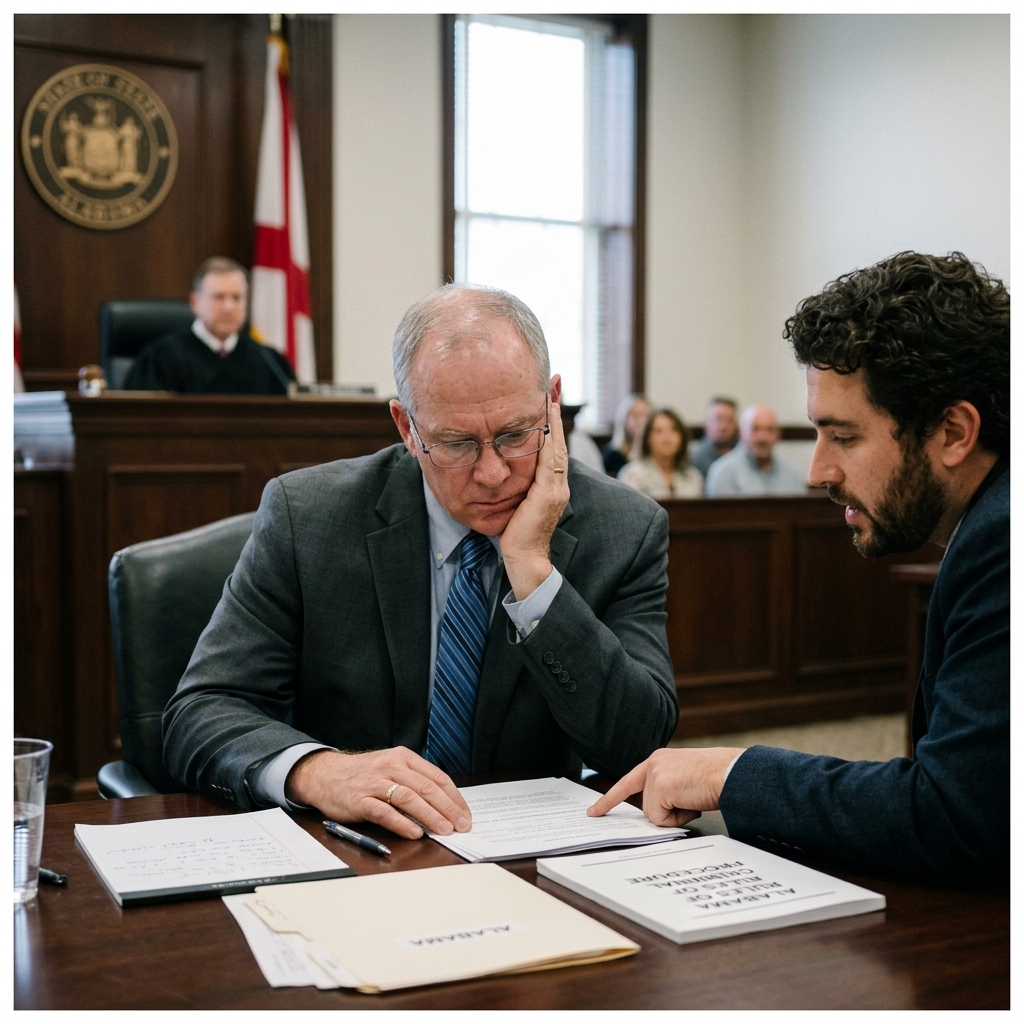
Probation in Alabama offers an alternative to serving a full jail or prison sentence, but it comes with strict rules and serious consequences if those rules are broken. When a probationer is accused of violating the terms of supervision, the court may start a probation revocation process that can end with the person returning to custody to serve part or all of their suspended sentence.
Probation Basics: How Supervision Works in Alabama
Probation is a court-ordered period of supervision in the community instead of incarceration. In Alabama, judges impose probation as part of a criminal sentence, and the Alabama Bureau of Pardons and Paroles generally oversees the supervision of adults on probation.
Probation comes with conditions designed to promote rehabilitation and public safety. Although specific terms depend on the case, common requirements include:
- Reporting regularly to a probation officer
- Obeying all laws and avoiding new criminal activity
- Submitting to drug or alcohol testing when ordered
- Maintaining employment or pursuing education as directed
- Paying fines, fees, restitution, or court costs
- Attending counseling, treatment, or other programs
Alabama law generally limits how long probation can last. For most offenses, the maximum probation term is two years for misdemeanors and five years for felonies, with certain statutory exceptions for specific crimes.
What Counts as a Probation Violation?
A probation violation occurs when a person on probation fails to follow one or more of their court-ordered conditions. Violations fall into two broad categories: technical (administrative) violations and new criminal offenses.
Technical or Administrative Violations
Technical violations do not involve new criminal charges. Instead, they relate to compliance with supervision rules, such as:
- Missing appointments with the probation officer
- Failing a drug or alcohol test
- Not completing a required treatment or educational program
- Failing to pay court-ordered financial obligations when able
- Traveling or moving without permission
Alabama law recognizes that these technical violations are different from committing a new crime and often allows courts to use intermediate sanctions instead of immediate full revocation, especially for certain nonviolent offenders.
New Offense Violations
New offense violations occur when a probationer is arrested for or convicted of a separate crime while still on probation. A new offense is treated as a serious violation and may be grounds for revocation, particularly when combined with other risk factors such as absconding or failing to complete court-ordered treatment.
| Type of Violation | Examples | Typical Consequences |
|---|---|---|
| Technical / Administrative | Missing meetings, positive drug tests, late payments, incomplete programs | Warnings, modified conditions, short jail sanctions, limited revocation options for eligible offenders |
| New Criminal Offense | Arrest for theft, assault, DUI, or other crimes during probation | Revocation more likely; court may order all or part of suspended sentence to be served in custody |
Legal Standards for Probation Revocation
The legal rules for revoking probation are different from the standards used to convict someone at trial. At trial, the prosecution must prove guilt beyond a reasonable doubt. In probation revocation proceedings, Alabama courts apply a lower standard.
Under Alabama practice and case law, a judge may revoke probation if the court is reasonably satisfied that a violation occurred. This means the judge does not need proof beyond a reasonable doubt, but must still rely on credible evidence and follow basic due process requirements.
Evidence rules are also more flexible. The court is not bound by the strict rules of evidence that apply at trial, but there are still limits. For example, Alabama appellate courts have held that hearsay evidence cannot be the sole basis for revoking probation; the State must present some non-hearsay evidence to support the alleged violation.
Statutory Framework: Alabama Code § 15-22-54
Alabama Code § 15-22-54 governs many aspects of probation, including duration, modification, intermediate sanctions, and revocation. Some key features of this statute include:
- Probation periods: As noted above, maximum terms are generally two years for misdemeanors and five years for felonies, subject to specific statutory exceptions.
- Court authority to modify or extend: The court may continue, extend, modify, or terminate probation within the statutory limits.
- Intermediate confinement sanctions: For certain nonviolent, eligible offenders who commit only administrative violations, the court may impose short periods of confinement (for example, up to 90 days) in a corrections facility or county jail as a sanction without fully revoking probation.
- Limits on full revocation: Alabama law often requires that a probationer receive multiple confinement sanctions before probation may be fully revoked, with exceptions for specified serious offenses or certain violation types.
- Credit for time in custody: If revocation results in a sentence of confinement, the probationer must receive credit for time spent in custody before revocation in connection with the case.
How the Probation Revocation Process Typically Unfolds
When a probation officer or prosecutor believes a violation has occurred, a series of steps usually follow. Although every case is different, the general outline of the process in Alabama looks like this:
1. Allegation and Notice of Violation
The process starts when a probation officer files a report or violation notice with the court, or when a new criminal charge triggers a review of probation. The probationer must receive written notice of the claimed violations so they know what allegations they need to address.
2. Arrest or Initial Appearance
Depending on the seriousness of the alleged violation, the court may issue a warrant for the probationer’s arrest, or order the probationer to appear for an initial hearing. At this stage, the court typically considers whether to set bond or hold the person in custody pending the revocation hearing.
3. Revocation Hearing
Alabama law requires a hearing before probation can be revoked. The revocation hearing must be held within a reasonable time after the probationer’s initial appearance. It is a formal court proceeding, but not a full criminal trial, and the rules of evidence are more relaxed.
At the hearing:
- The State presents testimony, documents, or other evidence of the alleged violation.
- The probationer has a chance to respond, present evidence, and in most cases question adverse witnesses.
- The judge evaluates whether the court is reasonably satisfied that a violation occurred based on the record.
4. Court’s Decision and Written Findings
After hearing the evidence, the court must make a decision. If the judge finds that a violation occurred, the court can revoke, modify, or continue probation. Alabama rules require the judge to provide a written statement, or state on the record, the evidence relied upon and the reasons for revoking probation when revocation occurs.
Possible Outcomes After a Violation
Probation revocation proceedings do not always end in full revocation. Alabama courts have several options, depending on the severity of the violation, the nature of the underlying offense, and the person’s history on supervision.
- Continue probation without changes: The court may decide that the violation is minor or not sufficiently proven and allow probation to continue as before.
- Modify probation conditions: Judges may add conditions such as more frequent reporting, stricter curfews, treatment requirements, or additional financial obligations.
- Short-term confinement (“dips”): For certain eligible nonviolent offenders with administrative violations, the court can order brief periods of incarceration (often limited by statute) while keeping the person on probation.
- Extend the probation term: Within statutory limits, probation may be lengthened to allow additional time to complete conditions.
- Full revocation: If revocation is ordered, the court can require the probationer to serve all or part of the remaining sentence that had been suspended, typically in jail or prison.
For certain serious crimes—such as specific violent offenses, sex offenses, or aggravated theft—Alabama law directs courts to revoke probation and require the person to serve the remaining term (or a portion of it) in a state facility when specified violation conditions are met.
Rights of Probationers in Alabama Revocation Proceedings
Even though probationers have already been convicted or pled guilty to an underlying crime, they retain important procedural rights in revocation proceedings. Alabama law and rules of criminal procedure, influenced by federal constitutional decisions, outline several core protections.
- Notice of alleged violations: The probationer must receive written notice of the specific conditions they are accused of violating.
- Timely hearing: A revocation hearing must be held within a reasonable time after the initial appearance.
- Opportunity to be heard: The probationer may appear, present evidence, and argue why revocation is not warranted.
- Right to confront and question witnesses: In most cases, the probationer can cross-examine adverse witnesses, subject to certain exceptions recognized in case law.
- Written statement of reasons: If probation is revoked, the court must state the evidence it relied on and the reasons for revocation on the record or in a written order.
Because probation revocation can lead to incarceration, many individuals choose to seek legal counsel to help navigate the process, challenge insufficient evidence, and present mitigating information.
Special Considerations for Eligible Nonviolent Offenders
Alabama has adopted statutory provisions aimed at reserving full revocation and long-term incarceration for more serious or repeated violations. For certain nonviolent probationers who meet defined criteria, the law allows the court to use shorter confinement penalties instead of immediately revoking probation.
An eligible offender, under earlier versions and interpretations of Alabama’s probation statute, generally must:
- Be a nonviolent offender on a probationary sentence
- Have committed only administrative violations
- Have no pending criminal charges
- Have no new offense convictions since being placed on probation
- Not have repeated probation violations on two or more earlier occasions during the current probation term
For such offenders, courts may impose limited confinement periods—such as up to 90 days in a Department of Corrections facility or county jail—while leaving the probation sentence in place. These intermediate sanctions are intended to respond to violations without automatically revoking probation and committing the person to the full remaining sentence.
Practical Tips for Probationers Facing Possible Revocation
Anyone on probation in Alabama can reduce the risk of revocation by understanding their obligations and responding promptly if issues arise. While specific legal advice must come from a licensed attorney familiar with the case, general practical steps include:
- Keep copies of all probation paperwork: Maintain your original sentencing order and written probation conditions so you can check what is required.
- Communicate with your probation officer: If you anticipate challenges (such as transportation problems or health issues), notify your officer in advance when possible.
- Document compliance: Save pay stubs, program completion certificates, receipts for payments, and any other records that show you are following conditions.
- Take allegations seriously: If you receive notice of a violation or learn that your probation officer is concerned, treat it as a priority and do not ignore court notices.
- Seek legal guidance: Consider consulting a criminal defense attorney to evaluate the evidence, explain your rights, and help you prepare for a hearing.
Frequently Asked Questions About Alabama Probation Revocation
Can probation be revoked without a hearing in Alabama?
No. Alabama law requires a revocation hearing before probation can be revoked. The hearing must be held before the sentencing court and within a reasonable time after the probationer’s initial appearance on the violation.
Is the burden of proof the same as at a criminal trial?
No. At trial, the State must prove guilt beyond a reasonable doubt. In probation revocation proceedings, Alabama courts apply a lower standard and need only be reasonably satisfied that a violation occurred, based on the evidence presented.
Can hearsay alone be used to revoke probation?
Alabama appellate decisions have made clear that hearsay evidence may not form the sole basis for revoking probation. While hearsay can be admitted in revocation hearings, the State must present some non-hearsay evidence to support the alleged violation.
What happens if probation is fully revoked?
If probation is fully revoked, the court may order the probationer to serve all or part of the remaining sentence that was previously suspended. The person is typically ordered to serve this time in jail or prison, and must receive credit for certain time spent in custody before revocation.
Can the judge choose alternatives to revocation?
Yes. Instead of revoking probation, the judge may continue probation, modify conditions, extend the supervision period within statutory limits, or impose short-term confinement sanctions for eligible nonviolent offenders.
References
- Alabama Code § 15-22-54, Period of probation; termination of probation; revocation. — State of Alabama / FindLaw. 2023-01-01. https://codes.findlaw.com/al/title-15-criminal-procedure/al-code-sect-15-22-54/
- Section 15-22-54 – Period of probation; termination of probation; revocation. — Justia US Law (Alabama Code). 2013-01-01. https://law.justia.com/codes/alabama/2013/title-15/chapter-22/section-15-22-54/
- Rule 27.6, Revocation of Probation. — Alabama Rules of Criminal Procedure, Judicial System of Alabama. 2020-01-01. https://judicial.alabama.gov/docs/library/rules/cr27_6.pdf
- Probation and Parole in Alabama: Structure, Supervision, and Policy. — OACRA. 2024-01-01. https://www.oacra.com/resources/alabama-probation
- What Happens After a Probation Violation in Alabama? A Step-by-Step Look at the Court Process. — John Totten, P.C. 2023-06-01. https://johntottenlaw.com/what-happens-after-a-probation-violation-in-alabama-a-step-by-step-look-at-the-court-process/
- Procedural Distinctions in Alabama Probation Revocation Proceedings. — Stove’s Law Firm. 2022-09-01. https://www.stoveslawfirm.com/blog/procedural-distinctions-in-alabama-probation-revocation-proceedings/
- When is Evidence Sufficient to Revoke Probation? — Joe Ingram Law. 2025-05-01. https://joeingramlaw.com/articles/2025/may/when-is-evidence-sufficient-to-revoke-probation/
Similar Articles








Read full bio of Sneha Tete




