
Wills In Montana: Key Rules, Probate Guide, And Tips For 2025
Learn the key Montana rules for valid wills, probate, and planning your estate so your wishes are clearly honored.
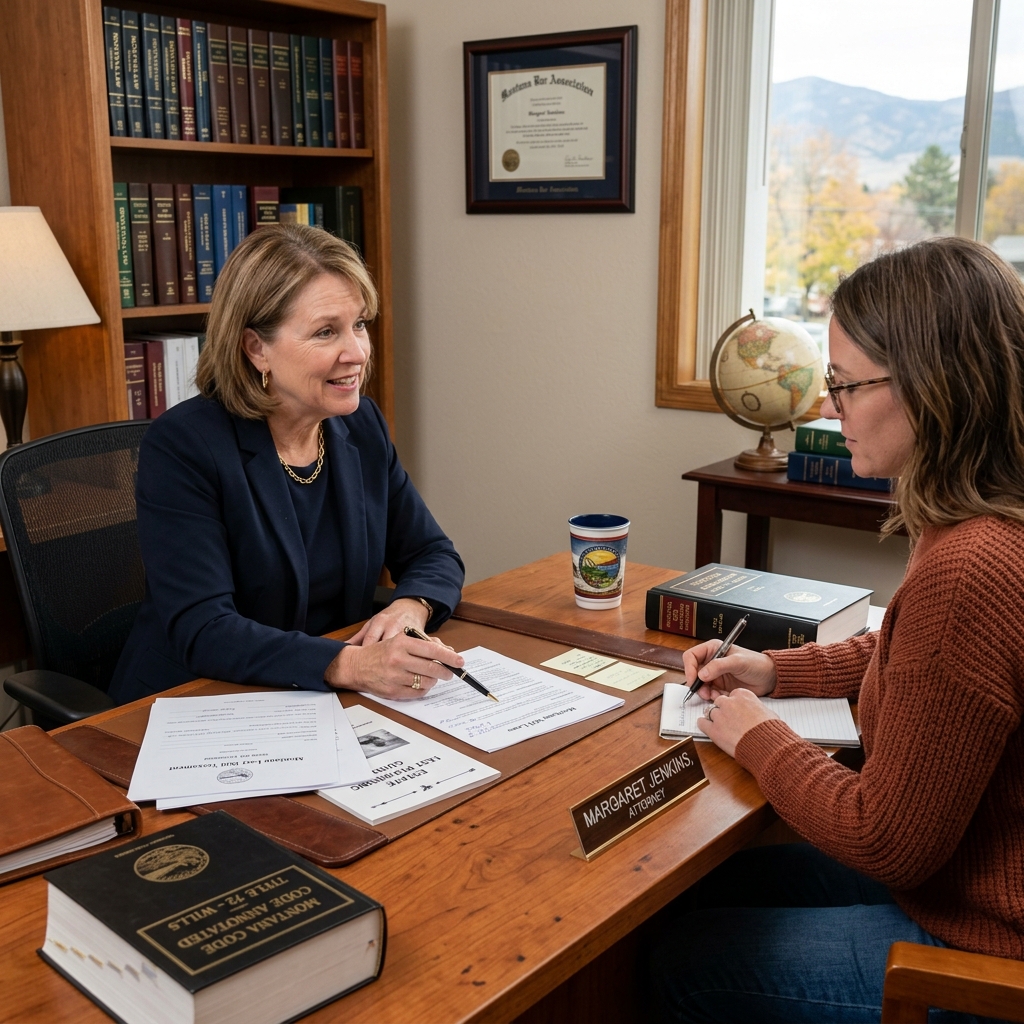
Montana law gives adults wide freedom to decide what happens to their property when they die, but it also imposes specific formal requirements to make a will legally enforceable. If those requirements are not met, your estate is distributed under the state’s intestacy rules instead of your personal wishes.
This guide explains the key rules governing wills in Montana, how they interact with probate, what happens if you die without a will, and practical tips for planning an effective estate document. It is informational only and does not replace advice from a qualified Montana attorney.
Who Can Make a Will in Montana?
Under Montana law, the person making a will is known as the testator. To create a valid will, a testator must meet basic eligibility standards relating to age and mental capacity.
- Minimum age: You must be at least 18 years old to make a will in Montana.
- Sound mind: You must understand the nature and extent of your property, the identity of your likely heirs, that you are creating a will, and how the will disposes of your assets.
- Voluntary decision: The will must be made freely, without coercion, fraud, or undue influence. Coercion can render a will invalid once challenged in court.
These requirements are assessed at the time the will is signed. If capacity or voluntariness is questioned later, the probate court may examine medical records, witness testimony, and other evidence.
Core Legal Requirements for a Valid Written Will
Montana’s statutes set out formal steps for a will to be valid. Although there is no official state form, the following elements are critical for a conventional written will.
Essential Elements
- Written document: A will must be in writing. Verbal or videotaped wills are not legally recognized.
- Signature of the testator: The testator must sign the will or direct another person to sign it on the testator’s behalf while in the testator’s presence.
- Witnesses: Two competent witnesses must either see the testator sign or see the testator acknowledge their signature or the will.
- Witness signatures: Both witnesses sign the will, typically in the presence of the testator and each other, to verify the authenticity of the document.
A “competent” witness is someone legally able to act as a witness and capable of understanding that they are witnessing a will signing. To avoid later challenges, many attorneys recommend using witnesses who are not beneficiaries.
Notaries and Self-Proving Affidavits
Montana does not require notarization for the will itself to be valid. However, notarization becomes important when you add a self-proving affidavit, which is a sworn statement confirming that the will was properly executed.
- Notary not required for validity: A simple written will with the required signatures and witnesses can be valid without a notary.
- Self-proving affidavit: Montana law permits attaching a notarized affidavit that allows the probate court to accept the will without needing the witnesses to testify later.
- Probate efficiency: A self-proving will generally speeds up probate and reduces administrative burdens on your family.
Special Types of Wills Recognized in Montana
While most people use a standard typed and witnessed will, Montana law also addresses other forms of wills that can arise in practice.
Holographic (Handwritten) Wills
Montana recognizes holographic wills, which are wills written entirely or primarily in the testator’s own handwriting.
- Key requirement: The signature and material provisions must be in the testator’s handwriting.
- Witnesses: Unlike standard wills, holographic wills may be valid without witnesses, as long as the handwriting requirements are met.
- Risk: Handwritten wills are easier to misinterpret and more vulnerable to disputes about authenticity, so they should be used with caution.
Oral and Electronic Wills
Montana does not accept certain nontraditional forms of wills that are increasingly discussed in other states.
- Oral wills: Wills spoken aloud without a written document are not recognized under Montana law.
- Electronic wills: As of recent guidance, Montana does not allow wills that exist solely in electronic form or that are signed and witnessed entirely through remote electronic means.
Because of these limitations, your estate plan should always include at least one properly executed written will.
What Happens If You Die Without a Will?
If you die in Montana without a valid will, state intestacy laws determine who receives your property. The probate court will follow these statutes regardless of any informal promises or personal statements you made during life.
Intestate Succession Basics
Intestacy rules focus on distributing assets to the closest blood relatives and, in many cases, a surviving spouse.
- Spouse first: A surviving spouse often has priority, with details depending on whether there are children from the current or prior relationships.
- Children next: If there is no surviving spouse, or after the spouse’s share is determined, children share equally in the estate.
- Parents and siblings: If there is no spouse or children, the next in line are parents, then siblings.
- Extended family: If close relatives are unavailable, the law looks to more remote relatives such as aunts, uncles, or cousins.
Once the statute identifies an eligible category of heirs, each heir in that category typically inherits an equal share, regardless of personal circumstances or your subjective preferences.
Consequences of Having No Will
Relying on intestacy instead of a will can produce outcomes different from what you expect:
- Your assets may be divided equally among children even if one child has far greater need or you intended a different allocation.
- Unintended relatives may receive property, while close friends or charities you care about get nothing.
- You lose the ability to nominate a personal representative of your choice to manage the estate.
For many people, these risks are a strong incentive to create a clear, valid will rather than leave matters to the default statutory scheme.
Disinheriting Children and Other Heirs
Montana law does not give adult children an automatic right to inherit from a parent’s estate when a valid will says otherwise. If you wish to exclude a child or other family member from your will, you generally may do so, provided the will complies with formal requirements and is not the result of undue influence or incapacity.
- Express language: It is wise to state disinheritance clearly and explicitly, rather than simply omitting the person’s name.
- Avoiding ambiguity: Courts may interpret a silent omission as an oversight and could apply default rules that benefit the omitted person.
- Contesting the will: Disinherited individuals may challenge the will, claiming lack of capacity or improper influence. A carefully drafted and properly executed document reduces these risks.
Probate and the Role of the Personal Representative
Wills and probate are closely connected. Probate is the court-supervised procedure for validating the will, paying debts and taxes, and distributing remaining assets to heirs or beneficiaries.
Starting the Probate Process
When a person with a will dies, the document is submitted to the district court in the county where the person lived or held property.
- Submission of will: The will is filed with the probate court for validation.
- Appointment of personal representative: The court appoints an executor or administrator to manage the estate. The will can nominate this person; if it does not, the court follows statutory priorities.
- Time limits: Montana generally requires probate to begin within two years of death, with certain exceptions.
Duties of the Personal Representative
The personal representative has fiduciary responsibilities to the estate and beneficiaries.
- Identify and inventory estate assets.
- Notify creditors and review claims.
- Pay valid debts in the legally prescribed order (commonly including funeral expenses, administrative costs, and tax obligations).
- Distribute remaining assets according to the will or, if there is no will, intestacy law.
Small Estate Options
Montana provides simplified probate procedures for smaller estates.
- If the gross value of the estate is below a statutory threshold (commonly around $100,000 in recent guidance), it may qualify for expedited handling through a small estate affidavit.
- Simplified probate can reduce costs and time, but it does not remove the need for a valid will or compliance with intestacy rules.
Comparing Different Will Types in Montana
The table below summarizes how various will formats are treated under Montana law.
| Type of Will | Recognized in Montana? | Key Requirements | Common Risks |
|---|---|---|---|
| Standard typed will | Yes | Written, signed by testator, two competent witnesses; notarization optional. | Improper witnessing, missing signature, ambiguous language. |
| Holographic (handwritten) will | Yes | Material portions and signature in testator’s handwriting; witnesses not always required. | Authenticity disputes, unclear provisions, greater litigation risk. |
| Oral (spoken) will | No | Not recognized; must be in writing. | Estate distributed under intestacy instead of spoken wishes. |
| Electronic-only will | No | Montana does not currently allow electronic-only wills. | Document may be entirely unenforceable at death. |
Practical Tips for Writing a Will in Montana
While Montana allows you to draft your own will, thoughtful planning can make the document clearer and more durable if it is ever challenged.
- List your assets: Create a detailed inventory of real estate, financial accounts, business interests, and personal property.
- Identify beneficiaries: Decide who should receive each category of property, including family members, friends, and charities.
- Choose a personal representative: Select someone trustworthy and capable, and consider naming an alternate in case your first choice cannot serve.
- Consider guardianship: If you have minor children, clearly state who you prefer to serve as guardian, understanding that the court will review this choice for the children’s best interests.
- Avoid vague language: Use precise descriptions of property and shares; avoid terms that could be interpreted in multiple ways.
- Review and update: Revisit your will after major life events such as marriage, divorce, birth of a child, or significant changes in assets.
- Seek legal guidance: For complex estates or to reduce risk of disputes, consulting a Montana estate planning attorney can be highly beneficial.
Frequently Asked Questions About Montana Wills
Do I need a lawyer to make a will in Montana?
No. Montana law allows you to make your own will, and many people use do-it-yourself tools or handwritten documents. However, an attorney can help ensure compliance with state statutes, reduce ambiguities, and address tax or business issues that standard forms do not cover.
Can I change or revoke my will?
Yes. As long as you remain of sound mind, you can update or revoke your will during your lifetime. This is often done by creating a new will that expressly replaces the prior one or by signing a formal codicil (an amendment to your existing will). Destroying the old will without a replacement can be risky if multiple copies exist.
What property is controlled by my will?
Your will generally governs assets that you own in your name alone at death, such as individually titled real property and bank accounts without beneficiary designations. Jointly titled assets, transfer-on-death accounts, retirement plans with named beneficiaries, and life insurance proceeds often pass outside the will according to contractual or titling arrangements.
Does my will avoid probate?
No. A will does not eliminate probate; instead, it guides how the probate court will distribute your probate assets. Other estate planning tools, such as revocable living trusts or beneficiary designations, may reduce the portion of your estate that must go through formal probate, but those devices have their own legal requirements.
Where can I get help if I cannot afford a lawyer?
Montana residents with limited income can seek assistance through legal aid and court-based programs. The Montana Legal Services Association and the Court Help Program provide resources and, in some cases, direct help with common civil legal issues, including will and estate planning forms.
References
- How to Make a Will in Montana FAQ — FindLaw. 2023-08-01. https://www.findlaw.com/forms/resources/estate-planning/last-will-and-testament/how-to-make-a-will-in-montana-faq.html
- Montana Code Annotated, Title 72, Chapter 2, Part 5: Wills, Will Contracts, and Custody and Deposit of Wills — Montana Legislature. 2025-01-01. https://mca.legmt.gov/bills/mca/title_0720/chapter_0020/part_0050/sections_index.html
- What Happens if I Die Without a Will in Montana? — Bishop, Heenan & Kearney, P.C. 2022-06-15. https://www.bkbh.com/what-happens-if-i-die-without-a-will-in-montana/
- Wills — Montana State University Extension. 2021-04-01. https://extension-store.montana.edu/montguides/wills
- Wills – Trusts – Powers of Attorney – Estate Planning – Probate — Montana Judicial Branch. 2023-05-10. https://courts.mt.gov/forms/endoflife
- What Is Probate Law in Montana? — HagEstad Law Group. 2023-02-20. https://hagestadlaw.com/blog/how-probate-law-works-in-montana
- What You Should Know When Writing a Will in Montana — MontanaLawHelp.org. 2022-09-01. https://www.montanalawhelp.org/resource/what-you-should-know-when-writing-will-montana
Similar Articles








Read full bio of medha deb


