
Understanding Implied Consent in DUI Cases
Learn how implied consent laws affect DUI stops, chemical testing, license suspensions, and your rights as a driver in the United States.
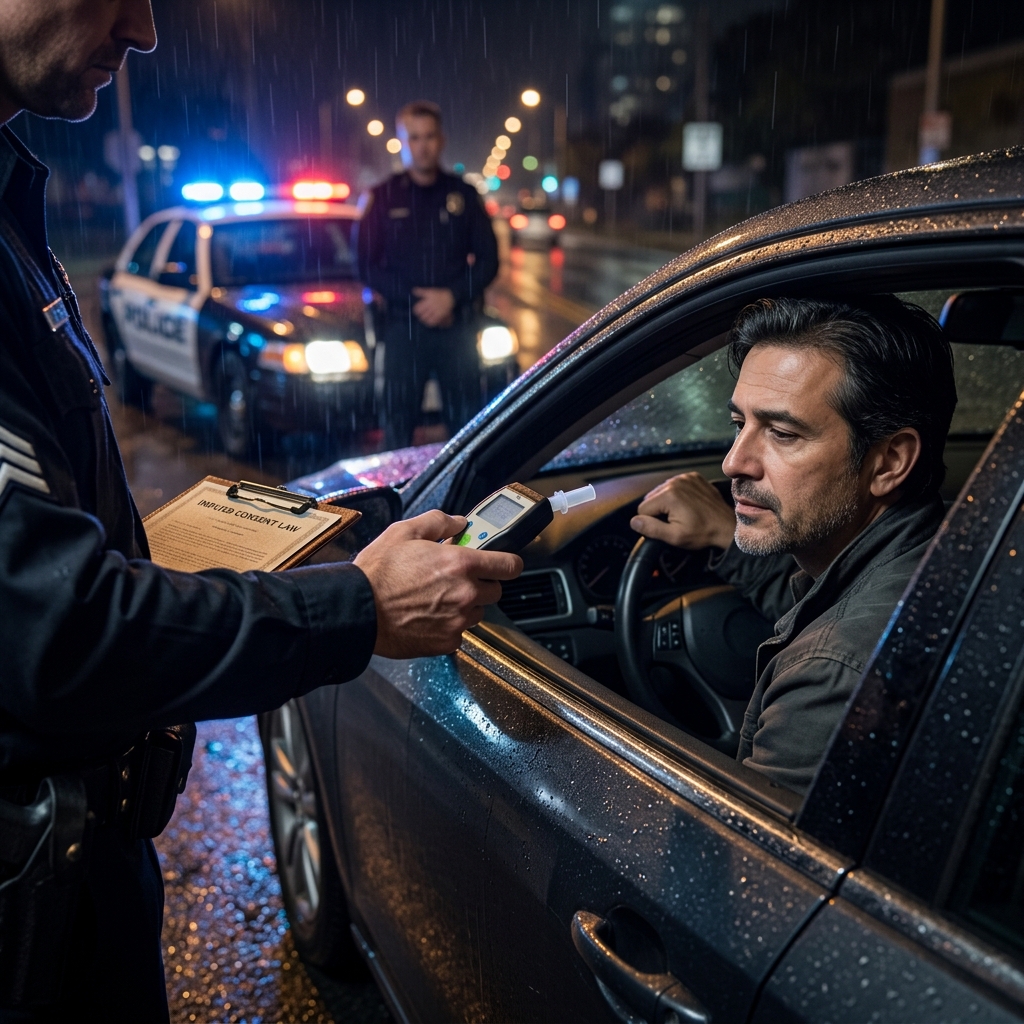
When you drive on public roads in the United States, you do more than simply operate a vehicle. In most states, you are also agreeing in advance to follow certain rules that apply if you are suspected of driving under the influence of alcohol or drugs. One of the most important of these rules is known as an implied consent law, which ties your privilege to drive to a duty to submit to chemical testing when law enforcement has a legally valid reason to request it.
This article explains what implied consent means, how it works in DUI investigations, what kinds of tests may be required, and the potential consequences of refusing or failing a test. It is an informational overview and not legal advice; DUI and implied consent procedures can differ significantly from one state to another.
What Does Implied Consent Mean?
Implied consent is a legal concept used in traffic and DUI law. Instead of signing a separate agreement every time you drive, the law in each state treats the act of driving on its roads as your advance agreement to certain conditions, including chemical testing for alcohol or drugs if you are lawfully stopped or arrested for impaired driving.
In practical terms, implied consent generally means:
- By driving on public roads, you are deemed to have consented to chemical tests (usually breath, blood, or urine) when an officer has the required legal basis (such as probable cause or a lawful arrest) to suspect DUI.
- Refusing these tests usually triggers administrative penalties, like license suspension, even if you are never convicted of a crime in court.
- The specific procedures, warnings, and penalties are spelled out in each state’s statutes and may differ in important details.
For example, Minnesota’s judiciary explains implied consent as the implicit agreement that drivers make—simply by driving on Minnesota roads—to take a chemical test to measure alcohol concentration when requested under appropriate circumstances. South Carolina law similarly provides that anyone who drives a motor vehicle in the state is considered to have given consent to chemical tests of breath, blood, or urine if arrested for DUI-related offenses.
Why States Use Implied Consent Laws
Implied consent laws serve several public safety and enforcement goals:
- Deterring drunk and drug-impaired driving: Knowing that refusal can lead to serious license consequences encourages drivers to avoid driving under the influence altogether.
- Ensuring evidence is available: Chemical test results provide objective evidence of impairment, which helps prosecutors and courts accurately assess DUI cases.
- Managing driving privileges: Driving is a privilege, not an absolute right. States condition that privilege on agreement to testing in order to protect other road users.
Under many state systems, implied consent laws are treated as largely administrative or civil in nature, separate from the criminal DUI charge itself, even though they are closely connected.
When Implied Consent Usually Applies
The point at which implied consent obligations are triggered depends on the state’s statute. Common trigger points include:
- After a lawful arrest for DUI or DWI: Many states, including California and South Carolina, apply implied consent once a driver has been lawfully arrested for an impaired driving offense.
- Upon probable cause and operation on public roads: Some states frame implied consent more broadly, covering any driver operating on the state’s roads when an officer has the requisite cause to believe the driver is impaired.
- Administrative scope: These obligations typically apply to all drivers on public roads in the state, including nonresidents and drivers licensed in other states.
Because these rules are state-specific, the moment when you are considered to have “invoked” or triggered implied consent can vary, but it is almost always tied to suspected DUI, not to ordinary traffic stops alone.
Types of Tests Covered by Implied Consent
Implied consent laws typically focus on chemical tests designed to measure alcohol concentration or the presence of drugs. The most common tests include:
- Breath tests
Used to estimate blood alcohol concentration (BAC) by measuring alcohol in the breath. Often performed using a breathalyzer or similar device at the station. Many statutes specifically designate breath testing as the primary or first-offered method. - Blood tests
Used to measure actual BAC or detect drugs. Because blood draws are more intrusive and implicate privacy concerns, they may require a warrant, explicit consent, or special circumstances, depending on state law and court decisions. - Urine tests
Less commonly used for alcohol but sometimes used for drug detection. Some states list urine as one of the authorized chemical tests under implied consent.
By contrast, roadside field sobriety tests (such as walking in a straight line or following an officer’s finger with your eyes) are typically not the focus of implied consent statutes, although some jurisdictions discuss them in related contexts. Refusal rules for field sobriety tests may follow different legal standards than for chemical tests.
Table: Chemical Tests Often Addressed by Implied Consent Laws
| Type of Test | Common Purpose | Typical Use in DUI Cases |
|---|---|---|
| Breath | Estimate alcohol concentration via breath sample | Most frequently used; often primary statutory test for alcohol |
| Blood | Direct measurement of BAC; drug detection | Used when breath testing is impractical, refused, or when drugs are suspected |
| Urine | Detect metabolites of drugs or, less commonly, alcohol | Less common; used where authorized by statute and appropriate for drug cases |
License Consequences of Refusing a Chemical Test
One of the defining features of implied consent laws is that refusing a required chemical test generally leads to automatic action against your driving privileges. This happens even if your underlying DUI charge is later reduced, dismissed, or you are found not guilty.
Common license-related consequences include:
- Immediate license suspension: In many states, a refusal triggers an administrative suspension, often for up to a year or more for a first refusal.
- Longer suspensions for repeat incidents: Drivers with prior DUI or refusal history frequently face longer suspension periods.
- Possible ineligibility for restricted licenses: Some states restrict or deny limited driving privileges (such as work-only licenses) when the suspension is based on refusal rather than a failed test.
- Separate from criminal penalties: The administrative suspension is typically a separate process from the criminal case, and may proceed even if the criminal charges are not sustained.
For instance, some states treat a refusal as a distinct event—sometimes labeled as a “willful refusal”—that the department of motor vehicles can act upon directly, regardless of the outcome of any DUI prosecution.
Potential Criminal and Evidentiary Consequences
Implied consent laws also intersect with the criminal side of a DUI case in several ways.
Refusal as Evidence
In many jurisdictions, the fact that a driver refused to submit to a chemical test can be used in court as evidence of consciousness of guilt, subject to constitutional limits and state law. This can create challenges for the defense, because prosecutors may argue that refusal suggests the driver believed the test would reveal impairment.
Enhanced Penalties for Refusal
Some states impose additional criminal penalties or sentencing enhancements for drivers who refuse testing, beyond the penalties for the DUI itself. These can include:
- Mandatory extra jail time upon conviction for DUI;
- Higher fines or longer probation periods;
- Additional license or ignition interlock requirements.
The exact structure of these enhancements varies widely, but the policy goal is similar: discourage refusals that would otherwise undermine evidence collection.
Special Issues: Pre-Arrest vs. Post-Arrest Testing
Many states distinguish between pre-arrest screening and post-arrest chemical testing.
- Preliminary breath tests (PBTs) or roadside screens
In some states, an officer may ask for a small roadside breath sample before making an arrest decision. Depending on the jurisdiction, drivers may have a greater ability to refuse these pre-arrest screenings without incurring the same penalties as refusing an official post-arrest chemical test. - Official post-arrest chemical tests
Once a lawful arrest occurs, implied consent statutes generally require the driver to submit to the official chemical test designated by law enforcement (for example, a stationhouse breath test). Refusing at this stage usually triggers the implied consent penalties discussed earlier.
Because this distinction can be critical, it is important for drivers to understand what type of test is being requested and under what legal authority.
Out-of-State Drivers and Implied Consent
Implied consent laws typically apply to anyone driving within the state’s borders, not only to drivers who hold that state’s license. A visitor from another state who drives on local roads is generally subject to the same implied consent obligations and penalties as a resident driver.
If an out-of-state driver refuses a required test, the state where the incident occurred can often suspend that driver’s privilege to operate a vehicle in that state. Many states are members of interstate compacts through which license actions can be reported back to the driver’s home state, potentially affecting their license there as well.
Implied Consent vs. Actual Consent and Constitutional Limits
Implied consent does not erase constitutional protections. Courts and legislatures have had to balance public safety with rights related to searches, seizures, and bodily integrity.
- Warrants and intrusive tests: Courts have recognized that certain types of chemical testing, particularly blood draws, may require a warrant or truly voluntary consent in many circumstances. Implied consent statutes cannot fully replace these constitutional requirements.
- Right to withdraw consent: Some states allow individuals to withdraw their implied consent, but this withdrawal often carries the administrative and criminal consequences already described. The law effectively treats the choice as: comply with testing or accept the statutory penalties.
- Due process and notice: Officers are commonly required to read a standardized warning explaining the consequences of refusal, so that a driver’s decision is informed. Failure to provide the required warning can affect the validity of a license suspension in some jurisdictions.
Practical Tips for Drivers
Because DUI and implied consent rules vary by state and can change over time, specific legal advice must come from a qualified attorney licensed where the incident occurs. However, some general, non-legal principles can help drivers better understand the landscape:
- Know that driving is conditional: Holding a driver’s license usually means agreeing to certain rules, including the possibility of chemical testing if you are suspected of DUI.
- Understand that refusal has serious consequences: Refusing a lawful chemical test can lead to license suspension and may be used in court as evidence of impairment.
- Recognize that state laws differ: The consequences for refusal, the types of tests offered, and the procedures officers must follow depend on your state’s specific statutes.
- Seek legal help promptly after an arrest: Many states impose strict deadlines for contesting license suspensions or requesting administrative hearings.
Frequently Asked Questions About Implied Consent
Does implied consent mean I can never say no to a test?
No. Implied consent does not physically force you to take a test. You can refuse, but that refusal almost always comes with legal and administrative consequences, such as license suspension, and it may be used as evidence against you in some states.
Are field sobriety tests covered by implied consent laws?
Most implied consent laws focus on chemical tests (breath, blood, urine) to determine alcohol or drug levels. Field sobriety tests are often treated separately. Some states may not impose the same automatic license penalties for refusing field sobriety tests, but the legal treatment of refusals can still affect a DUI case. Because this is highly state-specific, local legal advice is important.
What happens if I fail the chemical test instead of refusing?
Failing a chemical test, such as testing at or above the per se legal limit for alcohol, can also lead to administrative license consequences and may provide strong evidence for a DUI charge. In some states, the suspension period for failing may differ from the suspension for refusing; in others, both failure and refusal lead to separate penalties.
Do implied consent laws apply to drug-impaired driving?
Yes. Many implied consent statutes explicitly mention tests for drugs, alcohol, or a combination of both, and authorize blood or urine testing to detect controlled substances. Procedures and test types may differ when drugs, rather than alcohol, are suspected.
Can I challenge a license suspension based on refusal?
In many states, drivers have the right to request an administrative hearing to contest a suspension arising from an alleged refusal. There are often strict time limits—sometimes 30 days or less—to request such a hearing, and the issues considered may be narrower than in the criminal case. Legal assistance is typically important in navigating this process.
Key Takeaways
- Implied consent laws treat the act of driving on public roads as advance agreement to submit to chemical testing when an officer has the required legal basis to suspect DUI.
- Refusing a lawful test often leads to immediate or automatic license suspension and can result in additional penalties on top of any DUI charges.
- These laws usually apply to all drivers in a state, including out-of-state motorists.
- Breath tests are the most common, but blood and urine tests can also be authorized, particularly for suspected drug impairment.
- Because implied consent laws are state-specific and can be complex, anyone arrested or investigated for DUI should consult an attorney in the relevant jurisdiction as soon as possible.
References
- Implied Consent Law in California DUI Cases — Eisner Gorin LLP. 2023-05-01. https://www.egattorneys.com/implied-consent-law-california
- What the Georgia Implied Consent Law Means: GA DUI Arrests — Kohn & Yager, LLC. 2023-02-10. https://www.georgiacriminaldefense.com/blog/what-ga-implied-consent-law-means-in-georgia-dui-laws/
- DUI Implied Consent Law in North Carolina — Powers Law Firm PA. 2022-11-15. https://www.carolinaattorneys.com/implied-consent.html
- South Carolina Code § 56-5-2950: Implied consent to chemical tests — South Carolina Legislature. 2023-01-01. https://law.justia.com/codes/south-carolina/title-56/chapter-5/section-56-5-2950/
- Implied Consent Laws: What Every Driver Should Know — Intoxalock. 2024-03-20. https://www.intoxalock.com/knowledge-center/implied-consent-laws-explained
- Implied Consent Laws — ImpliedConsent.org. 2021-08-05. http://impliedconsent.org/impliedconsentlaws.html
- Implied Consent – Driving While Impaired (DWI/DUI) — Minnesota Judicial Branch. 2022-09-01. https://mncourts.libguides.com/dwi-dui/dwi-basics
Similar Articles








Read full bio of Sneha Tete




