
Understanding Fraternization in the U.S. Military
How fraternization rules protect military discipline, what conduct is prohibited, and what happens when policies are violated.
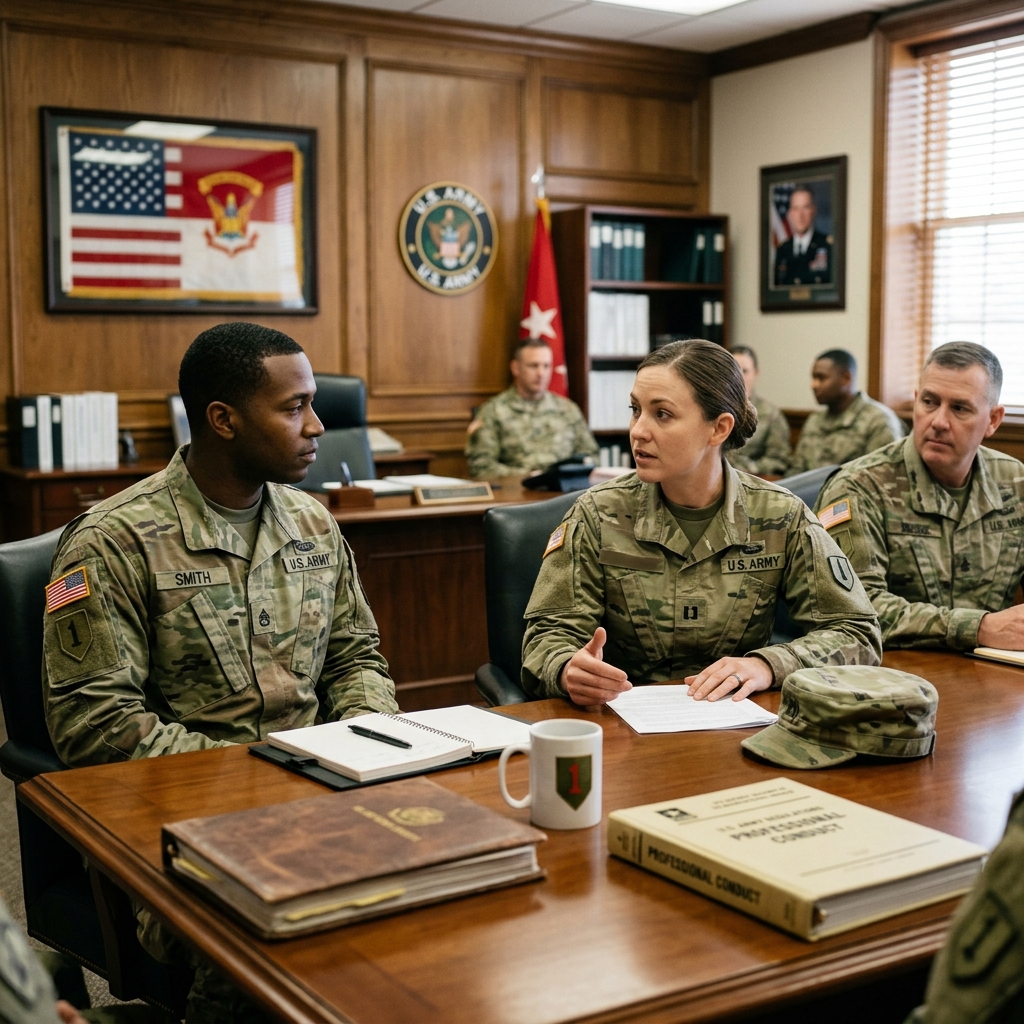
Fraternization is a uniquely military concept that sits at the intersection of professional ethics, command authority, and criminal law. It refers to improper personal relationships that cross rank boundaries and threaten the integrity of the chain of command and good order and discipline.
Although friendships and social interaction are common and often encouraged in the armed forces, U.S. military law imposes strict limits when relationships blur professional lines between officers and enlisted personnel or between superiors and subordinates. When those limits are violated, the conduct can be punished under the Uniform Code of Military Justice (UCMJ) and may even result in a court-martial.
Core Legal Framework Governing Fraternization
Fraternization is not defined in a single statute; instead, it is addressed through a combination of the UCMJ, service regulations, and long-standing customs of the service.
- Article 134, UCMJ (Fraternization) – The primary criminal provision used to prosecute fraternization, focusing on conduct by commissioned or warrant officers that violates service custom and prejudices good order and discipline or brings discredit on the armed forces.
- Article 92, UCMJ (Failure to Obey Order or Regulation) – Used when a service member violates a specific punitive regulation, such as Army Regulation 600-20’s rules on improper superior–subordinate relationships.
- Service Regulations – Each branch has detailed policies governing personal relationships. For the Army, AR 600-20 outlines prohibited status-based relationships and personal interactions between certain grades.
- Customs of the Service – Long-standing practices, especially the expectation that officers will not fraternize with enlisted members on terms of military equality, play a central role in determining what is considered improper.
These sources work together: regulations define specific prohibited relationships, customs fill in expectations, and Articles 92 and 134 provide the legal enforcement mechanisms when violations occur.
What Counts as Fraternization?
Fraternization is broader than simply dating across rank. It encompasses any personal relationship or social interaction that undermines the necessary professional distance between ranks or compromises the perception of fairness and authority.
Typical Characteristics of Improper Relationships
- They occur between individuals of different grades, especially between officers and enlisted personnel.
- They create the appearance of military equality where a clear hierarchy should exist.
- They may involve personal intimacy, financial ties, or social dependence that erodes professional boundaries.
- They have an actual or predictable impact on discipline, morale, authority, or mission readiness.
The focus is not merely on whether two people are friendly, but whether their relationship undermines respect for rank or affects how decisions, opportunities, and discipline are perceived within the unit.
Examples of Conduct Often Associated with Fraternization
Depending on context, the following types of behavior may constitute fraternization or be treated as unprofessional relationships:
- Romantic or sexual relationships between an officer and enlisted member.
- Dating or cohabitation between a noncommissioned officer (NCO) and a junior enlisted member in the same unit.
- Ongoing business partnerships between superior and subordinate, such as jointly owning a business (with limited exceptions like simple landlord/tenant relationships).
- Regular gambling between officers and enlisted personnel.
- Loaning substantial amounts of money, creating financial dependence between ranks.
Even if no explicit favoritism occurs, the mere existence of these relationships can be enough to raise concerns about partiality, exploitation, or compromised authority.
Elements of the Offense Under Article 134
To secure a conviction for fraternization under Article 134, military prosecutors must prove specific elements beyond a reasonable doubt.
| Element | What Must Be Proven |
|---|---|
| Status of the Accused | The accused was a commissioned officer or warrant officer at the time of the alleged conduct. |
| Nature of the Relationship | The officer fraternized with one or more enlisted members on terms of military equality, meaning the relationship disregarded rank distinctions. |
| Knowledge of Status | The officer knew that the other person was an enlisted member. |
| Violation of Custom | The conduct violated the custom of the service that officers shall not fraternize with enlisted members on terms of equality. |
| Impact on Discipline or Reputation | Under the circumstances, the conduct was to the prejudice of good order and discipline in the armed forces or was service discrediting. |
Each element is essential. If, for example, the accused reasonably believed the other person was not enlisted, or there is no evidence that the relationship violated a recognized custom, a fraternization charge may fail even if the conduct is still addressed administratively.
How Regulations Define Prohibited Relationships
Service regulations, especially in the Army, explicitly identify certain relationships that should not be initiated or maintained because they are likely to compromise proper authority and fairness.
Status-Based Prohibitions
Army policy, for instance, restricts personal relationships between categories such as officers and enlisted soldiers, NCOs and junior enlisted, and training cadre and trainees. These rules typically prohibit relationships that:
- Compromise, or appear to compromise, supervisory integrity or the chain of command.
- Create actual or perceived favoritism, partiality, or unfairness.
- Involve the improper use of rank or position for personal gain.
- Are exploitative or coercive in nature, especially where one party can influence evaluations, assignments, or discipline.
- Produce a clear or predictable adverse impact on discipline, morale, or mission accomplishment.
These regulatory standards often form the basis for administrative actions, such as counseling, reprimands, relief from duty, or separation, even when no criminal charges are pursued.
Personal Relationships Specifically Restricted
Common categories of prohibited personal relationships include:
- Ongoing business relationships between superior and subordinate (subject to narrow exceptions).
- Romantic or sexual relationships between officers and enlisted personnel, or between NCOs and junior enlisted within the same chain of command.
- Shared living arrangements that blur rank distinctions, such as roommates across significant grade differences.
- Regular gambling between superior and subordinate.
Not every cross-rank interaction is forbidden; situational, mission-related, and family relationships (such as when relatives serve together) may be allowed but are closely scrutinized and often require mitigation measures.
How Fraternization Affects the Military Profession
The underlying rationale for fraternization rules is not to restrict personal lives arbitrarily, but to protect the military’s ability to function as a disciplined, hierarchical institution.
Impact on the Chain of Command
- Compromised authority – If subordinates see a leader in a close personal relationship with a particular soldier, they may question whether orders and evaluations are objective.
- Erosion of trust – Perceptions of favoritism can reduce confidence in leadership and the fairness of promotion, awards, and discipline.
- Conflicted decision-making – A commander involved in a personal relationship may find it difficult to take necessary disciplinary action against that individual.
Effects on Morale and Unit Cohesion
- Other members may resent unequal treatment, leading to divisions and cliques within the unit.
- Rumors and speculation about relationships can become a distraction from mission tasks.
- Subordinates might feel pressured to engage in or tolerate inappropriate behavior to gain favor, undermining voluntary compliance with standards.
Because military operations rely on unquestioned obedience to lawful orders and confidence in leadership, even the perception of partiality can be harmful. The law therefore addresses fraternization not only when actual harm is proven, but when the conduct reasonably tends to cause such harm.
Potential Consequences of Fraternization
When suspected fraternization arises, the response can range from informal counseling to criminal prosecution, depending on the seriousness of the conduct and its impact on the unit.
Administrative Measures
- Formal counseling or written reprimands.
- Orders to terminate the relationship.
- Reassignment of one or both parties to different units.
- Adverse performance reports (OER/NCOER) affecting promotion and career prospects.
- Administrative separation from the service, sometimes under less-than-honorable conditions.
Criminal Sanctions Under the UCMJ
If the matter is treated as a criminal offense, it may proceed under Article 92 or Article 134. As outlined in the Manual for Courts-Martial, fraternization carries a potentially severe maximum punishment.
- Dismissal or dishonorable discharge from military service.
- Total forfeiture of pay and allowances.
- Confinement for up to two years if convicted at court-martial.
In practice, actual sentences vary based on the nature of the relationship, rank of the parties, prior record, and impact on the unit. Nevertheless, the statutory maximums underscore how seriously the military views these offenses.
Fraternization, Adultery, and Related Offenses
Fraternization charges often arise alongside other allegations, particularly adultery, conduct unbecoming, or disobedience of lawful orders.
- Adultery – Under the UCMJ, adultery involves sexual relations with someone other than one’s spouse and can be prosecuted when it undermines good order and discipline or is service discrediting.
- Conduct unbecoming an officer (Article 133) – Officers may face additional charges if their behavior is inconsistent with the standards of their commission.
- Failure to obey regulations (Article 92) – Violating a punitive relationship policy, such as AR 600-20’s prohibitions, can itself be charged.
The same set of facts—such as an officer’s extramarital relationship with an enlisted member—can support multiple charges, increasing the potential exposure to disciplinary action.
Practical Tips to Avoid Fraternization Problems
Service members can reduce the risk of fraternization allegations by proactively managing their personal relationships and understanding applicable regulations.
- Know your branch policy – Read and periodically review service-specific regulations on personal relationships and superior–subordinate interactions.
- Maintain professional boundaries – Avoid situations where social interactions could reasonably be viewed as favoritism or exploitation.
- Use the chain of command – Seek guidance from leaders or legal advisors when unsure about a particular relationship.
- Document compliance – When reassigned or promoted, consider addressing potential conflicts of interest in writing and following any guidance given.
- Terminate questionable relationships early – Once a relationship begins to raise concerns, ending or restructuring it can prevent more serious consequences.
Defending Against a Fraternization Allegation
Because fraternization cases often turn on context and perceptions, there are several avenues of defense that may be considered with the assistance of qualified counsel.
- Challenging the elements – Demonstrating that one or more required elements (such as knowledge of enlisted status or violation of custom) cannot be proven.
- Questioning the impact – Showing that the relationship did not prejudice good order and discipline and did not bring discredit upon the armed forces.
- Highlighting compliance efforts – Evidence that the parties sought guidance, followed orders, or adjusted the relationship to conform to policy.
- Procedural defenses – Challenging the lawfulness of a regulation or order, or arguing that the investigation failed to follow required procedures.
Given the potential for lasting career consequences, service members accused of fraternization often benefit from consulting military defense counsel or experienced civilian attorneys who understand both the UCMJ and service regulations.
Frequently Asked Questions (FAQs)
Can officers and enlisted members ever be friends without violating fraternization rules?
Yes. The law does not forbid all cross-rank friendships. What it prohibits are relationships that disregard rank distinctions, compromise the chain of command, or prejudice discipline and morale. Professional, respectful interactions and group social activities are generally acceptable when they do not create the appearance of favoritism or exploitation.
Is fraternization always punished as a criminal offense?
No. Many fraternization issues are addressed administratively, through counseling, reassignment, or reprimand, rather than by court-martial. Criminal prosecution under Articles 92 or 134 is more likely when the conduct is serious, repeated, or clearly harmful to the unit.
Do the rules differ between branches of the armed forces?
Yes. While all branches must follow the UCMJ, each has its own detailed policies and cultural norms. The Army’s AR 600-20, for example, specifically outlines status-based prohibitions, whereas other branches have their own instructions and guidelines. Service members should always consult their branch-specific regulations.
Can a consensual romantic relationship still be considered fraternization?
Yes. Consent does not eliminate the problem if the relationship crosses rank boundaries and undermines or appears to undermine proper authority, discipline, or fairness. Even mutually agreed relationships can create perceptions of favoritism or coercion due to the power imbalance.
What should I do if I think my relationship might violate policy?
Consider seeking confidential advice from legal assistance, the chain of command, or an ethics counselor. Early disclosure and corrective action—such as reassignment or ending the relationship—may prevent more serious consequences later. Ignoring the issue can increase the risk of both administrative and criminal sanctions.
References
- Criminal Law Deskbook: Improper Superior-Subordinate Relationships and Fraternization — The Judge Advocate General’s Legal Center and School (U.S. Army). 2023-01-01. https://tjaglcs.army.mil/criminallawdeskbook/topic/31_Improper_Superior-Subordinate_Relationships_and_Fraternization
- Manual for Courts-Martial, United States, pt. IV, ¶ 101 (Fraternization) — U.S. Department of Defense. 2019-12-20. https://jsc.defense.gov/Portals/99/Documents/Manuals/2019%20MCM.pdf
- Army Regulation 600-20: Army Command Policy — Headquarters, Department of the Army. 2020-07-24. https://armypubs.army.mil/ProductMaps/PubForm/AR.aspx
- UCMJ Article 134: Fraternization — Crisp and Associates Military Law. 2021-06-01. https://www.mymilitarylawyers.com/ucmj-article-134-fraternization/
- A Soldier’s Guide to Fraternization Policy in the Army — Bilecki Law Group. 2022-03-15. https://www.bileckilawgroup.com/court-martial-defense/articles-of-the-ucmj/article-134-offenses/fraternization/a-soldiers-guide-to-fraternization-policy-in-the-army/
- Fraternization & Adultery in the Military — Federal Practice Group. 2021-05-10. https://fedpractice.com/practice-areas/military/fraternization-adultery/
Similar Articles








Read full bio of medha deb




