
Understanding Access to Juvenile Crime Records
A practical guide to confidentiality, access rights, and long‑term impact of juvenile criminal records in the United States.
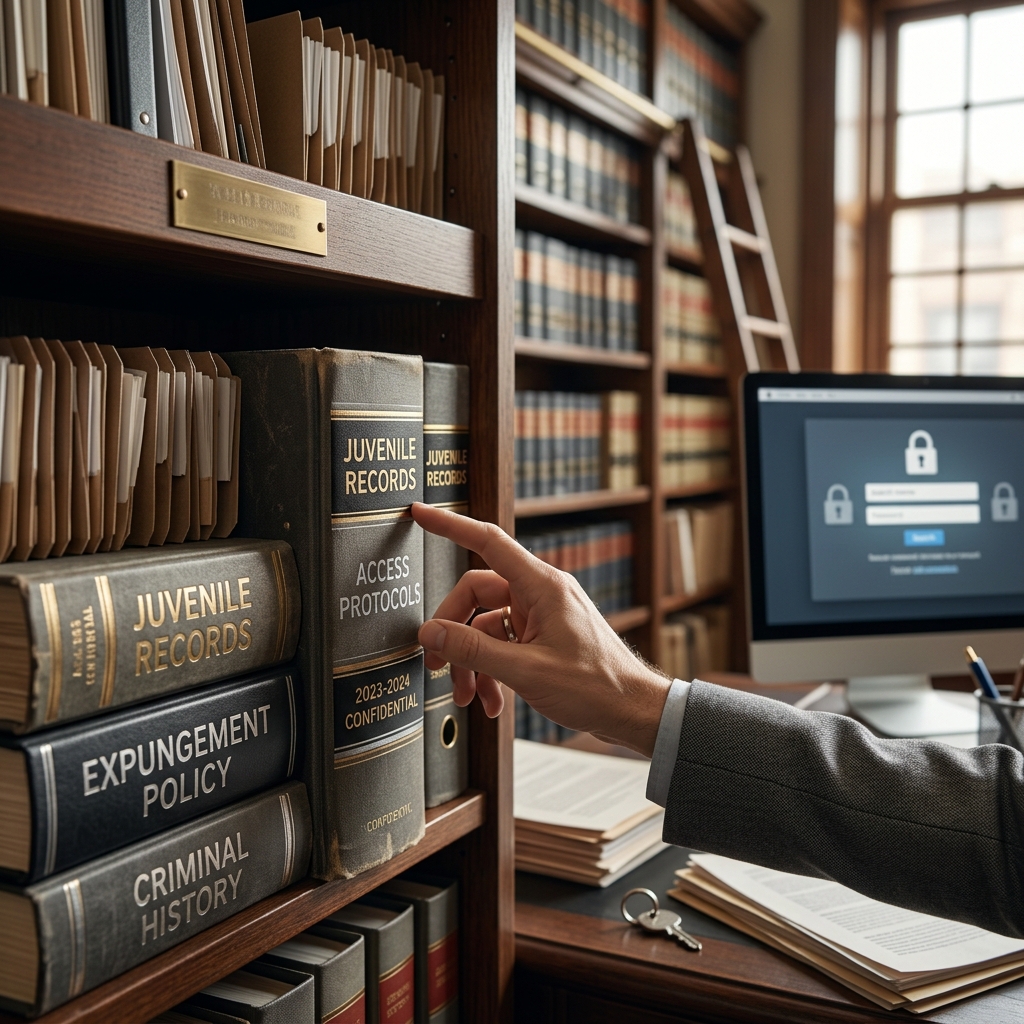
Juvenile crime records occupy a unique place in the legal system. They document a young person’s contact with the justice system, yet they are treated differently from adult criminal records because of a longstanding policy goal: protecting youth from lifelong stigma while still allowing courts, schools, and public safety agencies to function effectively. This article explains how juvenile records are created, who can access them, when they may be disclosed, and what options exist for limiting their impact over time.
What Counts as a Juvenile Crime Record?
Whenever a child or teenager is arrested, investigated, or brought before a juvenile court, a record is generated. These records can arise from both delinquency cases (conduct that would be a crime for an adult) and status offenses (conduct such as truancy that is only unlawful because of the person’s age).
Typical components of a juvenile record include:
- Law enforcement documents – arrest reports, incident reports, and police notes.
- Court case materials – complaints, petitions, charging documents, and motions filed in juvenile court.
- Hearing information – transcripts of proceedings, orders, judgments, and findings entered by the court.
- Social and agency records – probation files, diversion program documentation, school reports, and related case management notes.
These materials may be stored separately by multiple entities, including police departments, juvenile probation offices, state juvenile justice agencies, and the courts themselves. As a result, access rules can vary depending on which entity holds the particular record.
Why Juvenile Records Are Treated as Confidential
Most states make juvenile court records confidential and restrict public access to them. The policy reasons are well documented:
- Reducing stigma – juvenile records can cause social and professional labeling that follows young people into adulthood.
- Supporting rehabilitation – confidentiality is designed to encourage treatment, education, and reform rather than permanent punishment.
- Protecting privacy – cases may involve sensitive family, mental health, or child welfare information that is not appropriate for public disclosure.
Unlike adult criminal cases, which are often presumptively public, juvenile proceedings are commonly closed to the general public, and the corresponding files are kept out of standard public record systems. For example, the District of Columbia code explicitly requires that juvenile case records be confidential and not open to inspection except in narrow circumstances.
Who Is Allowed to Access Juvenile Crime Records?
Confidentiality does not mean absolute secrecy. Statutes and court rules specify groups that may lawfully access juvenile files, usually without a full public disclosure. While details differ by jurisdiction, several categories appear across state laws and guidance.
Individuals Directly Involved in the Case
- The juvenile – the young person generally has the right to examine their own record and obtain copies of it.
- Parents, guardians, or custodians – adults responsible for the juvenile can typically review the records, often to help with legal representation, education planning, or treatment.
- Attorneys – both defense counsel and government lawyers may access case files when they are representing a party in the matter.
Justice System Personnel
- Judges and court staff – courts must see the records to make decisions about adjudication, disposition, and supervision.
- Juvenile probation or court counselors – these professionals rely on records to supervise youth, recommend services, and track compliance.
- Law enforcement officers – police may be allowed to review juvenile records for investigative and safety purposes.
- Adult probation officers – in some jurisdictions, adult probation staff may view prior juvenile records when the same person later faces adult charges.
Educational and Child Welfare Agencies
- School officials – statutes often permit or require sharing information with schools when a student is the subject of a delinquency petition, especially for serious offenses.
- Child protective services – child welfare authorities may be authorized to examine juvenile records in order to protect the child’s safety and coordinate services.
Researchers and Policy Analysts
In some states, qualified researchers can obtain access to juvenile court data for academic or policy research under strict controls. For example, the Juvenile Court Judges’ Commission in Pennsylvania allows requests for certain records, but requires:
- Completion of a formal data request form.
- Submission of a research proposal and confidentiality plan.
- Institutional Review Board (IRB) approval for projects involving identifiable case data.
- Authorization from local juvenile probation officers or judges where records originate.
These requirements reflect the tension between promoting evidence‑based policy and protecting the privacy of individual youth.
Common Legal Exceptions to Confidentiality
Despite strong confidentiality protections, there are situations where juvenile records may be disclosed more broadly. These exceptions aim to balance privacy with public safety and fair trial rights.
Public Safety Disclosures
Some statutes allow courts to release limited information to the public when a juvenile is believed to pose a serious danger. For instance, a court may authorize disclosure if:
- The youth has escaped from detention or agency custody.
- There is reason to think they present a threat of bodily harm to others.
- The case involves a violent offense as defined by statute.
Even in these scenarios, disclosure is usually narrow and focused on identifying information or the nature of the threat rather than on the entire case file.
Use of Juvenile Records When the Youth Is a Witness
Juvenile records may lose some confidentiality when the juvenile appears as a witness in another case. Under the Confrontation Clause of the U.S. Constitution, a defendant has the right to challenge the credibility of witnesses against them. Courts sometimes permit limited access to juvenile records so the defense can use relevant information—for example, prior adjudications that relate directly to credibility—as part of cross-examination.
However, judges often restrict disclosure to information closely tied to the issues in the current case and may redact names or other sensitive material to maintain as much privacy as possible.
Transition to Adult Court or Adult Criminal Proceedings
In serious cases, youth may be transferred to adult court or later prosecuted as adults for new offenses. In these circumstances, adult courts and probation departments may be permitted to inspect prior juvenile records in order to understand the person’s history and inform sentencing or supervision decisions.
| Context | Typical Access Level | Primary Purpose |
|---|---|---|
| Juvenile delinquency proceedings | Full access for parties, limited access for schools and agencies | Adjudication, supervision, rehabilitation |
| Public safety emergencies | Targeted disclosure authorized by court | Locating youth, preventing harm |
| Youth as witness in criminal case | Limited, court‑controlled disclosure | Ensuring fair trial and effective cross‑examination |
| Research and policy studies | De‑identified or controlled data access | Evaluating system performance, reform design |
How Juvenile Records Affect Education, Employment, and Opportunity
Contrary to a common belief, juvenile records are not automatically sealed or erased when a person turns 18. Many records remain accessible to justice agencies and, in some cases, schools or other institutions well into adulthood.
Access to such records can have long‑term consequences:
- Educational barriers – schools and colleges may consider juvenile records in discipline, admissions, or placement decisions, particularly when they involve serious or repeated misconduct.
- Employment hurdles – although juvenile records are not always visible on standard background checks, information that has become part of other systems can influence hiring decisions.
- Housing and licensing – agencies that review criminal histories for licenses or housing eligibility sometimes encounter juvenile information, especially if it has been disclosed or merged into other files.
Advocacy organizations have highlighted how these collateral consequences undermine the rehabilitative purpose of the juvenile system and can extend punishment into the very period when young adults are trying to enter the workforce and pursue higher education.
Requesting Your Own Juvenile Records
Youth and adults who were previously involved in the juvenile system often need copies of their records—for example, when seeking legal advice, applying to seal a record, or correcting inaccurate information. Procedures differ by state, but several common steps appear in official guidance.
- Identify which agency holds the records – police departments keep arrest information, while juvenile courts or probation offices maintain case files and supervision records.
- Submit a written request – many jurisdictions require a signed request form or letter that includes identifying information and a description of the records sought.
- Provide identification – requesters are typically asked to include a copy of a government‑issued ID. If the youth is still under 18, a parent or guardian may need to sign and provide their ID.
- Work through your attorney if you have one – some systems allow records to be sent directly to the lawyer representing the individual in a current matter.
For instance, the Virginia Department of Juvenile Justice explains that individuals have the right to a copy of records held on them and can request an offense history for a limited time after their last hearing, subject to age limits and retention rules. Similarly, North Carolina’s juvenile justice agency requires written requests to its records officer for access to juvenile files.
Sealing, Expungement, and Long‑Term Protection
Several mechanisms exist to reduce the long‑term impact of juvenile records. Terminology and requirements vary, but the goals are similar: to limit future access and prevent past mistakes from permanently blocking opportunities.
Sealing Records
Sealing generally means a court order is issued so that the record is not accessible to the public or most agencies without specific judicial permission. Clerks may be instructed to restrict inspection of sealed portions of a file.
- In some states, certain juvenile records may be sealed automatically after a period of law‑abiding behavior.
- Elsewhere, the individual must file a petition and demonstrate rehabilitation or lack of subsequent offenses.
- Sealed records may still be accessible to courts or law enforcement in limited circumstances, such as future serious prosecutions.
Expungement
Expungement typically involves destroying or deleting records so they are treated as though they never existed for most purposes. Juvenile expungement statutes vary widely:
- Some jurisdictions offer expungement only for lower‑level offenses or cases that did not lead to adjudication.
- Others allow broader expungement, but require a waiting period and a demonstration that the youth has not reoffended.
- Expungement may require separate petitions for law enforcement files and court files, since they are stored by different entities.
Because the rules are complex and state‑specific, many individuals seek legal assistance when pursuing sealing or expungement.
Practical Tips for Families and Youth
Navigating juvenile record access can be confusing. The following practical points can help youth and families protect their rights and plan for the future:
- Ask early about record consequences – when a case begins, discuss with counsel how potential outcomes will affect the juvenile’s record and long‑term prospects.
- Keep copies of key documents – maintaining your own file of orders, discharge papers, and program completion certificates can simplify later sealing or expungement efforts.
- Clarify who may see the record – request information from probation officers or attorneys about which agencies or schools will have access to the file and under what conditions.
- Monitor for errors – if you discover inaccurate information in a record, work through counsel or the relevant agency to correct it promptly.
- Explore relief options – once the case is over, ask about eligibility for sealing, expungement, or other statutory protections that may be available.
Frequently Asked Questions (FAQs)
Are juvenile records always completely secret?
No. While juvenile records are generally confidential and not open to broad public inspection, many statutes allow limited access for courts, schools, law enforcement, child welfare agencies, and researchers under controlled conditions.
Do juvenile records automatically disappear at age 18?
In most states, juvenile records are not automatically sealed or erased when someone turns 18. Confidentiality rules can apply well into adulthood, and records may still be accessible to justice agencies or in certain background checks unless formal sealing or expungement occurs.
Can employers see juvenile records?
Many juvenile records are kept out of routine public databases, but information can still reach employers indirectly—for example, when records were disclosed in other proceedings or when the law permits certain licensing boards to consider juvenile history. The extent of access depends heavily on state law.
How can I get a copy of my juvenile record?
Generally, you need to contact the agencies that hold your record, such as the juvenile court, probation office, or the police department, and submit a written request with identification. Some states provide specific forms or instructions through court or justice department websites.
What is the difference between sealing and expungement of juvenile records?
Sealing usually restricts access to the record but keeps it in existence, typically allowing only courts or certain authorities to view it under limited circumstances. Expungement goes further by destroying or deleting records so that, for most purposes, they are treated as though they never existed. The availability and exact effect of each remedy are defined by state law.
References
- Juvenile Records — Virginia Department of Juvenile Justice. 2023-05-10. https://www.djj.virginia.gov/pages/about-djj/djj-juv-records.htm
- Request Data from the Juvenile Court Judges’ Commission — Commonwealth of Pennsylvania. 2022-09-01. https://www.pa.gov/services/jcjc/request-data-from-the-juvenile-court-judges-commission
- Juvenile Records – NC PRO — UNC School of Government. 2021-06-15. https://ncpro.sog.unc.edu/manual/523-1
- Confidentiality of Juvenile Records & Legal Exceptions — Justia. 2020-11-30. https://www.justia.com/criminal/offenses/other-crimes/juvenile-crimes/confidentiality-of-juvenile-court-records/
- § 16–2331. Juvenile case records; confidentiality; inspection and copying — District of Columbia Official Code. 2013-03-01. https://code.dccouncil.gov/us/dc/council/code/sections/16-2331
- Records — Juvenile Law Center. 2018-04-20. https://jlc.org/issues/records
- Juvenile court records — Massachusetts Legal Help. 2022-01-10. https://www.masslegalhelp.org/criminal-records-cori-licenses/criminal-offender-record-information-cori/juvenile-court-records
Similar Articles








Read full bio of medha deb




