
Understanding Police Liability for Property Damage
A clear guide to when police departments and officers can be held responsible for damaging property and how victims may seek compensation.
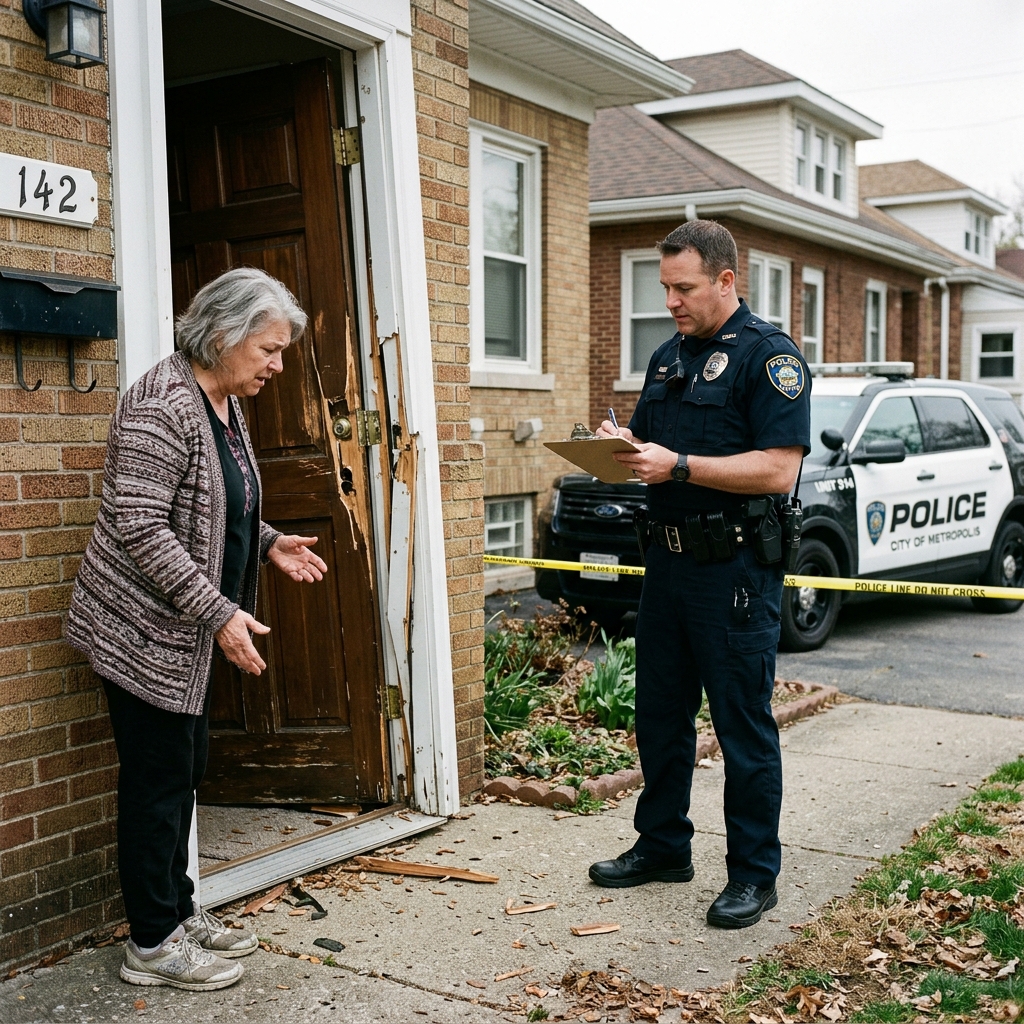
When police officers damage homes, vehicles, or other belongings during searches, arrests, or pursuits, the question quickly arises: who pays for the loss? Police liability for property damage sits at the intersection of constitutional law, state tort law, and government immunity doctrines, and the answer depends heavily on how and why the damage occurred.
This article explains the major legal pathways people use to seek compensation, the limits on suing police and government agencies, and practical considerations for anyone dealing with property damage linked to law enforcement activity. It focuses on general principles seen across the United States; specific rules vary by state and sometimes by locality.
Why Police Damage Property – And Why Liability Is Complex
Police officers are routinely required to enter buildings, stop vehicles, and use force in unpredictable, high-risk conditions. Doors are forced open, windows are broken, and cars are struck during pursuits. While some damage is an unavoidable part of legitimate law enforcement work, other harm may result from unreasonable tactics, policy failures, or unlawful conduct.
Liability is complex because several overlapping rules apply:
- Constitutional protections, such as the Fourth and Fourteenth Amendments.
- State tort law governing negligence, trespass, and other civil wrongs.
- Governmental immunity statutes that shield agencies and employees in many situations.
- Special federal rules for suing the United States over actions of federal officers, such as the Federal Tort Claims Act.
Understanding which body of law applies is the first step in evaluating whether compensation is possible.
Constitutional Framework: Search, Seizure, and Takings
Claims involving police damage to property often invoke the U.S. Constitution, particularly the Fourth Amendment, the Fourteenth Amendment, and the Takings Clause of the Fifth Amendment (applied to states through the Fourteenth).
Fourth Amendment: Reasonableness of Searches and Seizures
The Fourth Amendment prohibits unreasonable searches and seizures. When officers execute a search warrant or make an arrest, they may use force and cause damage, but that damage is judged under a reasonableness standard.
- Reasonable damage: Courts generally allow damage that is necessary to safely and effectively carry out a lawful search or arrest, such as breaking a locked door when executing a valid warrant.
- Unreasonable damage: Excessive, gratuitous, or vindictive destruction of property may violate the Fourth Amendment and support a federal civil rights claim.
Importantly, courts assess reasonableness based on what officers knew at the time, not on hindsight about whether evidence was found or an arrest ultimately led to conviction.
Fifth Amendment Takings Clause: Is Damage a “Taking”?
The Takings Clause states that private property cannot be taken for public use without just compensation. Courts have asked whether police destruction of property during law enforcement operations should be treated as a compensable taking.
The prevailing approach in many jurisdictions is:
- Damage carried out during a lawful search or arrest in a reasonable manner is not considered a constitutional “taking,” because the government is not appropriating the property for public use; it is applying police power.
- In some cases, where damage clearly exceeds what is necessary and reasonable, courts have suggested that a taking claim might be viable and compensation may be owed.
As a result, most claims for police-caused property damage proceed under civil rights statutes or state tort law, not under the Takings Clause.
Federal Civil Rights Claims Under Section 1983
A central mechanism for suing state and local officers is 42 U.S.C. § 1983, which allows individuals to bring civil actions when someone acting “under color of state law” deprives them of rights secured by the Constitution or federal statutes.
In the context of property damage, Section 1983 may be used when:
- Officers execute a search or seizure in an unreasonably destructive manner.
- Property is destroyed as a result of excessive force, unlawful entry, or retaliatory conduct.
- The damage reflects a broader policy or failure to train at the agency level.
To succeed on a Section 1983 claim, a plaintiff generally must show:
- Action under color of law (the officer was acting in an official capacity).
- Violation of a specific constitutional right (for example, unreasonable search and seizure).
- A causal link between the officer’s conduct and the property damage.
These claims are often complicated by qualified immunity, a doctrine that protects officers from liability when the law was not “clearly established” at the time of their actions.
State Tort Law: Negligence and Intentional Misconduct
Separate from federal civil rights law, each state recognizes civil wrongs—called torts—that may support damages claims against officers and their employers. Common theories include negligence, trespass, conversion (wrongful interference with property), and intentional torts such as assault or battery.
Negligence-Based Claims
A negligence claim generally requires proof that the officer failed to use reasonable care under the circumstances and that this failure caused property damage.
Examples might include:
- Improper vehicle operation during a police pursuit that damages an uninvolved motorist’s car.
- Careless handling of seized personal property leading to loss or breakage.
Intentional Torts and Excessive Force
Officers may also face claims for intentional torts when they act with deliberate, wrongful intent—for example, using unnecessary violence or engaging in unjustified destruction of property.
Courts have held that when an officer exceeds the scope of lawful authority or uses brutality without necessity, immunity can be lost and the officer may be personally liable. In these situations, the employing agency may also face liability, depending on state law regarding vicarious responsibility and indemnification.
Governmental Immunity and Indemnification
Even when conduct appears negligent or wrongful, many claims against public entities and employees face substantial barriers due to governmental immunity statutes.
State-Level Government Immunity
States often enact statutes that limit when individuals can sue government agencies. For example, under the Colorado Governmental Immunity Act, public entities and employees are generally immune except in specific categories of claims, and officers are personally liable only for willful and wanton conduct.
Common features of state immunity frameworks include:
- Enumerated exceptions where lawsuits are allowed (such as certain vehicle accidents or dangerous conditions of public property).
- Damage caps that limit how much an injured person can recover per claim or per incident.
- Short deadlines for notice and filing, stricter than ordinary civil statutes of limitations.
Federal Tort Claims Act (FTCA)
When a federal law enforcement officer (such as an FBI agent) causes property damage, claims are often governed by the Federal Tort Claims Act (FTCA). Under this statute, the United States agrees to pay damages for certain negligent torts committed by federal employees acting within the scope of their employment, and for some intentional torts by investigative and law enforcement officers.
Key points under the FTCA include:
- Federal employees are generally immune from suit in their personal capacity for acts within the scope of employment; the United States is substituted as the defendant.
- Claims are governed by the law of the state where the incident occurred, subject to federal limitations and exceptions.
- Administrative procedures must be followed before filing suit in federal court.
Indemnification of Officers
Many agencies indemnify officers—that is, they pay any judgments or settlements for actions taken in the course of duty, up to statutory limits. For instance, materials from the Colorado General Assembly describe indemnification caps and conditions under which agencies must cover damages owed to injured parties.
| Actor | When Liability May Apply | Common Limitations |
|---|---|---|
| Individual officer | Willful, wanton, or clearly outside scope of authority; unnecessary violence or destruction. | Qualified immunity; state immunity statutes; agency indemnification may shift financial burden. |
| Local or state agency | Negligence or policy failures; vicarious liability for employees; statutory causes of action. | Governmental immunity; damage caps; procedural hurdles such as notice requirements. |
| Federal government (FTCA) | Negligent torts and some intentional torts by federal law enforcement officers acting within scope. | FTCA exceptions; mandatory administrative claims; no liability in certain discretionary functions. |
Special Situations: Police Pursuits and Recording Incidents
Damage During Police Vehicle Pursuits
Property damage frequently occurs during police vehicle pursuits, including harm to uninvolved motorists or roadside structures. Assessing liability requires examining both pursuit policies and the officer’s adherence to those policies.
In many jurisdictions:
- Officers are protected by qualified immunity when they act in good faith and follow established procedures.
- Victims may pursue claims for negligence or reckless conduct if officers or agencies violated their own pursuit policies or ignored obvious safety risks.
- Damages can include repair or replacement costs, medical bills, lost income, and pain and suffering.
Damage to Recording Devices and Retaliation
Modern statutes in some states explicitly address the rights of individuals to record law enforcement and create civil remedies when officers damage or seize recording equipment unlawfully. Legislative materials from Colorado, for example, describe causes of action when officers destroy or damage recording devices, confiscate them without legal basis, or retaliate against someone for documenting police conduct.
These laws recognize that deliberate interference with recording can implicate both property rights and constitutional rights such as freedom of speech and petition.
Insurance and Risk Management for Law Enforcement Agencies
Because civil liability can be substantial, many agencies and municipalities carry law enforcement liability insurance that covers bodily injury, personal injury, and property damage arising from wrongful acts committed during law enforcement activities.
Typical policy features include:
- Coverage for damages arising from excessive force, unlawful arrest, or negligent operations.
- Defense costs for lawsuits alleging wrongful acts.
- Coordination with self-insurance funds or statutory indemnification frameworks.
Agencies also invest in risk management strategies—such as training, clear use-of-force guidelines, and pursuit policies—to reduce the likelihood of property damage and associated claims.
Practical Steps for Property Owners Seeking Compensation
People facing property damage tied to law enforcement activity often feel overwhelmed. While the best course of action depends on local law and the specific facts, several practical steps are usually helpful.
- Document the damage
Take photographs or videos as soon as possible, preserve broken items, and record dates, times, and names of officers or agencies involved. - Request incident reports
Obtain any available police reports or warrant documentation to clarify what operation occurred and under what claimed authority. - Check deadlines and notice requirements
Governmental immunity statutes often impose short deadlines for giving notice of a claim and filing suit; missing them can bar recovery. - Consult legal counsel
Because the interaction of constitutional law, state tort law, and immunity rules is complex, an attorney familiar with civil rights or government liability can assess viable theories of relief. - Explore non-litigation options
Some municipalities have administrative processes or claims forms for property damage, especially in clear-cut situations such as minor vehicle collisions.
Frequently Asked Questions (FAQs)
1. If police break down my door during a lawful search, do they have to pay for it?
Not necessarily. Courts generally hold that reasonable damage caused while executing a valid warrant—such as breaking a locked door—is part of lawful police work and does not automatically create a right to compensation under the Takings Clause or state law. However, if officers acted in an unnecessarily destructive or unlawful manner, you may have grounds for a civil rights or tort claim.
2. Can I sue the individual officer who damaged my property?
Sometimes. Officers may be personally liable when they act outside the scope of their authority or engage in willful, wanton, or unnecessarily violent conduct. At the same time, doctrines like qualified immunity and state governmental immunity can shield officers in many situations, and agencies often indemnify them, meaning the government ultimately pays any judgment.
3. What if a federal agent causes property damage?
Claims against federal officers are usually handled under the Federal Tort Claims Act. Under the FTCA, you generally sue the United States, not the individual agent, for negligent torts and certain intentional torts committed by law enforcement officers acting within the scope of their employment. Strict procedural and timing requirements apply.
4. Does qualified immunity mean police can never be sued?
No. Qualified immunity shields officers from personal liability under Section 1983 only when the law was not clearly established at the time of their actions. If a reasonable officer would have known the conduct violated clearly established constitutional rights, qualified immunity may not apply, and the claim can proceed.
5. Are there special laws protecting my right to record the police?
In some states, statutes explicitly protect the right to record law enforcement and provide civil remedies if officers unlawfully destroy recording devices, seize them without legal basis, or retaliate against the person recording. These laws often interact with constitutional free speech protections and property rights.
References
- Police Liability for Damage to Property — UNC School of Government. 2024-09-16. https://nccriminallaw.sog.unc.edu/police-liability-for-damage-to-property/
- Police Civil Liability — EBSCO Research Starters. 2019-01-01 (topic overview, still authoritative for general principles). https://www.ebsco.com/research-starters/law/police-civil-liability
- Law Enforcement Liability — Colorado General Assembly Issue Brief. 2021-01-01. https://content.leg.colorado.gov/sites/default/files/law_enforcement_liability_0.pdf
- Officer Liability – State Law Torts and the FTCA — Federal Law Enforcement Training Centers (FLETC). 2017-01-01. https://www.fletc.gov/officer-liability-state-law-torts-and-ftca-mp3
- Determining Liability in a Police Pursuit Car Accident — Barry P. Goldberg, A Professional Law Corporation. 2022-06-01. https://www.barrypgoldberg.com/determining-liability-in-a-police-pursuit-car-accident-understanding-the-legal-framework/
- Police Liability Claims — Chapman Law Group. 2020-01-01. https://www.chapmanlawgroup.com/practice_areas/policeliability/
- Tort Liability of Law Enforcement Officers: State Remedies — Louisiana Law Review, LSU Law Center. 1976-01-01 (classic doctrinal analysis, still cited for foundational principles). https://digitalcommons.law.lsu.edu/cgi/viewcontent.cgi?article=3568&context=lalrev
Similar Articles








Read full bio of medha deb




