
Understanding Parental Responsibility for Juvenile Crime
How and when parents can be held legally, financially, and practically accountable for crimes committed by their children.
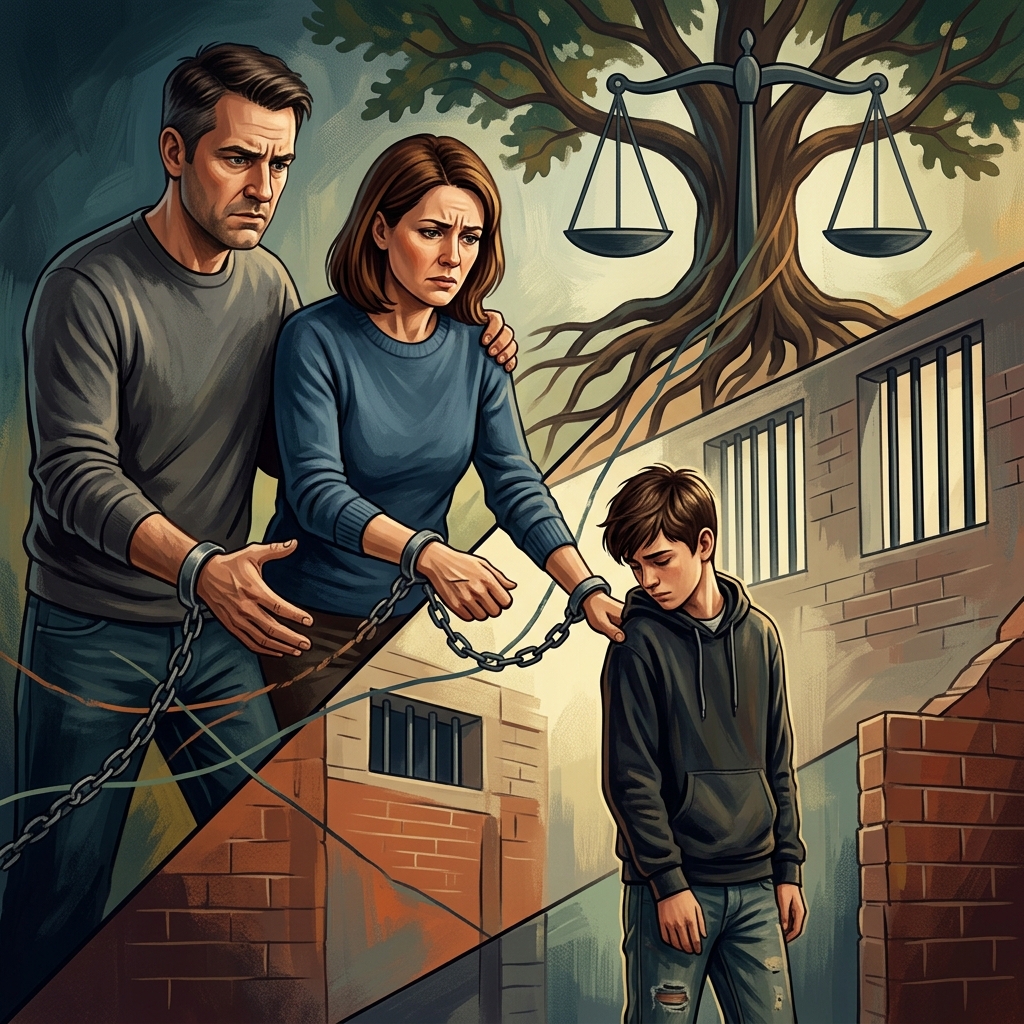
When a child or teenager breaks the law, the legal system increasingly looks beyond the young offender and asks a broader question: what responsibility do parents bear for juvenile crime? In many jurisdictions, parents can face civil lawsuits, criminal charges, and court-imposed obligations tied directly to their child’s misconduct. These policies aim both to compensate victims and to push parents toward closer supervision and involvement in their children’s lives.
This article explains the key concepts behind parental responsibility laws, the types of liability parents may face, how these laws operate in practice, and what families can do to reduce legal risk and support healthier youth development. It is focused primarily on U.S. law, though many of the themes arise in other countries as well.
Why Lawmakers Hold Parents Accountable
Modern parental responsibility laws emerged as part of a broader shift toward tougher responses to juvenile delinquency and greater emphasis on victims’ rights. Instead of viewing youth offending solely as the child’s problem, policymakers increasingly frame delinquency as a family and community issue.
Several overlapping goals drive these laws:
- Victim compensation – Ensuring that people harmed by minors can recover at least some financial losses from a responsible adult.
- Deterrence of youth crime – Assuming that if parents risk penalties, they will monitor and supervise their children more closely, which in turn should reduce offending.
- Encouraging parental involvement – Using court orders and legal obligations to pull parents into the juvenile justice process, from hearings to counseling.
- Symbolic accountability – Reinforcing a social norm that parents share responsibility for children’s behavior and well-being, especially when those children are not yet adults.
Research indicates that parental monitoring and involvement are indeed linked to lower levels of delinquency, though the evidence is mixed on whether punishing parents directly produces long-term reductions in youth crime.
Core Legal Framework: Civil vs. Criminal Responsibility
In most U.S. states, parental responsibility appears in two main forms: civil liability and criminal liability.
Civil Liability for a Child’s Misconduct
Civil responsibility focuses on money and compensation. Parents may be ordered to pay damages when their child’s wrongful acts cause property loss or personal injury. These statutes are often called parental civil liability or vicarious liability provisions.
- Applies broadly to intentional acts such as vandalism, assault, or theft by minors.
- Usually sets a maximum recovery amount, which varies by state (average caps around a few thousand dollars).
- Often covers restitution (repayment to victims), court costs, and sometimes fees for detention or treatment.
Under these laws, parents are not being punished for committing the crime themselves. Instead, the law treats them as financially responsible parties, similar in some respects to how employers may be liable for employees acting within the scope of employment.
Criminal Liability and Neglect-Based Offenses
Criminal parental responsibility laws go further by imposing the possibility of fines, probation, or jail time when parents are deemed to have encouraged, enabled, or negligently failed to prevent their child’s crime.
Typical criminal theories include:
- Contributing to delinquency – Charging parents when they actively assist or knowingly allow illegal behavior (for example, providing a weapon or alcohol to a minor).
- Failure to supervise – Treating inadequate oversight as a criminal neglect offense when it leads to serious harm or recurrent delinquency.
- Status offense involvement – Some statutes target parent behavior related to truancy, curfew violations, and similar non-criminal but prohibited youth behaviors.
Criminal parental responsibility provisions are often classified as misdemeanors, with potential penalties including fines, short jail terms, and mandatory participation in education or counseling programs.
Common Types of Offenses That Trigger Parental Liability
Parental responsibility laws capture a range of youth behaviors, from relatively minor mischief to serious violent crime. Three broad categories are frequently discussed in legal and criminological literature:
Property Damage and Theft
One of the most typical scenarios involves minors who damage property or steal items. Civil statutes often make parents financially responsible in these situations, up to a specified limit.
- Graffiti and vandalism of homes, schools, or businesses
- Breaking windows, damaging vehicles, or destroying landscaping
- Shoplifting or organized theft from retailers
Courts may order parents to pay restitution to victims, as well as court costs and, in some states, part of the expenses incurred by juvenile justice agencies.
Personal Injury and Assaultive Behavior
When a minor assaults another person, parents may be sued civilly for damages or, in more serious cases, face criminal charges if the law finds that they contributed to the risk (for example, by negligently storing firearms).
- Physical fights leading to medical expenses or long-term injury
- Bullying that escalates into assault or battery
- Use of weapons where parents ignored obvious warning signs
These cases raise difficult questions about foreseeability and what level of supervision is reasonable, especially for older teens who spend more time away from home.
Status Offenses and School-Related Misconduct
So-called status offenses are behaviors that are unlawful only because of the youth’s age. Examples include truancy, running away, and violating curfew.
- Repeated school absenteeism without valid excuse
- Being out past curfew in violation of local ordinances
- Habitual disobedience that leads to court involvement
In some jurisdictions, parents can be fined or ordered into parenting classes if they fail to address chronic status offenses. The intent is to push families to intervene early before more serious delinquent conduct appears.
How Parental Responsibility Laws Vary by State
Parental responsibility is not governed by a single national standard. Each state designs its own set of statutes, and even within states, local ordinances can add extra layers of obligation. Nonetheless, some broad patterns have emerged.
| Aspect | Typical Civil Approach | Typical Criminal Approach |
|---|---|---|
| Who is liable? | Parents or legal guardians of minors | Parents or guardians alleged to be negligent or complicit |
| Primary purpose | Compensation for victims and restitution costs | Deterrence, punishment, and increased supervision |
| Common sanctions | Damage awards, restitution, court fees | Fines, possible jail, mandatory classes or counseling |
| Typical limit | Statutory caps on dollar amounts (varies by state) | Often misdemeanor-level penalties, sometimes more serious if harm is extreme |
According to federal juvenile justice research, nearly all U.S. states have some form of civil parental liability for youth crime, and many also impose obligations such as attending hearings, paying court costs, or reimbursing detention and treatment expenses.
Court-Ordered Parental Involvement and Services
Beyond direct liability, courts now use a variety of tools to draw parents into the process and promote family-based solutions. These measures often sit at the intersection of prevention and punishment.
Mandatory Participation in Juvenile Proceedings
Some states require parents to attend juvenile court hearings, with the threat of contempt charges or fines if they fail to appear. The rationale is that parental presence enhances communication, ensures families understand orders, and emphasizes shared responsibility for outcomes.
Financial Responsibility for Juvenile System Costs
Legislation in several states obligates parents to contribute to the expenses of juvenile supervision, including detention, counseling, and treatment services. These costs can include:
- Daily detention fees while the youth is in custody
- Portions of therapy or rehabilitation program charges
- Administrative and court processing costs
Such obligations may be controversial, particularly for low-income families already under strain; nonetheless, they are increasingly part of the legal landscape.
Parenting Classes, Counseling, and Community Service
Many parental accountability initiatives are deliberately educational rather than purely punitive.
- Parenting skills courses designed to build structure, communication, and discipline techniques.
- Family counseling that addresses conflict, trauma, or substance use issues contributing to delinquency.
- Joint community service, where parents and youth complete projects together after a law violation.
Public safety organizations argue that holding parents accountable while offering supportive services can increase the likelihood that youth behavior improves over time.
Critiques and Concerns About Parental Responsibility Laws
Although parental responsibility statutes are widespread, they are not without controversy. Scholars, advocates, and courts have raised several significant concerns.
Lack of Clear Evidence of Crime Reduction
Legal and criminological research highlights that many parental responsibility laws rest on an assumption: that punishing parents will cause them to control their children more effectively, thereby reducing delinquency. However, empirical support for this assumption is limited.
- Studies show strong links between parental monitoring and lower youth offending, but do not conclusively demonstrate that legal penalties alone improve monitoring.
- Some parents already face serious barriers, such as poverty, unstable housing, or their own health issues, which legal sanctions cannot easily fix.
Fairness and Disparate Impact
Critics worry that parental responsibility laws may disproportionately burden families in disadvantaged communities or those already under heavy surveillance by child welfare and criminal justice agencies.
- Financial penalties can be more devastating for low-income households than for wealthier families.
- Increased criminalization of parenting may deepen existing racial and socioeconomic disparities in the justice system.
Autonomy of Older Adolescents
Another issue involves the growing independence of older teens. As youth approach adulthood, they make more decisions outside direct parental control—yet laws may still hold parents liable for their choices.
- Question of how much realistic control a parent has over a 17-year-old’s activities away from home.
- Risk that statutes impose unrealistic expectations and blame parents for behavior they cannot fully prevent.
Practical Steps Parents Can Take
Despite controversies, parental responsibility laws remain an important part of the juvenile justice framework. Parents who want to reduce both the likelihood of crime and their own legal exposure can take several practical steps informed by research and policy guidance.
Strengthening Everyday Supervision
- Maintain regular communication with children about school, friends, and online activities.
- Establish clear rules and consequences regarding curfews, substance use, and respect for property.
- Monitor who children spend time with and where they are, especially during evenings and weekends.
Engaging with Schools and Community Resources
- Work closely with teachers and school counselors when early signs of truancy or misconduct appear.
- Use available community programs, such as mentoring, after-school activities, and youth clubs, which can provide structure and positive role models.
- Seek early help from mental health or social service providers if behavior problems escalate.
Legal Awareness and Preparedness
- Learn about your state’s specific civil and criminal parental responsibility laws, including any monetary caps or duties to attend hearings.
- Secure potentially dangerous items (for example, firearms, alcohol, or vehicles) and set clear rules for access.
- If your child is investigated or charged, consult a qualified attorney promptly to understand your rights and obligations.
Frequently Asked Questions (FAQs)
Can parents be sued for damages caused by their child?
Yes. In nearly all U.S. states, parents or guardians may be held civilly liable for property damage or personal injury caused by their minor children, subject to statutory limits on the amount that can be recovered.
Can parents face criminal charges for a child’s crime?
In some jurisdictions, parents can be charged if they encourage, enable, or negligently fail to prevent their child’s crime—for example, by knowingly allowing access to firearms or ignoring repeated serious misconduct.
Are parents responsible for truancy and curfew violations?
Many states and localities impose fines, counseling requirements, or other sanctions on parents when they fail to address chronic truancy or curfew violations, treating these as part of broader parental responsibility for status offenses.
Do parental responsibility laws apply to all ages of minors?
These laws generally apply to unemancipated minors, which typically means children under 18 who remain legally under the care of their parents or guardians. Some provisions may have narrower age ranges depending on the statute.
Is there any way for parents to defend themselves?
Parents may argue that they exercised reasonable supervision, did not know about the planned misconduct, or took appropriate steps to prevent it. The exact defenses available depend on the wording of the specific law and the facts of the case.
References
- Parental Legal Culpability in Youth Offending — Annual Review of Criminology. 2024-01-13. https://www.annualreviews.org/content/journals/10.1146/annurev-criminol-022422-121250
- Parental Responsibility for Juvenile Crime — Hofstra Law Faculty Scholarship (J. H. DiFonzo). 2001-01-01. https://scholarlycommons.law.hofstra.edu/faculty_scholarship/214/
- Parental Responsibility Laws — Office of Juvenile Justice and Delinquency Prevention (OJJDP), U.S. Department of Justice. 1999-12-01. https://ojjdp.ojp.gov/sites/g/files/xyckuh176/files/pubs/reform2/ch2_d.html
- Parental Responsibility for a Child’s Criminal Actions — Nolo / CriminalDefenseLawyer.com. 2022-06-01. https://www.criminaldefenselawyer.com/resources/criminal-defense/juvenile/parents-responsibility-childs-criminal-actions
- Strategy: Holding Parents Accountable for Their Children’s Behavior — National Crime Prevention Council. 2012-05-01. https://www.ncpc.org/resources/bullying/strategies/strategy-holding-parents-accountable-for-their-childrens-behavior/
- Juveniles’ Perspectives on Parental Responsibility — University of Nebraska-Lincoln, Psychology Faculty Publications. 2002-01-01. https://digitalcommons.unl.edu/cgi/viewcontent.cgi?article=1385&context=psychfacpub
- Should Parents Be Charged for a Child’s Crimes? That’s the Wrong Question — Boston University. 2024-02-14. https://www.bu.edu/articles/2024/charging-parents-for-childs-crime/
Similar Articles








Read full bio of medha deb




